Exceeding My Low Expections

I’ve always heard that if you keep your expectations low, you’ll never be disappointed. My activation this morning was a prime example of that. What should have been a difficult activation turned out pretty well.

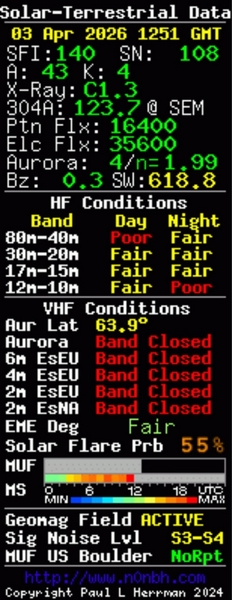
I set out for an early morning activation at Norristown Farm State Park (US-4363, KFF-4363). It was a damp and foggy morning, and the propagation forecast was as dreary as the weather. Before I left the house, I heard some hams on a DMR talkgroup complaining about poor band conditions. Checking the propagation forecasts online, I could see why. The K Index was 4 and the A Index was a whopping 43. 

Propagation forecast. The A index was 43 and the K index was 4.

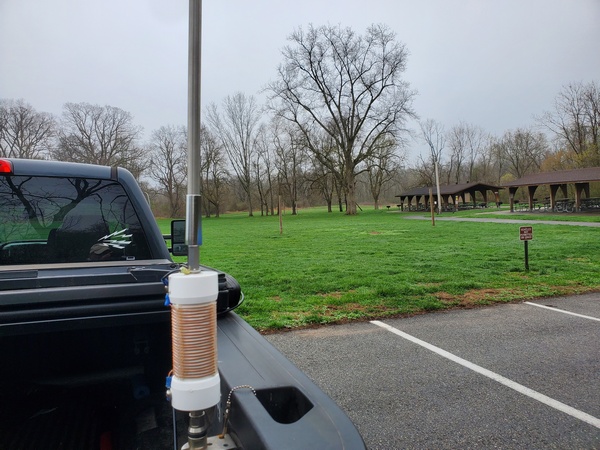
When I got to the park, I wasn’t feeling very optimistic about my chances today. Undeterred, I set up my usual 12-foot whip and homebrew loading coil, along with my trusty little Penntek TR-35 (5 watts, CW). I figured, even in the worst conditions, there would be a hunter or two who could hear me. 

Overcast and foggy morning at Norristown Farm State Park

Starting out on 40M, it turned out I was right. A minute or so after spotting myself, I was pounced on by some loud signals. After nine minutes, I had already logged my first 10 contacts, and the hunters kept calling.

After the activity on 40M dried up, I switched to 20M. The activity wasn’t quite as brisk, but it still produced a steady stream of contacts. Among those were three stations in the Dominican Republic. One was HI0A, a special event station for autism awareness. I suspect the other two might have been individual operators at the same station. F1BLL in France was my sole European contact today. I gave 17M a shot, but I only made one contact there.

Even with the lousy propagation numbers, an hour’s worth of operating netted me 37 contacts. It’s a good thing I went out early, as the geomagnetic storm seemed to worsen as the day went on.

Regardless of the propagation, park activators and hunters always seem to find a way to make contacts.

72, Craig WB3GCK

Fooled by Mother Nature

After a tough couple of weeks, I was really looking forward to a park activation today. Although the weatherman predicted storms later in the day, it was supposed to be a decent morning. I had some specific plans in mind. Mother Nature, however, had other plans.

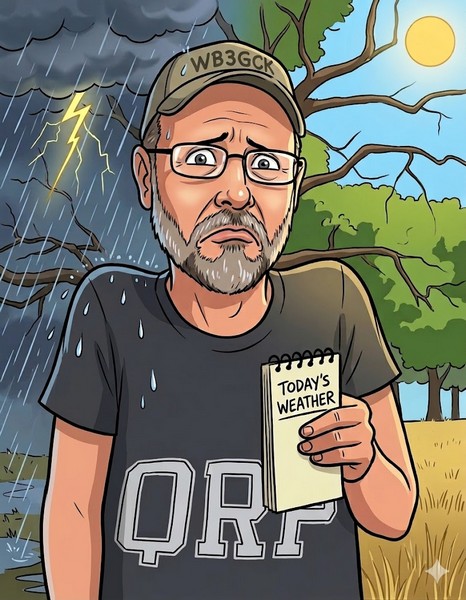
AI-generated cartoon of WB3GCK experiencing both rainy and sunny weather.

I planned to drive over to nearby Valley Forge National Historical Park (US-0761, KFF-0761) to operate from a picnic table and experiment with an antenna or two. When I was about halfway to the park, it started raining. Figuring it was just a passing shower, I continued on. Hah! It just kept raining.

Not wanting to get my radio gear wet, I gave up on the picnic table idea and stayed in the truck. I quickly set up my usual 12-foot whip and homebrew coil in the rain. I fired up my trusty Penntek TR-35 in the truck and got started.

About three QSOs into my activation, the rain stopped, and the sun came out. That was a cruel prank, Mother Nature! I briefly toyed with moving my gear over to a picnic table and setting up the antenna I wanted to try. Since I didn’t want to spend my limited operating time tearing down and setting up again, so I pressed on. 

As activations go, it was nothing special. The bands were so-so, and I could hear some static from the impending storm. Still, I logged 19 contacts in about 50 minutes. Among those were park-to-park contacts with K4NYM in Florida on 30M and 20M. I had other business to attend to, so I started packing up to leave.

As I was out taking my antenna down, the sky clouded over and it started raining again. Well played, Mother Nature! You were quite the prankster this morning.

72, Craig WB3GCK

The Weather Was Cold – 40M Was Hot

I drove out to French Creek State Park (US-1355, KFF-1355) for an early morning activation. While I was there, I wanted to do some initial testing on an antenna I’ve been working on. With the near-freezing temperature, I picked the wrong day for antenna testing. Fortunately, the activity on the bands made the trip worthwhile. 

I designed the new antenna to be attached to a picnic table, so I parked by a picnic area near a boat launch. My original plan was to set up the antenna and take some antenna analyzer readings after my activation. My impatience got the better of me, so I decided to brave the freezing temperatures and test the antenna right away. That wasn’t a smart move. By the time I got the antenna set up and took some SWR scans, my fingers were numb. I should have waited for it to warm up a little.

Taking some measurements on a new antenna I'm working on
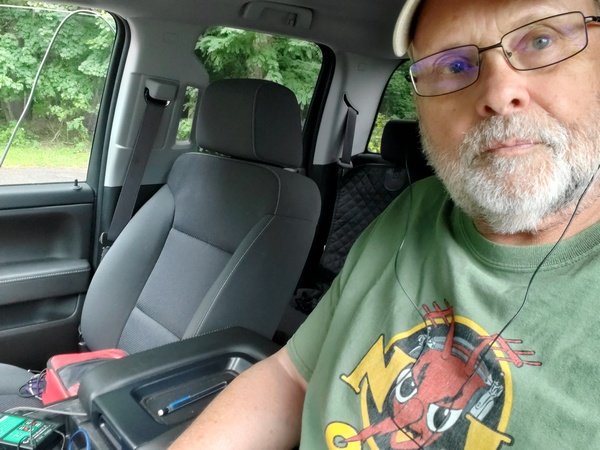
Doing some antenna testing prior to my activation

I was hoping to hook up my Elecraft KH1 and see how it worked with the antenna, but that wasn’t happening. After tearing everything down and packing up, I sat in the truck with my gloves on and the heater running until my fingers thawed out. Then it was time to get on with my activation.

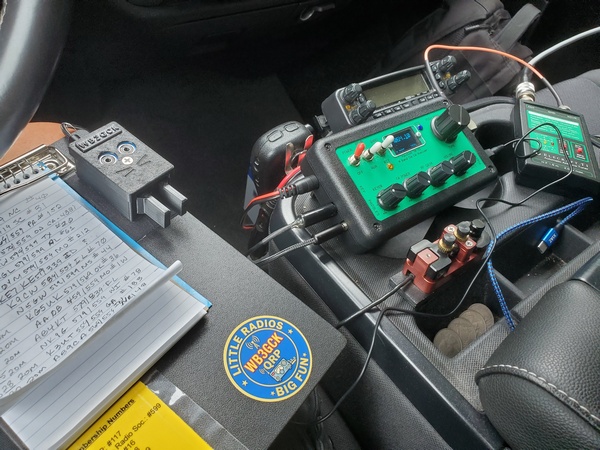
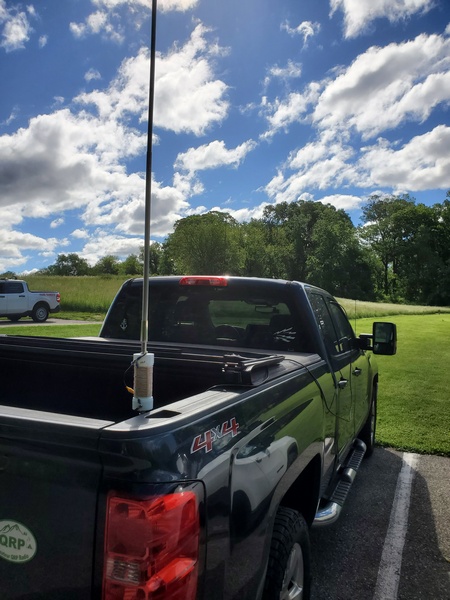
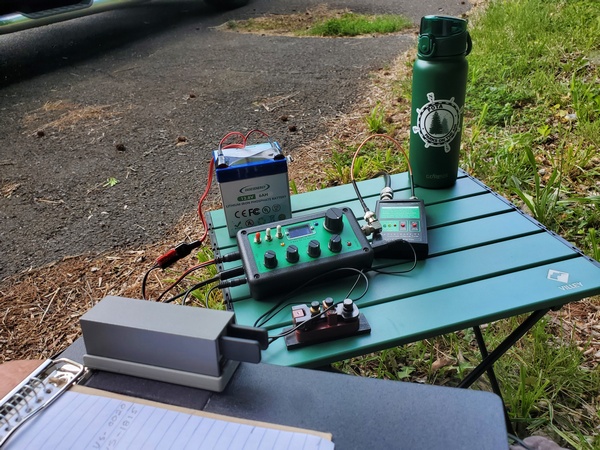
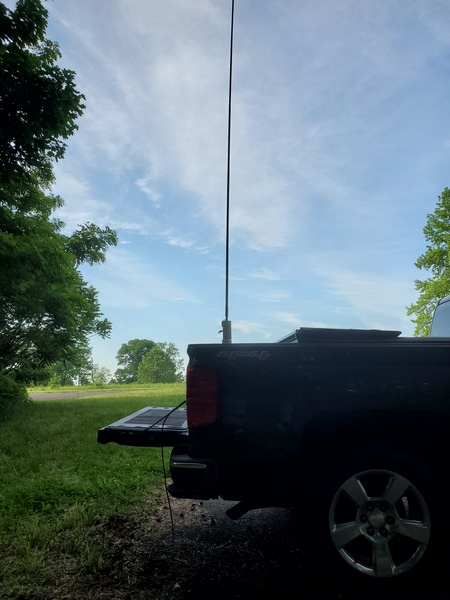
I quickly set up a 17-foot whip and my homebrew loading coil on the back of the truck. Up in the cab, I set up my trusty Penntek TR-35 (5W, CW). I went with a 17-foot whip because my band conditions app showed an unsettled geomagnetic field and poor daytime conditions on 40M. I figured the extra length couldn’t hurt.

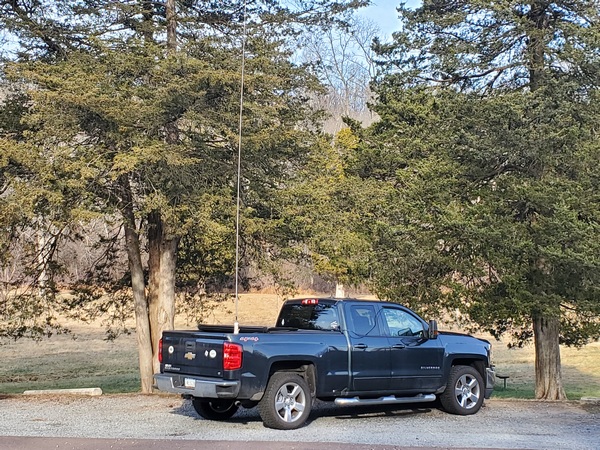
My truck with 17-foot whip at French Creek State Park

When I fired up the TR-35 on 40M, I heard lots of activity and some very loud signals. In fact, I had to search around for a clear frequency. Once I started calling CQ, the hunters immediately pounced. I had constant pileups for the first 20 minutes. I had my first 10 contacts in about eight minutes. 

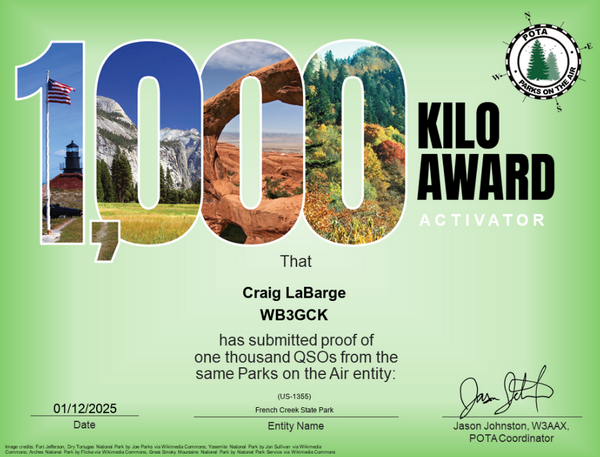
About 30 minutes in, I had worked 29 stations on 40M. The 20M band wasn’t quite as productive, but it still produced 22 more contacts. Among those was one with IZ2UUG in Italy. When I pulled the plug after an hour on the air, I had 52 contacts (before removing a dupe). The moral of the story is: Don’t always go by the band condition predictions. 

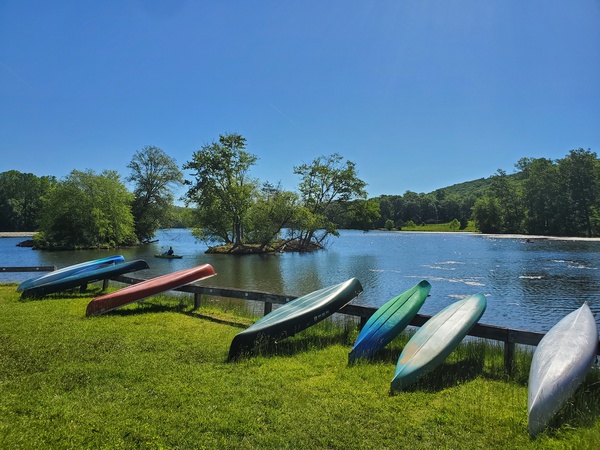
A partially frozen Hopewell Lake in French Creek State Park
Hopewell Lake in French Creek State Park

Now that I’m back home, I have some tweaks to make to my experimental antenna. Once I’m convinced it works and will be useful, I’ll do a separate post on it. That might take a while, though. I plan to wait for some warmer weather for the next round of tests.

72, Craig WB3GCK

Round Two with the AD8HK EFRW

A while back I purchased one of AD8HK’s end-fed random wire (EFRW) antennas. I tried it for the first time during my ill-fated Flight of the Bumblebees (FOBB) outing. With everything that went wrong that day, the AD8HK antenna certainly deserved a better evaluation—at least one where I wasn’t in a panic over problems with my newly acquired Elecraft KH1.

The AD8HK EFRW is a really slick little antenna. It consists of a 15-foot radiator and a 7.5-foot counterpoise wire. It has a neat 3-D printed winder for the wires that also incorporates a 4:1 unun and BNC connector. It’s compact and well-built. AD8HK Antenna Systems sells this antenna (and other offerings) through eBay.

During my infamous FOBB outing, I fed the antenna with 6 feet of RG-316 coax. It loaded up on 30M through 15M, but neither my KH1 nor my Elecraft T1 tuner could find a match on 40M. I’m not sure what the issue was, but I didn’t have much time to look into it.

Sometime later, tried the same length wires with one of my homebrew 4:1 ununs. That time I used 20 feet of RG-316, and it loaded up fine on all bands.

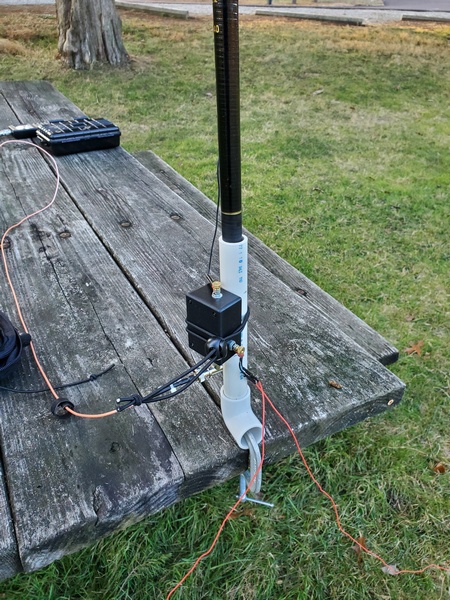
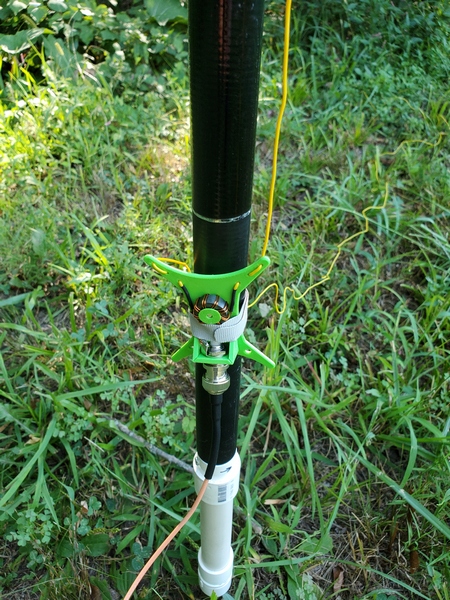
The AD8HK winder/unun. The gray thing is a Velcro strap I used to secure it to the pole.
The AD8HK winder/unun secured to the pole with a Velcro strap.

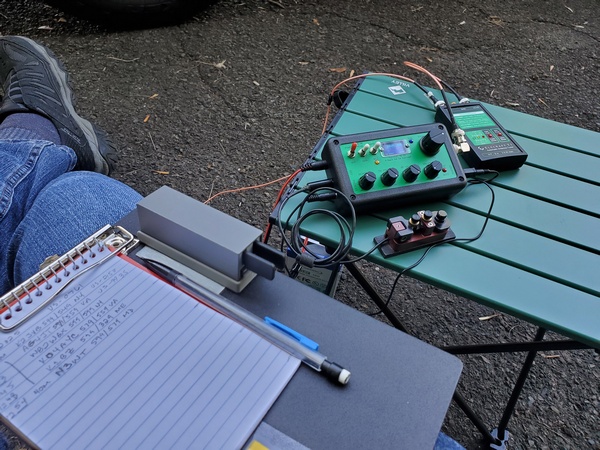
This morning I took the AD8HK EFRW over to Valley Forge National Historical Park (US-0761, KFF-0761) for an activation. I supported the antenna with a 20-foot pole and my homebrew ground mount. I fed the antenna with 20 feet of RG-316, and this time my T1 ATU easily found a match on 40M. It also loaded up fine on 30M through 17M. 

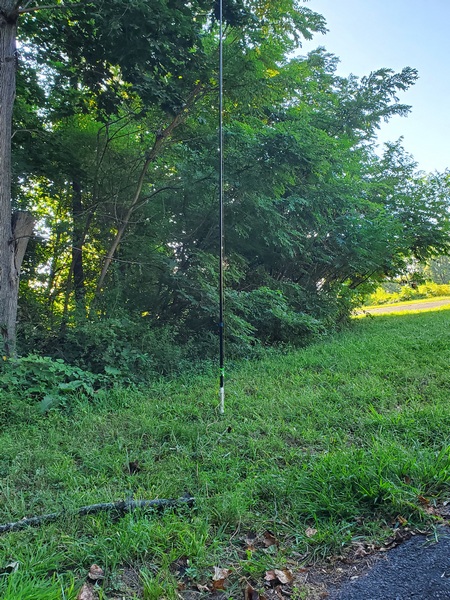
My antenna pole
My antenna pole

A 15-foot radiator isn’t going to be a barn burner on 40M; however, this little antenna certainly held its own today. I easily logged 13 contacts on 40M before moving on to try other bands. When I wrapped up after a little over an hour, I had twenty contacts in the log, with four park-to-park contacts. I made contacts on all four bands covered by my Penntek TR-35 (40M-17M), and I was pleased to work W6LEN out in California on 20M. 

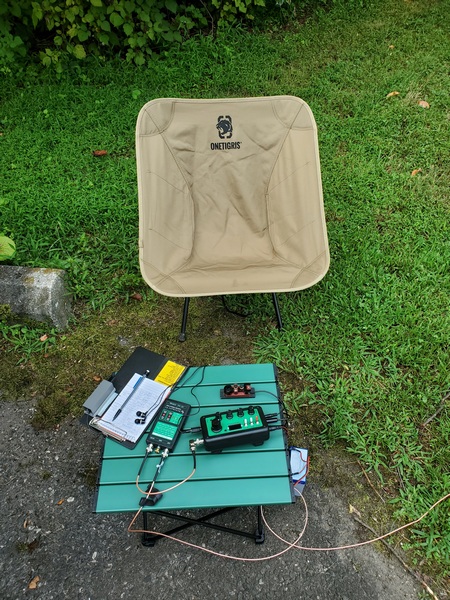
My usual set up: Penntek TR-35 and Elecraft T1 ATU

After today, the AD8HK EFRW has definitely earned a spot in the KH1 kit I’m putting together. It’s easy to deploy and has a relatively small footprint. 

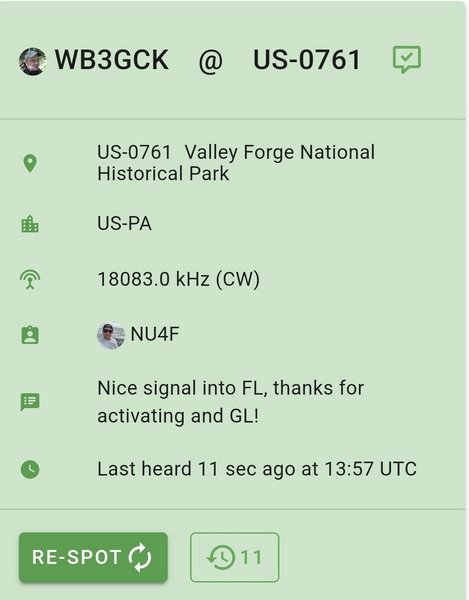
Thanks to NU4F for the nice spot from Florida

Speaking of my KH1… I heard from Elecraft a few days ago. They replaced the FET in the final amplifier, and now the rig is on its way home. I can’t wait to get it back on the air.

72, Craig WB3GCK

Antenna Testing at Ridley Creek

On Wednesday, August 7th, I set out to do some antenna experimentation. So, why not get in a POTA/WWFF activation at the same time? To kill those two birds with one stone, I drove down to Ridley Creek State Park (US-1414, KFF-1414). (Disclaimer: No birds were actually harmed during this activation.)

I saw some discussion on the Internet about an antenna configuration I found intriguing. It’s just a 15-foot radiator and a 7.5-foot counterpoise wire fed through a 4:1 unun. Folks claim they work on 40M through 15M—with a tuner, of course. I’m a sucker for simple, field-expedient antennas, so I gave it a try during the recent Flight of the Bumblebees contest.

With the unun I used, I had mixed results. I couldn’t get the antenna to load on 40M, but it seemed to do fine on 30M through 15M. I wanted to try the same configuration, but with a larger 4:1 unun I built a several years ago. After cutting another set of 15-foot and 7.5-foot wires, I was ready to go.

My antenna feedpoint

When I got to the park, I headed to a spot I had been using a lot lately. It’s off the beaten path and well away from the other park visitors. Using my homebrew ground mount, I set up the antenna on a lightweight 19-ft telescoping pole I bought years ago on eBay. I ran 20 feet of RG-316 coax over to my Penntek TR-35 and Elecraft T1 tuner. 

My operating position at Ridley Creek State Park
My operating position

Before I started my activation, I gave the antenna a quick check. The antenna was an easy match on 30M through 17M, but it took two tries before the T1 found a good match on 40M. 

Despite the slightly fussy tuning on 40M, the antenna didn’t do too badly on that band. I logged 12 contacts before the activity slowed down. I next tried 30M, but there were no takers. Moving up to 20M, I logged three more stations. Up on 17M, I worked one last station in Alabama. After an hour on the air, I had 16 stations in the log, including five park-to-park contacts. 

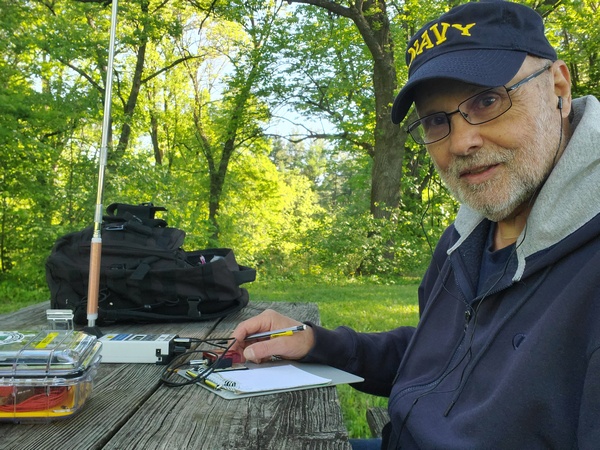
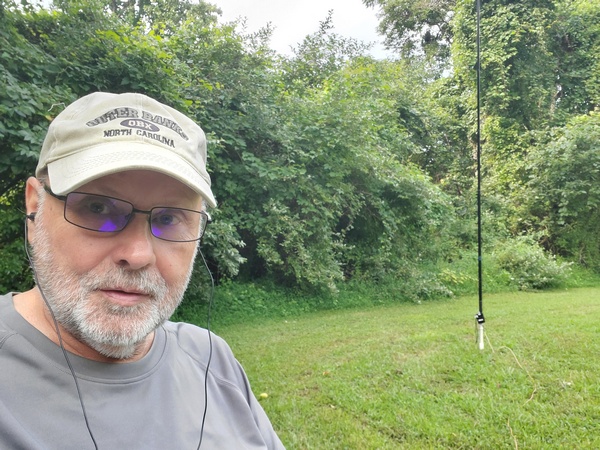
Selfie at Ridley Creek State Park with my antenna in the background
Something in the woods behind me was not happy with my presence. Fortunately, I never came face-to-face with whatever it was.

I had better luck with this antenna configuration this time around. The unun I used for this outing uses a larger iron powder toroid (T130-2, as I recall) compared to the smaller ferrite core used in the other unun. Also, the longer run of coax I used this time was probably a contributing factor. 

In any event, this configuration can definitely work. Granted, it’s a compromise antenna, but it’s super simple to deploy for casual operating in the field. Still, I think a slightly longer radiator would make for an easier match on 40M. 

I have another configuration in mind that I plan to try soon.

72, Craig WB3GCK

The Disastrous Flight of Bumblebee 24

Actually, this bumblebee ‌barely got off the ground at all this year. It started off with a heartbreaking rig failure and ended with some horrendous local noise.

I had a late-breaking change of plans this week. I originally planned to operate in the Flight of the Bumblebees (FOBB) contest from a nearby POTA entity. Instead, I ended up in central Pennsylvania helping a family member recovering from a recent surgery.

So, I activated Plan B: take my new KH1 along and make a few contacts from the backyard. What could go wrong with that? A lot, as it turns out.

Using my homebrew ground mount, I set up a new antenna on my lightweight telescopic pole. The antenna comprises a 15-foot radiator and a 7.5-ft counterpoise fed through a 4:1 unun. (More about that antenna in another post.) I ran a 6-foot length of RG-316 coax over to the KH1. 

I easily got a 1:1 match on 20M and up, but it wouldn’t load up at all on 40M. Going back to 20M, I started operating. Something on the display didn’t look right. It turned out that I wasn’t getting any power output. When I pressed the ATU button, I heard some relay clicking, but there was no power or SWR displayed after tuning. When I keyed up, the display showed zero bars of power and one bar for SWR.

I checked to make sure I wasn’t in “Test” mode (I wasn’t). Next, I started pouring through the settings to make sure I hadn’t messed something up. Nothing looked out of the ordinary to me. I tried the built-in whip on 20M, but still no power out.

After spending an inordinate amount of time playing around with the KH1, I packed it up and brought out my Penntek TR-35. My trusty Elecraft T1 ATU also refused to load up on 40M.

WB3GCK equipment set up for the 2025 Flight of the Bumblebees contest

So, 20M was the only band working for me, given the rig I was using. I could have set up a different antenna, but I didn’t have that much time. 

The 20M band had some horrendous local noise, so it was rough going. I worked one bumblebee in Missouri, and that was it. Frustrated with my inability to hear any other FOBB activity through the noise, I called it quits. I needed to get back inside to take care of a few things, anyway.

Having owned my KH1 for less than a week, you can imagine my disappointment. I shot off a message to the support folks at Elecraft, so hopefully, they can help get this issue resolved before I head down to North Carolina on vacation next month. (Fingers crossed)

I hope you all did better in the contest than me.

72, Craig WB3GCK

Gabil on the Table

Wanting to take advantage of the excellent weather today, I drove up to Evansburg State Park (US-1351, KFF-1351) for a quick morning activation. I wanted to give my Gabil GRA-7350TC vertical some air time, so I tossed it into the truck and headed out to the park.

The picnic table I planned to use had been moved from its usual spot. Not wanting to drag the heavy table back to where it belongs, I set up at a table I have used previously. It’s close to a hiking trail, so I needed to make sure my radials wouldn’t be a trip hazard for passersby. 

I set up the Gabil antenna on its tripod at one end of the table. To facilitate tuning, I set up my Penntek TR-35 (5 watts, CW) and Elecraft T1 ATU within arm’s reach of the antenna. I meant to bring a 3-foot coax along, but it didn’t make it into my backpack. A 10-foot cable was the best I could do, so I just coiled up the excess. (Note to self: Keep a 3-foot cable in the backpack.)

I started out on 40M, so I laid out a 33-foot counterpoise wire on the ground. I reached for my little SWR meter, but it wouldn’t power on. It had been a while since I had last charged it, so the battery appeared to be dead. I ended up adjusting the antenna for maximum noise in the receiver and used the T1 to do the final matching. 

After I had a few contacts in the log, I changed over to 20M. I built my 33-foot counterpoise wire so I could split it into two 16.5-foot wires. After laying out the two counterpoise wires, I tried to peak the noise. No joy. I just couldn’t find a discernible peak. 

Just then, I remembered I had a 12-volt power cable for the SWR meter. Duh! Why didn’t I think of that sooner? After temporarily disconnecting the TR-35, I used the battery to power the SWR meter. I quickly got the antenna adjusted to a 1.3:1 SWR. I reconnected the TR-35 and got started. (Note to self: Throw a Powerpole splitter in the backpack.)

The action was relatively slow-going this morning, but there were a fair number of activators on the air. After a little over an hour, I had 14 contacts, nine of which were park-to-park. 

Despite some minor glitches, it was an enjoyable morning operating in the park.

72, Craig WB3GCK

Getting Ahead of the Heat

Today was shaping up to be the first day of a five-day heatwave here in southeastern Pennsylvania. Since there are excessive heat warnings in place for the next few days (and I don’t hold up too well in the heat these days), I went out for an early morning activation to beat the heat.

I drove up to Evansburg State Park (US-1351, KFF-1351), since my last visit was back in March. Because of a medical condition, I need to be careful with sun exposure. So, I looked around until I found a shady spot where I could set up my radio and use an antenna on my truck. My rig today was my Penntek TR-35 (5 watts, CW) and my 12-foot loaded whip mounted on my truck.

My rig at Evansburg State Park

I started on 40M, and it didn’t take long to make my first 10 contacts. The Reverse Beacon Network (RBN) was reporting some strong hits from my 5-watt signal. After logging 15 contacts, I did some hunting and logged a few park-to-park contacts. 

The 30M band was pretty quiet, yielding only 2 contacts. I had a little better luck on 20M, but the band conditions there weren’t all that great. I shut down after about an hour and a half, with 26 contacts in the log. Considering the early hour, I was satisfied with that. 

WB3GCK operating in a wooded site in Evansburg State Park

In the end, it wasn’t the heat that was the problem today; it was the bugs. I was the target of both air and ground assaults by tiny mosquitos and huge ants. That was to be expected, I guess, since I was sitting in a wooded area on a warm day. 

I hope the weather is better for Field Day next weekend. The extended forecast shows lower temperatures here, but a chance of rain on Saturday. Oh well, at least the heatwave will be over by then. 

72, Craig WB3GCK

Repeat Offender at US-4363

I was one activation away from the 20 needed for a POTA “Repeat Offender” award at Norristown Farm Park (US-4363, KFF-4363). After coming away empty-handed in my last attempt, I tried again this morning. This time I had a much better outcome.  

Given the dismal weather forecast, I left my bike at home and operated instead from the shelter of my truck. I went with my go-to setup: Penntek TR-35 (5 watts, CW) and 12-foot whip with my homebrew loading coil

The bands weren’t great, but I have seen worse conditions. There was a fair amount of fading with some static crashes from storms in the area. Despite those challenges, I made my first 10 contacts in about 15 minutes on 40M. 

While I was on 40M, I heard Greg WA3GM activating US-1351 about 5 miles away. Greg was operating with the Pottstown Area Amateur Radio Club’s annual PAARC in the Park POTA event. Our park-to-park contact this morning was a repeat of one we made last year

After operating for an hour, it started to drizzle, so I called it quits. My time on 40M, 30M, and 20M, produced 26 contacts, with two park-to-park contacts. 

POTA Oasis Repeater Offender award for 20 activations at the same park

My timing was excellent, as I ran into a heavy downpour on my way home. In any event, I was happy to close the books on activation #20 at US-4363. 

72, Craig WB3GCK

Skunked!

“Mama said there’d be days like this.” — The Shirelles

My week got off to a good start. I activated parks three days in a row with good success. With some nice Spring weather today, I thought I’d get the bike out for an activation. I drove out to Norristown Farm Park (US-4363, KFF-4363), since I’m one activation away from a Repeat Offender award there. My plan was to get in a bike ride, while completing my 20th activation.

Things didn’t go as well as I had hoped.

I last rode my bike there about eight years ago. A friend and I were doing some communications testing to prepare for a March of Dimes event. I rode all over the park with an HT, while my friend listened for me at the proposed Net Control location. I remembered seeing a picnic table just off the road, so I headed out in that direction. About a mile out, I found a covered picnic table. It wasn’t the one I remembered, but it seemed to be a better location.

The view from the covered picnic table I was using.

My setup was similar to the last time I used the bike. I mounted a Gabil GRA-7350TC vertical on my handlebars and used a 33-ft elevated radial. I easily adjusted the antenna for a 1.3:1 SWR on 40M. Then, I ran 20-ft of RG-316 over to the picnic table where I set up my Penntek TR-35 (5 watts, CW) and Elecraft T1 tuner.  

You have to look closely to see the Gabil GRA-7350TC on my handlebars.

The 40M band seemed a little weak. I heard very little activity, and my hits on the Reverse Beacon Network (RBN) weren’t all that strong. After 10 minutes or or so of futile CQing, I reconfigured the radials and tuned up the antenna for 20M. This time I used three 17-ft radials.

Despite getting double-digit Signal-to-Noise readings on RBN, 20M wasn’t producing any takers. I tried calling a couple of activators, but I wasn’t getting through the pile-ups. I didn’t have much time this morning, so I gave up after 30 minutes with an empty log. After packing up my gear, I rode back to the parking lot.

This empty cage was located in the back of the clearing I was in. I have no idea what kind of critter it might have been used for.
This empty cage was located in the back of the clearing I was in. I have no idea why it was there or what kind of critter it might have been used for.

On the ride back, I tried to figure out what the problem was today. Was it propagation, my location, or was it just one of those days? Who knows?

Radio-wise, today was a bust. I did, however, get in a pleasant bike ride and a little exercise.

72, Craig WB3GCK