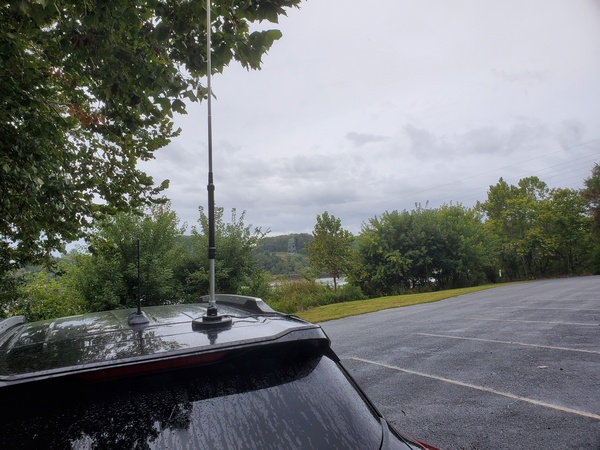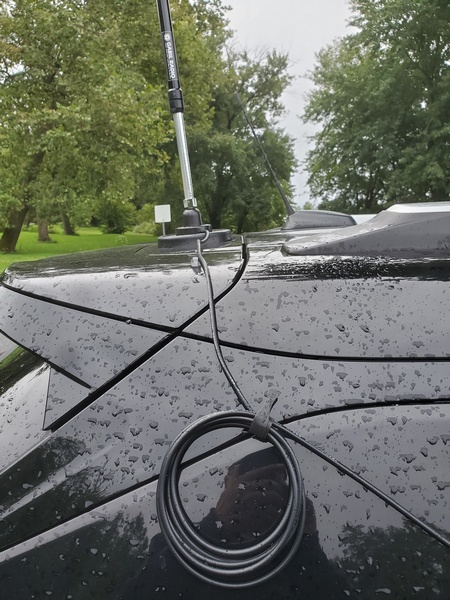
A Simple Portable Vertical for 20M-15M

This is one of those antenna projects that started with: “I wonder if…” Designed with my Elecraft KH1 in mind, it covers the 20M, 17M, and 15M with the use of an tuner—similar to how the KH1’s whip antenna operates. It wasn’t something I had a burning need for, but it turned out to be pretty effective. 

Concept

For many of my recent activations, I’ve been using my Elecraft KH1 with my base-loaded 12-foot whip. While I built the loading coil for 40M through 17M, I found that the KH1’s internal tuner easily matched the 12-foot whip on 17M and 15M, with the coil bypassed. A 12-foot radiator is resonant somewhere around 19.5 MHz, so it falls in between the 17M and 15M bands. Even though the 12-foot whip is a compromise, I was regularly making DX contacts on those two bands running five watts or less.

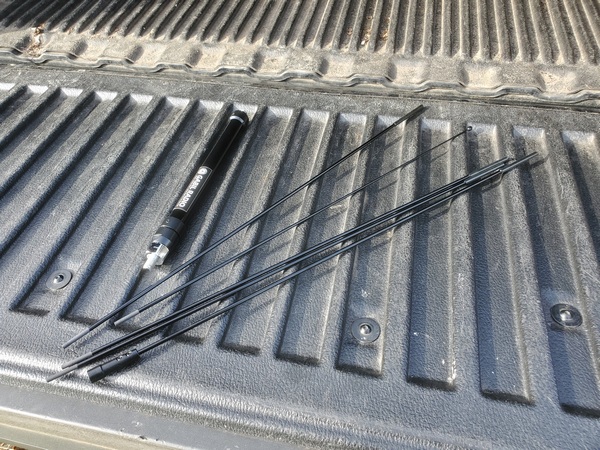
That got me thinking about building a more portable antenna for 20M through 15M using a 12-foot radiator. What I came up with was a simple 12-foot wire antenna that uses a loading coil for 20M and just the 12-foot wire for 17M and 15M.

When I thought about it, what I was building was conceptually similar to the Elecraft AX1 antenna and the KH1’s whip antenna. These antennas are close to resonance on 20M and resonant somewhere in between 17M and 15M. My antenna would operate the same way, except it would be almost 8 feet longer. I’ve always had good luck with the AX1 and the KH1’s whip antenna, so I figured my proposed antenna should work even better. 

Along with the electrical properties, I wanted to make the antenna small and lightweight, using a #26 AWG radiator along with two 13-foot counterpoise wires. Also, I wanted to use—as much as possible—parts I already had in my junk box. 

Parts List

I selected most of the parts based on availability in my junk box. They might not be the optimal choices, but here’s what I used:

  • T106-2 iron powder toroid
  • #22 AWG enameled wire (approx. 35 inches)
  • SPST slide switch. I actually adapted a DPDT slide switch, since I already had a bag of them.
  • #26 AWG wire (12 ft for radiator)
  • #26 AWG wire (2x13ft for counterpoise wires)
  • 2mm banana plugs & jacks (2 sets for connecting the counterpoise wires)
  • (2) ring terminals
  • BNC female jack
  • (2) 4-40 x ¾-inch bolts plus some washers and nuts for the antenna and counterpoise connections. I used a couple of knurled nuts I had on hand.
  • Plastic box. I had one that measures about 2.5 x 1.75 x 1 inches.

Construction:

When I first thought about building this thing, I originally envisioned a more field-friendly form factor with built-in winders for the antenna and counterpoise wires. Since I constrained myself to using parts I already had (and I don’t own a 3-D printer), I used a plastic box I bought years ago but never used.

The construction was pretty simple; it’s just a toroid, a switch, and some connectors in a box. They say a picture is worth a thousand words, so have a look at the accompanying pictures to see how I built it. 

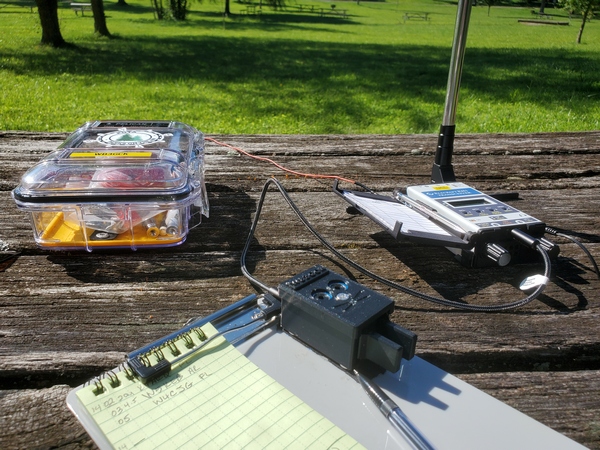
Inside the matchbox for my 20M-15M 12-ft vertical
Inside the matchbox

I used some online calculators to determine the loading inductance needed for 20M. Assuming I would need to tweak the number of turns, I started with one turn more than I had estimated. It’s easier to remove turns than to add turns—don’t ask me how I know this. 

I used some foam mounting tape to hold the toroid in place. For good measure, I also wedged ‌in a piece of Styrofoam between the toroid and the lid. That adds some assurance that the toroid won’t come loose in the field. The trickiest part was cutting a square opening for the slide switch. That took some careful work with a nibbler tool and a file to get it done without destroying the box. 

You could use a tree branch to support this antenna, but I like to keep my field setups self-contained. I found a cheap telescopic pole on eBay that measures about 12’ 3” fully extended, so I went with that. 

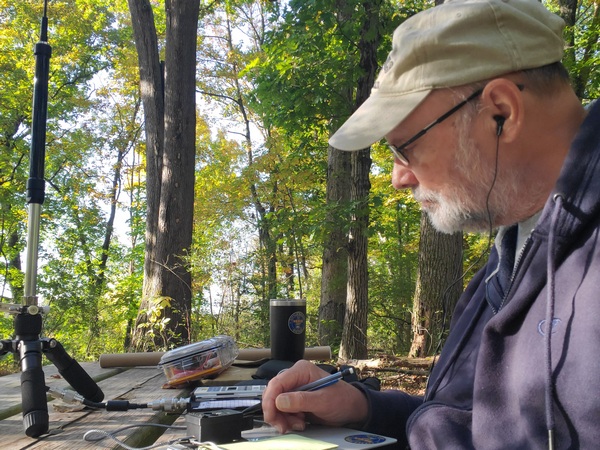
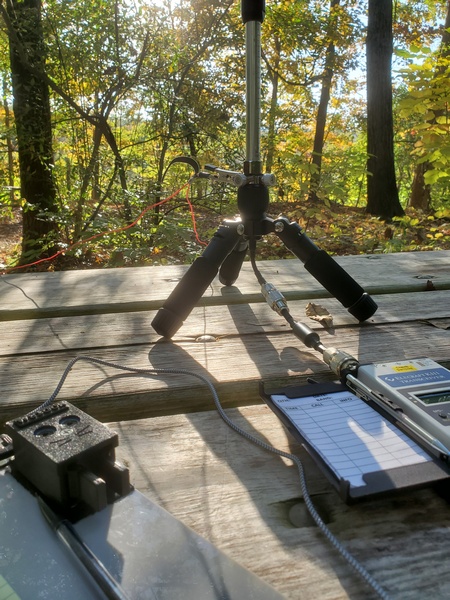
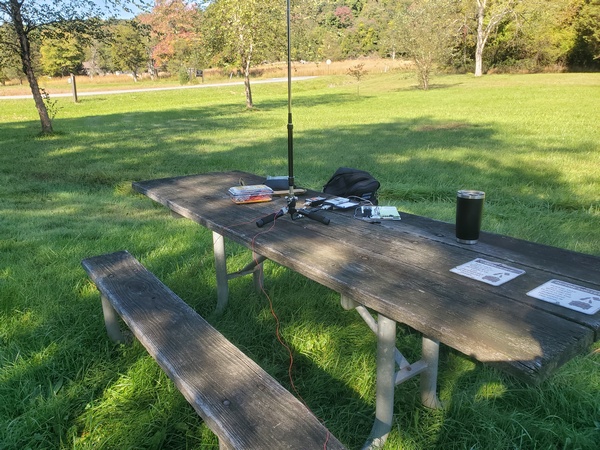
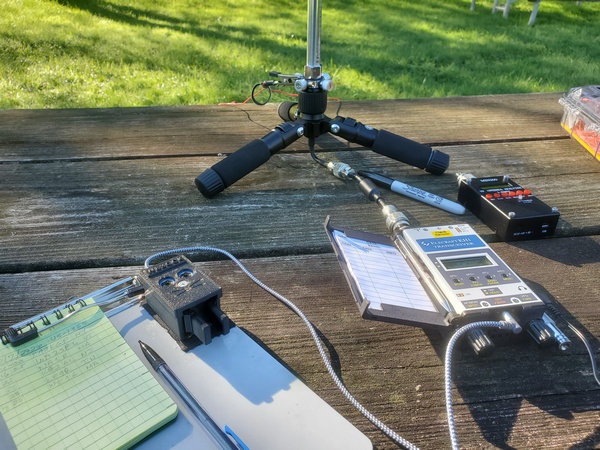
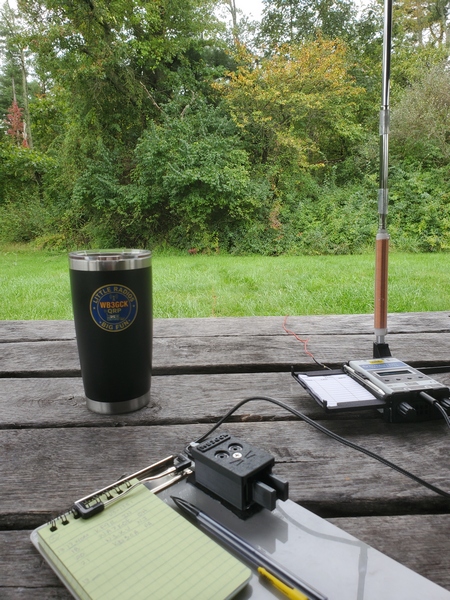
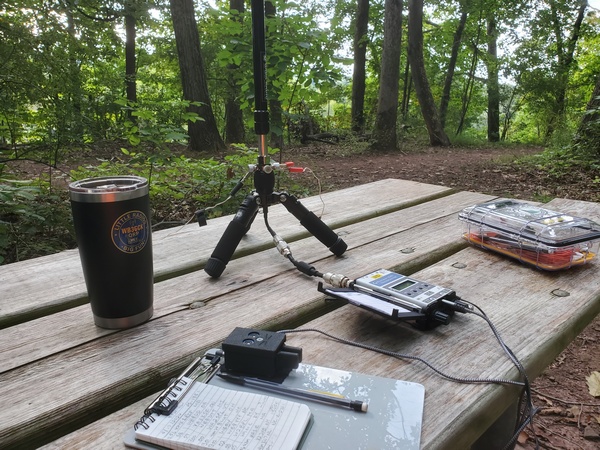
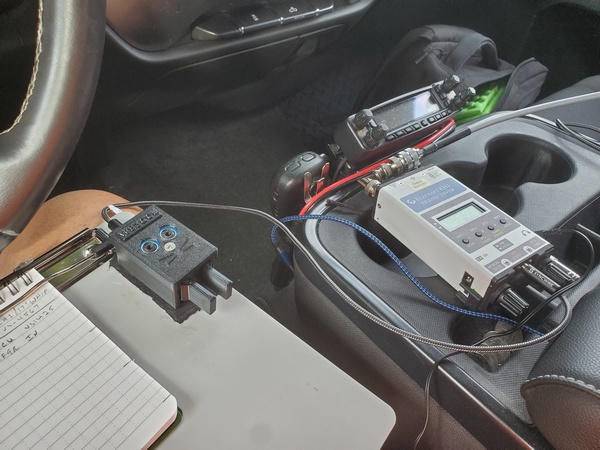
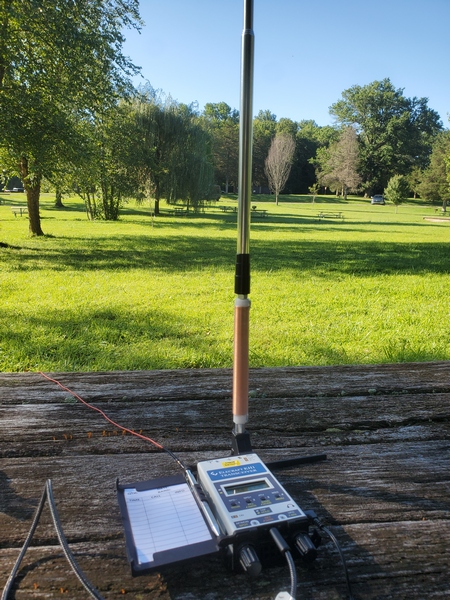
Typical picnic table setup with the 12-ft vertical and Elecraft KH1

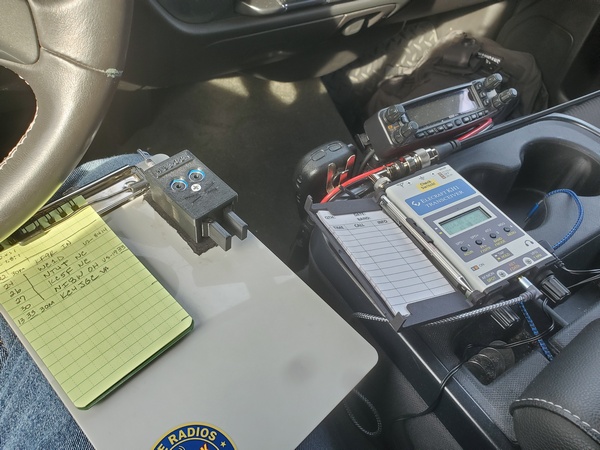
I envisioned using this antenna primarily for “picnic table-portable” operation, running a short length of coax to the radio. Using a piece of PVC pipe and a PVC elbow fitting, I built a simple mount for clamping to a table. As luck would have it, the base of the pole fits perfectly inside a ¾-inch PVC pipe. I just use a C-clamp to fasten the elbow to the table and slide the pole into the pipe. When I built the mount, I inserted a small screw partway up the pipe to give the pole a few more inches of height. A six-foot length of RG316 is more than enough to reach the radio at the other end of the table. 

Matchbox attached to the PVC pipe picnic table mount

Testing in the Field

I don’t have a good place for antenna experimentation where I live, so it took several trips to the field to tweak the inductor. On each trip, I took readings with an antenna analyzer, made any necessary adjustments to the loading coil when I got back home, and repeated the process on the next outing. That was a tedious process, which was spread out over a few months because of winter weather. 

Once I set the antenna up in the field, I found I needed far fewer turns than I originally estimated. Initially, the antenna was resonating well below the 20M band, so I removed a turn at a time. Since I was going to need to use an ATU for 17M and 15M anyway, I didn’t get too fussy about getting it exactly resonant on 20M. However, I eventually got it resonating in the 20M band, with an SWR under 1.5:1 across the band.

The good news was that, even though I hadn’t finished tweaking the coil, the KH1 easily found a match. I had five successful activations during those testing sessions, typically running 3.5 to 4 watts. I consistently worked stations in Europe on all three bands, along with some U.S. stations on the west coast. On one outing, I worked W6LEN in California on all three bands from a park here in southeastern Pennsylvania. During my final testing session with the antenna, I had a 20-minute two-way QRP QSO with DL4ISX on 15M (CW). I declared the project completed at that point.

Below is a schematic showing the final configuration:

Wrap-up

So, there you have it. No revolutionary technical breakthrough here, just a fun little project that has been even more fun to use. I envision many more picnic-table-portable activations with it. 

72, Craig WB3GCK

Am I Collectible Now?

Several years back, a friend of mine said he found one of my old QSL cards for sale on eBay. It was a card I sent to a DX ham almost 31 years ago. While poking around on eBay recently, I saw it was still for sale.

I sent this card to VP9MZ in Bermuda for our 30M CW QSO back in June 1995. The card shows a fisherman, representing one of my other hobbies. The eBay seller, located in Canada, is asking $6.95 Canadian ($5.08 US). 

WB3GCK QSL card from 1995
My old QSL card someone is selling on eBay

I went back through my old paper logbooks and found the QSO. I was running my old MFJ-9030  (about 3 watts, CW) into my raingutter antenna. In the remarks column, I made a note that he remembered me. Apparently, we had worked each other previously. My log entry also shows that I received his QSL card via his QSL manager. While I was on that page of the logbook, I saw another QSO with him 5 days later. 

One part of me is insulted that my card hasn’t been sold after being up on eBay for years. On the other hand, I’m not really sure why someone would want to buy it.

I have boxes of QSL cards I have received over the past 50+ years. Hmmm…. Maybe I should start selling them on eBay. 

72, Craig WB3GCK

Forty Meter Fun by the River

While out in central Pennsylvania over the weekend visiting family, I headed out early on a chilly Saturday morning for a quick activation of the Captain John Smith Chesapeake National Historic Trail (US-4567). The 40M band was really hopping.

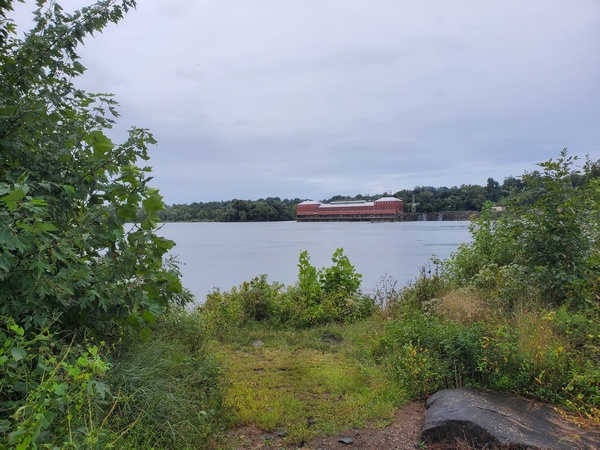
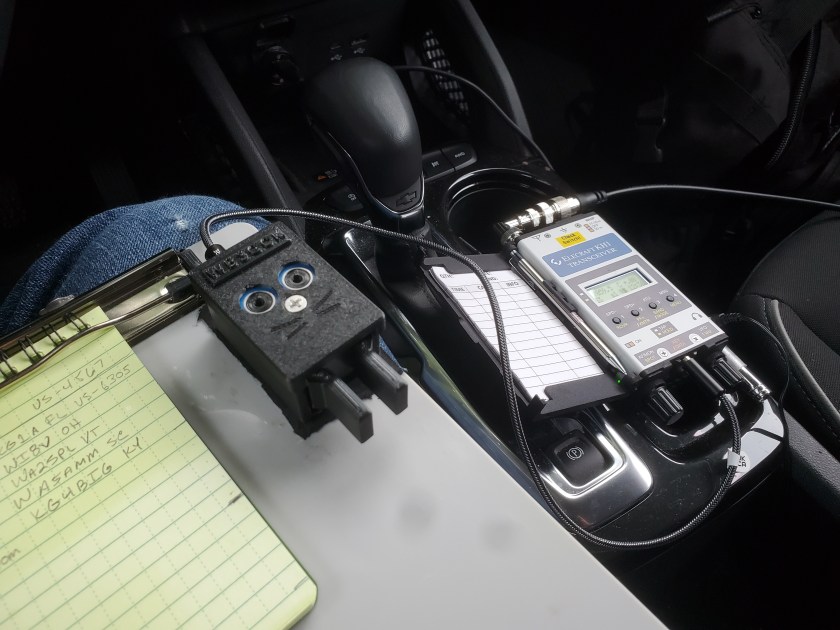
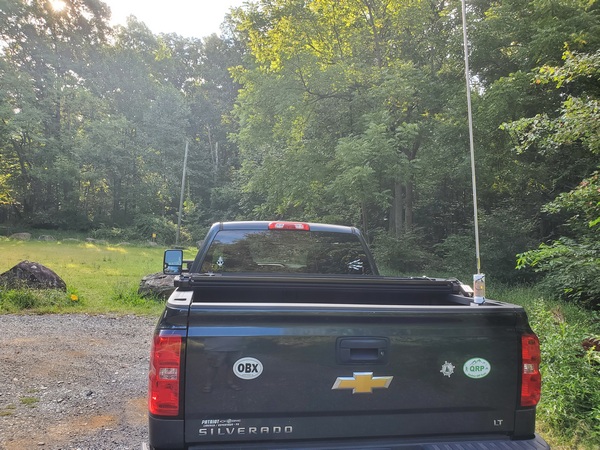
My destination was Falmouth Access Park, which is along the Susquehanna River in northern Lancaster County. The place was nearly empty, except for a few anglers along the river. Not too surprising, since it was only 0730 EST. I set up my 12-ft base-loaded whip on the back of the truck and my Elecraft KH1 (4.5W, CW) up in the cab.

My truck near the Susquehanna River for a chilly early-morning activation
My truck by the Susquehanna River for a chilly early-morning activation

After posting a spot and calling CQ on 40M a couple of times, the hunters started piling up. Once they started, the action was nearly non-stop for the next 45 minutes. The 40M band was in great shape, providing contacts all up and down the East Coast and out to Iowa to the west. I was short on time, so I never got around to trying other bands.

At the end of my 45-minute activation, I had 35 contacts in the log, including five park-to-park contacts. I had a couple of errands to run before heading back to the house for breakfast, so I packed up and headed out.

Thanks to all the early-rising hunters. You didn’t disappoint.

72, Craig WB3GCK 

Oops! Operator Error!

I was out and about on a rainy and foggy Friday morning. Since I was in the vicinity, I made a stop in Ridley Creek State Park (US-1414, KFF-1414) for a quick activation. I completed the activation successfully, despite some self-inflicted problems. 

I pulled into ‌a convenient parking spot. Not surprisingly, the picnic area I was in was completely deserted. Since the weather was miserable, I planned to use my Elecraft KH1 in the truck with my trusty 12-foot base-loaded whip on the back. 

As I was setting up the antenna, I noticed my first issue. The spot I had hastily chosen was under a tree—a large, rain-drenched one. Rookie error! Fortunately, my 12-foot stainless steel whip went up in between the branches and didn’t appear to be touching any of them. (Note to self: Look up next time!)

Rainy and foggy morning in Ridley Creek State Park (US-1414, KFF-1414)

I finished up with the antenna and got the KH1 set up for 40M. Normally, with this antenna, the KH1 easily finds a good match on the first try. Not this time. It would find a good match (1.5:1 or better), but the SWR would occasionally jump full scale. I had to hit the KH1’s ATU button to re-tune frequently, sometimes mid-QSO. Thinking it was the wind blowing the whip into the wet branches above, I backed the truck up a foot or two to clear the tree. That didn’t help.

After stumbling through seven contacts on 40M, I went out to change the antenna tap for 20M. As I did that, I realized what the problem was. On my last activation, I was using the KH1’s whip antenna, and I neglected to set the switch for using the BNC connector. The BNC jack is always connected, but the “20M” setting puts in some additional inductance for the whip. It appears extra loading was the source of my issues on 40M. Once I corrected my mistake, things continued normally on 20M and 17M. 

Despite my struggles, I completed my brief activation with 22 contacts in my log. It was good to put a few DX stations in the log:

20M: CU3DI, F1BLL
17M: OE3KAB

All’s well that ends well, I suppose. My switch error got my activation off to a shakey start, but I got it done. Having already experienced blown finals with this rig, I’m usually mindful of the antenna switch setting. Still, I used my trusty label maker to put a reminder right on the radio.

Label added to the front of my KH1 to remind me to check the antenna switch

Take that, Murphy!

72, Craig WB3GCK

Coming Out of a Slump

I’ve been in a bit of a ham radio slump lately. It had been nearly three weeks since my last park activation, and I’ve only had a few QSOs from the home station. Our temperatures have finally gotten above freezing this week, so I headed out to Evansburg State Park (US-1351, KFF-1351) for a long-overdue activation this morning.

With the slightly warmer temperatures this week, the snow and ice from last month’s storm are finally melting (a little). Even though the temperatures are above freezing, we still have what I refer to as “refrigerator weather.” Still, I braved the chilly weather and operated outdoors today. 

The Evansburg State Park entrance sign with the dirty remnants of last month's snow
The Evansburg State Park entrance sign with the dirty remnants of last month’s snow

I was the only person in the park this morning, so I had a large picnic pavilion to myself. Of course, there usually aren’t many picnics on a weekday morning in February. I went with my Elecraft KH1 and whip antenna with a right-angle adapter from Tufteln. I ran my counterpoise wire out across the snow. 

WB3GCK operating at Evansburg State Park (US-1351, KFF-1351)
Operating at Evansburg State Park (US-1351, KFF-1351)

I started out on 40M with the Elecraft AXE1 extension coil. As always, the little whip antenna amazed me with how well it was getting out. I logged eight contacts in the first 10 minutes before the action slowed. After logging 11 contacts, I moved up to 20M. The action was a little slower there, but I still managed seven more contacts. 

The view from my operating position this morning

My coffee mug was nearly empty, so I called it quits after an hour on the air. I finished up with 18 contacts in my log. Not bad for a 45-inch antenna and “fair” band conditions, I suppose.

It was fun getting back out in a park again. Hopefully, I’ll get in another activation or two before the next round of snow shows up.

72, Craig WB3GCK

Thinking Inside the Box

I’ve been very happy with the soft case that came with my Elecraft KH1 Edgewood Package. It has room enough for the KH1 and most of the accessories I typically use with it. Although I’ve been very careful with the KH1, I somehow damaged the stock Elecraft paddles that came with it. I’m not sure how I managed to do that, but that prompted me to start looking into a hard case for transporting this expensive little radio.

[Note: This post is not sponsored, and there are no affiliate links.]

Fortunately, others have gone before me in this quest, so there are a variety of boxes that others have tried. KR8L wrote a blog post about using a Pelican 1040 case for his KH1. K4SWL had a blog post and an excellent video showing a bunch of hard cases suitable for the KH1. Somewhere online I saw mention of the Apache 550 as a less expensive option from Harbor Freight. Commercially, Tufteln sells a Pelican M40 case modified to fit the KH1 and its whip antenna.

Now that I had a mind-boggling array of options to consider, it was time for the next phase of my project: over-thinking and over-analyzing. 

While most KH1 users carry the bare minimum of items to get on the air. I, however, tend to over-pack. With the original soft case, I could carry everything I needed for pedestrian-mobile, picnic-table-portable, and stationary-mobile operations. Being a soft case, it has a little “give” to it when I squeeze in some extra items. So, for my purposes, I wanted a box at least large enough to hold everything I carried in the soft case.

After much agonizing, I settled on the Pelican M50. With exterior dimensions of 8.10 x 5.50 x 2.90 inches, it’s somewhat larger than others use. However, it easily holds everything I carried in the soft case—and then some.

Pelican M50 MicroCase with my KH1 and accessories (see text for contents)

Here’s what I have in there:

I placed the KH1 on top of the counterpoise wires for some cushioning, but the KH1 still flopped around a bit. I found that placing a 3×5 inch notepad under the KH1 kept it in place with the lid closed. So, the notepad and a full-size mechanical pencil are now part of the kit. No problem, since they will get used for picnic table operations. 

Pelican M50 MicroCase. The counterpoise wires and a notepad are under the KH1.

Although I already have a bunch of stuff packed in there, I’m still thinking about adding a random wire antenna and maybe some throw line. I might just keep that stuff in my backpack, though. We’ll see.

So that’s what I wound up with. In typical fashion, I probably packed more than I should have, but the overall weight of my backpack hasn’t increased very much. Plus, I like to think I’m minimizing the possibility of forgetting something in the field.

72, Craig WB3GCK

Keeping My CW Fist Warm

My old, arthritic fingers aren’t what they used to be, especially when sending CW in colder weather. I’ve tried a variety of gloves over the years, but they have each had their drawbacks. Recently, my (far) better half stumbled across an inexpensive pair of gloves that seem to be just what I’ve been looking for. 

[Note: This post is not sponsored, and there are no affiliate links.]

I mentioned my cold weather CW dilemma to my (far) better half in passing, and she found an interesting pair of gloves on Amazon a few minutes later. They are the Glider Touch Screen gloves for $8.99 (USD). At that price, I took a chance and fired off an order to try them. After measuring my hand and using their sizing guide, I went with the large size. Glider Gloves is a Canadian company, and our friends to the north certainly know a thing or two about cold weather.

Some reviewers on Amazon complained about these gloves having a snug fit, but that’s exactly what I’ve been looking for. I use iambic (squeeze) keying and paddles with a light touch, so bulky gloves can make accurate sending difficult.

This is how I normally send while holding a pencil. These touchscreen gloves allow me to do that with no problems.

I tried my new gloves during a recent POTA/WWFF activation. They definitely have a snug fit, but they conform nicely to the shape of my fingers. There’s no excess material in the fingertips to interfere with keying. Normally, I use the paddles while holding a pencil, so I can quickly alternate between keying and logging. I found I could still do that with no issues. My log’s legibility was no worse than my normal chicken scratch. 

My Glider Gloves. (See the Amazon website for better pictures)
The Glider Gloves. (See the Amazon website for much better pictures.)

They also worked great when I entered my spotting information using my cell phone. To facilitate use with touch screens, they have some copper woven right into the material. My typing on the phone was about the same as my normal “fat-fingering.” 

Since they are thin and form-fitting and have some non-slip material on the palms, they are good for other tasks requiring manual dexterity. Normally, I have to take my gloves off at some point when installing the antenna on my truck. This time, however, I had the Glider gloves on and had no problems screwing the parts together.

The temperature in the truck during my brief activation was about 45° F (7° C), and my hands stayed reasonably warm. The manufacturer says they’re good for “moderate temperatures,” so I probably wouldn’t wear them on an Artic expedition. Regardless, they are a whole lot better than no gloves at all—which is how I sometimes operated in the cold. I can also put my regular gloves on over them if I need to take a break from sending.

I had hoped to use them during Winter Field Day this year, but some personal obligations and a snowstorm forced me to sit this one out. According to the weather forecasts, we have a lot more winter weather ahead of us here in Pennsylvania, so I’m sure these gloves will still get plenty of use.

There are lots of similar gloves on the market, so there may be better options out there. Since I tend to avoid operating in extremely low temperatures anyway, I think these should do the job for me.

72, Craig WB3GCK

Boschveldt QRP Winter Outing 2026

For the third year in a row, the Boschveldt QRP Club (W3BQC) held its annual winter outing in a cabin in French Creek State Park. For a variety of reasons, we had a smaller than usual group this year. Regardless, it was a fun weekend of catching up with old friends, eating some good food, and playing radio in the park. 

Our cabin in French Creek State Park

When I arrived Friday afternoon, Ed K3YTR was already in the cabin. After unloading my gear and settling in, I wanted to squeeze in a quick POTA/WWFF activation (US-1355, KFF-1355) before the rest of the crew arrived. I operated from the truck using my Penntek TR-35 and 12-foot loaded whip. After 14 quick contacts on 20M and 17M, I headed back inside the cabin to warm up. 

ED K3YTR with his KX3 station in a box
Ed K3YTR with his KX3 station in a box (Photo credit: NK1N)

Glen NK1N rolled in from New Jersey later in the day. He put up an 85-foot inverted vee and used his Elecraft KX2 from inside the cabin. Over the course of the weekend, Glen activated the park using our club’s callsign, W3BQC. We wrapped up the first day with a lasagna dinner and some socializing. 

Glen NK1N operating from the cabin

Walt KB3SBC also stopped by on Friday and stayed for dinner. Special thanks to Walt for making sure we had a coffee maker and plenty of coffee for the weekend—a crucial part of every Boschveldt QRP Club gathering.

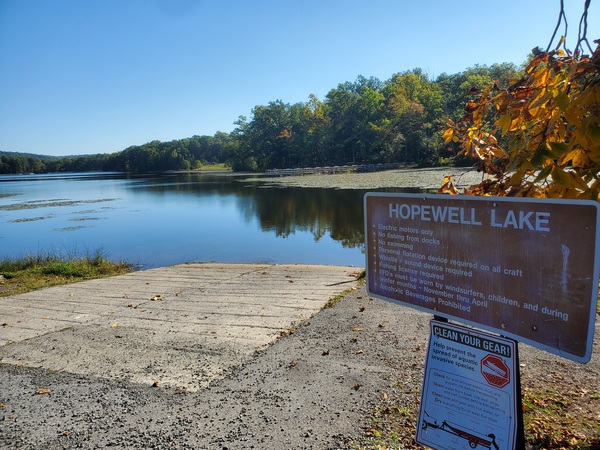
On Saturday morning, we had some snow starting. I drove over to the Hopewell Lake boat launch for another quick activation before the roads got too bad. Using the same setup as the day before, I hopped on 40M. The activity was fast and furious. After about 30 minutes, I had an inch of snow in the bed of the truck, and it was coming in through the window I fed my coax through. I wrapped up with 28 contacts in my log, including an ear-shattering park-to-park QSO with W3BQC (NK1N operating) less than a mile away back at the cabin. 

WB3GCK operating at the boat launch in the snow
Snow piling up on my homebrew loading coil

Later on Saturday, Ed K3BVQ joined us and set up his MFJ travel loop antenna inside the cabin. With his indoor antenna, Ed was busy making contacts with a four-watt YouKits rig and a straight key. Chris W3CJW also stopped by for a visit.

Ed K3BVQ operating from the cabin with his indoor loop antenna

Saturday evening we drove into town for dinner at a local restaurant. We capped off the night by watching an old science fiction movie projected onto a screen hung on the wall. 

We woke up Sunday morning to another round of snow. After breakfast, NK1N and K3BVQ got back on their radios to make some more contacts.

During the weekend, we noticed that Ken N3CU was doing a POTA activation somewhere in the park. It turned out that Ken and his XYL, Stephanie, were in a cabin just down the road from us, and they stopped by for a visit. Ken and I had worked each other many times over the years, so it was a pleasure to finally meet him in person. Ken had a successful weekend, completing his POTA Kilo award at French Creek. By virtue of his visit, Ken also became our newest Boschveldt QRP Club member. 

Ken N3CU and his XYL (and future ham), Stephanie, stopped by to visit on Sunday morning.

K3BVQ and I packed up to head out on Sunday afternoon, while NK1N and K3YTR stayed over for one more night. According to the POTA website, W3BQC had close to 80 contacts over the weekend.

In true Boschveldt QRP Club fashion, our weekend get-togethers are as much about socializing as getting on the radio. Although illness and competing obligations prevented some of our regulars from attending, it was great to spend the weekend hanging out with some old ham radio friends.

72, Craig WB3GCK

Testing a New Mag Mount

On those occasions when I do an activation with my (far) better half’s car, I have been using my Gabil GRA-7350TC antenna on an old magnetic mount. Because of a recent issue with the mag mount I’ve had for 20+ years, I finally had to replace it. Today was the first opportunity I’ve had to use the new one.

While visiting my daughter and her family over the Christmas holiday, I headed out to activate the Captain John Smith Historic Trail (US-4567). Normally, when using the GRA-7350TC and mag mount on my (far) better half’s car, I can easily get the SWR down less than 1.5:1 on 40M. This time was different; the tuning seemed very finicky. I eventually got it close enough to use with the KH1 and completed my activation. As I was packing up, I noticed some damage to the coax where it enters the mount. 

This old mag mount has seen many years of service with a VHF/UHF antenna on my truck before being pressed into service with the Gabil antenna. It’s amazing it lasted as long as it did. I decided that trying to disassemble and repair it was more trouble than it was worth. 

I ended up buying a Tram magnetic mount on Amazon. This one is a real beast. It’s five inches in diameter and weighs a whopping 2.6 pounds. It’s probably overkill for my intended use, but I figured the larger diameter would provide better coupling to the vehicle. (Spoiler Alert: It does.)

My new five-inch magnetic mount
Tram magnetic mount

To try it out, I headed out to Marsh Creek State Park (US-1380, KFF-1380) and set it up on my truck. The attached coax is 17 feet long. That’s way more than I need, so after feeding it through the passenger-side window to my Penntek TR-35 (5 watts, CW), I coiled up the excess. 

The Gabil GRA-7350TC antenna and magnetic mount on my truck

I started out on 40M and was surprised to see I could tune‌ the Gabil antenna down to 1.3:1 SWR. That’s better than I could ever get using the old mag mount on my truck. It was slow going on 40M this morning with a lot of fading. I could only manage about nine contacts before moving up to 30M.

Marsh Creek Lake partially frozen over

Up on 30M, things picked up dramatically, but the most productive band was 20M. My contacts on 20M included Germany, France, and two from Finland. After logging 42 contacts, I pulled the plug and headed home for lunch. 

So, the new mag mount should work great on my (far) better half’s car. Sadly, my old mount is now destined for the trash. I certainly got my money’s worth out of it, though.

72, Craig WB3GCK

Farewell 2025, Hello 2026

Going out for back-to-back park activations on the first and last days of the year has become something of a tradition for me. Since my (far) better half and I had no special plans, I happily carried on that tradition. Plus, my New Year’s Day activation had a special significance this year.

New Year’s Eve

I wrapped up 2025 with a trip to French Creek State Park (US-1355, KFF-1355). As with my last visit to French Creek, the weather was unpleasantly cold. Here in southeastern Pennsylvania, we’re in the midst of a stretch of days with temperatures below or near the freezing point. 

The antenna project I tested last time was ready for another round of measurements. With the temperatures forecasted to remain below freezing all day, however, I didn’t bother to bring it along. 

So, I hunkered down in the truck with my Penntek TR-35 (5 watts, CW) with my 12-foot whip and homebrew loading coil on the back of the truck. When I powered up the radio, I was pleased to see I wasn’t the only early-morning station on the air. My log quickly started filling with familiar hunter callsigns. In fact, it took only nine minutes to make my first 10 contacts. I spent most of my time on 40M, but also worked several stations on both 30M and 17M.

My truck and antenna at French Creek State Park near Hopewell Lake
New Year’s Eve at French Creek State Park (US-1355, KFF-1355)

With my supply of hot coffee running out, I made my last contact of the year. That was a park-to-park contact with G0UUU/M. It took about a dozen tries before Phil correctly copied the last two letters of my callsign. Mine isn’t the most CW-friendly callsign, so I appreciate his patience in digging my QRP signal out of the noise. After that, I quickly packed up, cranked up the heater in the truck, and headed home. I ended my activation with 42 contacts, including five that were park-to-park.

Looking back, 2025 was a pretty good year for me. I earned my first-ever Kilo Award early in the year and earned Kilo Awards at four more local parks after that. Plus, a DX park-to-park contact was a pretty good way to wrap up the year. 

New Year’s Day

On this day back in 2016, ARRL kicked off its wildly successful National Parks on the Air (NPOTA) program. This one-year program led to the massive popularity the Parks on the Air (POTA) program enjoys today. 

So, 10 years ago, I headed out early on New Year’s Day for my first-ever formal park activation from Valley Forge National Historical Park (US-0761, KFF-0761). That was far from my first time operating from a park (and Valley Forge in particular), but it was my first time activating in a formal parks program. To recognize the ten-year anniversary of my first park activation, I headed back to Valley Forge. This time, though, I was about a mile away from where I parked back then. 

I still have the old Yaesu FT-817 I used 10 years ago, but I went with a more modern rig: my Penntek TR-35. This rig lets me keep both paddles and a straight key connected at the same time. January is Straight Key Month for the Straight Key Century Club (SKCC), so I would be ready if I heard any K3Y special event stations

Mother Nature welcomed in the new year with freezing temperatures and a coating of snow from an overnight snow squall. Traveling on the back roads was a little tricky, but I arrived without incident. The trailhead parking lot I was in was fairly busy with hikers and dog walkers. 

New Year's Day at Valley Forge National Historical Park (US-0761, KFF-0761)
New Year’s Day at Valley Forge National Historical Park (US-0761, KFF-0761)

Using the same equipment as the day before, I quickly set up and got on the air. Boy, the bands sure were busy. I split my time between the 40M, 20M, and 17M bands, and there were lots of early-risers out there hunting. 

I was feeling a little under the weather, so I packed it in after about an hour. I ended up with 42 contacts, with a couple of park-to-park contacts. Some highlights included:

  • W6LEN in California on 40M. (Forty seemed long this morning)
  • F1BLL on 20M
  • IK2XDF, IK1GPG, and DL1AX on 17M

So, 2026 is off to a good start for me, and I hope it’s a good one for you, too. Here’s wishing you a happy, healthy, and prosperous new year.

73, Craig WB3GCK