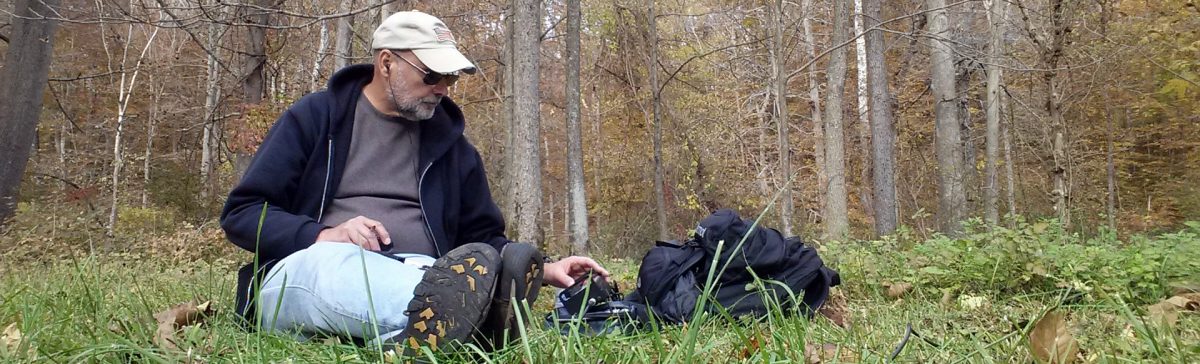
More Antenna Testing in Valley Forge

In my last post, I talked about using a simple antenna comprising a 15-foot radiator, a 7.5-foot counterpoise, and a 4:1 unun. It worked well, but I found it a little touchy to tune on 40M. Today, I tried the same configuration, but with a slightly longer radiator and counterpoise.

I wanted to add a little length to the radiator, but limit it to 19 feet, so I could still use my lightweight 19.5-foot telescoping pole to support it. Looking at a table of random wire antenna lengths to avoid, it seemed like 18 feet might be a good choice for 40M through 15M, my primary bands of interest. Scaling the counterpoise wire proportionately, I went with a length of 9 feet. 

Just as I was getting ready to cut a set of wires to try out, I stumbled on a video by Thomas K4SWL. In the video, he was using an antenna built by AD8HK that used a radiator length of 17’9” and a counterpoise length of 8’10.5”. I went with those dimensions, since they were very close to what I was considering and seemed to work with Thomas’s KH1.  

On the Air

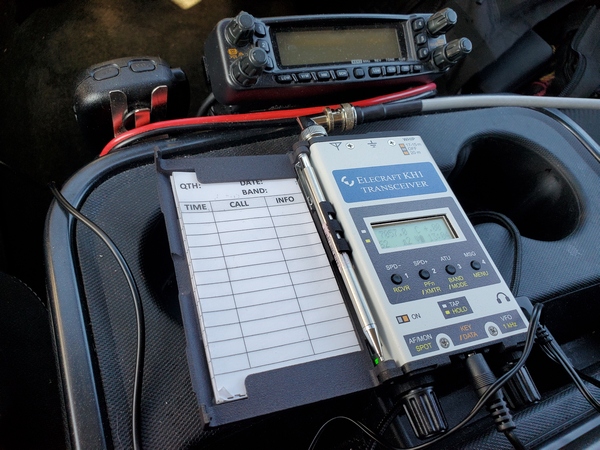
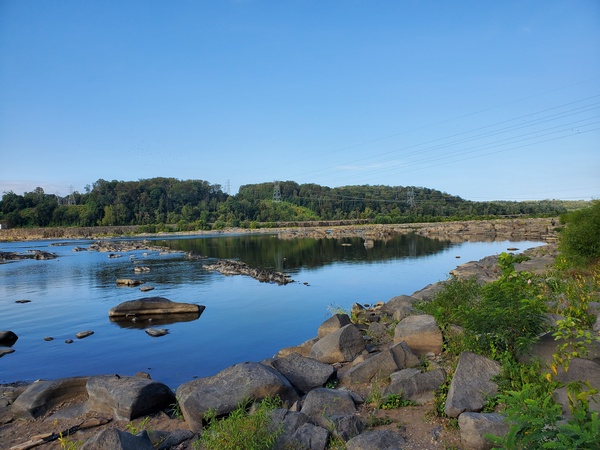
To try it out, I made a quick trip over to Valley Forge National Historical Park (US-0761, KFF-0761). Using the same 4:1 unun and coax as the last time, I made a quick check to see how my Elecraft T1 loaded up on the bands. The tuner quickly found a match on 40M, 30M, 20M. On 17M, however, it seemed to struggle. I went back to 40M and got started with my activation. 

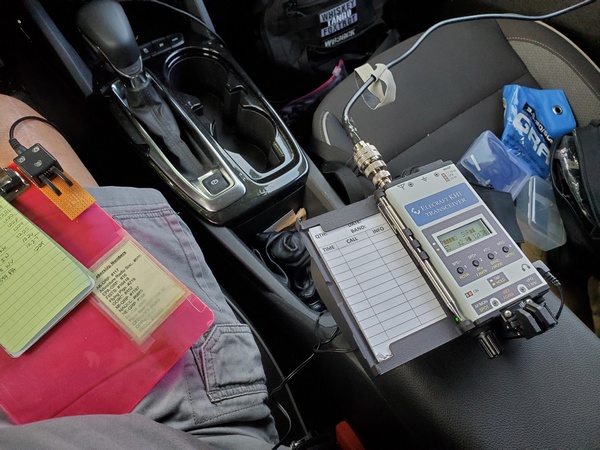
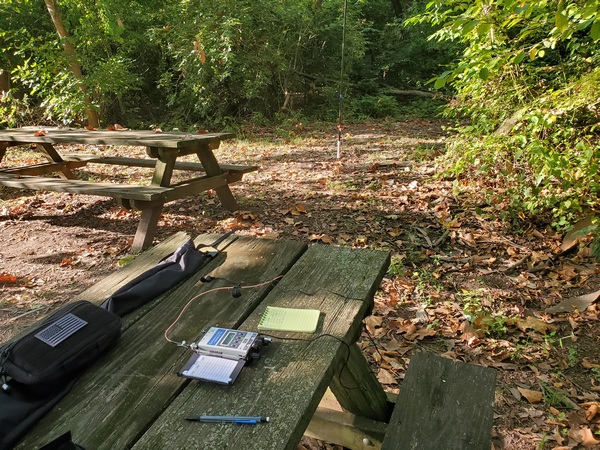
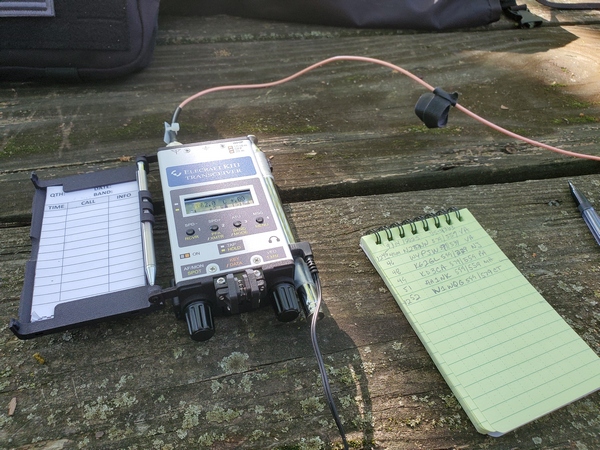
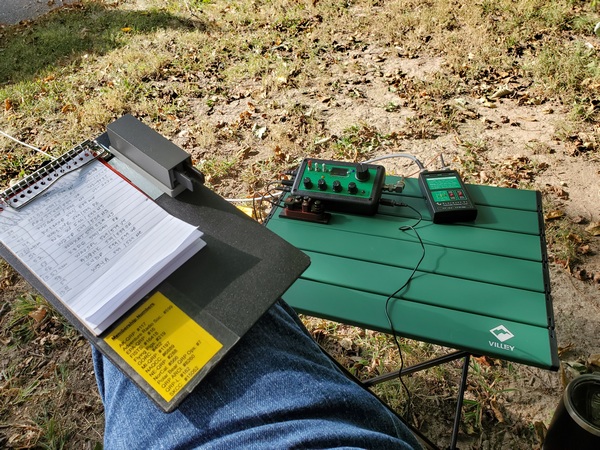
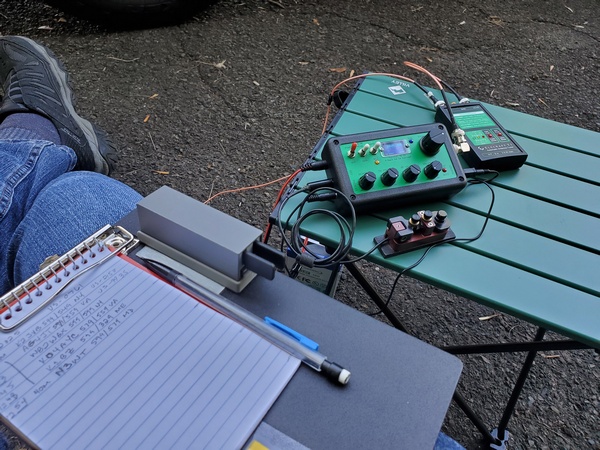
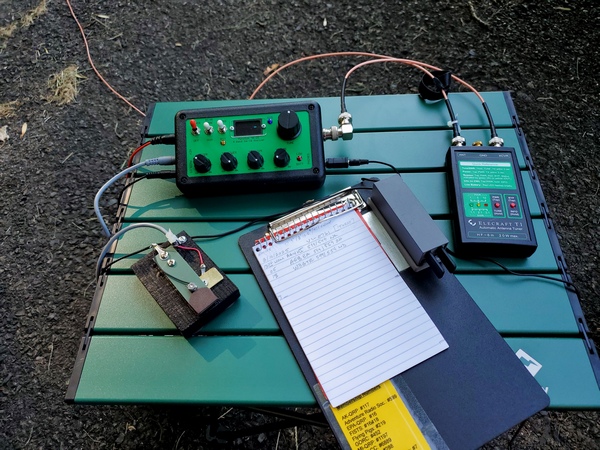
My radio equipment at Valley Forge NHP

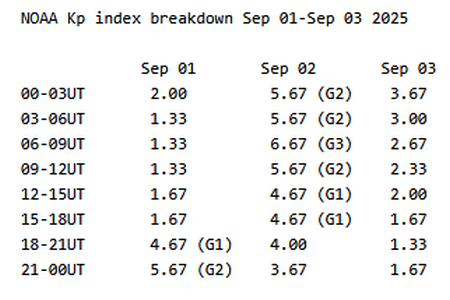
This wasn’t the best day to be doing this. The geomagnetic field was unsettled with a K index of 4 and the A index sitting at 47. Nevertheless, the callers showed up, although at a somewhat slower pace than usual. 

After I had 14 contacts in the log, I decided to spend the rest of my limited time playing around with the antenna. When I went back and checked 17M, the T1 tuned it up without flinching. I also rearranged the counterpoise wire so it ran 180 degrees opposite of my coax. Checking the bands again, the T1 reliably matched 40M through 17M. 

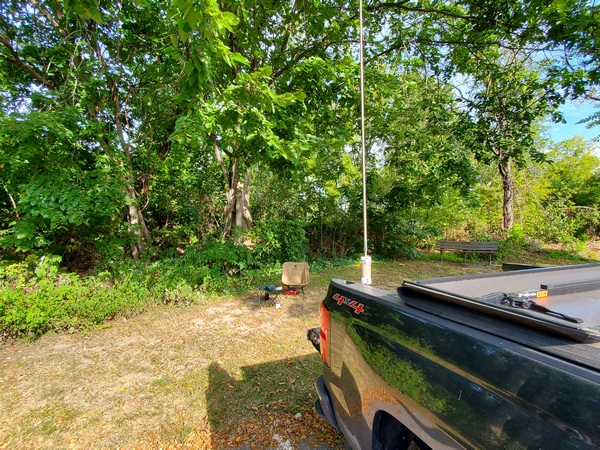
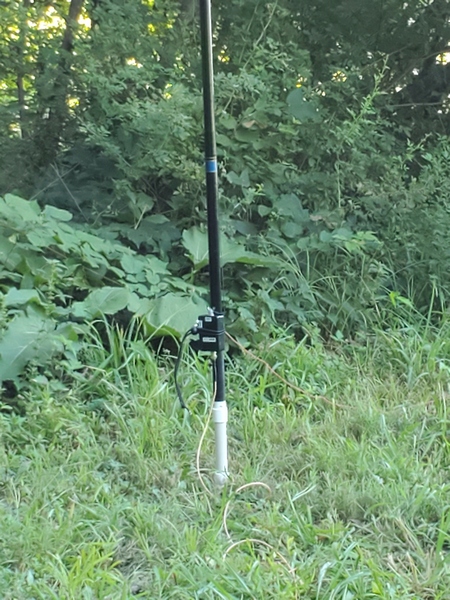
My antenna at Valley Forge NHP

Convinced that the new wire lengths work, I went back to the 15-foot radiator and 7.5-foot counterpoise I used a few days earlier. This time, the T1 had no issues loading up on 40M. Go figure! 

I really wanted to give the unun with the smaller ferrite core another shot. When I last tried it with the 15-foot & 7.5-foot wires, neither my KH1 nor my T1 could find a match on 40M. Unfortunately, I neglected to put it in my backpack before I left. I’ll have to save that for another time. 

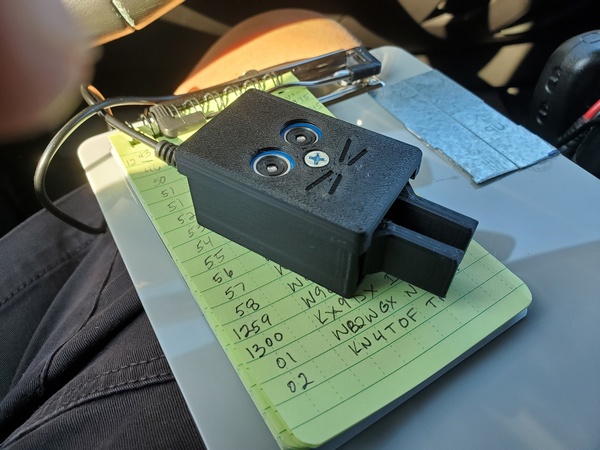
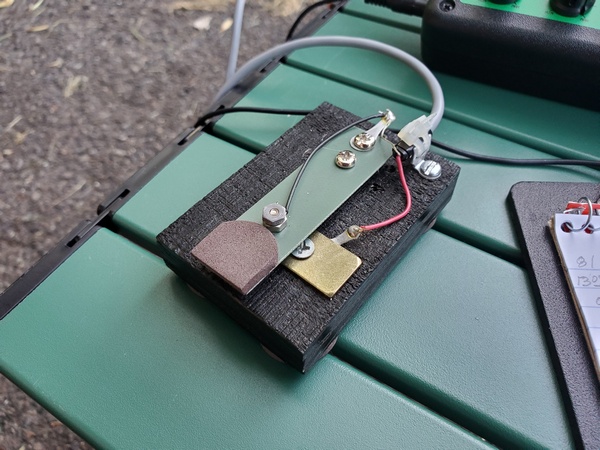
The Straight Key Century Club (SKCC) Weekend Sprintathon contest was going on this weekend, and I worked one SKCC station while tuning around the bands. This month, the WES theme was homebrew keys. In the spirit of the contest, I made the contact using a straight key I built a few years ago from junk box parts. 

My homebrew straight key constructed from odds and ends in my junk box
My homebrew straight key constructed from odds and ends from my junk box

Conclusions

So it looks like both the 15’/7.5’ and 17’9”/8’10.5” configurations are usable with my homebrew 4:1 unun. Given a choice, though, I would probably stick with the longer wires. 

One other thing is clear: short random wires can sometimes be finicky little critters.  When in doubt, rearrange the counterpoise wire.

72, Craig WB3GCK

Antenna Testing at Ridley Creek

On Wednesday, August 7th, I set out to do some antenna experimentation. So, why not get in a POTA/WWFF activation at the same time? To kill those two birds with one stone, I drove down to Ridley Creek State Park (US-1414, KFF-1414). (Disclaimer: No birds were actually harmed during this activation.)

I saw some discussion on the Internet about an antenna configuration I found intriguing. It’s just a 15-foot radiator and a 7.5-foot counterpoise wire fed through a 4:1 unun. Folks claim they work on 40M through 15M—with a tuner, of course. I’m a sucker for simple, field-expedient antennas, so I gave it a try during the recent Flight of the Bumblebees contest.

With the unun I used, I had mixed results. I couldn’t get the antenna to load on 40M, but it seemed to do fine on 30M through 15M. I wanted to try the same configuration, but with a larger 4:1 unun I built a several years ago. After cutting another set of 15-foot and 7.5-foot wires, I was ready to go.

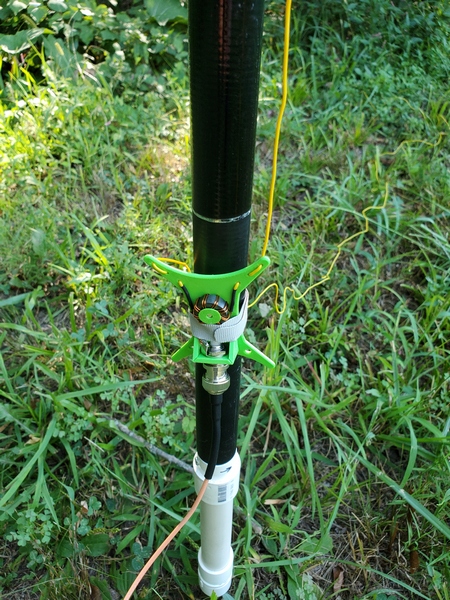
My antenna feedpoint

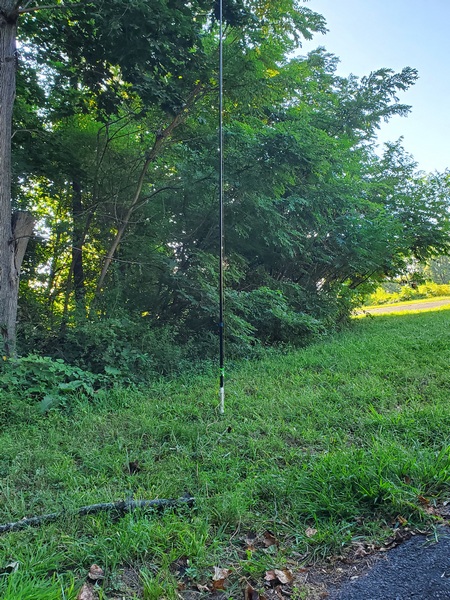
When I got to the park, I headed to a spot I had been using a lot lately. It’s off the beaten path and well away from the other park visitors. Using my homebrew ground mount, I set up the antenna on a lightweight 19-ft telescoping pole I bought years ago on eBay. I ran 20 feet of RG-316 coax over to my Penntek TR-35 and Elecraft T1 tuner. 

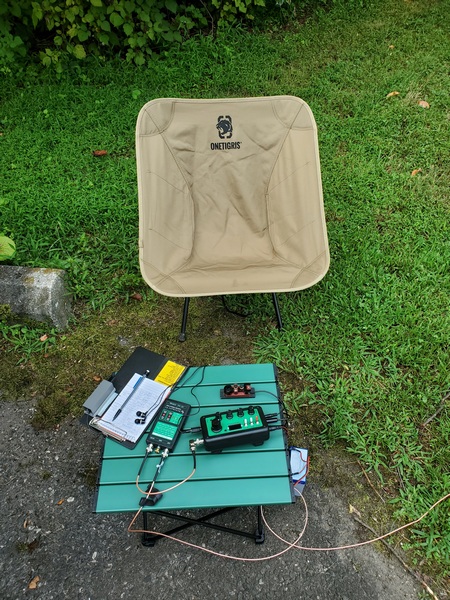
My operating position at Ridley Creek State Park
My operating position

Before I started my activation, I gave the antenna a quick check. The antenna was an easy match on 30M through 17M, but it took two tries before the T1 found a good match on 40M. 

Despite the slightly fussy tuning on 40M, the antenna didn’t do too badly on that band. I logged 12 contacts before the activity slowed down. I next tried 30M, but there were no takers. Moving up to 20M, I logged three more stations. Up on 17M, I worked one last station in Alabama. After an hour on the air, I had 16 stations in the log, including five park-to-park contacts. 

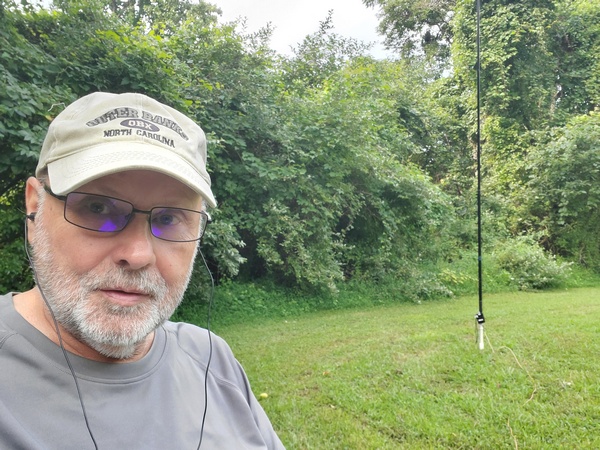
Selfie at Ridley Creek State Park with my antenna in the background
Something in the woods behind me was not happy with my presence. Fortunately, I never came face-to-face with whatever it was.

I had better luck with this antenna configuration this time around. The unun I used for this outing uses a larger iron powder toroid (T130-2, as I recall) compared to the smaller ferrite core used in the other unun. Also, the longer run of coax I used this time was probably a contributing factor. 

In any event, this configuration can definitely work. Granted, it’s a compromise antenna, but it’s super simple to deploy for casual operating in the field. Still, I think a slightly longer radiator would make for an easier match on 40M. 

I have another configuration in mind that I plan to try soon.

72, Craig WB3GCK
Marsh Creek with the HB-1B

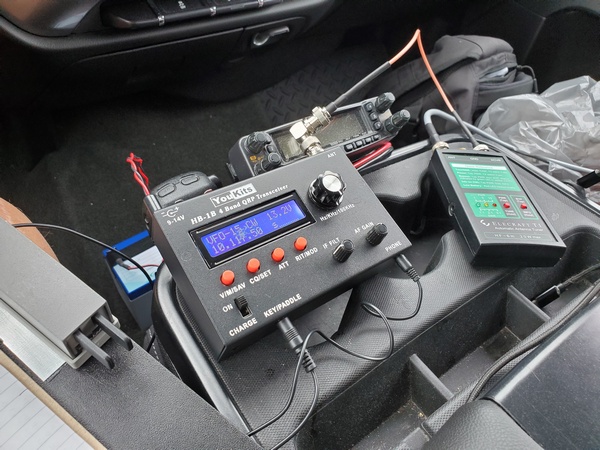
I normally have my old YouKits HB-1B nearby as a backup radio. In that role, it spends a fair amount of time tucked away under the backseat of my truck. I hadn’t used it in a few months, so I fired it up for a POTA/WWFF activation at Marsh Creek State Park (US-1380, KFF-1380). 

I rolled into one of my favorite spots on the western shore of Marsh Creek Lake. Being a weekday, the boat launch parking lot wasn’t nearly as crowded as it gets on weekends during the summer months. It was very hazy this morning from the smoke from Canadian wildfires. 

Hazy morning at Marsh Creek Lake

Besides the HB-1B, I used my Elecraft T1 tuner, a 17-foot whip, and my homebrew loading coil. I started out on 40M, and that band did not disappoint. It only took about 10 minutes to make my first 10 contacts. I stayed on 40M for about 30 minutes until the activity dwindled. 

My HB-1B transceiver during a POTA/WWFF activation at Marsh Creek State Park (US-1380/KFF-1380)
My trusty HB-1B getting some air time

I set the loading coil tap for 20M, but things were much slower there. I logged just two contacts on 20M, but one of them was F1BLL in France. After that, I switched to 30M and picked up three final contacts.

After a little more than an hour, I had logged 28 contacts. Among those contacts, I had three (known) park-to-parks and one DX contact.

The HB-1B really doesn’t like my cell phone. To prevent getting noise in the receiver, I had to keep my phone several feet away. Despite its quirks, the HB-1B still got the job done. 

72, Craig WB3GCK
The Disastrous Flight of Bumblebee 24

Actually, this bumblebee ‌barely got off the ground at all this year. It started off with a heartbreaking rig failure and ended with some horrendous local noise.

I had a late-breaking change of plans this week. I originally planned to operate in the Flight of the Bumblebees (FOBB) contest from a nearby POTA entity. Instead, I ended up in central Pennsylvania helping a family member recovering from a recent surgery.

So, I activated Plan B: take my new KH1 along and make a few contacts from the backyard. What could go wrong with that? A lot, as it turns out.

Using my homebrew ground mount, I set up a new antenna on my lightweight telescopic pole. The antenna comprises a 15-foot radiator and a 7.5-ft counterpoise fed through a 4:1 unun. (More about that antenna in another post.) I ran a 6-foot length of RG-316 coax over to the KH1. 

I easily got a 1:1 match on 20M and up, but it wouldn’t load up at all on 40M. Going back to 20M, I started operating. Something on the display didn’t look right. It turned out that I wasn’t getting any power output. When I pressed the ATU button, I heard some relay clicking, but there was no power or SWR displayed after tuning. When I keyed up, the display showed zero bars of power and one bar for SWR.

I checked to make sure I wasn’t in “Test” mode (I wasn’t). Next, I started pouring through the settings to make sure I hadn’t messed something up. Nothing looked out of the ordinary to me. I tried the built-in whip on 20M, but still no power out.

After spending an inordinate amount of time playing around with the KH1, I packed it up and brought out my Penntek TR-35. My trusty Elecraft T1 ATU also refused to load up on 40M.

WB3GCK equipment set up for the 2025 Flight of the Bumblebees contest

So, 20M was the only band working for me, given the rig I was using. I could have set up a different antenna, but I didn’t have that much time. 

The 20M band had some horrendous local noise, so it was rough going. I worked one bumblebee in Missouri, and that was it. Frustrated with my inability to hear any other FOBB activity through the noise, I called it quits. I needed to get back inside to take care of a few things, anyway.

Having owned my KH1 for less than a week, you can imagine my disappointment. I shot off a message to the support folks at Elecraft, so hopefully, they can help get this issue resolved before I head down to North Carolina on vacation next month. (Fingers crossed)

I hope you all did better in the contest than me.

72, Craig WB3GCK

I Went and Did It

I’m at the stage in my life when I should be “thinning the herd” when it comes to radios. So, what do I do? Instead of getting rid of some stuff, I fire off an order to Elecraft for a KH1 Edgewood package. I need another QRP rig like a hole in the head, but after considering it for the past year, I gave in and ordered one. 

I have a couple of use cases in mind for the KH1. This rig should be ideal for bicycle-portable outings and hopefully get me out on some hiking trails—within the limits of my arthritic knee, of course. 

I have to admit that after I placed the rig in my online shopping cart, it took me several minutes to convince myself to press the “Submit” button. Less than 24 hours later, I received a shipping notice from Elecraft. 

While waiting for the KH1 to arrive, I watched a bunch of YouTube videosread serveral blogs, and downloaded the manual. With those resources, I was thoroughly prepared when the Post Office delivered it.

What I wasn’t prepared for was exactly how tiny this thing is. Even with the research I had done, I didn’t fully appreciate its diminutive size until I had it in my hand. It’s amazing how much functionality Elecraft was able to cram into this little rig.

WB3GCK's Elecraft KH1
My new rig at US-0761/KFF-0761

Some Initial Impressions

Menus. I prefer radios that are simple to operate without a bunch of complicated menus. That’s one reason I love my Penntek TR-35 so much. There are a lot of menu options provided through the four pushbuttons on the KH1’s front panel. Elecraft, however, has come up with a scheme that makes navigating the menus very intuitive. 

Paddles. The Elecraft KHPD1 paddles included with the Edgewood package will take some getting used to. I typically prefer paddles with a light touch, like my trusty Palm Mini paddles. I played around with the Elecraft paddles with the rig in the “Test” mode. It didn’t take too long before I could send coherent code with them. We’ll see how I do in the field. Fortunately, there are several after-market paddles for the KH1 if I decide to go that route.

Overall Ergonomics. It’s clear that a lot of thought has gone into the clever design of the KH1. Everything from the logging tray to the self-contained pen is nothing short of genius. I’ve never used a handheld HF rig before, so using the logging tray will take some getting used to.

Maiden Outing

The day after I received the KH1, my (far) better half suggested I go out and give the new radio a try. Of course, I took her suggestion, but I had some reservations. There was some geomagnetic craziness going on, plus the higher bands could be tough early in the morning. Nevertheless, I packed up the KH1 and headed off to Valley Forge National Historical Park (US-0761, KFF-0761).

I started off using the KH1 handheld with the telescopic whip while sitting on top of a picnic table. Using the stock counterpoise wire on the ground, the KH1’s internal ATU easily found a 1:1 match. The bands were really rough, but I made seven contacts that way. It took the better part of an hour to make those contacts, however. Six were on 20M and one was on 17M.

WB3GCK with the Elecraft KH1 at US-0761/KFF-0761
A Boy and His Toy

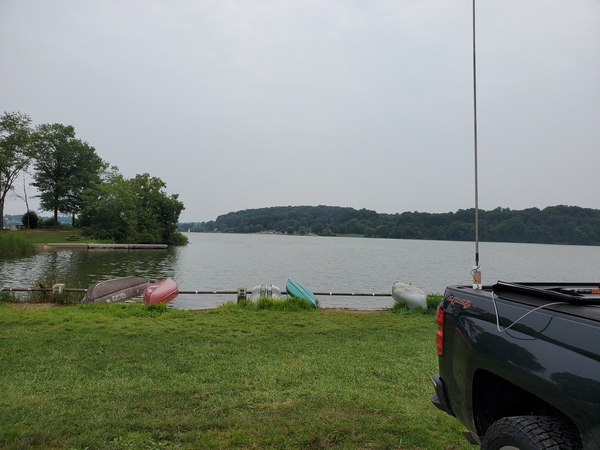
I wanted to try the lower bands—and my rear end was sore from sitting on the table—so I walked back to the parking lot and set up a 12-foot loaded whip on my truck. Sitting on a camp chair next to the truck, I bounced around the bands. I ended up with one contact on 40M and three more on 20M. Out of my 11 contacts, four were park-to-park. 

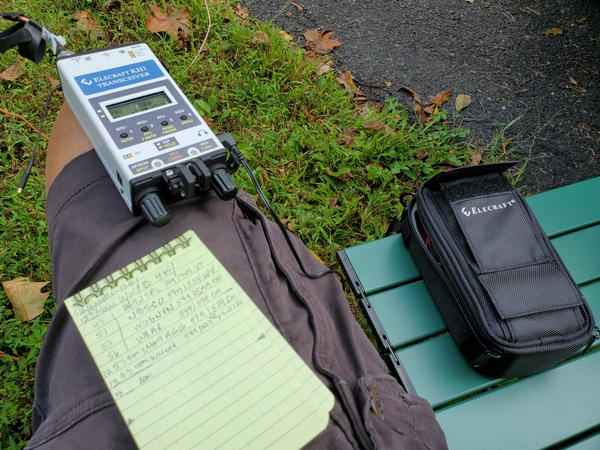
Using the logging tray was a challenge. Writing while holding the rig in my hand was tough. Sitting in a chair with the radio resting on my knee was a little easier. My handwriting was pretty sloppy but still readable. 

With enough contacts for the activation, I declared victory and went home. 

Wrap-Up

I’m definitely not an early adopter with new gear. The KH1 is no exception. Elecraft announced the KH1 in the fall of 2023. Since that time, they have made improvements to the paddle and added new features via the firmware. Plus, by waiting to buy one, I got to learn from the users who jumped on the KH1 bandwagon early on. Thanks to the legions of YouTubers and bloggers for sharing their experiences with this rig. You made it easy for me to get up and running with it.

After the intial outing, I am thoroughly impressed with the KH1. With earbuds, the receiver sounds great, and the rig was super easy to use.

This little rig is going to see a lot of future use in the field. 

72, Craig WB3GCK
Gabil on the Table

Wanting to take advantage of the excellent weather today, I drove up to Evansburg State Park (US-1351, KFF-1351) for a quick morning activation. I wanted to give my Gabil GRA-7350TC vertical some air time, so I tossed it into the truck and headed out to the park.

The picnic table I planned to use had been moved from its usual spot. Not wanting to drag the heavy table back to where it belongs, I set up at a table I have used previously. It’s close to a hiking trail, so I needed to make sure my radials wouldn’t be a trip hazard for passersby. 

I set up the Gabil antenna on its tripod at one end of the table. To facilitate tuning, I set up my Penntek TR-35 (5 watts, CW) and Elecraft T1 ATU within arm’s reach of the antenna. I meant to bring a 3-foot coax along, but it didn’t make it into my backpack. A 10-foot cable was the best I could do, so I just coiled up the excess. (Note to self: Keep a 3-foot cable in the backpack.)

I started out on 40M, so I laid out a 33-foot counterpoise wire on the ground. I reached for my little SWR meter, but it wouldn’t power on. It had been a while since I had last charged it, so the battery appeared to be dead. I ended up adjusting the antenna for maximum noise in the receiver and used the T1 to do the final matching. 

After I had a few contacts in the log, I changed over to 20M. I built my 33-foot counterpoise wire so I could split it into two 16.5-foot wires. After laying out the two counterpoise wires, I tried to peak the noise. No joy. I just couldn’t find a discernible peak. 

Just then, I remembered I had a 12-volt power cable for the SWR meter. Duh! Why didn’t I think of that sooner? After temporarily disconnecting the TR-35, I used the battery to power the SWR meter. I quickly got the antenna adjusted to a 1.3:1 SWR. I reconnected the TR-35 and got started. (Note to self: Throw a Powerpole splitter in the backpack.)

The action was relatively slow-going this morning, but there were a fair number of activators on the air. After a little over an hour, I had 14 contacts, nine of which were park-to-park. 

Despite some minor glitches, it was an enjoyable morning operating in the park.

72, Craig WB3GCK
WES & POTA at Ridley Creek

I made some contacts in the monthly Straight Key Century Club (SKCC) Weekend Sprintathon (WES) this morning and completed a POTA activation while I was at it. My operating site today was Ridley Creek State Park (US-1414, KFF-1414).

I rolled into one of my favorite spots and set up my table and chair in the grass behind my truck. From previous activations, I knew this spot always has lots of shade. Of course, with the heavily overcast skies this morning, sun exposure wasn’t much of an issue. 

I mounted a 17-foot whip and my homebrew loading coil on my truck and ran some coax back to my operating position. Rig-wise, I used my Penntek TR-35 (5 watts, CW), Elecraft T1 tuner and my little American Morse MS2 straight key

WB3GCK's radio setup at Ridley Creek State Park (US-1414, KFF-1414)

My strategy today was to operate in the WES for an hour. If I hadn’t reached 10 contacts by then, I planned to break out the paddles and finish up as a POTA activator. 

It was a good thing I had a “Plan B.” After an hour, I had only scratched together six WES contacts. I don’t know if it was the unsettled geomagnetic conditions or just a lack of early morning participants, but I didn’t hear much WES activity on 40M and 20M. 

WB3GCK operating in the SKCC WES contest at Ridley Creek State Park (US-1414, KFF-1414)

After spotting myself on the POTA and WWFF websites, I easily made the requisite 10 contacts on 20M plus three more for good measure. One of those contacts was a park-to-park. 

It wasn’t my best outing, but far from my worst. Even with the humid weather and the occasional mosquito, it was nice to do a little outdoor operating and log some familiar SKCC and POTA callsigns.

72, Craig WB3GCK

Independence Day at Valley Forge

Operating from Valley Forge National Historical Park (US-0761, KFF-0761) on the 4th of July has become something of a tradition for me over the years. I expected the park to be busy today, so my plan was to get out early before the picnic-goers arrived en masse. Then, get home to spend the rest of the day with my (far) better half. 

I headed to a spot in one of the picnic areas that has some shade in the morning. Today, I used a 17-foot telescopic whip on my homebrew loading coil on the truck, along with my little Penntek TR-35 (5 watts, CW). An 18-foot length of coax was more than enough to reach my operating position.

My setup at Valley Forge National Historical Park

Speaking of my operating position… I set up my camping chair and table on a paved area next to my truck. Normally, I would set up in the grass behind the truck, but the grass was a little high and the ticks have been bad this year. In fact, I found one strolling across my notepad at one point. 

WB3GCK operating from Valley Forge National Historical Park

I started off on 40M, and things got off to a fast start. It was probably a combination of decent band conditions and it being a holiday. Regardless, the hunters pounced on me within a minute of posting my spot. It didn’t take long to make my first 10 contacts.

After things slowed down on 40M, I gave 30M a try. That band produced just a single contact. I moved up to 20M and found a little more action up there. After an hour and 10 minutes, I started losing my shade, so it was time to wrap things up. I finished up with 31 contacts, including five park-to-park contacts.

Around that time, I saw a teenager casually throw some trash on the ground before getting in their car to leave. This was only about 10 feet away from where I was sitting. Unbelievable, since they had to drive past the trash cans on their way out of the parking lot. After I loaded up the truck, I grabbed a plastic bag and cleaned up the mess that was carelessly left behind. Apparently, my parents taught me better.

Littering incident notwithstanding, it was a fun little activation this morning. I hope my fellow citizens have an enjoyable and safe 4th of July holiday.

73, Craig WB3GCK

Boschveldt QRP Field Day 2025

Another Boschveldt QRP Club Field Day is in the books. This year’s outing was a little different for our little group. Besides operating with a skeleton crew, we had a few weather challenges. But that’s part of Field Day, I suppose.

Once again, a local business owner gave us permission to set up camp on his property for the weekend. We had some storms Thursday night and steady downpours on Friday morning, so I wasn’t sure what the condition of the field would be for the weekend. There have been some years when one end of the field became a swamp. It wasn’t as bad this year, but it was close.

When I arrived Friday afternoon. Ed K3YTR had already set up his teardrop camper. I headed down to a spot I usually use. The ground down there was a little soggy, but I decided to set up my tent there, anyway. That was a decision I would come to regret. 

The area in front of my tent got muddier as the weekend progressed. The ground underneath the tent was just as bad.
The area in front of the tent got muddier as the weekend progressed. The ground underneath the tent was just as bad.

In the process of setting up, my walking in and out of the tent turned the area into a mud pit. I briefly toyed with tearing it down and moving it across the field, but I didn’t have the energy at that point. We had more rain overnight, so the conditions around my tent only got worse. 

On Saturday morning, Andrew K2AFO arrived to spend the day operating with us. He was using a new Xiegu G90 and set about getting his end-fed halfwave up into a tree. In the process of doing that, his paracord got looped around a couple of branches and tied itself into a knot. It took a 28-foot Jackite pole, a tent stake, and some duct tape to free the paracord. Talk about some serious “MacGyvering!”

Andrew K2AFO operating in his first Boschveldt QRP Club Field Day
K2AFO using some advanced "MacGyvering" technigues to free his stuck throwing line
K2AFO using some advanced “MacGyvering” technigues to free his stuck throwing line

This year we operated as 2A EPA, using our club callsign, W3BQC. As you might expect for a QRP club, we ran QRP on battery power. I ran CW using my KX3 and a 29.5-foot vertical fed through a 9:1 unun. Ed K3YTR operated on 6M and 2M, while Andrew operated SSB using his new G90. 

K3YTR's set up for 6M and 2M
K3YTR’s set up for 6M and 2M

On Saturday night, we headed out to a local restaurant for dinner (and some air conditioning). Andrew’s wife, Emily K2MLE, joined us for the evening. After enjoying a nice dinner (and some air conditioning), we headed back to our Field Day for a campfire. (Did I mention that Boschveldt Field Days are decidedly laid-back?) Observing a long-standing Boschveldt QRP tradition, we roasted marshmallow Peeps® over the campfire. 

We had yet another storm heading towards us, so Andrew and Emily packed up and headed home, while K3YTR and I headed into our respective shelters. I operated on and off through the night, but dealt with some heavy QRN on 80M and 40M. 

After getting some coffee and breakfast on Sunday, I had one last session on the radio. This time around, 40M was in much better shape. After that, Ed and I started tearing down and packing up. My tent and tarps were a real mess, so I just rolled everything up and shoved it in the truck. Needless to say, I have some gear to clean up this week. 

Each year, our Field Day outings are an adventure. Although this one had some minor challenges, it was fun. Plus, we have some more stories to tell at future get-togethers.

I hope your Field Day activities were successful.

72, Craig WB3GCK

Getting Ahead of the Heat

Today was shaping up to be the first day of a five-day heatwave here in southeastern Pennsylvania. Since there are excessive heat warnings in place for the next few days (and I don’t hold up too well in the heat these days), I went out for an early morning activation to beat the heat.

I drove up to Evansburg State Park (US-1351, KFF-1351), since my last visit was back in March. Because of a medical condition, I need to be careful with sun exposure. So, I looked around until I found a shady spot where I could set up my radio and use an antenna on my truck. My rig today was my Penntek TR-35 (5 watts, CW) and my 12-foot loaded whip mounted on my truck.

My rig at Evansburg State Park

I started on 40M, and it didn’t take long to make my first 10 contacts. The Reverse Beacon Network (RBN) was reporting some strong hits from my 5-watt signal. After logging 15 contacts, I did some hunting and logged a few park-to-park contacts. 

The 30M band was pretty quiet, yielding only 2 contacts. I had a little better luck on 20M, but the band conditions there weren’t all that great. I shut down after about an hour and a half, with 26 contacts in the log. Considering the early hour, I was satisfied with that. 

WB3GCK operating in a wooded site in Evansburg State Park

In the end, it wasn’t the heat that was the problem today; it was the bugs. I was the target of both air and ground assaults by tiny mosquitos and huge ants. That was to be expected, I guess, since I was sitting in a wooded area on a warm day. 

I hope the weather is better for Field Day next weekend. The extended forecast shows lower temperatures here, but a chance of rain on Saturday. Oh well, at least the heatwave will be over by then. 

72, Craig WB3GCK