Crowded Activation at Valley Forge

I made a quick trip over to nearby Valley Forge National Historical Park (US-0761, KFF-0761) this morning. It almost didn’t happen, but it turned out to be a fun morning.

Located a few miles from my home, Valley Forge has always been one of my favorite places for QRP-portable operations. During the winter months, I usually operate from a trailhead away from the main areas of the park. When I rolled in this morning, I couldn’t believe how crowded it was. It’s usually a popular place, but this was different. The parking lot was full, with a few folks even parking on the grass. There were a few sizeable groups of hikers/walkers gathering, which accounted for the crowded conditions. I was about to leave, when a parking spot in the middle of the lot opened up. 

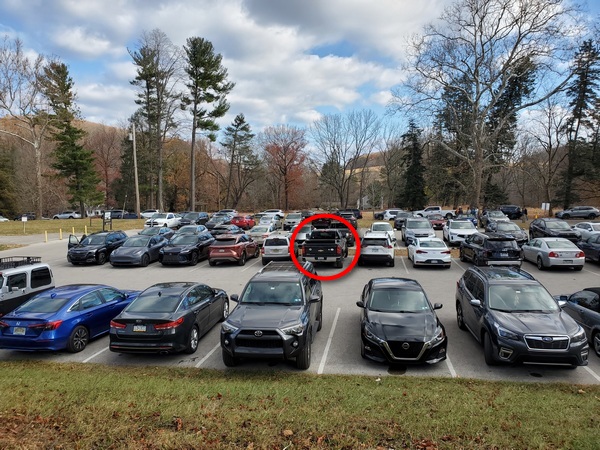
That's me in the middle of all those cars
That’s me in the middle of all those cars. Fortunately, my location didn’t impede my efforts on the air.

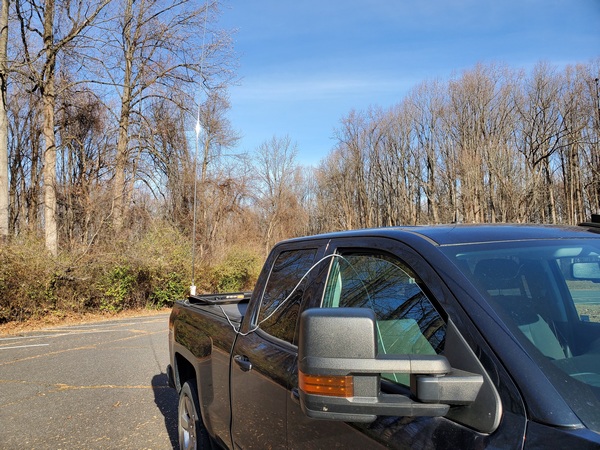
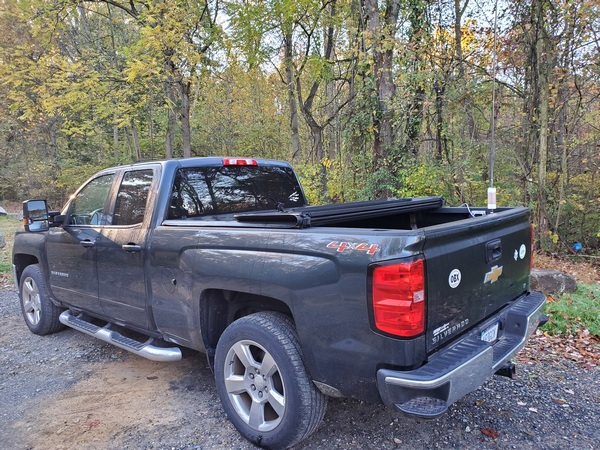
It was a beautiful, albeit windy, morning. I was hoping to get a spot where I could operate from the tailgate, but that was not to be. One of the hiking groups had occupied the only picnic table, so I operated “stationary-mobile” from the middle of the parking lot. I used my usual TR-35 (5 watts, CW) and 12-foot loaded whip

The bands were as busy as the parking lot I was in. There were a ton of hunters out on 40M, so I made my first 10 contacts in less than 10 minutes. After logging 20 contacts on 40M, I moved up to 20M, where it was just as active and produced some DX contacts. Same goes for 17M. After an hour and 20 minutes, I had logged 41 contacts, of which four were known park-to-park contacts. 

Some highlights from this morning:

  • Working 10 European DX stations: Germany (3), Belgium (2), Slovak Republic (2), France, Poland, and Slovenia
  • Working three of my fellow Polar Bear QRPers: VE3DN, VA2NW, and VE3WMB (P2P)
  • Getting calls from a couple of fellow QRPers I haven’t worked in a while: Dave K1SWL and Fred KA4RUR

Although my location wasn’t all that great, it was a fun activation this morning. 

72, Craig WB3GCK

Mini Rove

Earlier this week I had a day without my usual obligations, so I planned to do a POTA/WWFF activation somewhere. I was originally thinking of visiting one of my usual local parks. My (far) better half, however, suggested I take advantage of my free day to activate some parks in the other end of the county I had been planning to re-visit. She’s always right, so off I went.

The first stop was White Clay Creek Preserve (US-6433), which I last activated a year ago. With Monday morning rush hour traffic, it took over an hour to get to this park near the Pennsylvania-Delaware border. 

My location at White Clay Creek Preserve (US-6433)

When I finally got there, I set up my 12-foot whip and homebrew loading coil, along with my Penntek TR-35 (5 watts, CW). I fired up the rig on the 40M band and encountered a horrendous noise level. It was so bad, I didn’t even try to use the band. This was my fourth activation at this location, and I can’t recall running into noise issues like that. I ended up splitting my time between 30M and 20M. Those bands had some noise, but nowhere near as bad as 40M. 

Despite the local noise, band conditions were pretty good. After 45 minutes, I had 28 contacts in the log. No DX today, but I had one park-to-park contact. After taking the antenna down, I took a short, three-mile drive over to Big Elk Creek State Park (US-9721, KFF-6093).

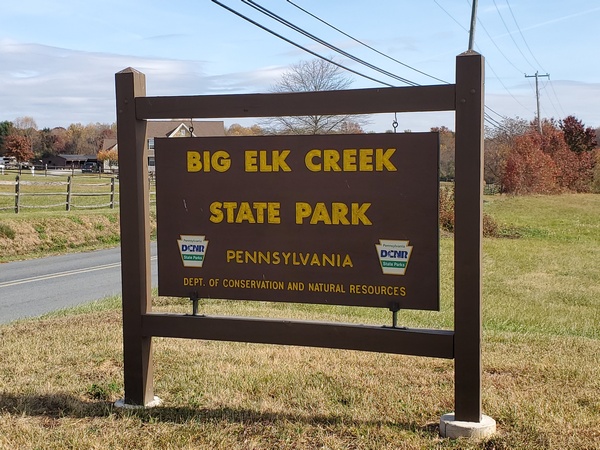
Situated on the Maryland border, Big Elk Creek became a state park in 2022. My first activation there was about two months after POTA added the park. Two years ago there were no amenities whatsoever. This time, I found the trailhead now had a gravel parking lot, portable toilet, and some picnic tables. 

When I last visited this trailhead in Big Elk Creek State Park (US-9721, KFF-6093) it was just a dirt parking lot. Now there's a gravel parking lot, portable toilet, and some picnic tables.
When I last visited this trailhead in Big Elk Creek State Park (US-9721, KFF-6093) it was just a dirt parking lot. Now there’s a gravel parking lot, portable toilet, and some picnic tables (off camera).

I used the same setup as the previous park. Thankfully, I didn’t have to deal with noise problems. I made a few contacts on 40M before moving up to 20M and 17M for the rest of the activation. Besides the POTA spotting page, I spotted myself using the smartWWFF app. That brought out the Europeans, especially on 17M: 

  • Finland
  • France (2)
  • Germany
  • Slovak Republic (2)
  • Slovenia
  • Latvia
  • Italy

Activating under both the POTA and WWFF programs certainly increases the number of hunters out looking for you. 

In a little over an hour, I had 35 contacts with four park-to-park contacts. I briefly thought about making a quick trip into Delaware to activate White Clay Creek State Park, but saved that one for another time. 

All in all, it was a fun way to spend my free day. I’m glad I listened to my (far) better half.

72, Craig WB3GCK

Plan B with the (tr)uSDX

I planned to activate two parks at the other end of the county this morning. Given the travel time involved, I figured I’d need to leave the house around 0700 local time, to get back home in time to take care of a few things this afternoon. I’m always up super early, so I didn’t need an alarm clock. Hah! Of course, I slept in this morning. 

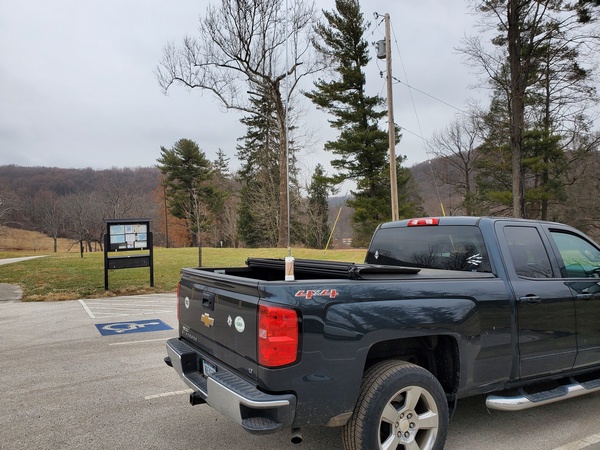
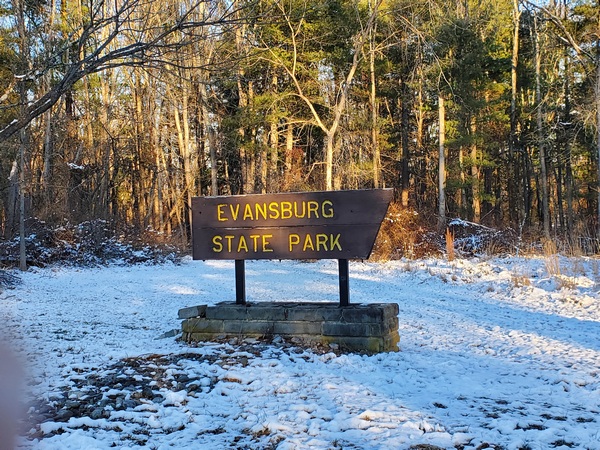
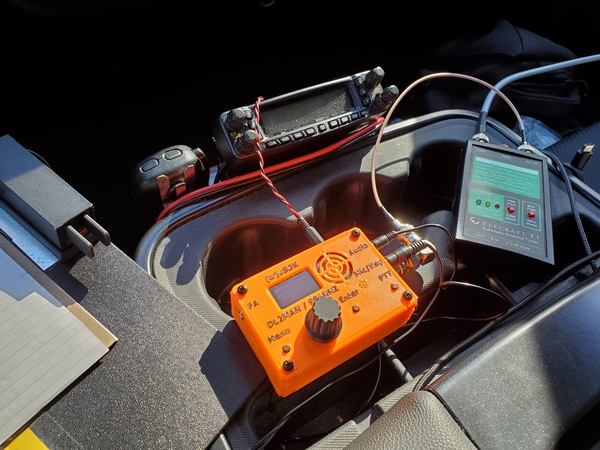
I needed a Plan B, so I stayed close to home and headed up to Evansburg State Park (US-1351, KFF-1351). To switch things up a bit, I opted to give my (tr)uSDX another shot at a POTA activation. Along with the (tr)uSDX I used my 12-foot whip, homebrew loading coil, and my Elecraft T1 ATU.

My (tr)uSDX in use at Evansburg State Park (US-1351, KFF-1351)

Although I got off to a slow start on 40M, things picked up significantly when I moved to 30M and 20M. An hour and twenty minutes later, I had 30 contacts in the log. No DX today, but I did have one park-to-park contact. Thanks to WA2QLK for hunting me on two bands.

The little (tr)uSDX got the job done. Since my last activation with it, I tweaked a couple of settings, which made the receiver a little easier to listen to:

  • AGC = OFF
  • ATT2 = 1

I also calibrated the frequency. The Reverse Beacon Network (RBN) confirmed that the frequency readout is right on the money. The sidetone still has some clicks and pops, but overall the little rig was better this time. It’s a fun little radio, although probably not my first choice for POTA activations.

I’ll have to get down to those other two parks another time. Next time I’ll use an alarm clock. 

72, Craig WB3GCK

Drive-by Activation at US-8941/KFF-5862

My (far) better half and I spent some time with family in central Pennsylvania over the weekend. Our busy weekend didn’t leave much time for a POTA/WWFF activation, but I was determined to get out to a park. The result was a brief but successful activation at Pennsylvania State Game Lands 246 (US-8941, KFF-5862).

I’m a notorious early riser, so I was the first one up on Sunday morning. After sunrise, I loaded up the truck and scraped the frost off the windshield. It was about 0740 local time (1140 UTC) when I headed out. SGL 246 is only a few miles away, so I was on site and operational by 0800 local (1200 UTC). I used my Penntek TR-35 (5 watts, CW) and 12-foot loaded whip. 

WB3GCK at PA State Game Lands 246

I started on 40M and ended up staying there. I kicked things off hunting a park-to-park QSO, before finding an open frequency and calling CQ. A minute or two after spotting myself, I had a pile-up on my hands. A steady stream of callers kept me busy for the next 30 minutes—and it was pretty hectic at times. 

My initial plan was to just make my 10 contacts and head back to the house. However, my half-hour activation yielded 29 contacts, far exceeding my expectations. I also had three park-to-park QSOs in my log. 

The 40M band was amazing. I guess it was a combination of good band conditions and being a POTA Support Your Parks Weekend. Whatever it was, the hunters were up early and out in full force. 

About 15 minutes after my last contact, I was back at the house and just in time for breakfast. It was a chilly morning, so that second cup of coffee hit the spot.

OK, so it wasn’t exactly a “drive-by” activation, but it was certainly a short one.

72, Craig WB3GCK

Sprinting in the Park

No, I wasn’t running through the park. I was operating in the Straight Key Century Club’s Weekend Sprintathon contest from a POTA/WWFF entity. I ended up with two POTA/WWFF activations as a result. 

On Saturday morning, I drove over to Norristown Farm Park (US-4363, KFF-4363), which has become one of my favorites. It was pretty chilly when I started, so I set up in the truck. (That turned out to be a poor decision.) I used my Penntek TR-35 (5 watts) and my trusty 12-foot loaded whip. I used my little MS2 straight key for the SKCC contacts.

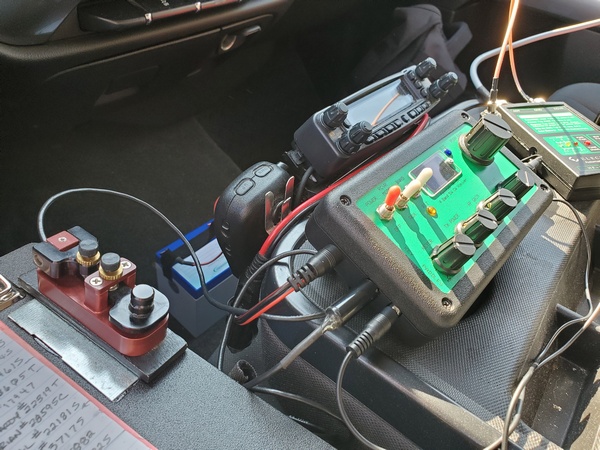
My setup in the truck on Saturday. My little American Morse MS2 straight key looks unusual but has a great feel.
My setup in the truck on Saturday. My little red American Morse MS2 straight key looks unusual but has a great feel.

My plan was to operate in the WES and only spot myself on the POTA and WWFF websites if I had trouble making my 10 contacts. The band conditions had improved significantly from the severe geomagnetic storms over the previous couple of days, so I was optimistic. 

Starting out on 40M, I was pleasantly surprised to find a bunch of SKCC stations. I worked 13 WES stations on 40M before moving up to 20M to work a few more. SKCC WES contacts come at a slower pace than POTA contacts, so after an hour and 20 minutes, I only had 16 contacts. I was happy with that, though. 

By that time, the temperature had gone up, and the sun was beating down on the windshield. It was really getting hot in the truck, so I pulled the plug and packed up for the day. 

On Sunday morning, I went back to Norristown Farm Park for more of the SKCC WES. This time, I operated from the tailgate of my truck. I rarely do that, because the tailgate is too high off the ground. I had backed the truck up to a slight slope, so my chair was a bit higher than if I had been on flat ground. Still, it wasn’t all that comfortable for keying. I ended using my clipboard on my lap. My equipment was the same as the day before.

Operating from the tailgate on Sunday morning.

This time there was much less SKCC activity on 40M. Despite numerous CQ calls, I only logged four WES contacts. So, I made the command decision to spot myself on the POTA website and switch over to the paddles. The activity picked up dramatically after that.

This time I ended up with 21 contacts, which included three park-to-park QSOs. All together, I made 20 SKCC WES contacts over the weekend, which is not too bad for me. 

I’ll have to try this again for next month’s Weekend Sprintathon. 

72, Craig WB3GCK

Equipment Failure but Activation Success

Another busy weekend here in my neck of the woods. We had a family get-together in central Pennsylvania on Saturday, and I took part in a public service event with my local ARES-RACES group on Sunday. Despite everything going on, I squeezed in a short POTA/WWFF activation on Saturday morning before heading out of town.

I chose a spot in Valley Forge National Historical Park (US-0761, KFF-0761) that’s only a few miles from home. The parking lot serves as a trailhead for a popular trail, and it can be a busy place during the summer months. It wasn’t too bad today. 

My original plan was to use some different gear and try out some antenna configurations. Being pressed for time, I went with my usual setup, which I knew—or thought—would work. That, of course, was my Penntek TR-35, Elecraft T1 tuner, and my 12-foot whip and homebrew loading coil combination. The SWR is a little higher on 40M and 30M, so I use the T1 to keep the rig happy.

I scanned the 40M band, and it was hopping. I planned to pick off some park-to-park QSOs before setting in on a frequency to call CQ. When I hit the T1, it didn’t even try to find a match, and the LEDs showed a 3:1 (or higher) SWR. I tried other bands, including ones I knew were close to 1:1, and the T1 wouldn’t budge. 

I couldn’t remember the last time I changed the battery, so I put in a fresh one. No go. Next, I ran through the T1’s internal diagnostics. Nothing out of the ordinary there that I could see. On (very) rare occasions over its 11 years of service, the T1 would get fussy and refuse to match certain bands. Just running through the diagnostics seemed enough to clear up those issues—but not today.

I disconnected the T1 and went straight from the TR-35 to the antenna. The truck-mounted whip has very low SWR on 20M and 17M, so I confined my operation to those bands. 

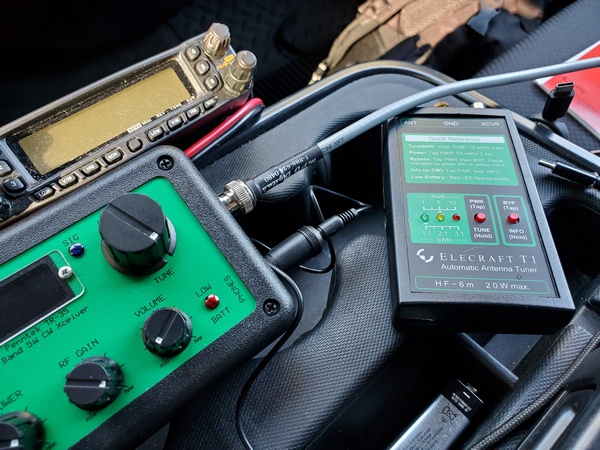
My ailing T1 after disconnecting it
My ailing T1 after I disconnected it

Fortunately, 20M was in great shape for 0930 (local time), and I had a steady stream of hunters. I needed to leave at 1000 (local), and I had spent an inordinate amount of time playing around with the T1. However, my 30-minute activation netted me 26 contacts with two of them park-to-park. Most of the contacts were on 20M, but I had five on 17M before pulling the plug. 

I drove back home, saddened that my trusty T1 was having issues. It has been so reliable over the years that I just took for granted that it would always work and match whatever antenna I was using. 

Back at home, I did a couple of quick checks with different antennas, but no joy was to be had. I suspect a stuck relay, but I’m not really sure how to discern that from the internal diagnostics routine. I bought it assembled and tested, so I’ve never poked around inside. I’ll have to download the instructions for the kit version to see if that offers any insights. 

When I get some time this week, I’ll pursue this further and decide how to proceed. If any T1 users out there have advice to offer, I’m all ears. 

[Update: I resolved the issue with the T1. It appears to have been a case of “cockpit error.” Here’s what it was.]

72, Craig WB3GCK

POTA with the (tr)uSDX

Although I bought my little (tr)uSDX transceiver two years ago, it has only seen sporadic use. Other than an occasional contact or two, it has been mostly relegated to the shelf. I figured it was about time to put it to serious use in a POTA/WWFF activation. 

I made a return visit to Norristown Farm Park (US-4363, KFF-4363) for another activation. It was raining on and off this morning here in southeastern Pennsylvania, so I pretty much had the place to myself. 

I set up the (tr)uSDX with my Elecraft T1 tuner in the cab of my truck. I used three 18650 Li-ion batteries power the radio. As usual, I went with my 12-foot whip and homebrew loading coil on the back of the truck.

I’m getting a little better at navigating the (tr)uSDX’s menus and using the controls. There are a lot of functions covered by three controls. To refresh my memory, I used the rig last night with my rain gutter “antenna” to make a couple of contacts. I also brought along a cheat sheet today, which I didn’t need.

Just for the fun of it, I started off using my little N6ARA TinyPaddles. They match the orange radio, so why not. Unfortunately, I had some issues with them, so I switched over to my Palm Mini paddles. I have to tweak the contact spacing on the N6ARA paddles. 

My (tr)uSDX. The N6ARA paddles are in the lower left.
My (tr)uSDX. The N6ARA TinyPaddles are in the lower left.

Starting out on 40M, the signals were strong and plentiful. It only took me about 11 minutes to log my first 10 contacts. When things slowed down on 40M, I made a few contacts each on 30M and 20M. After 45 minutes, I had 21 contacts in the log with one park-to-park QSO.

My trusty homebrew loading coil. In hind sight I should have used a plastic bag to protect it from the rain this morning.
My trusty homebrew loading coil. In hindsight I should have used a plastic bag to protect it from the rain this morning.

The (tr)uSDX is an incredible little rig. They packed an awful lot of features into a tiny package, but it’s not really a high-performance radio. I have to admit it wasn’t the most pleasant rig to listen to; there were some pops and clicks in the sidetone when keying. It could have been the earbuds I was using. I also need to go back through the menu settings to make sure I haven’t missed something. Looking at my RBN spots, I could see I need to tweak the frequency calibration a bit. It’s transmitting a little lower than the displayed frequency. Having said all that, I can’t be too critical of radio at this price point.

In the end, though, the little rig got the job done today. Not bad for a five-band, multi-mode radio that costs less than $140 assembled. 

72, Craig WB3GCK

Good Conditions at Norristown Farm Park

Between the grand-kids’ equestrian competitions and soccer games, Sunday morning was the only time I could squeeze in a POTA/WWFF activation this week. Like most of my recent activations, it had to be early and short.

It had been a while since my last visit to Norristown Farm Park (US-4363, KFF-4363), so I headed over there. Before I headed out, I took a quick look at the band conditions. The A Index was around 6, the K Index was zero, and there was no geomagnetic activity. Now, I’m not an expert in this stuff, but that looked pretty good to me.

Band conditions at the end of my activation. They were even better before I left for the park

My original plan was to do this activation with some vintage QRP gear, but I wasn’t able to get all that together. Instead, I used my usual Penntek TR-35 (5 watts, CW), 12-foot whip, and my homebrew loading coil

"Stationary-mobile" at Norristown Farm State Park (US-4363, KFF-4363)
“Stationary-mobile” at Norristown Farm Park (US-4363, KFF-4363)

My band conditions app showed poor daytime conditions on 40M, but I found that wasn’t the case. Signals were strong and plentiful. My first 10 contacts only took 13 minutes to achieve. The 20M band was equally strong, so I spent some time there. Finally, I checked 17M, and picked up five more there. 

This old bridge at Norristown Farm State Park is only used for bike and pedestrian traffic these days.
This old bridge at Norristown Farm Park is only used for bike and pedestrian traffic these days.

In all, I had 32 contacts with two known park-to-park QSOs and one DX contact (F1BLL). Not too bad for an hour’s effort, I guess. Then it was time to head off to my grandson’s soccer game.

I have to remember to get that old gear together, so it’s ready to go for next time. 

72, Craig WB3GCK

POTA Repeat Offender and SKCC WES

The monthly running of the Straight Key Century Club’s Weekend Sprintathon (WES) contest was this weekend. I needed two more activations at Marsh Creek State Park for a POTA “Repeat Offender” award, so I headed out both Saturday and Sunday for POTA/WWFF activations and to make a few WES contacts.

We had some outstanding weather here in southeastern Pennsylvania, so I knew Marsh Creek (US-1380, KFF-1380) was going to be pretty busy. Given that, I headed out early on Saturday morning. I found a parking spot in the boat launch area, but the parking lot was filling up fast. 

My location in Marsh Creek State Park (US-1380, KFF-1380) for a POTA activation and the SKCC WES
My location in Marsh Creek State Park (US-1380, KFF-1380) for a POTA/WWFF activation and the SKCC WES

My trusty Penntek TR-35 was the perfect rig for this weekend. The TR-35’s separate straight key and paddle inputs let me instantly switch between the two without having to make configuration changes in the radio. I also went with my usual 12-foot whip and homebrew loading coil

The separate straight key and paddle inputs on the TR-35 lets me instantly switch between the two. (Note to Self: Clean out your truck!)

The 40M band was alive and well, so I spent most of my time there. I alternated between calling “CQ POTA” with the paddles and searching and pouncing SKCC WES stations with my little MS2 straight key. In about an hour of operating, I logged 26 contacts. Among those were three park-to-park QSOs and six SKCC WES QSOs. 

As great as the weather was on Saturday, it was even better on Sunday. I wanted to attend my grandson’s hockey game, so I went out even earlier this time and kept it even shorter. Even though I got an earlier start than the day before, the parking lot was even more crowded this time around. 

Once again, 40M was in excellent shape, and I ended up staying there for the duration. I logged 19 contacts in about 45 minutes, with three park-to-park and three more WES contacts. Then it was time to head home to take care of a few things before going to the soccer game.

In the end, I didn’t set any records in the WES contest, but I got in the two activations needed for my Repeat Offender award. 

72, Craig WB3GCK

Dusting Off My Z-Match

I was recently looking at some of my older gear gathering dust on the shelf, so I resolved to start putting it to use. So yesterday, before I headed out for Ridley Creek State Park (US-1414, KFF-1414), I grabbed my old homebrew z-match antenna tuner and gave my Elecraft T1 tuner the day off.

I built this tuner from scratch about 24 years ago, and it has always been one of my favorite projects. Based on a bunch of different designs, it gave me years of great service. For years, my go-to portable rig was my old FT-817 coupled with this tuner. Today, I paired the z-match with my Penntek TR-35 (5 watts, CW). I used my 12-foot whip and homebrew loading coil mounted on the truck. The loaded whip’s SWR on 40M and 30M is just slightly high, nothing the old z-match can’t handle. 

My old homebrew z-match ATU along with my TR-35

I’ve been spoiled using automatic antenna tuners lately, but tuning the z-match was a cinch. Just peak the received noise, switch in the resistive SWR bridge, key up the rig, and tweak the knobs to extinguish the LED. Then switch out the bridge and go. 

The z-match is a high-Q, narrow bandwidth device, so when changing frequencies on a band, I did a check with the SWR bridge before transmitting. It just took a minor tweak to extinquish the LED again.

It was a pretty good day on the bands. I split my time between 40M and 20M. I ended up with 28 QSOs. Among them was one park-to-park contact and one DX contact (IW2NXI). I forgot my water bottle, so my parched throat (and famously short attention span) prompted me to pull the plug after an hour on the air. Activation #20 from US-1414 was in the books.

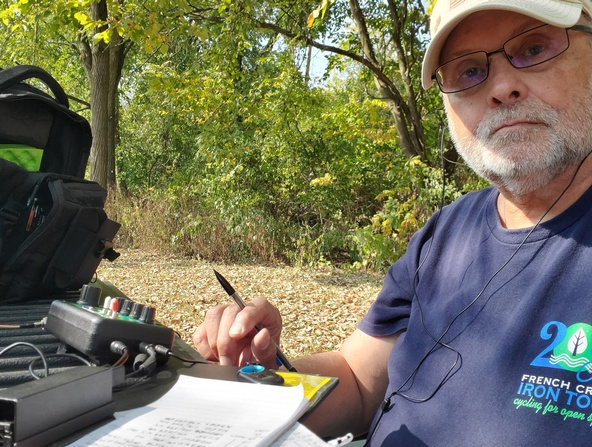
My homebrew z-match was an integral part of my portable setups back in the day. In this picture from 2001, I was using it with a doublet fed with TV twinlead.
My homebrew z-match was an integral part of my portable setups back in the day. In this picture from 2001, I was using it with a 40M doublet fed with TV twinlead.

My little Elecraft T1 tuner certainly has a size and weight advantage over my homebrew z-match. It’s certainly is easier to use, too. However the z-match can handle both balanced and unbalanced loads, and it doesn’t need a battery.

I have some other old gear in mind for future activations. A couple of rigs could make for some challenging activations.

Stay tuned.

72, Craig WB3GCK