Pre-Holiday Bingeing

For a variety of reasons, it’s been a couple of weeks since I’ve gone out portable. I had the rare opportunity to get out three days in a row, so I activated three local parks.

Valley Forge National Historical Park

First up was Valley Forge National Historical Park (US-0761, KFF-0761) on Friday afternoon. When I rolled into the parking lot, there were only a couple of cars there. That’s a big difference from the craziness I encountered the last time I was there. I guess being a cold weekday accounted for that. 
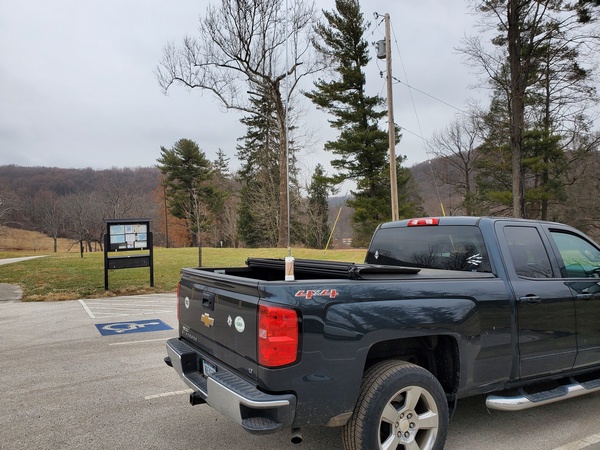
Valley Forge National Historical Park (US-0761, KFF-0761)

I set up my Penntek TR-35 (5 watts, CW) and my 12-foot loaded whip. I spent some time on 40M with no takers, so I spent the rest of my time on 20M and 17M. 

After an hour and 15 minutes, I logged 40 contacts, including one park-to-park and five European DX stations. The DX stations included Germany, Sweden, Switzerland, France, and Slovak Republic. I also worked a station in California. So, despite some unsettled geomagnetic conditions, my 5 watts were getting out pretty good. 

Norristown Farm Park

On Saturday, I made an early morning run over to Norristown Farm Park (US-4363, KFF-4363). I couldn’t get to the section of the park where I normally operate. We had some snow overnight and the road down to that area was closed. When I got there, the temperature was around 30º F with strong gusting winds. 
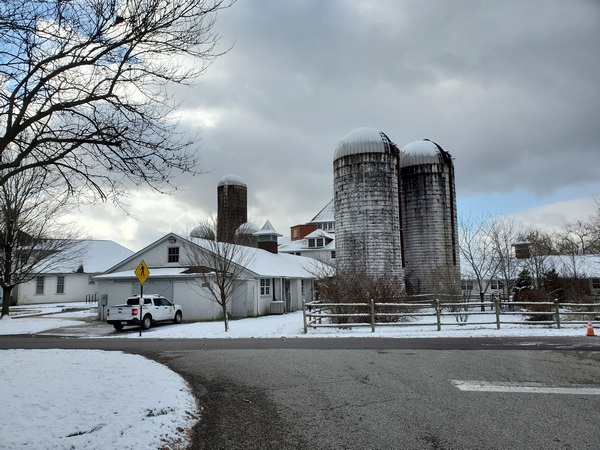
Norristown Farm Park (US-4363, KFF-4363)

Instead of my usual spot, I operated from a parking lot near the park office. This location has the highest elevation in the park, but it’s also wide open. So, the wind was really putting my 12-foot telescopic whip to the test. Equipment-wise, I used the same setup as the day before. 

The bands were a little better than the day before, so the contacts were coming in steadily on both 40M and 20M. In just under an hour, I had 42 contacts in my log. I had one park-to-park contact, along with two DX contacts (Germany and Finland). 

One call I received was from “nature.” The road closure rendered the restrooms inaccessible, so I packed up and headed to a convenience store down the road on my way home.

Evansburg State Park

I wrapped up the weekend with a Sunday morning trip to Evansburg State Park (US-1351, KFF-1351). As cold as it felt on Saturday, it was much colder on Sunday. It took longer to get set up, with frequent breaks to warm up my numb fingers. 
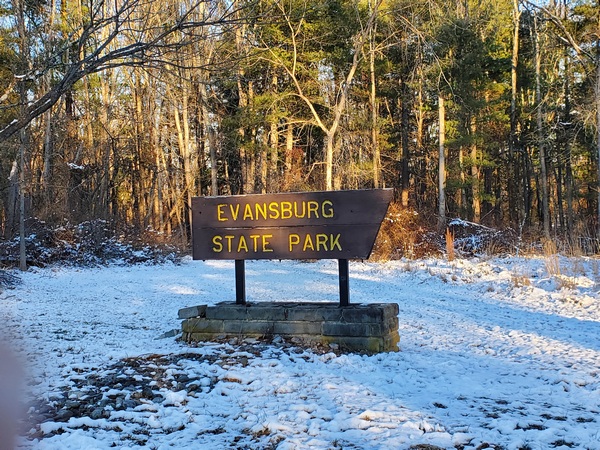
Evansburg State Park

Although I had a successful activation, it was far from trouble-free. As I was extending my trusty old MFJ-1956 12-foot telescopic whip, the bottom section came out completely and two small copper shims fell on the ground. I guess the wind on Saturday was harder on the antenna than I thought. Luckily, I found the two shims and put them in a safe place. I don’t know if I’ll be able to repair the whip, and I don’t think anyone makes a 12-foot whip anymore. To get things going, I grabbed my MFJ-1979 17-foot whip and installed it on my homebrew loading coil

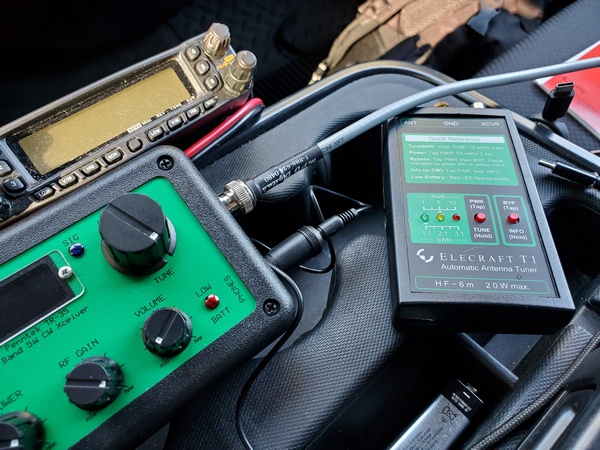
Next, I set up my TR-35 and T1 tuner in the truck. I tried tuning up, but the T1 wasn’t responding. After a little troubleshooting, I isolated the problem to a bad RG-316 jumper cable between the radio and the tuner. I replaced the cable, and things were back to normal. 

When I finally got on the air, the hunters were out in full force. It only took about nine minutes on 40M to make my first 10 contacts. The 20M band also seemed to be in good shape. I had a QSO with W6LEN out in California, so my five-watt signal was getting out OK. 

I wanted to try 17M, but I would have had to shorten the 17-foot whip to resonate it. I didn’t have my antenna analyzer with me, so I decided to just let the T1 tuner work its magic on the fully extended 17-foot whip. The T1 easily found a match, and the whip seemed to work fine. My contacts on 17M included two stations in Germany. 

Even sheltered in the truck, my feet were getting cold. So, it was time to pull the plug and head home. After an hour and 10 minutes, I had 44 in my log. Along with the two DX contacts, I had one park-to-park contact.
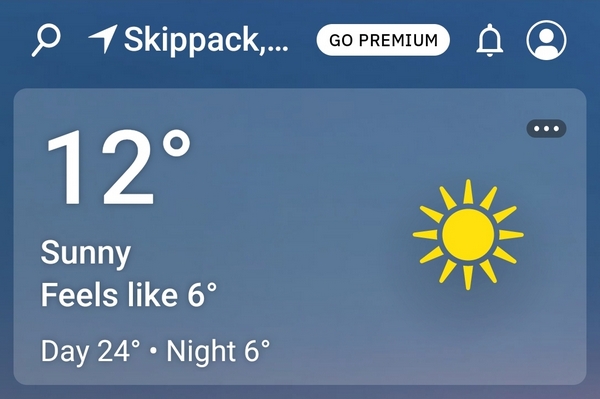
Weather conditions at Evansburg State Park on Sunday. Fortunately, it was a balmy 42º F inside the truck.
Weather conditions (Fahrenheit) at Evansburg State Park on Sunday morning. Fortunately, it was a balmy 42º F inside the truck.

Despite the damaged gear, it was a fun weekend of activations. I think it made up for my inactivity over the past two weeks.

Merry Christmas and Happy Holidays to you and yours.

72, Craig WB3GCK
A Couple of Early Morning Activations

With the holidays closing in, it seems like it’s getting harder to find time for getting out to play radio. However, I managed to get in two early morning activations over the weekend.

Norristown Farm Park (US-4363, KFF-4363)

First up was a chilly trip over to Norristown Farm Park on Saturday. I’m slowly progressing towards a POTA Repeat Offender award, so I’ve been activating this park quite a bit lately. My rig was my trusty Penntek TR-35 (5 watts, CW) and 12-foot loaded whip.

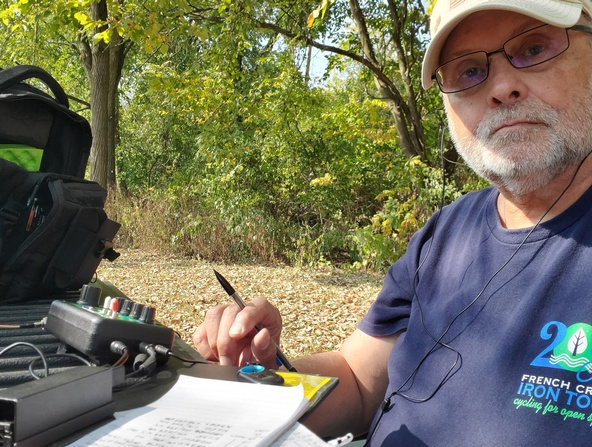
WB3GCK at Norristown Farm Park (US-4363, KFF-4363)

I started on 40M and got off to a brisk start, making my first 10 contacts in about 9 minutes. By the time I had 24 contacts in the log, the pile-ups subsided, and I switched to 20M. 

Despite some high noise levels on the band, I added 11 more stations to the log. My first contact on 20M was with DK3DUA, who would later work me again on 17M.

I finished up on 17M, where I was plagued with the same noise levels. Undeterred, I worked nine more there, mostly European DX. 

After an hour and ten minutes, I finished with 44 contacts. Among those, were two park-to-park contacts and 9 DX contacts:

  • Germany (4)
  • Finland (2)
  • Italy
  • Slovak Republic
  • Ukraine

And then, it was back home to help my (far) better half set up the Christmas tree.

Ridley Creek State Park (US-1414, KFF-1414)

On Sunday morning, I drove down to Ridley Creek State Park. Thankfully, the weather was a little milder this time around. My equipment setup was the same as the day before. 

Ridley Creek State Park (US-1414, KFF-1414)

Once again, I was amazed with the number of early-rising hunters. The action on 40M was fast and furious; my first 10 contacts came in about seven minutes. Things were a little slower on 20M, but I made a few DX contacts. The real fun came on 17M. The signals weren’t all that strong, but there were lots of them. 

After an hour and 15 minutes, I had made 55 contacts. I only had one (known) park-to-park contact, but I had a dozen Europeans in my log:

  • France (4) – F4HZR worked me on two bands
  • Germany (3)
  • Azores
  • Italy
  • Poland
  • Slovenia
  • Slovak Republic

After logging contact #55, I had to take off to run a couple of errands. All-in-all, it was a pretty good weekend—by my standards, anyway. 

72, Craig WB3GCK

Captain John Smith Trail

I was out in central Pennsylvania over the past weekend for our family’s belated Thanksgiving get-together. Before we left for home on Sunday, I squeezed in a quick early-morning POTA activation. This time, I drove down to Falmouth Boat Launch to activate the Captain John Smith Chesapeake National Historic Trail (US-4567).

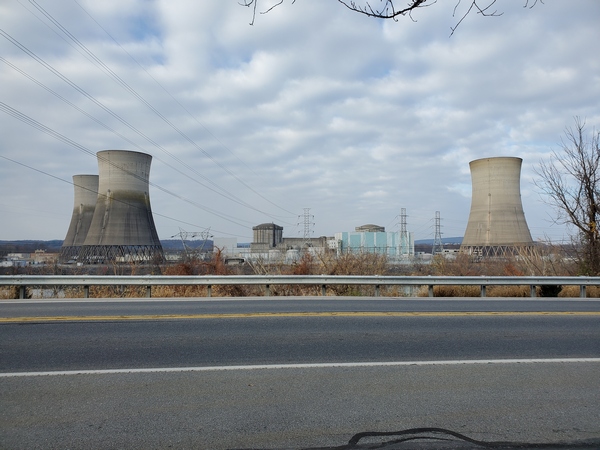
The Falmouth launch is about two miles downstream from the infamous Three Mile Island Nuclear Generating Station. I was here once before back in 2018. However, I had forgotten that this water trail includes the entire length of the Susquehanna River. (I have since uploaded that log to the POTA website.) 

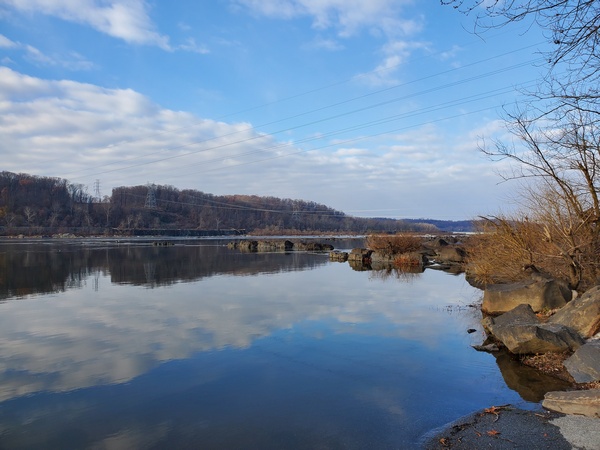
Susquehanna River
Susquehanna River

It was about 20F (-7C) when I headed out for the 15-minute drive to the site. The parking lot was nearly empty, so I was able to park in a spot that fell within the 100 feet guideline. I had previously used Google Earth to measure the distance to the river. 

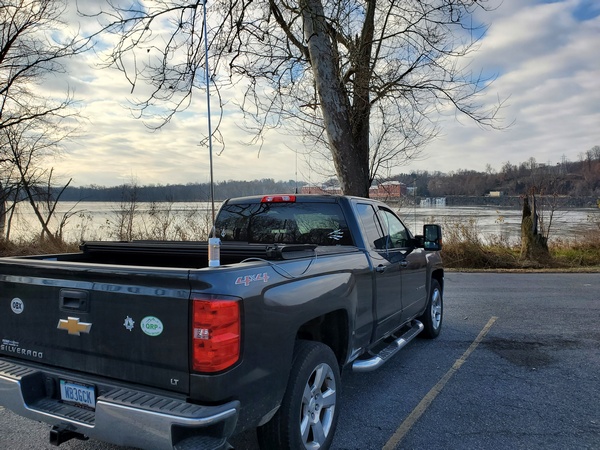
WB3GCK along the Susquehanna River on a sub-freezing morning

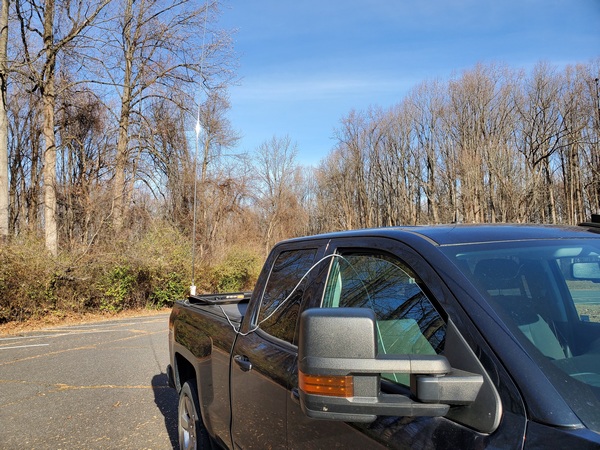
I quickly put up my 12-foot loaded whip (before my fingers got numb) and set up my Penntek TR-35 (5 watts CW). Thankfully, the sun and my body heat brought the cab of the truck up to 40F (4C) in short order. 

The conditions on 40M were amazing. The first two stations answered my CQs before I had even spotted myself. When I finally posted my spot, I had a huge pile-up. There were a lot of early risers out there, so Craig was a very busy boy for the first 15 minutes or so.

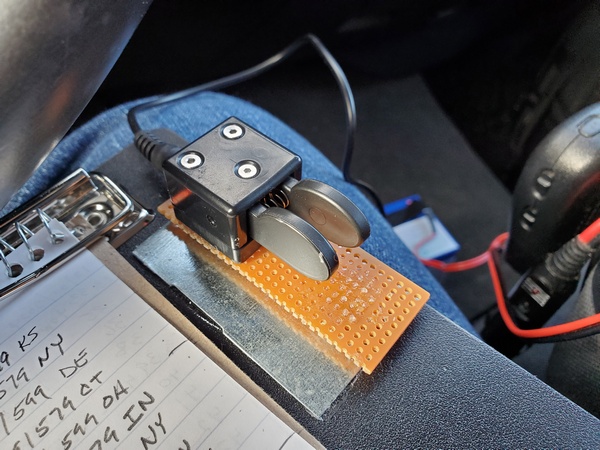
I gave the cheap QU-21C paddles a real workout this morning. My quick and dirty magnetic mount held perfectly, and the paddles worked great. They’ll be seeing a lot more use in the future. 

QU-21C Mini Paddles with my quick & dirty magnetic mount. This clipboard has some thin, steel strips, instead of the steel washers I had been using.

After 33 minutes on the air, I had worked 32 stations, all of them on 40M. I had one known park-to-park.

Then, it was time to head back to my daughter’s house for breakfast. On the way, I pulled over to take some pictures of Three Mile Island. I also saw another boat launch that I’ll have to check out further. 

Three Mile Island Nuclear Generating Station
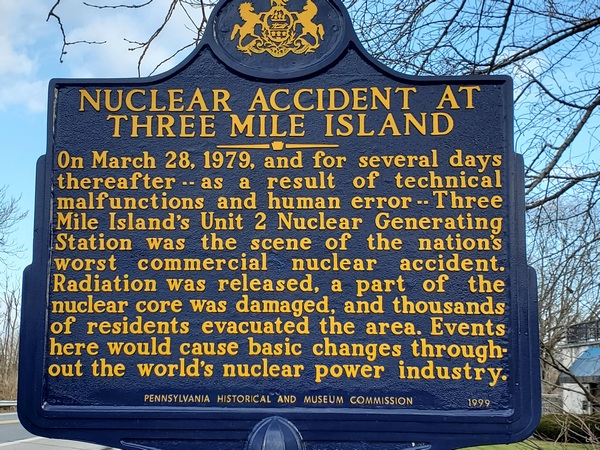
Three Mile Island historical marker

Happy belated Thanksgiving to all who celebrated.

72, Craig WB3GCK

Crowded Activation at Valley Forge

I made a quick trip over to nearby Valley Forge National Historical Park (US-0761, KFF-0761) this morning. It almost didn’t happen, but it turned out to be a fun morning.

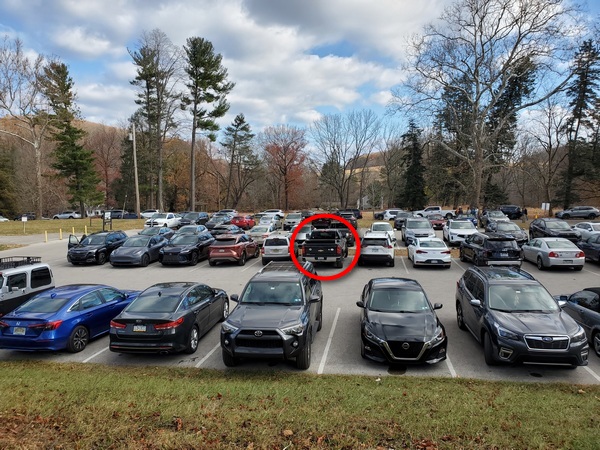
Located a few miles from my home, Valley Forge has always been one of my favorite places for QRP-portable operations. During the winter months, I usually operate from a trailhead away from the main areas of the park. When I rolled in this morning, I couldn’t believe how crowded it was. It’s usually a popular place, but this was different. The parking lot was full, with a few folks even parking on the grass. There were a few sizeable groups of hikers/walkers gathering, which accounted for the crowded conditions. I was about to leave, when a parking spot in the middle of the lot opened up. 

That's me in the middle of all those cars
That’s me in the middle of all those cars. Fortunately, my location didn’t impede my efforts on the air.

It was a beautiful, albeit windy, morning. I was hoping to get a spot where I could operate from the tailgate, but that was not to be. One of the hiking groups had occupied the only picnic table, so I operated “stationary-mobile” from the middle of the parking lot. I used my usual TR-35 (5 watts, CW) and 12-foot loaded whip

The bands were as busy as the parking lot I was in. There were a ton of hunters out on 40M, so I made my first 10 contacts in less than 10 minutes. After logging 20 contacts on 40M, I moved up to 20M, where it was just as active and produced some DX contacts. Same goes for 17M. After an hour and 20 minutes, I had logged 41 contacts, of which four were known park-to-park contacts. 

Some highlights from this morning:

  • Working 10 European DX stations: Germany (3), Belgium (2), Slovak Republic (2), France, Poland, and Slovenia
  • Working three of my fellow Polar Bear QRPers: VE3DN, VA2NW, and VE3WMB (P2P)
  • Getting calls from a couple of fellow QRPers I haven’t worked in a while: Dave K1SWL and Fred KA4RUR

Although my location wasn’t all that great, it was a fun activation this morning. 

72, Craig WB3GCK

Mini Rove

Earlier this week I had a day without my usual obligations, so I planned to do a POTA/WWFF activation somewhere. I was originally thinking of visiting one of my usual local parks. My (far) better half, however, suggested I take advantage of my free day to activate some parks in the other end of the county I had been planning to re-visit. She’s always right, so off I went.

The first stop was White Clay Creek Preserve (US-6433), which I last activated a year ago. With Monday morning rush hour traffic, it took over an hour to get to this park near the Pennsylvania-Delaware border. 

My location at White Clay Creek Preserve (US-6433)

When I finally got there, I set up my 12-foot whip and homebrew loading coil, along with my Penntek TR-35 (5 watts, CW). I fired up the rig on the 40M band and encountered a horrendous noise level. It was so bad, I didn’t even try to use the band. This was my fourth activation at this location, and I can’t recall running into noise issues like that. I ended up splitting my time between 30M and 20M. Those bands had some noise, but nowhere near as bad as 40M. 

Despite the local noise, band conditions were pretty good. After 45 minutes, I had 28 contacts in the log. No DX today, but I had one park-to-park contact. After taking the antenna down, I took a short, three-mile drive over to Big Elk Creek State Park (US-9721, KFF-6093).

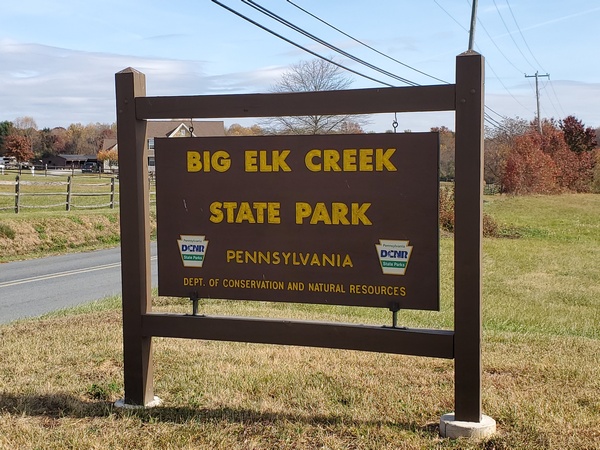
Situated on the Maryland border, Big Elk Creek became a state park in 2022. My first activation there was about two months after POTA added the park. Two years ago there were no amenities whatsoever. This time, I found the trailhead now had a gravel parking lot, portable toilet, and some picnic tables. 

When I last visited this trailhead in Big Elk Creek State Park (US-9721, KFF-6093) it was just a dirt parking lot. Now there's a gravel parking lot, portable toilet, and some picnic tables.
When I last visited this trailhead in Big Elk Creek State Park (US-9721, KFF-6093) it was just a dirt parking lot. Now there’s a gravel parking lot, portable toilet, and some picnic tables (off camera).

I used the same setup as the previous park. Thankfully, I didn’t have to deal with noise problems. I made a few contacts on 40M before moving up to 20M and 17M for the rest of the activation. Besides the POTA spotting page, I spotted myself using the smartWWFF app. That brought out the Europeans, especially on 17M: 

  • Finland
  • France (2)
  • Germany
  • Slovak Republic (2)
  • Slovenia
  • Latvia
  • Italy

Activating under both the POTA and WWFF programs certainly increases the number of hunters out looking for you. 

In a little over an hour, I had 35 contacts with four park-to-park contacts. I briefly thought about making a quick trip into Delaware to activate White Clay Creek State Park, but saved that one for another time. 

All in all, it was a fun way to spend my free day. I’m glad I listened to my (far) better half.

72, Craig WB3GCK

Plan B with the (tr)uSDX

I planned to activate two parks at the other end of the county this morning. Given the travel time involved, I figured I’d need to leave the house around 0700 local time, to get back home in time to take care of a few things this afternoon. I’m always up super early, so I didn’t need an alarm clock. Hah! Of course, I slept in this morning. 

I needed a Plan B, so I stayed close to home and headed up to Evansburg State Park (US-1351, KFF-1351). To switch things up a bit, I opted to give my (tr)uSDX another shot at a POTA activation. Along with the (tr)uSDX I used my 12-foot whip, homebrew loading coil, and my Elecraft T1 ATU.

My (tr)uSDX in use at Evansburg State Park (US-1351, KFF-1351)

Although I got off to a slow start on 40M, things picked up significantly when I moved to 30M and 20M. An hour and twenty minutes later, I had 30 contacts in the log. No DX today, but I did have one park-to-park contact. Thanks to WA2QLK for hunting me on two bands.

The little (tr)uSDX got the job done. Since my last activation with it, I tweaked a couple of settings, which made the receiver a little easier to listen to:

  • AGC = OFF
  • ATT2 = 1

I also calibrated the frequency. The Reverse Beacon Network (RBN) confirmed that the frequency readout is right on the money. The sidetone still has some clicks and pops, but overall the little rig was better this time. It’s a fun little radio, although probably not my first choice for POTA activations.

I’ll have to get down to those other two parks another time. Next time I’ll use an alarm clock. 

72, Craig WB3GCK

Drive-by Activation at US-8941/KFF-5862

My (far) better half and I spent some time with family in central Pennsylvania over the weekend. Our busy weekend didn’t leave much time for a POTA/WWFF activation, but I was determined to get out to a park. The result was a brief but successful activation at Pennsylvania State Game Lands 246 (US-8941, KFF-5862).

I’m a notorious early riser, so I was the first one up on Sunday morning. After sunrise, I loaded up the truck and scraped the frost off the windshield. It was about 0740 local time (1140 UTC) when I headed out. SGL 246 is only a few miles away, so I was on site and operational by 0800 local (1200 UTC). I used my Penntek TR-35 (5 watts, CW) and 12-foot loaded whip. 

WB3GCK at PA State Game Lands 246

I started on 40M and ended up staying there. I kicked things off hunting a park-to-park QSO, before finding an open frequency and calling CQ. A minute or two after spotting myself, I had a pile-up on my hands. A steady stream of callers kept me busy for the next 30 minutes—and it was pretty hectic at times. 

My initial plan was to just make my 10 contacts and head back to the house. However, my half-hour activation yielded 29 contacts, far exceeding my expectations. I also had three park-to-park QSOs in my log. 

The 40M band was amazing. I guess it was a combination of good band conditions and being a POTA Support Your Parks Weekend. Whatever it was, the hunters were up early and out in full force. 

About 15 minutes after my last contact, I was back at the house and just in time for breakfast. It was a chilly morning, so that second cup of coffee hit the spot.

OK, so it wasn’t exactly a “drive-by” activation, but it was certainly a short one.

72, Craig WB3GCK

Sprinting in the Park

No, I wasn’t running through the park. I was operating in the Straight Key Century Club’s Weekend Sprintathon contest from a POTA/WWFF entity. I ended up with two POTA/WWFF activations as a result. 

On Saturday morning, I drove over to Norristown Farm Park (US-4363, KFF-4363), which has become one of my favorites. It was pretty chilly when I started, so I set up in the truck. (That turned out to be a poor decision.) I used my Penntek TR-35 (5 watts) and my trusty 12-foot loaded whip. I used my little MS2 straight key for the SKCC contacts.

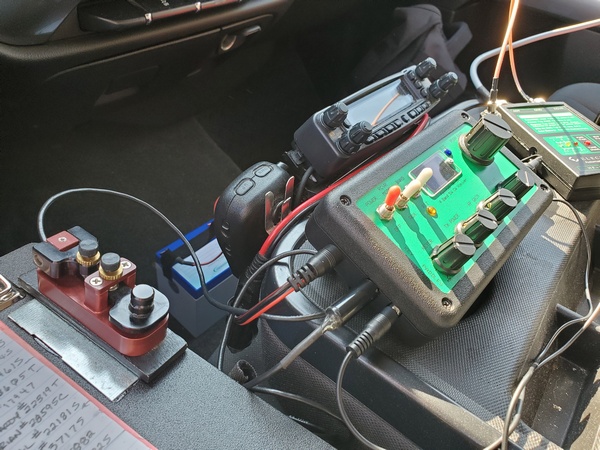
My setup in the truck on Saturday. My little American Morse MS2 straight key looks unusual but has a great feel.
My setup in the truck on Saturday. My little red American Morse MS2 straight key looks unusual but has a great feel.

My plan was to operate in the WES and only spot myself on the POTA and WWFF websites if I had trouble making my 10 contacts. The band conditions had improved significantly from the severe geomagnetic storms over the previous couple of days, so I was optimistic. 

Starting out on 40M, I was pleasantly surprised to find a bunch of SKCC stations. I worked 13 WES stations on 40M before moving up to 20M to work a few more. SKCC WES contacts come at a slower pace than POTA contacts, so after an hour and 20 minutes, I only had 16 contacts. I was happy with that, though. 

By that time, the temperature had gone up, and the sun was beating down on the windshield. It was really getting hot in the truck, so I pulled the plug and packed up for the day. 

On Sunday morning, I went back to Norristown Farm Park for more of the SKCC WES. This time, I operated from the tailgate of my truck. I rarely do that, because the tailgate is too high off the ground. I had backed the truck up to a slight slope, so my chair was a bit higher than if I had been on flat ground. Still, it wasn’t all that comfortable for keying. I ended using my clipboard on my lap. My equipment was the same as the day before.

Operating from the tailgate on Sunday morning.

This time there was much less SKCC activity on 40M. Despite numerous CQ calls, I only logged four WES contacts. So, I made the command decision to spot myself on the POTA website and switch over to the paddles. The activity picked up dramatically after that.

This time I ended up with 21 contacts, which included three park-to-park QSOs. All together, I made 20 SKCC WES contacts over the weekend, which is not too bad for me. 

I’ll have to try this again for next month’s Weekend Sprintathon. 

72, Craig WB3GCK

Equipment Failure but Activation Success

Another busy weekend here in my neck of the woods. We had a family get-together in central Pennsylvania on Saturday, and I took part in a public service event with my local ARES-RACES group on Sunday. Despite everything going on, I squeezed in a short POTA/WWFF activation on Saturday morning before heading out of town.

I chose a spot in Valley Forge National Historical Park (US-0761, KFF-0761) that’s only a few miles from home. The parking lot serves as a trailhead for a popular trail, and it can be a busy place during the summer months. It wasn’t too bad today. 

My original plan was to use some different gear and try out some antenna configurations. Being pressed for time, I went with my usual setup, which I knew—or thought—would work. That, of course, was my Penntek TR-35, Elecraft T1 tuner, and my 12-foot whip and homebrew loading coil combination. The SWR is a little higher on 40M and 30M, so I use the T1 to keep the rig happy.

I scanned the 40M band, and it was hopping. I planned to pick off some park-to-park QSOs before setting in on a frequency to call CQ. When I hit the T1, it didn’t even try to find a match, and the LEDs showed a 3:1 (or higher) SWR. I tried other bands, including ones I knew were close to 1:1, and the T1 wouldn’t budge. 

I couldn’t remember the last time I changed the battery, so I put in a fresh one. No go. Next, I ran through the T1’s internal diagnostics. Nothing out of the ordinary there that I could see. On (very) rare occasions over its 11 years of service, the T1 would get fussy and refuse to match certain bands. Just running through the diagnostics seemed enough to clear up those issues—but not today.

I disconnected the T1 and went straight from the TR-35 to the antenna. The truck-mounted whip has very low SWR on 20M and 17M, so I confined my operation to those bands. 

My ailing T1 after disconnecting it
My ailing T1 after I disconnected it

Fortunately, 20M was in great shape for 0930 (local time), and I had a steady stream of hunters. I needed to leave at 1000 (local), and I had spent an inordinate amount of time playing around with the T1. However, my 30-minute activation netted me 26 contacts with two of them park-to-park. Most of the contacts were on 20M, but I had five on 17M before pulling the plug. 

I drove back home, saddened that my trusty T1 was having issues. It has been so reliable over the years that I just took for granted that it would always work and match whatever antenna I was using. 

Back at home, I did a couple of quick checks with different antennas, but no joy was to be had. I suspect a stuck relay, but I’m not really sure how to discern that from the internal diagnostics routine. I bought it assembled and tested, so I’ve never poked around inside. I’ll have to download the instructions for the kit version to see if that offers any insights. 

When I get some time this week, I’ll pursue this further and decide how to proceed. If any T1 users out there have advice to offer, I’m all ears. 

[Update: I resolved the issue with the T1. It appears to have been a case of “cockpit error.” Here’s what it was.]

72, Craig WB3GCK

POTA with the (tr)uSDX

Although I bought my little (tr)uSDX transceiver two years ago, it has only seen sporadic use. Other than an occasional contact or two, it has been mostly relegated to the shelf. I figured it was about time to put it to serious use in a POTA/WWFF activation. 

I made a return visit to Norristown Farm Park (US-4363, KFF-4363) for another activation. It was raining on and off this morning here in southeastern Pennsylvania, so I pretty much had the place to myself. 

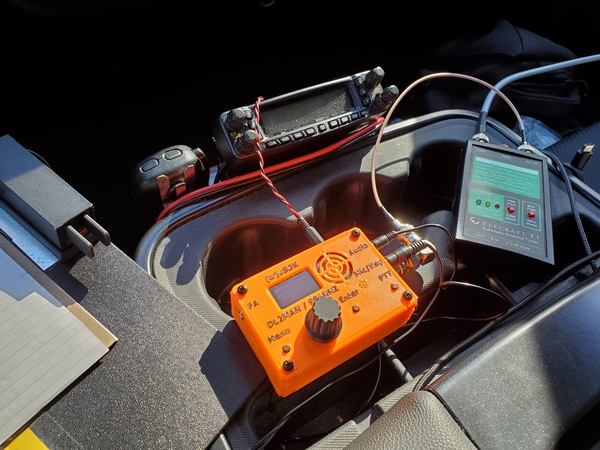
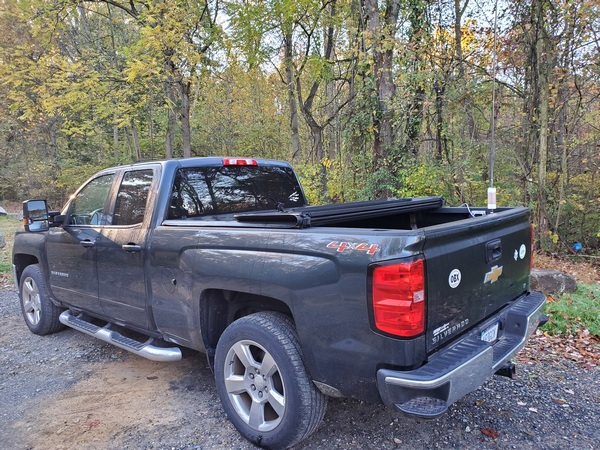
I set up the (tr)uSDX with my Elecraft T1 tuner in the cab of my truck. I used three 18650 Li-ion batteries power the radio. As usual, I went with my 12-foot whip and homebrew loading coil on the back of the truck.

I’m getting a little better at navigating the (tr)uSDX’s menus and using the controls. There are a lot of functions covered by three controls. To refresh my memory, I used the rig last night with my rain gutter “antenna” to make a couple of contacts. I also brought along a cheat sheet today, which I didn’t need.

Just for the fun of it, I started off using my little N6ARA TinyPaddles. They match the orange radio, so why not. Unfortunately, I had some issues with them, so I switched over to my Palm Mini paddles. I have to tweak the contact spacing on the N6ARA paddles. 

My (tr)uSDX. The N6ARA paddles are in the lower left.
My (tr)uSDX. The N6ARA TinyPaddles are in the lower left.

Starting out on 40M, the signals were strong and plentiful. It only took me about 11 minutes to log my first 10 contacts. When things slowed down on 40M, I made a few contacts each on 30M and 20M. After 45 minutes, I had 21 contacts in the log with one park-to-park QSO.

My trusty homebrew loading coil. In hind sight I should have used a plastic bag to protect it from the rain this morning.
My trusty homebrew loading coil. In hindsight I should have used a plastic bag to protect it from the rain this morning.

The (tr)uSDX is an incredible little rig. They packed an awful lot of features into a tiny package, but it’s not really a high-performance radio. I have to admit it wasn’t the most pleasant rig to listen to; there were some pops and clicks in the sidetone when keying. It could have been the earbuds I was using. I also need to go back through the menu settings to make sure I haven’t missed something. Looking at my RBN spots, I could see I need to tweak the frequency calibration a bit. It’s transmitting a little lower than the displayed frequency. Having said all that, I can’t be too critical of radio at this price point.

In the end, though, the little rig got the job done today. Not bad for a five-band, multi-mode radio that costs less than $140 assembled. 

72, Craig WB3GCK