WES Portable in Valley Forge

This weekend is the SKCC‘s monthly Weekend Sprintathon (WES) contest. When I can, I like to go out and operate portable for at least part of the contest. I headed to Valley Forge National Historical Park for a couple of hours to take advantage of the great weather.

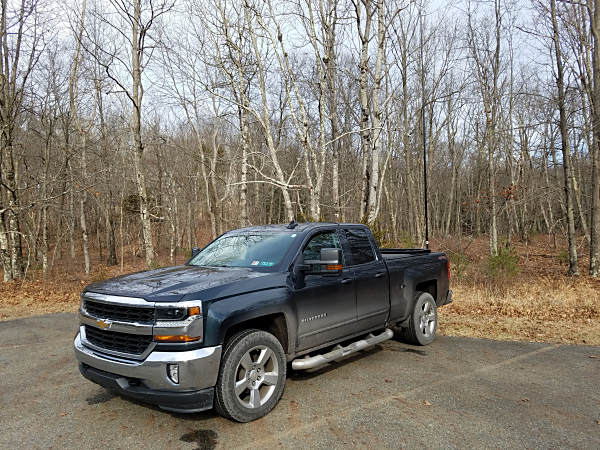
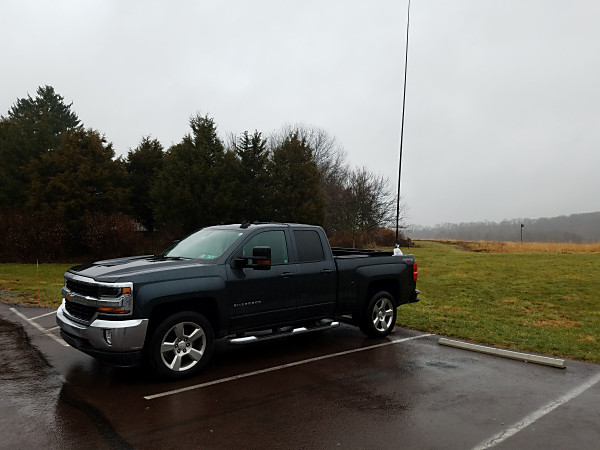
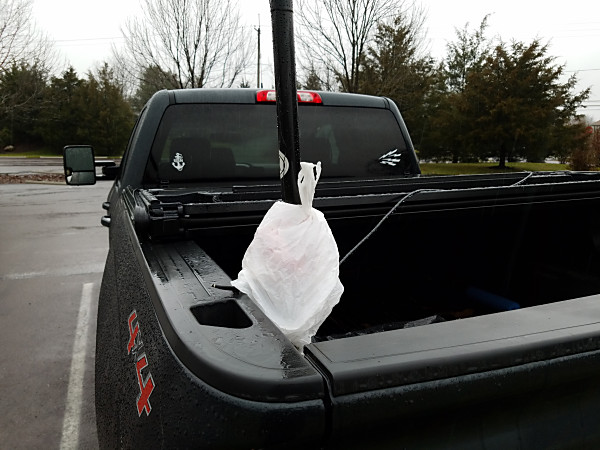
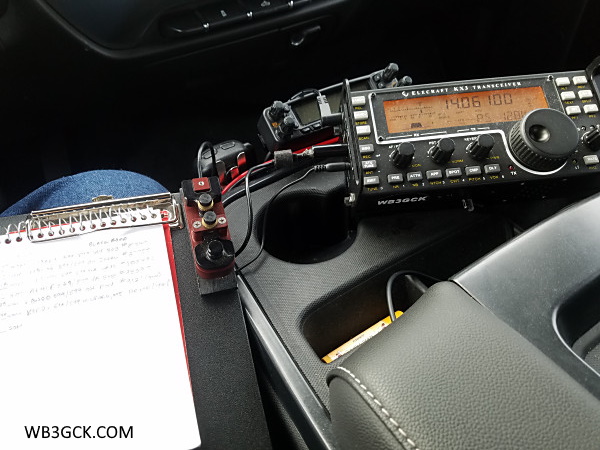
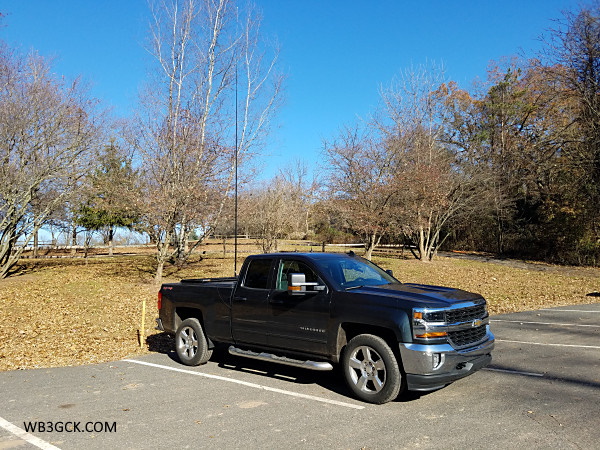
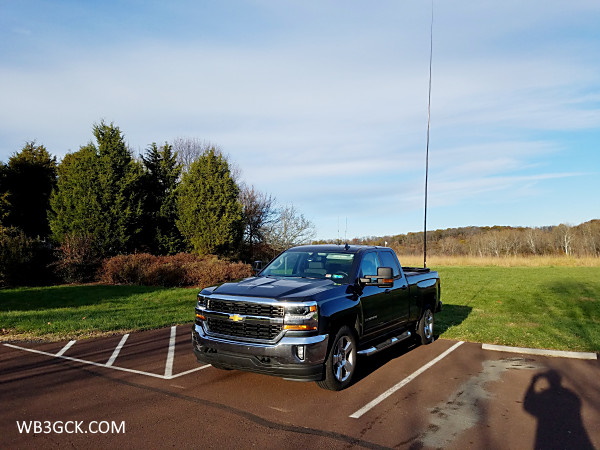
On arrival, I headed for a shady spot that I’ve used a few times before. I mounted my 19-foot vertical on the back of my truck and set up a small table behind my truck. I fired up my KX3 and got on the air.

My set up in Valley Forge

In short order, I logged several stations on 40M, including a POTA park-to-park QSO. (Valley Forge is POTA/WWFF K/KFF-0761.) Moving up to 20M, I made a few more contacts.

I decided to check 15M and I’m glad I did. I found several very strong stations who easily heard my meager 5-watt signal. I called CQ for a while and picked up a few more stations. I seemed to have a pipeline to Indiana and Illinois. It was great to hear some WES activity on 15M.

After a couple of hours, I started to run out of shade. I was getting hot and so was the KX3. I decided to pack up for the day. Besides, I had to do some preparations for a public service event early the next morning.

It was a great day for portable operating and I added a few more QSOs towards my SKCC Senator award.

72, Craig WB3GCK

Neal Thorpe Trail Hike

As part of my recent emphasis on exploring local trails, I did some hiking on a great little trail today. This gem of a trail has become my favorite local trail for a quick getaway.

The Neal Thorpe Trail begins at the Schuylkill Canal Park in Mont Clare, Pennsylvania. The trail is named in honor of the late founder of the Schuylkill Canal Association. It’s not a very long trail; it’s less than a mile in length. The scenery, though, is outstanding. Even though I was just across the river from the weekend hustle and bustle of downtown Phoenixville, I felt like I was out in the middle of nowhere.

Entrance to the Neal Thorpe Trail near the Schuylkill Canal Lock 60

From the trailhead, the trail passes through a ravine and parallels a small creek. According to an online description of the trail, it eventually turns left and heads up a steep climb. The problem, I found, is that there are lots of side trails and no trail markings.

Neal Thorpe Trail. The beginning of the trail follows a small creek through a scenic ravine.

At one point the trail crossed the creek and I found a trail heading off to the left up to the top of the ridge. It wasn’t marked but I went ahead and made the climb anyway. When I got to the top, I found no less than 4 trail options. Of course, none were marked. I continued on the trail straight ahead.

I headed down the trail a bit and decided to stop and set up my radio gear. I found a log about 20 yards off the trail, which I used for my operating position. I set up my portable vertical about 15 feet behind me.

WB3GCK sitting like a bump on a log along the Neal Thorpe Trail

Band conditions weren’t the best. There was a fair amount of fading and some static from storms heading in. Nonetheless, I worked a few Museum Ships Weekend (MSW) stations. They were all in Massachusetts, as it turns out. I also had an SKCC QSO with a station in North Carolina before packing up.

The hike back down into the ravine was a little tricky but uneventful. I took my time hiking back to enjoy the surroundings.

The Canal Park was busy with lots of people canoeing, kayaking, and just enjoying the beautiful weather. I found it interesting that, with all that activity in the park, I pretty much had the trail to myself. I briefly saw one other hiker off in the distance but that was it.

With the lack of trail markings, I’m still not sure if I was on the right trail or not. It doesn’t matter though; I found a great new place to operate out in the woods. And, it’s only minutes from home.

72, Craig WB3GCK

Portable Antenna Ground Mount

Here’s yet another quick little hack. I raided my junk box to cobble together a ground mount for my portable vertical. While this solved a couple of specific issues I had, it might only be of interest to a few of you folks out there.

I often support my 19-foot vertical with one of those inexpensive fishing poles from eBay. (I paid around $10 USD for my 7.2M pole.) I had been using a simple method for ground mounting. I shove a screwdriver in the ground, take the bottom cap off of the pole, and place the pole over the screwdriver. Voila!

While the screwdriver technique is a useful way to support my vertical, there are two issues with it. First, the screwdriver method places the bottom of the pole in direct contact with the dirt. This can gunk up the threads on the bottom of the pole. (Ask me how I know.) Next, since my homebrew 19-foot vertical takes up the entire length of the pole, the matchbox ends up too close to the ground for my liking. I made a simple little gizmo that addresses both of these issues.

Antenna ground mount in use with my 19-foot vertical

From some scraps and junk I had on hand, I used the following:

  • 5 inches of 1/2-inch PVC pipe
  • Approx 6 inches of 3/4-inch PVC pipe
  • 3/4″ x 1/2″ PVC reducer
  • (2) 3/4″ PVC end caps (with flat ends)
  • Stainless steel toilet float rod (1/4″ diameter x 10″ long. 1/4-20 threads on each end of the rod)
  • (2) 1/4-20 nuts
  • 1/4″ lock washer
  • Duct tape (optional, for a better fit between the 1/2-inch PVC and the bottom of the pole)
  • A dab of Lock-Tite thread locker

[Note: The PVC pipe I used works with the particular pole I use. If the bottom of your pole has a different inside diameter, you might need to use a different size pipe.]

I joined the two pieces of PVC pipe together with the PVC reducer. Then I glued the two end caps together, back-to-back. Next, I drilled a 1/4-inch hole through the center of the two end caps. I fastened the stainless steel rod with two nuts and a lock washer. I also used a dab of thread locker for good measure. I had to do some sanding on the 3/4-inch pipe to allow the end caps to slide on and off easier. At this point, you might want to put a layer or two of duct tape on the 1/2-inch pipe for a snug fit inside the pole.

The two main assemblies of the antenna ground mount
Stainless steel rod bolted through the two back-to-back PVC end caps

In the field, I place the end cap assembly on the 3/4-inch pipe and shove the rod into the ground. The pole goes over the 1/2-inch PVC pipe, of course. This places the bottom of the pole about 8 inches above the ground. With lightweight poles, guying is unnecessary. For travel, I flip the end cap assembly around so that the bolt stores inside the pipe. This prevents poking holes in my backpack or bicycle pannier bags.

Antenna ground mount assembled for use
Antenna ground mount configured for travel. The stainless steel rod is stored safely inside the PVC pipe assembly.

The threads on the end of the stainless steel rod pick up some dirt in use. It’s not a major problem but I might cut the rod off just above the threads. I haven’t decided yet.

That’s all there is to it. I’m hoping the accompanying pictures clarify how I built it.

72, Craig WB3GCK

Basin Trail Hike

I’ve been making it a point to get out and visit some new (to me, at least) local trails. Even in this suburban area, we are blessed with a myriad of trails to explore. I was long overdue for some hiking and, with today’s excellent weather, I packed up my gear and headed out.

My target today was the Basin Trail outside of Phoenixville, Pennsylvania. This out-and-back trail runs between Black Rock Sanctuary and a public boat launch on the Schuylkill River. It’s only about .75 miles each way but it is an interesting trail. This area was an industrial silt basin that was converted into a wetland habitat for waterfowl. The Basin Trail gives some great views of the wetlands area.

Wetlands along the Basin Trail

I’ve been having some knee issues, so this trail was a good length to start off with. The hike to the Schuylkill River was flat for the most part. The wetlands are on one side of the trail and there’s some dense woods on the other side. It was an easy hike, except for a couple of very muddy, low-lying spots. There was no option except to trudge forward through the mud.

Historic silt basin water control weir on the Basin Trail

Near the Schuylkill River end of the trail, I found a bit of a clearing and opted to operate from there. I set up my KX3 along the trail and put up my 19-foot vertical a little further back. As I was getting ready to operate, I was warmly greeted by a swarm of bugs. I sure was glad I had some insect repellent in my pack.

WB3GCK operating from the Basin Trail

On the air, I wasn’t hearing much activity. I was getting lots of hits on the Reverse Beacon Network on 40 meters but no takers. I checked 30 and 20 meters with no luck.

I headed back to 40 meters to give it one last try before packing up. This time, I received a very loud call from fellow SKCC member, AB8EL in Ohio. Thanks to Don for keeping me from getting skunked. I then tuned down the band and heard Randy KB4QQJ in North Carolina operating in the “Bug Roundup” event. I was using a straight key but I went ahead and gave him a call anyway.

After I finished, I packed up for the hike back. I did a little better negotiating the muddy spots this time.

This wasn’t my best outing, radio-wise, but it was good to loosen up my knees and spend some time out in the woods.

72, Craig WB3GCK

The “QRP” Camper Rides Again

It seemed like an eternity since our little travel trailer went into storage for the Winter. This past weekend we were finally able to take it out for a weekend of camping. Of course, ham radio was a part of that.

My (far) better half and I went to nearby French Creek State Park for our inaugural trip of the 2019 season. We arrived on Friday night ahead of a line of severe thunderstorms. We had just enough time to get the trailer parked and leveled before the storms rolled in. My antenna would have to wait.

After the storms passed through, I was able to set the antenna up before it got too dark. I went with my trusty 29.5-foot wire vertical and 9:1 UNUN. It was too wet for a campfire so I got on the radio instead. There was a fair amount of SKCC activity on 30M. I made several QSO there before calling it quits for the night.

The WB3GCK QRP Camper at French Creek State Park. If you look closely, you can see my vertical antenna back along the tree line.

Saturday brought clear blue skies but also gusting winds and chilly temperatures. Two of our grandkids were visiting for the day, so my radio time was sporadic. During the course of the day, I made a variety of QSOs. Here are some of the highlights:

  • I ran into an old Polar Bear QRP friend, Mark NK8Q, on 60M CW. Mark was doing a SOTA activation in the Allegheny Mountains of Pennsylvania.
  • I worked a special event station, WA1WCC, on Cape Cod. WA1WCC was commemorating International Marconi Day and the Centennial of RCA. This was the third time I’ve worked WA1WCC while camping at French Creek.
  • I worked a special event station, KM0RSE/8, commemorating Samuel Morse’s birthday. The operator was fellow SKCC and FISTS member, Larry KA8HFN.
  • Some of my Boschveldt QRP buddies were on an overnight hike on the Appalachian Trail. They were camping at a shelter on Peters Mountain in central Pennsylvania. Glen NK1N texted me to let me know he was on the air. I met Glen on 60M CW for an SKCC QSO. Shortly afterward, I worked both Glen and Ron WA8YIH on 60M SSB. It sounded like they were having a great time up there.

Fortunately, the winds eventually calmed down later in the day. After cooking some burgers and hanging out at the campfire with the grandkids, I made one more SKCC QSO before calling it a day.

On Sunday, we awoke to a somewhat rainy and dreary day. We usually do our cooking outdoors but today we opted for a leisurely breakfast in the camper. After breakfast, I made a few more QSOs before packing up for the drive home.

After a long Winter, it felt great to be back out in my little “QRP” camper. I’m looking forward to the next trip in a couple of weeks.

72, Craig WB3GCK

(Almost) Gone with the Wind

I was long overdue for some outside QRP-portable operating. Although we had some heavy rain overnight, it looked like it would be gone by mid-day. So, yesterday I headed out to nearby Towpath Park to take advantage of some milder temperatures.

I had a couple of objectives for today. First, I was hoping to make some QRP to the Field (QTTF) contest QSOs. I also wanted to test a new ground mount I put together for my cheap eBay telescopic pole.

When I got to the park, the rain had stopped. Unfortunately, last night’s heavy rains left the park a bit on the swampy side. That, coupled with some gusting winds, would make for an interesting test of my new ground mount. I was a bit leary but went ahead and set up the antenna anyway.

As I was setting up, a Pennsylvania Fish & Boat Commission officer got out of his car and walked up the path towards me. While it’s true that I was using a fishing rod (for my antenna), I was about 50 yards away from the river! As he approached, I told him that I was a ham radio operator. He said, “I know.” As it turns out, he was also a ham and had spotted my callsign on my license plate. He was just stopping by to say hello. As we talked a bit, we also found out that we also had some former employers and co-workers in common. Small world!

WB3GCK at Towpath Park

As we were chatting, the gusting wind blew my antenna over to a 45-degree angle. The ground was too soggy to hold my antenna mount. It never fell over, so I gave my antenna mount a passing grade for this extreme test. Unfortunately, in my rush to straighten out the antenna, I never took a picture. Pity. It put that tower in Pisa to shame. I moved the antenna a few feet to a somewhat drier spot and that did the trick. I’ll show a closer look at my ground mount in a future post.

My vertical ground-mounted in the soggy ground. This picture was taken while Mother Nature was on a brief break from trying to blow my antenna over.

When I finally got on the air, I found the bands dominated by Michigan and Ontario QSO Party stations. I didn’t hear any QTTF stations at all. So, I spent some time handing out points to some of the QSO Party stations.

After a while, I had had enough of the wind and packed up my gear. As I was packing up, the sun came out and the wind subsided. Go figure!

72, Craig WB3GCK

My Favorite Apps for Portable Operating

I do the majority of my HF operating while out at portable locations. Like most people these days, I always have my cell phone handy. While I have a bunch of apps installed, there are a few that I use most often to figure out where to go and where I am.

Before I begin, I should mention that I use an Android phone. Some of these apps may be available for the iPhone or there may be similar apps available for you.

I should also point out that I do most of my hiking and biking on well-established trails. Suburban Philadelphia is not exactly a wilderness area. Wilderness and backcountry folks will likely have different needs.

Having said all that, here are the non-ham-specific Android apps I use most often in the field.

Where Am I?

This appropriately-named app by Ejelta LLC does exactly what it says. Using your phone’s location services, it shows where you are in the world. It shows your city, zip code, phone area code, sunrise and sunset times, elevation, and GPS coordinates. It also identifies the county you’re in, which is useful for setting up a new location in the TQSL software for Logbook of the World (LoTW).

Where Am I? Screenshot

The sharing feature is also important to me. When I’m out alone, I use Where Am I? to text my location to my (far) better half. I can send her the location of where I parked my truck and where I stopped along the trail to play radio.

Maidenhead Grid Locator

Another piece of information I need for LoTW is the grid square I’m in. For years, I used (and still use) an app with the simple title, Locator. As I started writing this post, I found that this particular app is no longer available in Google Play. No worries; there are lots of other apps to determine your Maidenhead grid square. Here are a few:

  • Ham Locator (by OH5GQF) shows your grid square (6 characters) on a map. You can toggle between street view and satellite view.
  • If you use HamLog (from Pignology) for portable logging, check the “Tools” tab. There’s a grid locator tool there. You can navigate around a map to find the grid square anywhere on earth.
  • HamGPS (by EA4EOZ) is a grid locator on steroids. It shows your current grid square out to 10 characters, along with your coordinates and compass heading. It also shows the location and status of the GPS satellite constellation. That can be fascinating to watch.

Ham Locator Screenshot

TrailLink and AllTrails

These are two similar apps that I use for planning trips to new trails. The Rails to Trails Conservancy produces TrailLink, while AllTrails is from AllTrails, Inc. They both give you maps, directions, reviews, and more. Both apps have paid versions that will let you save maps to your phone. That’s handy if you are in an area with poor cellular coverage.

AllTrails map display. You can zoom in and navigate around the map to see a detailed view. With the paid version, you can save maps to your device for offline use.
AllTrails map display. You can zoom in and navigate around the map to see a detailed view. With the paid version, you can save maps to your phone for offline use.

Storm Radar

Last but not least… There’s no shortage of weather apps for your phone. I have one that I use for the usual weather forecasts: daily, hourly, and so forth. I also use Storm Radar (The Weather Channel) and it has saved my bacon on a few occasions.

Storm Radar. Fortunately, there was no rain in view when I captured this screenshot.

Of course, Storm Radar‘s radar display lets you see exactly what’s coming your way. What I really like, though, is the real-time rain and lightning alerts. Even if I don’t have the radar display up, Storm Radar gives me a heads up on nasty weather headed towards me. There have been times when this app helped keep me and my gear from getting rained on.

Wrap-Up

So these are some of my favorite apps for portable operating. I didn’t cover any apps that are specific to ham radio but I may do that in a future post.

Do you have any must-have apps for outdoor operating? Let me know in the comments.

72, Craig WB3GCK


Links

[My usual disclaimer: This blog is not monetized in any way. I have no financial interest whatsoever in any of these products.]

OK. With that out of the way, here are links to the apps mentioned in this post:


Calm Before the Storm

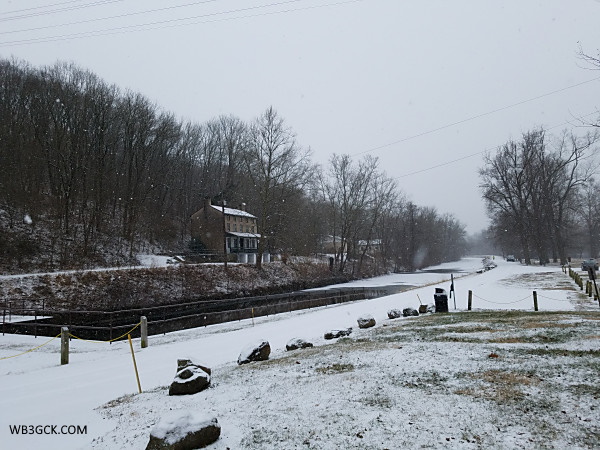
We’re under a Winter Storm Warning today, with 5 to 8 inches of snow expected in some areas. I thought I would sneak out for a bit of QRP-portable before the snow starts. So I drove over to nearby Upper Schuylkill Valley Park, one of my regular Winter-time haunts.

The Upper Schuylkill River Trail at Upper Schuylkill Valley Park

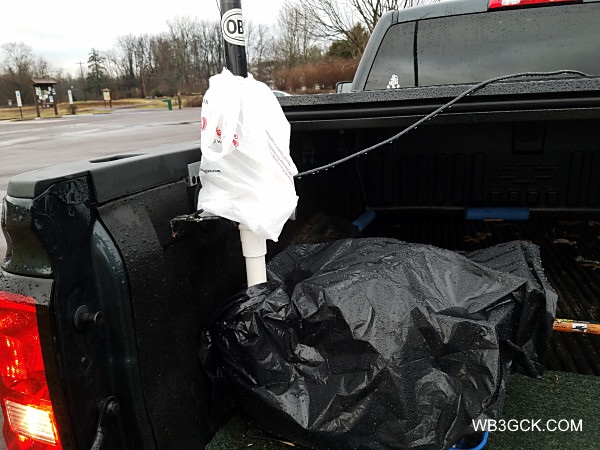
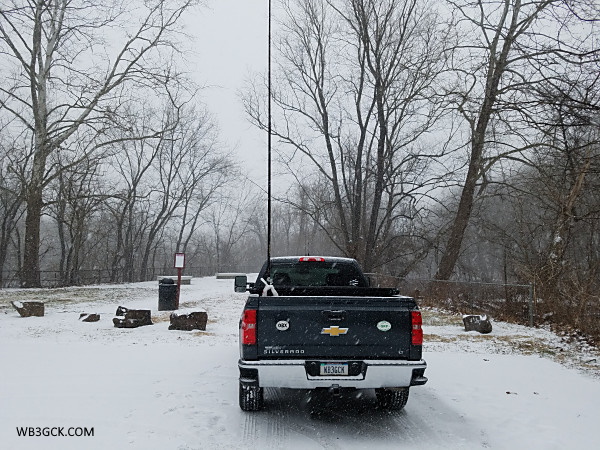
There were a few people in the park when I got there, including a few hardy fishermen. After installing my 19-foot Vertical on my truck, I fired up the KX3 on 40M in search of some SKCC contacts. The bands seemed to be recovering from the geomagnetic wackiness from the past few days. There were some strong signals on the band but not much activity.

I only logged four contacts today but there were some nice chats. In particular, I had nice two-way QRP chats with W8BUD and AJ8S. The best “DX” of the day was with KR9Z in Florida on 20M.

After a while, a park ranger came by to tell me that they were closing the park in anticipation of the snow. So, I tore down, packed up, and headed home. No problem, I was starting to get hungry anyway.

As I write this, the snow has yet to arrive but the local weatherman assures us that it’s coming. I guess I better rest up for some snow shoveling tomorrow.

72, Craig WB3GCK

A Slippery Sloper

I spent the weekend with my grandkids out near Harrisburg, Pennsylvania. My XYL and I watched the kids while my daughter and son-in-law took a little anniversary get-away. Of course, there was some time for ham radio, too.

By the time I got around to setting up an antenna on Friday, it was dark and the temperature was well below freezing. Oh yeah, there was about 4 inches of snow in the backyard to boot. So, I was in need of a real quick and dirty antenna.

I decided to toss a 29.5-foot wire out of a 2nd-floor window. I then went out to the backyard to secure the other end of the wire. I used some shock cord to tie it off to the top of a 6-foot wooden fence. My total time outside in the cold and dark was about a minute.

Back inside, I fed the wire through a homebrew 9:1 UNUN with 18 feet of RG-8X coax. This particular wire and UNUN served me well as a vertical during many National Parks on the Air (NPOTA) activations. I commandeered one end of the dining room table for my KX3 and powered up for a test. The KX3 was able to get a match on 80M through 10M.  Then, I went back to hanging out with the kids.

My impromptu sloper's feedpoint. The wire from the 9:1 UNUN is just pinched in the window.
My impromptu sloper’s feedpoint. The wire from the 9:1 UNUN is just pinched in the window.

By now I’m sure you’re wondering where the “slippery” part of the this post’s title comes in. Well, the next morning I looked out the window and saw that some ice had accumulated on the wire. The wire was dragged through the snow during installation and it froze overnight. The KX3 didn’t mind at all; the internal tuner loaded up the frozen wire without problems.

I got on the air for a bit on Saturday afternoon.  On the air, my impromptu antenna far exceeded my low expectations. I started off working N2CX on 40M. Joe was activating a park on the Eastern Shore of Maryland. I followed that up with a nice two-way QRP chat with WK2J in North Carolina.

My dining room table set up.

I worked a couple of QRPers in the FYBO contest sponsored by the Arizona ScQRPions. I also worked some Minnesota and Vermont QSO Party contesters. An assortment of SKCC, POTA, and SOTA stations also made it into my log over the weekend. The best “DX” of the weekend was VE7ST in the British Columbia QSO Party on 20M.

I didn’t expect much from this quickie antenna configuration but I was happy with the way it got out. Plus, set up/tear-down was easy and only took a few minutes. This sloper will likely be my go-to antenna for future visits to see the Harrisburg grandkids.

72, Craig WB3GCK

Winter Field Day 2019

Between errands and other obligations, I squeezed in a little time for Winter Field Day. I was only on for about 3 hours over the weekend but it was still fun.

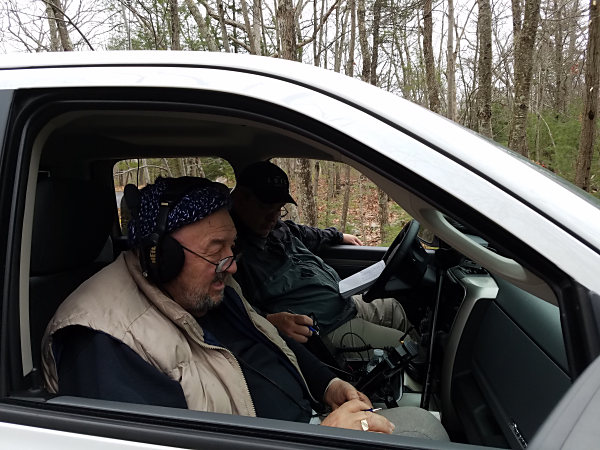
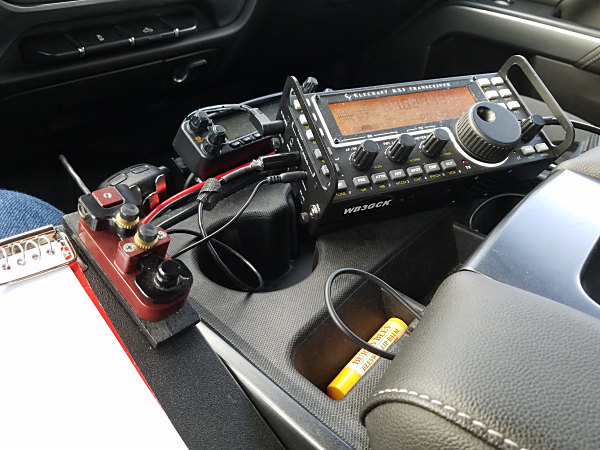
On Saturday, I went to one of my usual Winter operating spots, Black Rock Sanctuary. (It’s one of a few local parks that have Porta-Potties year round.) I used my usual stationary-mobile set-up and operated from inside the truck.  I operated in category 1O from EPA.

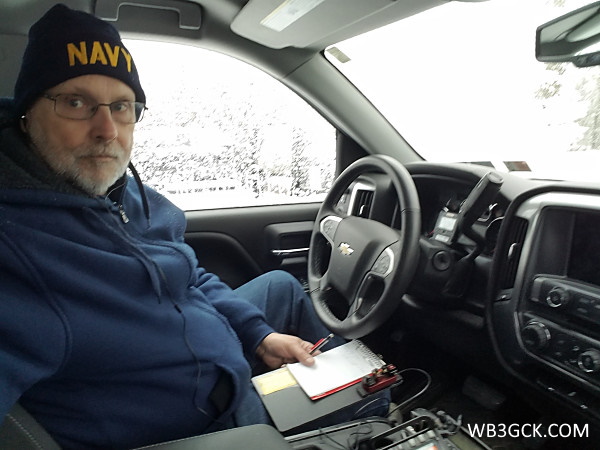
WB3GCK operating in Winter Field Day 2019. If you look closely, you can see a microphone connected to my KX3. Yep. I actually made some SSB contacts.

I got off to a rough start, though. My trusty Palm Mini paddles gave me some problems. The connector at the paddles wasn’t making reliable contact. After fiddling with it for a while, I managed to get them working again. I’m babying these paddles since Palm is no longer in business and parts are unavailable.

After I got on the air, I found that 40M was wide open. I was able to work pretty much any station I could hear. In a little over an hour of operating, I logged 19 contacts — all on 40M CW.

I packed up and headed home to have dinner with my (far) better half, who had been out of town most of the week. I also went to work on my Palm paddles with some contact cleaner.

On Sunday, I headed back to Black Rock to make a few more contacts. This time my paddles worked right off the bat. (Note to self: Hey, Craig! Do some maintenance on your portable keys once in a while, will ya!)

The QSOs came a bit slower this time around. In two hours, I logged 20 contacts on 40M and 20M. I even made some SSB contacts for the extra multipliers. (That’s a fairly rare thing for me.) My best “DX” of the day was California.

When it starting getting tough to find “fresh meat” on the bands, I decided to pack up and head home. It wasn’t the most adventurous Winter Field but it was fun to get out there to make a few contacts.

72, Craig WB3GCK