Hopewell Furnace NPOTA Activation

ARRL National Parks on the Air logoOn Good Friday, I found myself with a free afternoon.  I decided to take advantage of the great Spring weather and make a spur-of-the-moment trip to activate the Hopewell Furnace National Historic Site (NS37).  I hastily threw some equipment into my truck and headed out.

About 45 minutes later, I was on site and ready to get started.  But first, I  had to resolve some antenna issues.  For some reason, my SWR was higher than normal and not very stable.  I found a loose BNC connector on my 4:1 unun that I think was the culprit.  I eventually managed to get things stabilized enough to operate.  I was using my FT-817 at 5 watts into a 29.5-foot vertical wire antenna with two counterpoise wires.  I operated all CW.
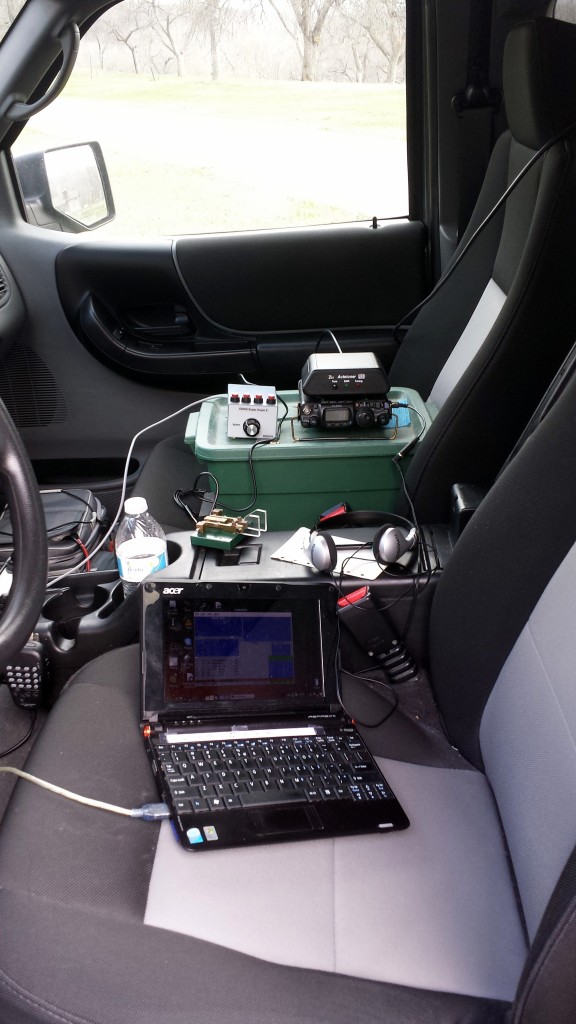
The somewhat cramped operating position in my truck.

I couldn’t spot myself due to lack of a cell signal, so I just started calling, “CQ NPOTA.”  After about 35 minutes with no takers, I was pretty close to packing up and heading home.  Finally, I worked a Wisconsin station on 20 meters.  I tuned down the band a bit and heard N4CD activating a park in Texas.  I got him on the first call.  So, at least, I was getting out to somewhere.

I moved down to 40 meters and worked stations in New York and Michigan.  One of them must have spotted me because things picked up quickly after that.  I spent the rest of my time on 40 meters and wound up with 30 contacts in the log (including 2 park-to-park QSOs) after an hour and forty-five minutes.
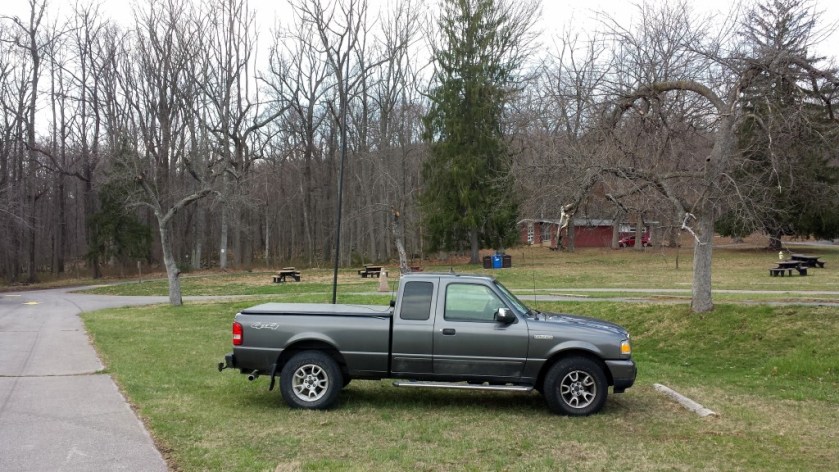
My 31-ft Jackite pole supported with a drive-on mount

After I packed up, I stopped by the visitor center and chatted a bit with the park rangers.  They were very welcoming and happy to have their park activated again.  They were curious about how many contacts I made and how far I was able to get out.  As I was leaving they thanked me for putting their park on the air.
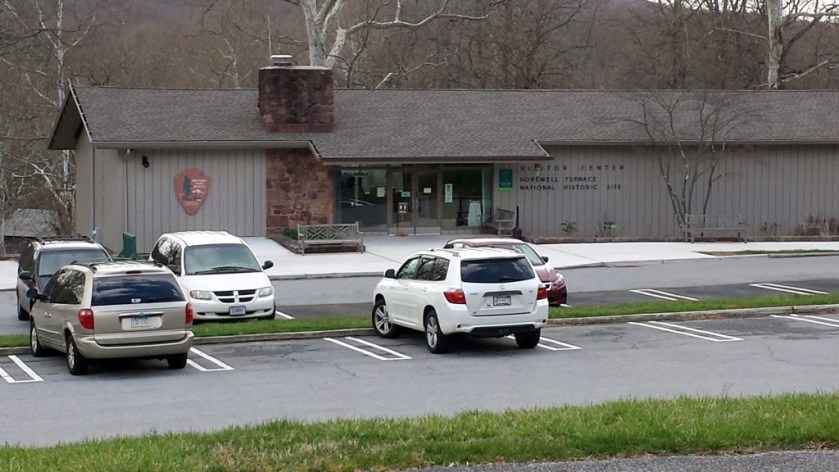
Hopewell Furnace visitor's center
Hopewell Furnace visitor’s center

I have some repair work to do on my antenna but it was a nice afternoon for an NPOTA activation.

72, Craig WB3GCK
Rediscovering the Straight Key

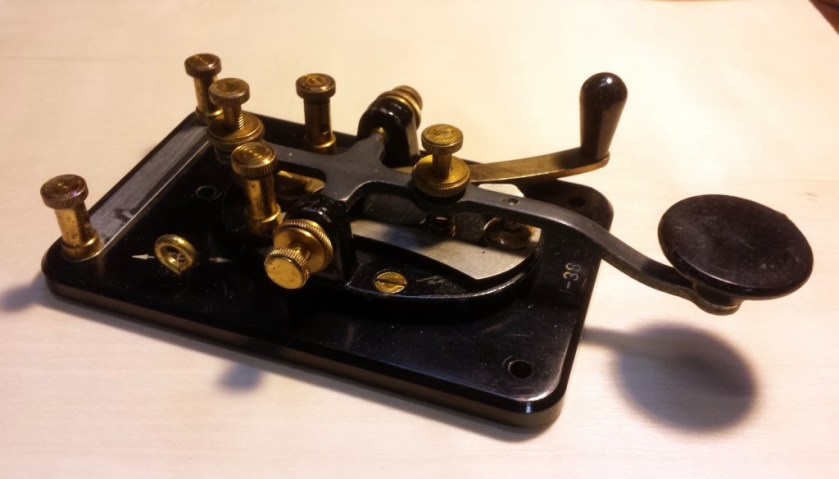
Back in January, I decided I wanted to add a new facet to this hobby that I’ve enjoyed for more than 42 years now.  I have always heard a lot of Straight Key Century Club (SKCC) activity on the bands and it sounded like fun.  So, I signed up for an SKCC number, dusted off my trusty J-38 key and jumped into the fray.

More than 20 years had passed since I made the switch to paddles and Iambic Mode B keying.  Needless to say, my straight key fist was very rusty.  After some off-air practice, I heard NN9K near Chicago calling, “CQ SKCC,” on 30 meters one day.  I grabbed the J-38 and a few minutes later, Peter had given me my first official SKCC contact.

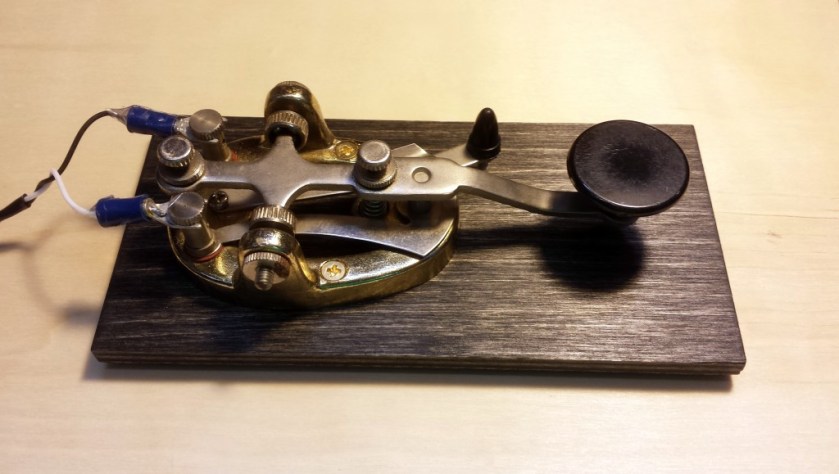
I bought this J-38 from a military surplus store around 1975. Nothing special but I love the feel of it. It reminds me of my Navy days, I guess.

A few days later, it was time for the February SKCC Weekend Sprintathon (WES).  The monthly, weekend-long WES contests are like most other CW contests except they are friendlier and run at a slower pace.  After a fun weekend operating on and off, I ended up with 38 more SKCC contacts in the log.  One particular highlight was working Bert F6HKA on two bands with my meager 5 watts and rainspout antenna.  (Full disclosure:  Bert’s awesome station gets most of the credit for these contacts.  He was louder than most stateside stations.) After my first WES, I was hooked.

Even though SKCC promotes the use of manual keying methods, i.e., straight key, bug, cootie key; they have some pretty sophisticated, computer-based tools that can help you reach the various award levels.  There are a few SKCC-specific logging programs.  I use AC2C’s SKCC Logger for logging during WES contests and keeping track of all of my SKCC contacts.   The K3UK SKCC Sked Page is an online gathering place for members looking for contacts.  Another slick tool is the SKCC Skimmer.  This software tells me who is online on the Sked Page and which SKCC members have been spotted on the Reverse Beacon Network (RBN).  Most importantly, it lets me know if they have SKCC numbers I need for award levels I’m pursuing.

The thing I like most about SKCC is the friendly attitude of the members.  They are particularly helpful to newbies and will always slow down to match the sending speeds of slower operators.  Many times, operators would recognize my new SKCC number and take the time to welcome me to the club — even during contest exchanges.

This is my first key as a ham. I bought this at a Radio Shack store in 1974. It still sees occasional use.

After a month and a half of general operating and two WES contests, I found myself with 99 SKCC contacts.  I needed just one more to reach the SKCC Centurion level.  With some sort of geomagnetic disturbance going on, I resorted to the SKCC Sked Page for help.  Within minutes, there were several stations trying to work me to put me over the top.  Werner, N8BB in Michigan, was finally able to get me there.  I applied for my Centurion award and received it later that day.  I’m now in the process of trying to work 50 Centurion, Tribune, or Senator level members for the Tribune level.

I’m pleased to report that my old straight key fist is back in shape and I have rediscovered the elegant simplicity of the straight key.  Many thanks for the good folks who run the SKCC organization.  It’s easy to see why the SKCC is one of the fastest growing clubs in ham radio.

72, Craig WB3GCK

Measuring Audio Frequencies with a Guitar Tuner

Here’s a little hack that serves no real purpose.  I’ll tell you about it anyway.

I recently built the T-Tone Code Practice Oscillator (CPO) kit from Morse Express.   It’s a handy little addition to the shack for adjusting straight keys or testing keyers.  After building it, I just adjusted the audio frequency for a pleasing tone.  Most people would have just left it alone at that point.  I’m not most people.

I started to do some thinking, which is a dangerous practice that can sometimes lead to unexpected consequences.  I wondered how the frequency of CPO compared to the sidetone of my FT-817.  There was no particular point to this mental exercise other than idle curiosity.

Now, I certainly could have keyed both the CPO and the FT-817 and done a comparison by ear.  I could have just adjusted the CPO by ear to match the FT-817.  But what fun would that be?  I was curious about the exact audio frequency of the FT-817’s sidetone, so I opted to do some experimenting.

Having been playing guitar for more than 50 years, I have acquired a gadget or two over the years.  One of those gadgets is a clip-on guitar tuner.  I can clip this clever device on the headstock of my guitar and, by sensing vibrations, it will tell me what note I’m playing and whether the pitch is sharp or flat.  I figured I could use this thing as an audio frequency meter of sorts.

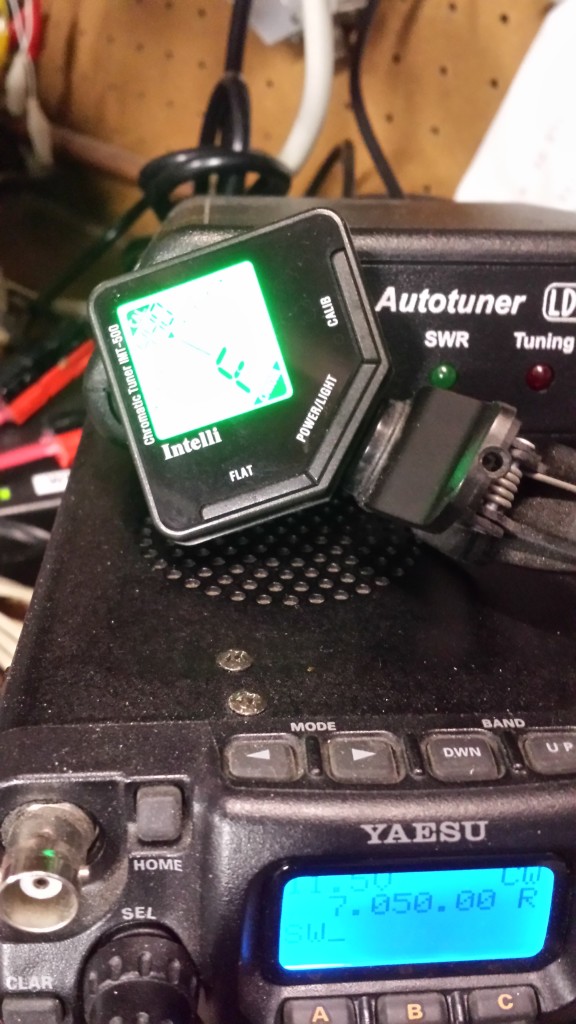
First, I laid the guitar tuner on top of the FT-817’s speaker and keyed up.  That indicated that the pitch of the sidetone was an F note.  Consulting a conversion chart I found on the Internet, that equates to 699Hz.  I seemed to recall that the FT-817’s sidetone was somewhere around 700Hz, so that seemed about right.  I was sure I was in the right octave.

Guitar tuner on top of the FT-817

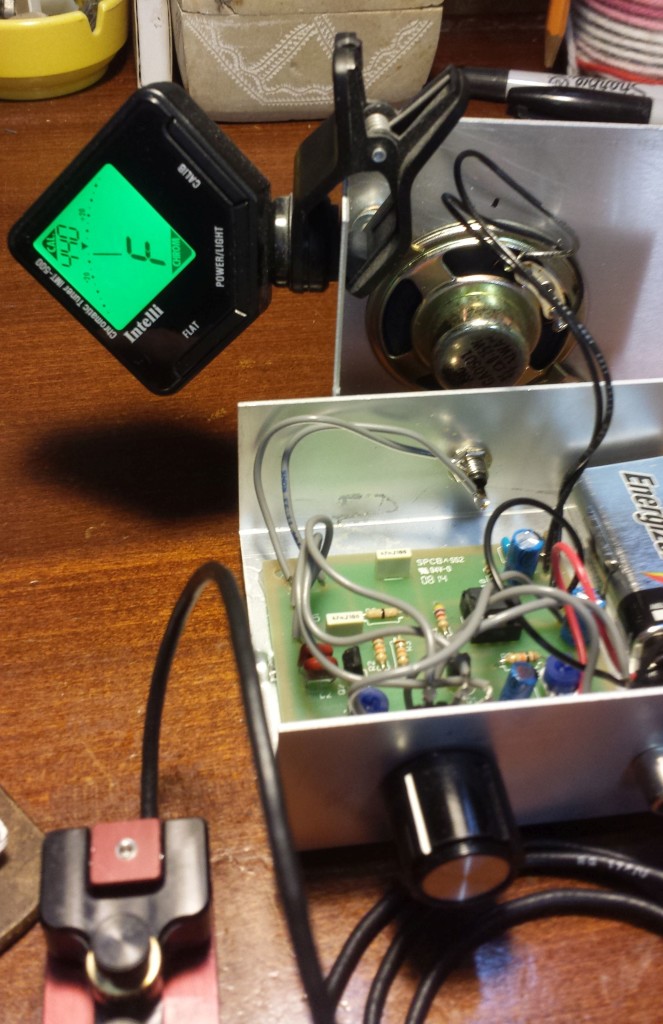
Next I took the lid off of the CPO and clipped the guitar tuner on it.  It initially indicated that the CPO was tuned to F#.  That equates to a frequency of 740Hz.  I tweaked the CPO’s frequency adjustment pot to F, matching the FT-817.  A side-by-side comparison of the CPO and the FT-817 showed that I was successful.

Guitar tuner clamped onto the lid of the code practice oscillator

So, what’s the point of all this?  None really.  Is there a practical use for this?  Probably not.  Does it really matter that my CPO matches the sidetone of my radio?  Nope.  I just had one of those “I wonder what would happen if…” moments.  Now I know.

72, Craig WB3GCK