Back to the Field Again

Boy, it sure has been a while since I’ve done any portable operating.  Other projects and interests seemed to have overtaken ham radio for the past few months.  With temperatures near 70F today, I couldn’t resist the opportunity to shake off my cabin fever.

My XYL was planning to drive out to our daughter’s house to help her out with a household project.  I decided to tag along and do some operating from my daughter’s property.  I purchased a new truck about a month ago and had yet to do any QRP operating from it.  Today looked like a great opportunity to do a little testing.

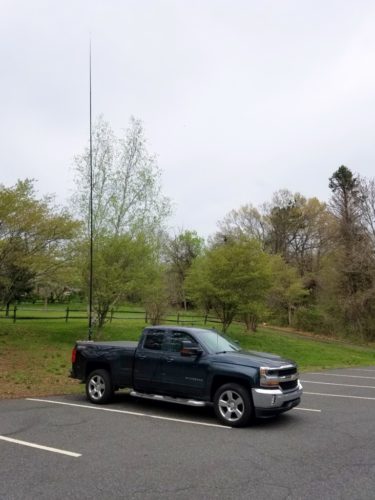
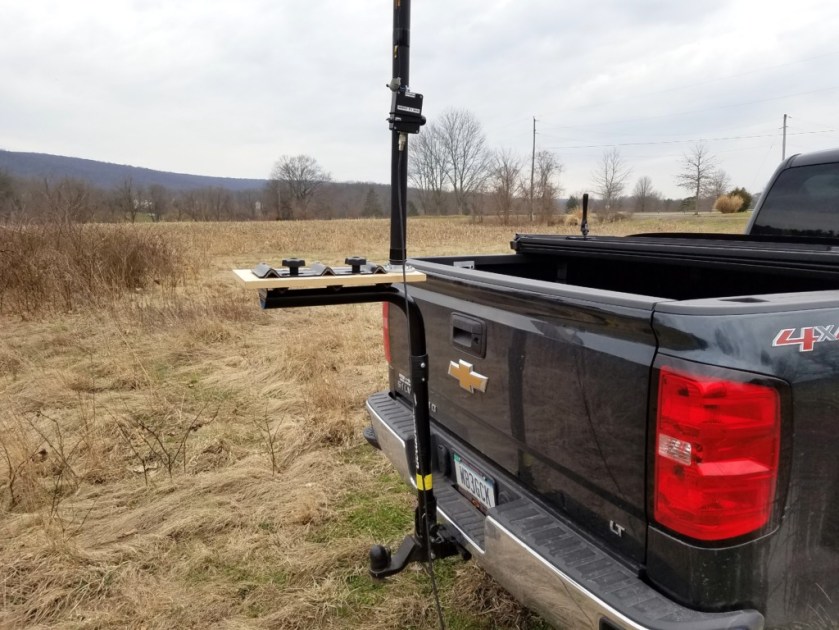
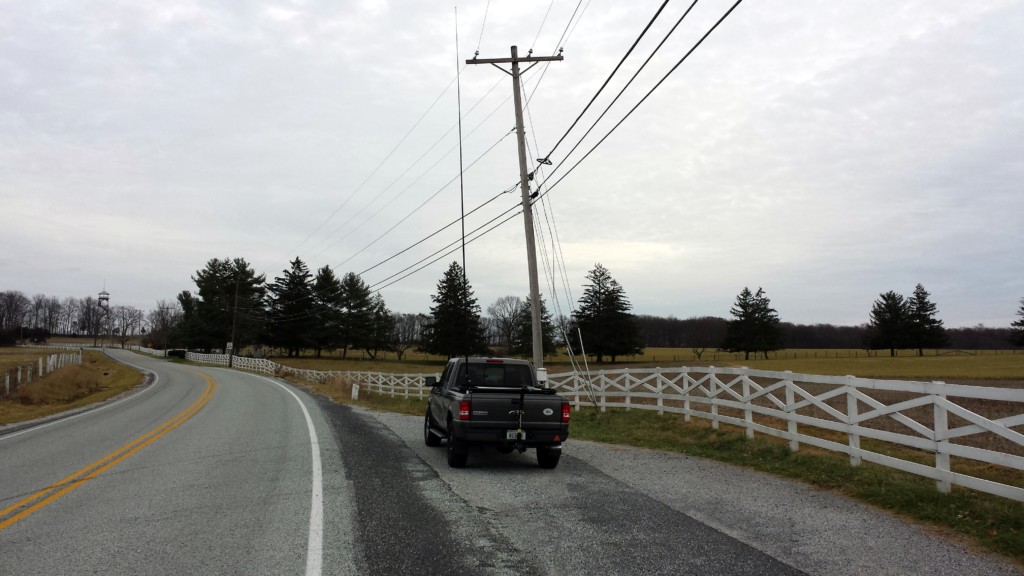
I parked the truck in a remote corner of my daughter’s property, next to her neighbor’s corn field.  I set up a 29.5-foot vertical using my bike rack mount on the rear of my truck.  I fed it through a 9:1 unun and ran a 25-foot coax cable into the passenger side window of the cab.  So far so good.

My new truck's first QRP-portable outing.
My new truck’s first QRP-portable outing.

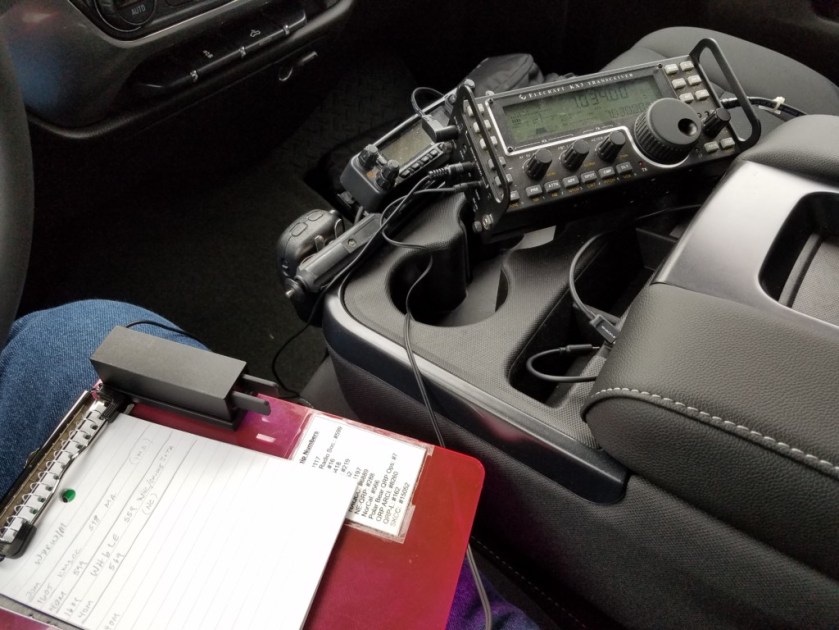
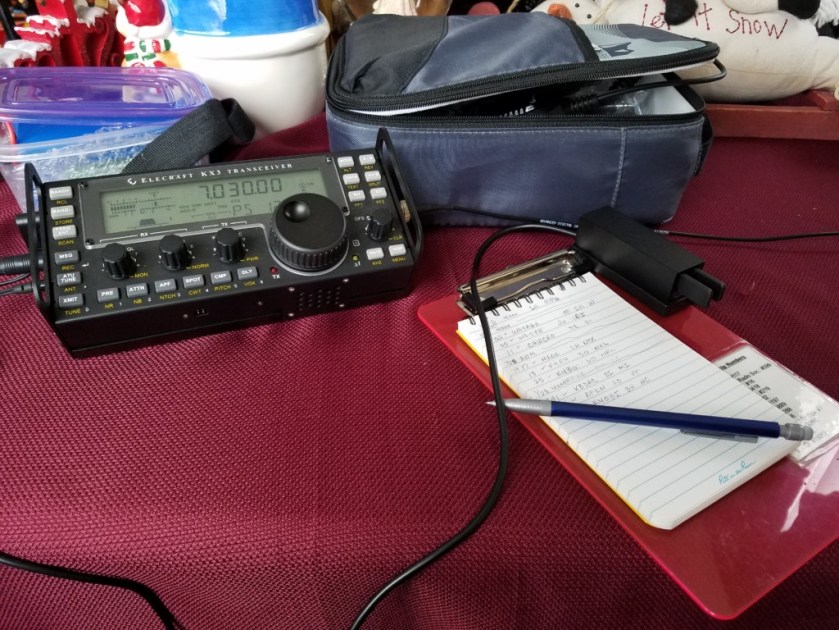
Given that this truck is larger than my last one and the configuration of the center console is much different, I had to do some finagling to place my KX3.  I used a small Rubbermaid® container on the passenger seat and placed the KX3 on top of it.  Due to the distance involved, I had to place my clipboard and paddles on the console in order for the cable to reach the rig.  (Unfortunately, I forgot to take a picture of the setup.)  It worked OK but I need to figure out a more comfortable arrangement.  I have some ideas that I’ll be exploring.

Bike Rack Antenna Mount. A 9:1 unun is attached to the Jackite pole with a bungee cord.

My goal for today was to make contacts on 40, 30 and 20 meters.  I started out calling CQ on 40 meters and NN4NC in North Carolina came back with a very strong signal.  During our QSO, Mac reduced his power to match my 5 watts and he continued to boom into southeastern Pennsylvania.  I then moved up to 30 meters and had a short exchange with W1TEF in South Carolina.

When I moved to 20 meters, I heard WU5M calling CQ near the QRP watering hole.  I gave Bryan a call and we had a two-way QRP QSO, despite some fading on the band.  It started to rain so I signed with Bryan and quickly took down the antenna.  I was parked in an area that tends to get very muddy when it rains.

So, everything worked fine with the new truck but I do need to work out some better ergonomics.  It felt good to get back out in the field again, even if only for an hour or so.

72, Craig WB3GCK

Winter Field Day 2017

Well, there wasn’t much “field” in Winter Field Day (WFD) for me.  My XYL and I traveled out to central Pennsylvania for the weekend to babysit our 2-year old grandson.  My plan was to sneak out into the backyard for a few hours each day to operate in WFD as category 1O (outdoor).  Before the weekend, however, I came down with a wicked cold (courtesy of my other grandson).  I decided that operating out in the cold probably wasn’t a good idea.

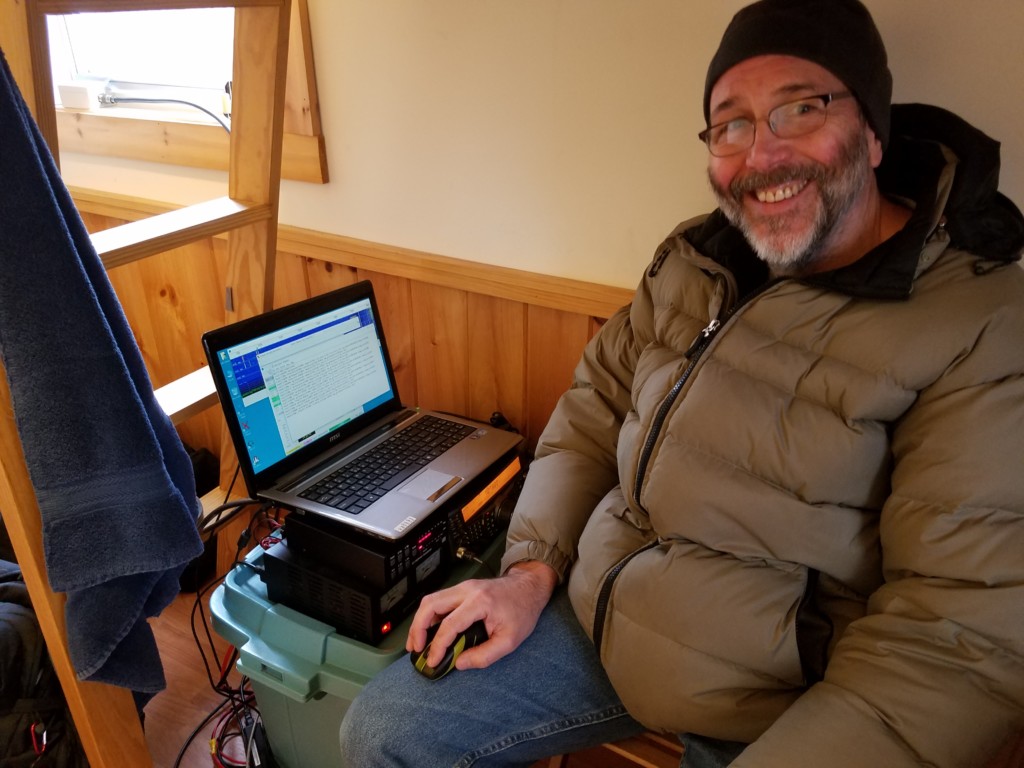
I strapped my 31-foot Jackite pole to the fence in the backyard and used it to support the far end of my LNR EFT-10/20/40 end-fed halfwave antenna.  The feed point was just inside a second story window.  I set up my KX3 and operated under battery power.  I read over the rules and concluded that I was a “1H” (home) station.

My temporary indoor station for Winter Field Day

After setting up, I had a warm-up QSO on 20M with K0WEW in Kansas.   Everything appeared to be working.  I operated mostly during nap time (my grandson’s, not mine).  With just a couple of hours of actual operating,  I ended up with 20 CW Winter Field Day stations in the log.  I’m sure I could have logged more if I had plugged in the microphone.  I just couldn’t bring myself to do that.

Outside of the contest, I worked TM1A (France) in the REF Contest (on 40 meters, no less).  I also had a nice two-way QRP QSO with W4MQC.  Alan was operating portable from New Hampshire.

Even though it wasn’t much of a Field Day for me, it wasn’t without some excitement.  At one point, all the signals on 40 meters suddenly dropped way down.  I looked out the window and saw that the wind caused my Jackite pole to collapse putting half of my antenna on the ground.  My halyard line got caught between two sections of the pole when it collapsed.  It took me about 30 minutes to get that mess straightened out.

My hat goes off to all the hardy hams who braved the cold for Winter Field Day.  Hopefully, next year I’ll get out there, too.

73, Craig WB3GCK

Camp Run-a-MOC 2017

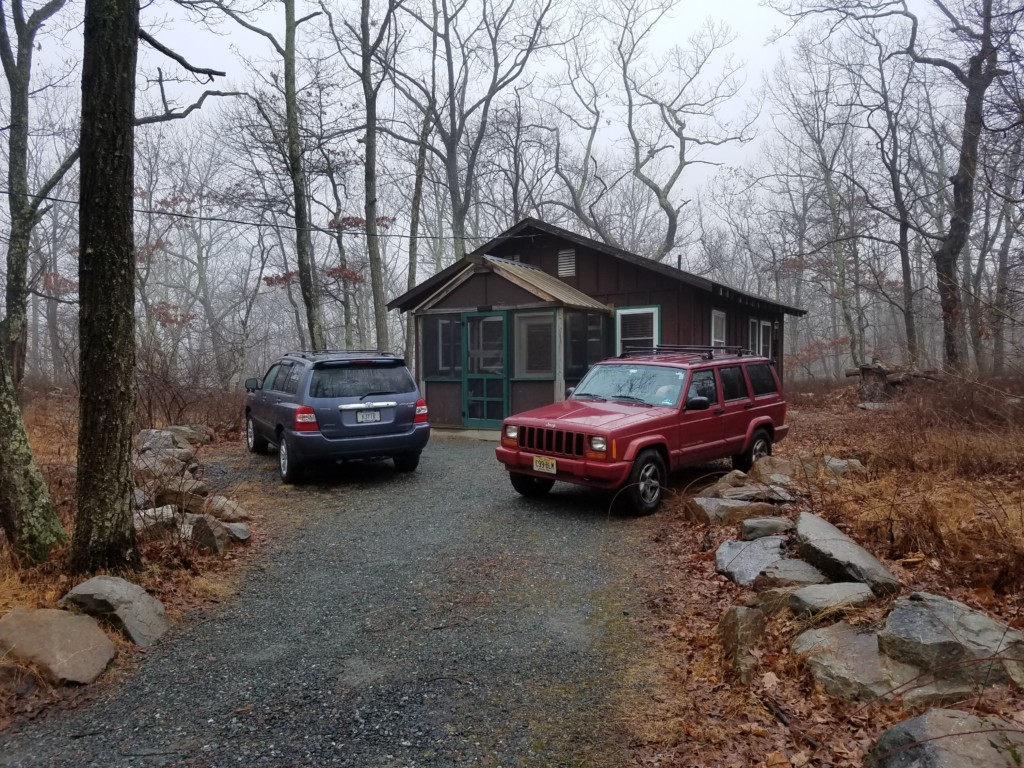
Our loosely-knit group of QRPers, known as the Boschveldt QRP Club, gets together each year in January for a weekend of operating and socializing in the woods.  We rent a small cabin at the Mohican Outdoor Center (MOC) in the Delaware Water Gap Recreation Area in Northern New Jersey.  The MOC, which is adjacent to the Appalachian Trail, has been the site of this annual gathering for the past 12 years or so.  This annual event has come to be known as “Camp Run-a-MOC.”

Our cabin at Mohican Outdoor Center.

In attendance this year was K3YTR, WA3WSJ, NK1N, NU3E and me.  Walt KB3SBC was there on Friday but, unfortunately, had to leave to deal with a plumbing emergency at home.

When I rolled into camp on Friday afternoon, Ed K3YTR was busy setting up his gear for the ARRL VHF Contest and John NU3E was setting up an end-fed halfwave antenna for some JT65 & JT9 operating.  Ed WA3WSJ and Glen NK1N were operating pedestrian mobile near Crater Lake.  It turned out to be a rainy hike for them.  After a dinner prepared by K3YTR, there was a lot of catching up and story swapping.

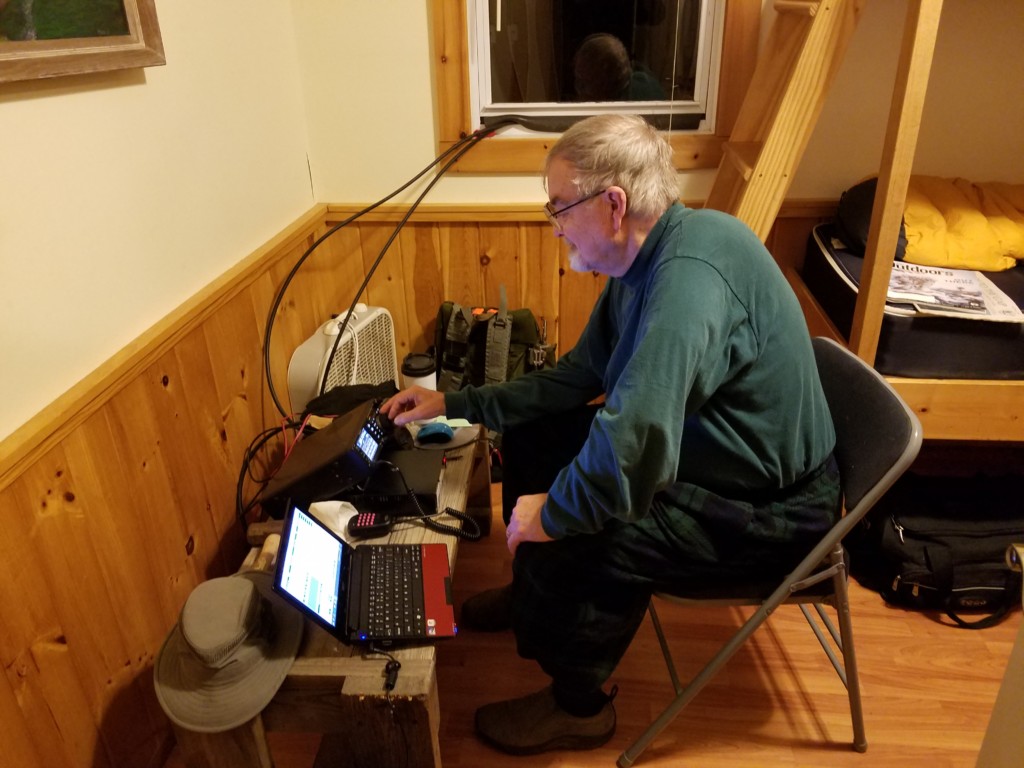
John NU3E operating JT modes from the cabin.
John NU3E operating JT modes from the cabin. It wasn’t that cold in the cabin; John was dressed for our hike to the Catfish Fire Tower.

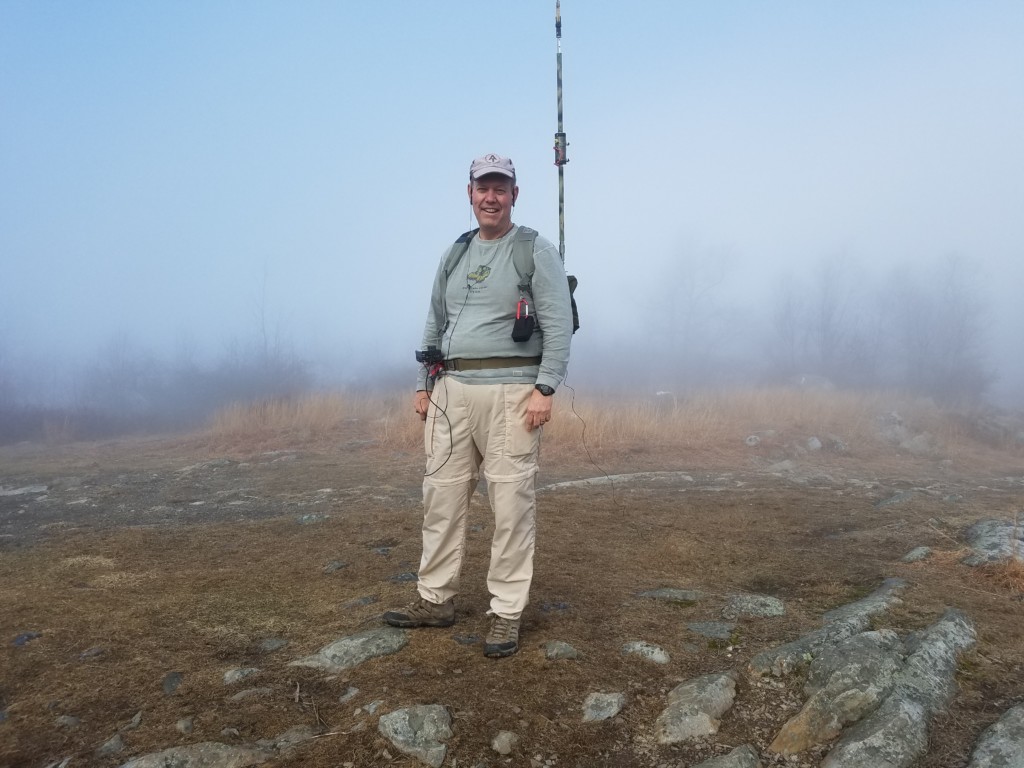
After breakfast on Saturday, WA3WSJ, NK1N, NU3E and I made the two-mile hike up to the Catfish Fire Tower on the Appalachian Trail.  Although we hiked through dense fog on the way up, the weather cleared up a bit when we reached the top of the ridge.

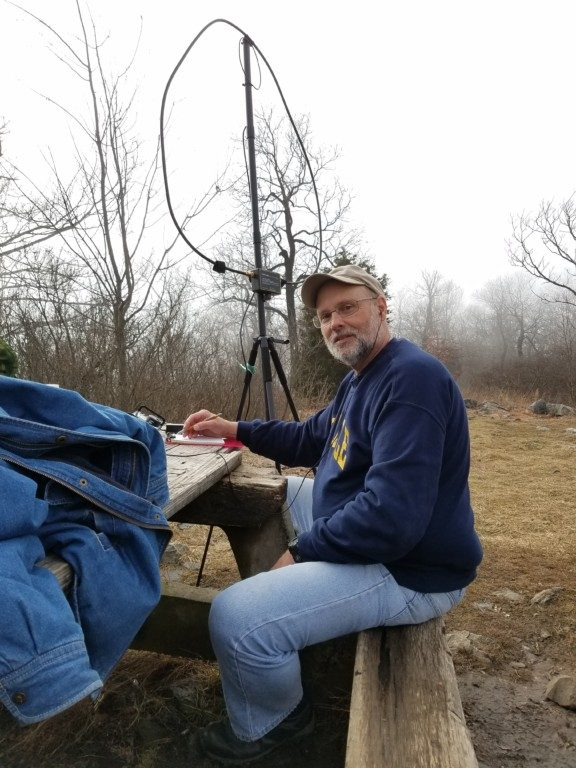
I set up my KX3 and AlexLoop at a picnic table, while WA3WSJ and NK1N operated pedestrian mobile.  NU3E came along for the hike and caught a short nap on the bench of the picnic table where I was operating.

WB3GCK operating from the fire tower. This was taken during a brief break in the weather.

After we each had made a few contacts, the sun went in, the temperature dropped and a dense fog rolled in.  We packed up our gear and made the trek back down the trail.

Ed WA3WSJ operating pedestrian-mobile near the fire tower.

Back at the cabin, K3YTR and NK1N made more some contacts in the VHF contest before we headed into town for dinner.  By the time we headed back to the cabin, the heavy fog and limited visibility made for some tricky driving.  When we got back to the cabin there was some more VHF contesting and more tall stories.  On Sunday morning, we all enjoyed NU3E’s famous Belgian waffles before packing up for the trip home.

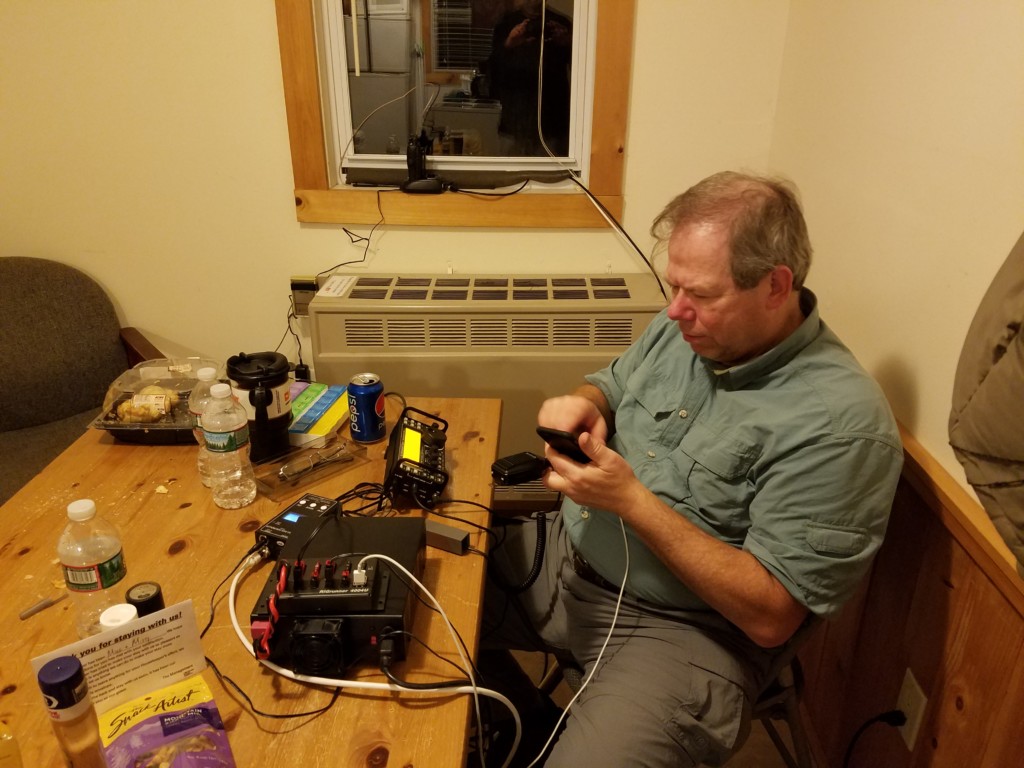
ED K3YTR working the VHF contest from the cabin.
Glen NK1N operating 6 meters in the VHF contest from the cabin.

So, another fun Camp Run-a-MOC get-together is in the books.  The weather wasn’t great but at least it didn’t snow this year.

The next outing for the Boschveldt QRPers is Field Day.  I’m already looking forward to that.

72, Craig WB3GCK

Drive-on Portable Antenna Support

[This is an updated description of the drive-on antenna support that I have been using for many years.  This version originally appeared in the July 2016 edition of QRP Quarterly in the “Idea Exchange” column and most-recently  in the October 2024 edition of Radio ZS, The Journal of the South African Radio League.  You can still find the older article here.  A revised, “step-by-step” version appeared in ARRL’s On the Air Magazine (May/June 2024 edition). ]

Here’s a simple, inexpensive drive-on mast support that I have been using for more than ten years now.  It’s been particularly handy for quick trips to the field, such as National Parks on the Air (NPOTA) activations.

Over the years, telescopic fiberglass poles have become popular as portable supports for lightweight antennas.  Two popular suppliers of these collapsible poles are Jackite (http://www.jackite.com/) and SOTABeams (http://www.sotabeams.co.uk/).  I typically use my 31-foot Jackite pole to support a vertical wire along the outside of the pole.  I have also used them to support lightweight dipoles and a variety of end-fed wire antennas.

One trip to your local hardware store will get you everything you need for this project.  To support a 31-foot Jackite pole, here’s what you’ll want to buy:

  • 1-1/4 inch floor flange
  • 18-inch length of 1-1/4 inch threaded steel pipe
  • (4) 1/4-20 x 1-1/2-inch flathead bolts
  • (4) 1/4-20 nuts
  • (4) 1/4-inch flat washers
  • (4) 1/4-inch lock washers
  • 18 to 24-inch length of 1×8 lumber (I used a piece of maple.  A piece of 1×6 lumber would also work)

[NOTE: I’ve heard that the dimensions of newer Jackite poles may be different. Use the dimensions given here as a general guide, and be sure to double-check the dimensions of your particular pole before buying materials.]

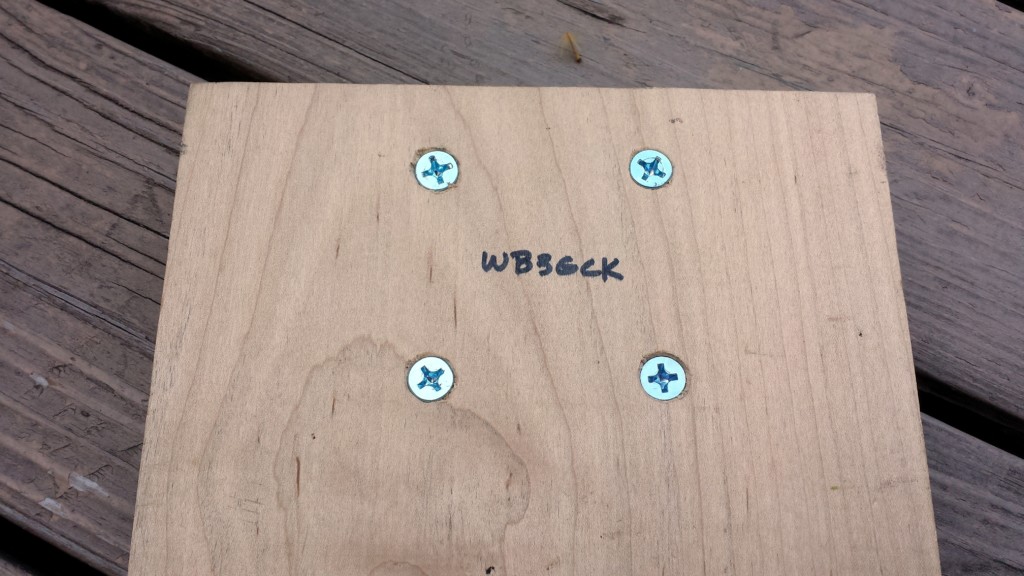
Figure 1. Drill 4 countersunk holes for the floor flange at the end of the board.

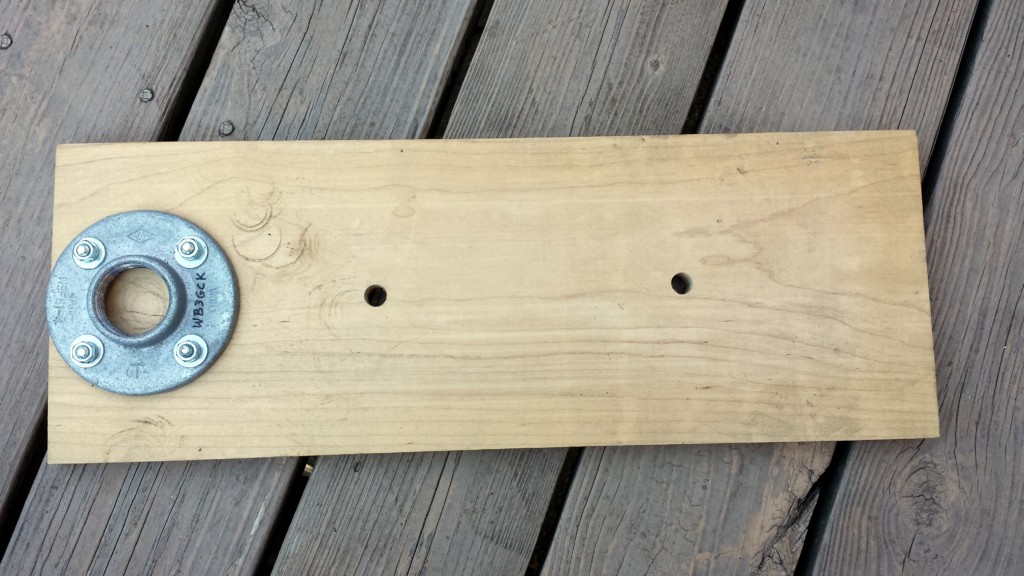
Assembly is pretty straightforward.  Drill four holes to mount the flange to the board.  The flathead bolts go in from the bottom.  You need to countersink the bolts so they will flush with the bottom of the board.  Attach the flange with the flat washers, lock washers and nuts.  That’s about it.

Figure 2. Here is the floor flange mounted on the board.

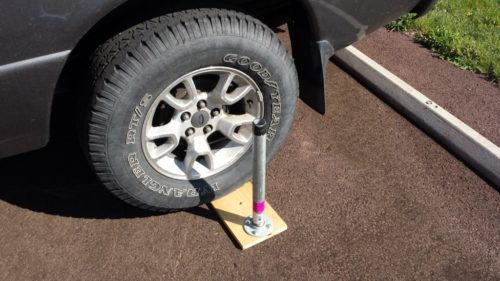
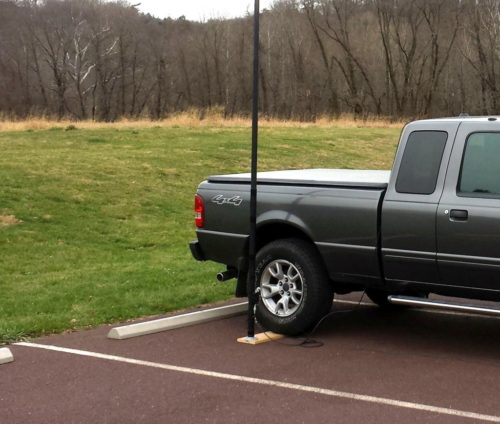
To use the mount, I just set it on the ground and run one of my vehicle’s tires up on it.  Next, I screw the threaded pipe into the flange.  Once the pole is fully extended and the bottom cap removed, I just slide the pole over the pipe.  For my 31-foot Jackite pole, I use a little electrical tape on the pipe to give a snug fit.

Figure 3. Drive onto the mount and screw in the pipe.
Figure 4. Drive-on mast in use supporting a vertical wire.

You can also adapt this for other size poles.  For my 28-foot Jackite pole, for example, I use a 1-inch pipe.  For my 20-foot Black Widow pole (https://www.bnmpoles.com/), I use a 3/4-inch pipe.  You can buy reducers (adapters) in the plumbing department that will allow you to use the smaller diameter pipes with the 1-1/4 inch flange.  If you only use one particular pole, you can always buy a smaller flange and build your mount with that.

This design is more than sufficient for a lightweight, telescopic fiberglass mast. If you need to support something heavier, like a steel mast, you’ll need a more robust support than this.

DE WB3GCK

My NPOTA Finale

ARRL National Parks on the Air logoWow!  This year sure went by fast.  Back on New Year’s Day, I activated Valley Forge National Historical Park (HP46) on the first day of the ARRL’s National Parks on the Air event.  I thought it only fitting that I end the year where it began.
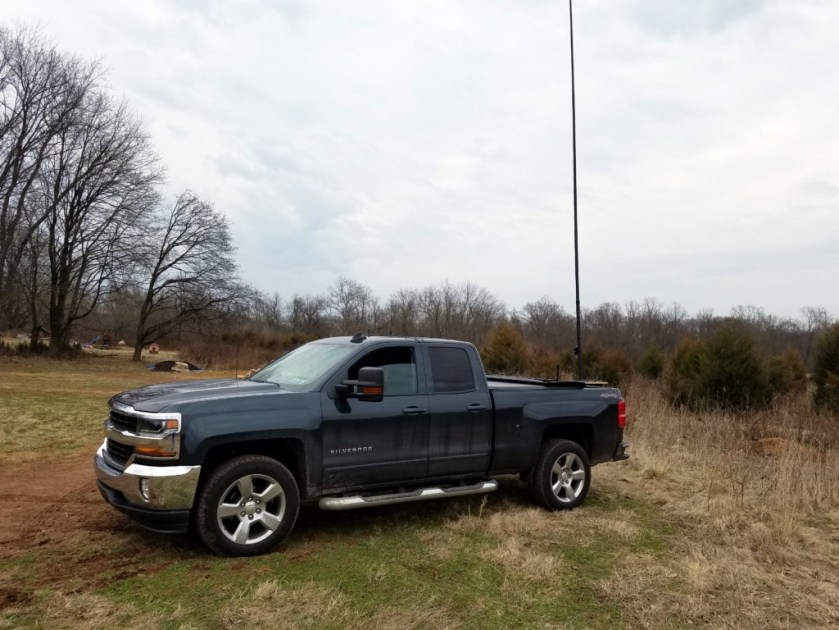
I had some things to do today, so I headed down to Valley Forge this morning for an early activation.  I pulled into the same parking spot in the Wayne’s Woods area I used on January 1st.  It only took a few minutes to set up my 29.5-foot vertical on the back of my truck and get on the air.

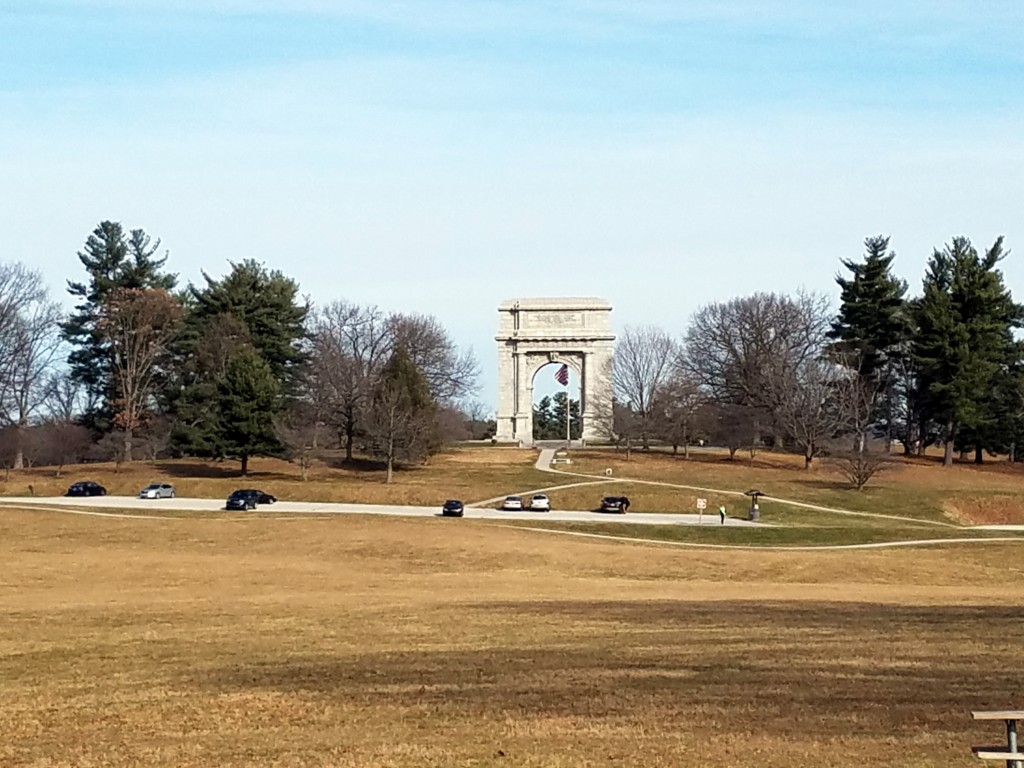
The National Memorial Arch in Valley Forge National Historical Park

I started off on 40 meters CW and was quickly met by a horde of enthusiastic chasers.  Business was brisk for about 30 minutes or so.  The 40-meter band was in excellent shape.  My meager 5-watt signal was making it all up and down the East Coast and well into the upper Midwest.

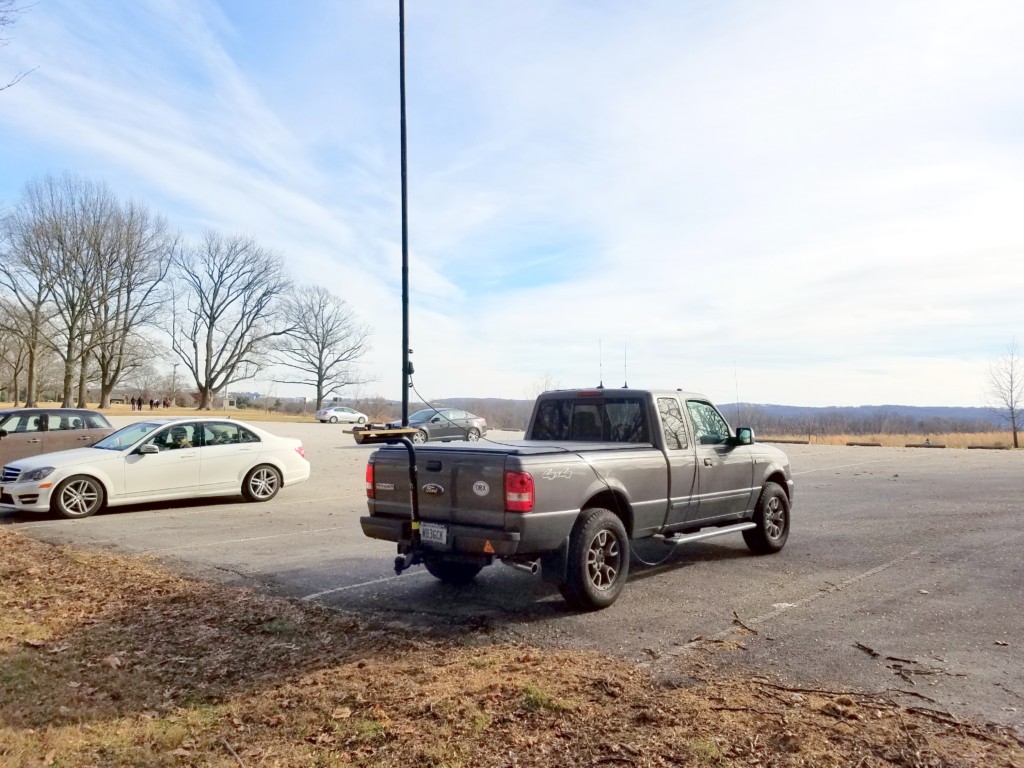
Operating "stationary-mobile" the Wayne's Woods area of Valley Forge. This is the same spot I used back on January 1st.
Operating “stationary-mobile” the Wayne’s Woods area of Valley Forge. This is the same spot I used back on January 1st.

I moved up to 20 meters but the results were disappointing.  Signals were very weak and only one station made it into the log.  I dropped down to 30 meters and worked a handful of stations there before calling it a morning.

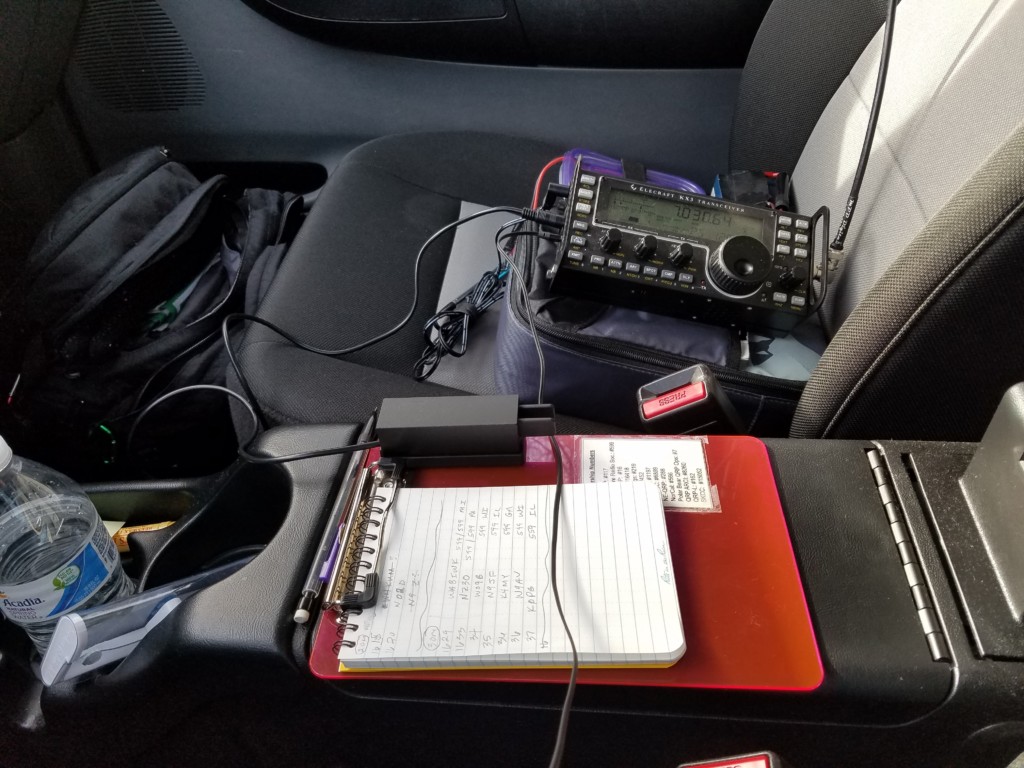
My setup in the truck

Although I was only on the air for about an hour, it sure was a lot of fun.  There were lots of familiar stations like my friends, Kay N3KN and Carter N3AO, down in Virginia.  It was nice to work Emily KB3VVE, the NPOTA “Cookie Queen.”  I also made 2 park-to-park contacts to boot.  As I was processing my log, I noticed that N4EX worked me on both my first and last activations (and a bunch of others, too).  Thanks to Rich for the contacts this year.

I really have to hand it to the ARRL.  This event was a stroke of genius.  The popularity of this event was nothing short of spectacular.  While I wasn’t the most active participant, I sure had fun.  I particularly enjoyed the camaraderie of the participants on the NPOTA Facebook site.  Thanks to the ARRL for putting all of this together.  I also want to thank the many activators and chasers who really made this event so successful.

I wish all of you a happy, healthy and peaceful New Year.

73/72, Craig WB3GCK

First State for the Second Time

ARRL National Parks on the Air logoOne of the things I wanted to do this year was a digital mode National Parks on the Air (NPOTA) activation.  With less than a week left for NPOTA, I figured I better get busy.  I had some free time today, so I headed down to Delaware to activate First State National Park (HP12) using PSK-31.  I activated this park once before back in July.

My set-up was very similar to what I used at HP12 back the last time I was there.  I set up my 31-foot Jackite pole on my bike rack and used it to support a 29.5-foot vertical wire.  I fed it through a 9:1 unun with 18 feet of RG-8x coax from my KX3.  The only thing different this time was the addition of my little Linux netbook computer and a Signalink USB interface that I picked up recently.

I started off on 20 meters and quickly worked about 4 stations.  Things slowed down a bit after that.  Looking at the waterfall, I could see the band fading in and out.  After picking up a few more, I moved down to 40 meters.  Although 40M seemed to be in good shape, there wasn’t much activity there.  I worked one very loud station from West Virginia and headed back to 20 meters to finish up.

By the time my laptop battery died (it’s probably time for a new battery), I managed to log 11 stations, just squeaking by the minimum number needed to qualify the activation.  Despite the fading on 20 meters, I managed to cover a good bit of the country including a California station and a park-to-park PSK-31 contact.  I’m sure I could have done better using CW but using PSK-31 was fun and a nice change of pace for me.  Unfortunately, I left the park without taking pictures.

I’m planning to do one more activation before the end of the year. I’m going back to finish the year where I started off on New Year’s Day.   On New Year’s Eve, I’ll be at Valley Forge National Historical Park (HP46) from 1700-1900 UTC.  This time, it will be CW only.

72, Craig WB3GCK

Catoctin, Gettysburg and Eisenhower NPOTA Activations

ARRL National Parks on the Air logoSince the XYL was planning to do some Christmas shopping today, I decided to activate three NPOTA sites.  It was a busy day but a lot of fun.

I started off at Catoctin Mountain National Park (DZ01) near Thurmont,  Maryland.  Brian, N3VN, had emailed me to let me know that he would be there at the same time.  On arrival, I headed to their location in the Chestnut Picnic Area.  I chatted with Brian and Mike W3MBC for a while before heading to the Hog Rock trailhead to set up.  I used my KX3 at 5 watts and my trusty 29.5-ft vertical wire and 9:1 unun.

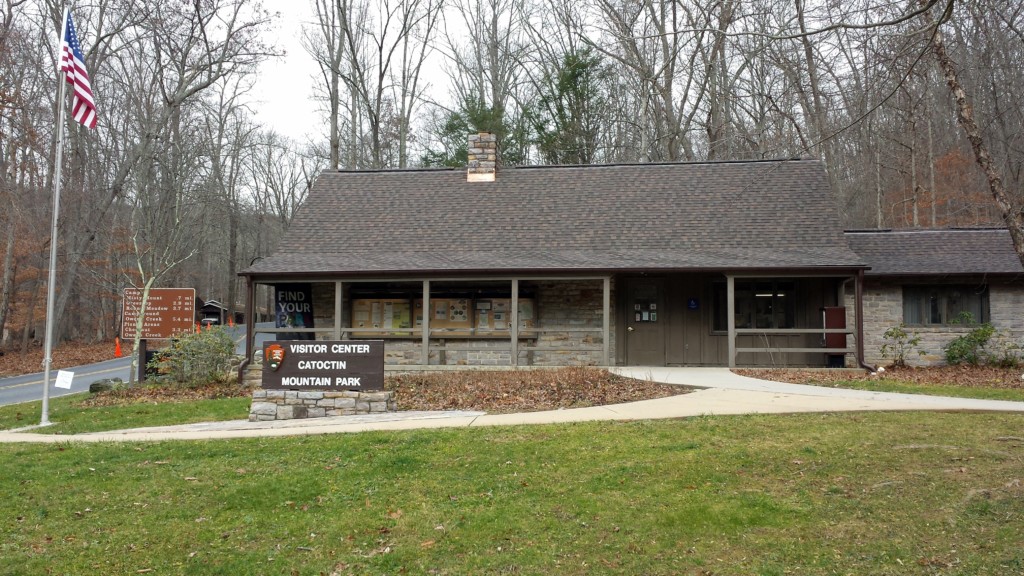
Catoctin Mountain Park Visitor's Center
Catoctin Mountain Park Visitor’s Center

For some reason, the “dit” side of my Palm mini paddles wasn’t working.  Fortunately, I brought my old NorCal paddles along as a backup.

Once I got my paddle issues under control, I worked a steady stream of stations on 40 meters and a few on 20 meters.  After about 45 minutes things slowed down.  I decided to cut my visit short and move on to Gettysburg National Military Park (MP03) to make up some time.

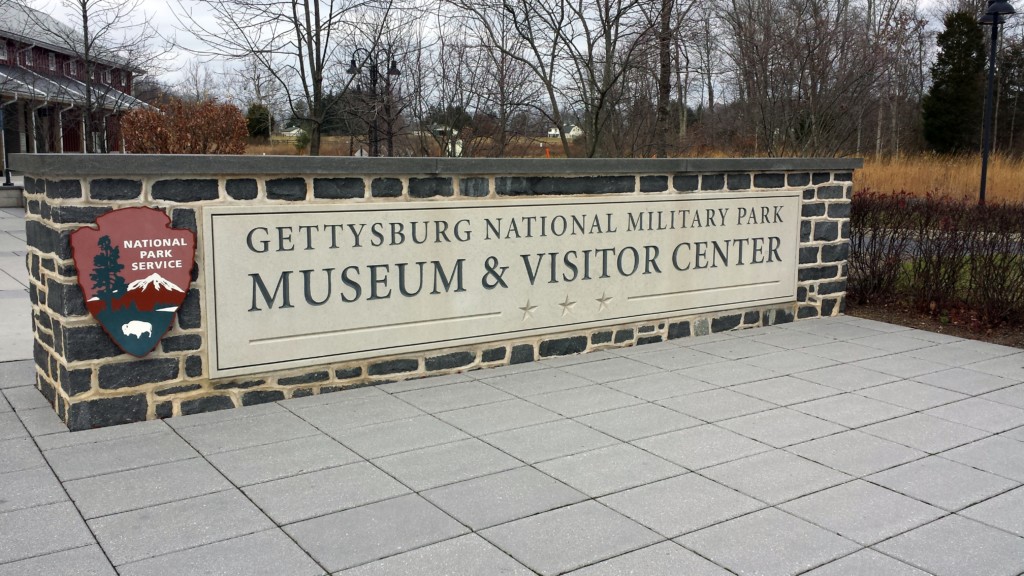
Gettysburg National Military Park

Brian N3VN recommended a spot at Gettysburg but I never did find it.  I ended up pulling off the road near the New Jersey Brigade monument.  I set up the 29.5-foot vertical and got to work.  Here I again made most of my contacts on 40 meters.  There weren’t many takers on 20 meters so I again left early and headed over to  the Eisenhower National Historical Site (NS13).

At the Eisenhower site, I operated outside the fence along the side of the road.  Many folks have activated NS13 from this spot.  Since there are some overhead utility wires, my 31-foot Jackite posed a bit of a risk.  So, for this site, I went with a 19-foot vertical that I had cobbled together the day before.  I also cranked up the KX3 to 10 watts for good measure.  Because of the shorter antenna, I only worked 20 meters from this location.

Activating the Eisenhower National Historic site. My 20-foot antenna is a bit closer to the utility lines than I would have liked.

Things got off to a very slow start.  I was a little nervous but eventually got the required 10 contacts and then some.  Despite my kludged-together antenna, I worked several stations in western Canada plus one in Alaska.

While I was operating at Eisenhower, I noticed that my SWR was changing a lot.  I had to frequently re-tune the KX3’s internal tuner to get it back down.  As I was taking down the antenna, I found a loose connection on my 9:1 unun.  So, in addition to dealing with the Palm paddles, I have an unun to repair.

Things didn’t always go smoothly but I was happy to successfully activate three sites today.  That made the 2-hour drive home a lot more bearable.

72, Craig WB3GCK

Delaware National Scenic River Activation

ARRL National Parks on the Air logoI made the trip to the Washington Crossing area to activation the Delaware National Scenic River (WR03).  It’s a beautiful area but this wasn’t my best activation.

I had a couple of potential operating locations I wanted to check out.  I first headed up to the Thompson-Neely section of the Washington Crossing State Park in Pennsylvania.  There was a high bluff overlooking the river that was intriguing but didn’t seem close enough to the river.  (In hindsight, I might have been over-thinking the 25-foot requirement.)

I next headed across the very narrow bridge to the New Jersey side.  Intrepid NPOTA activator, N2CX told me about this section of New Jersey’s Washington Crossing State Park.  I passed on the picnic area (one of a couple of bad decisions I made) and continued to explore the park.  I was thinking about heading back to the Pennsylvania side but I wanted to get on the air.

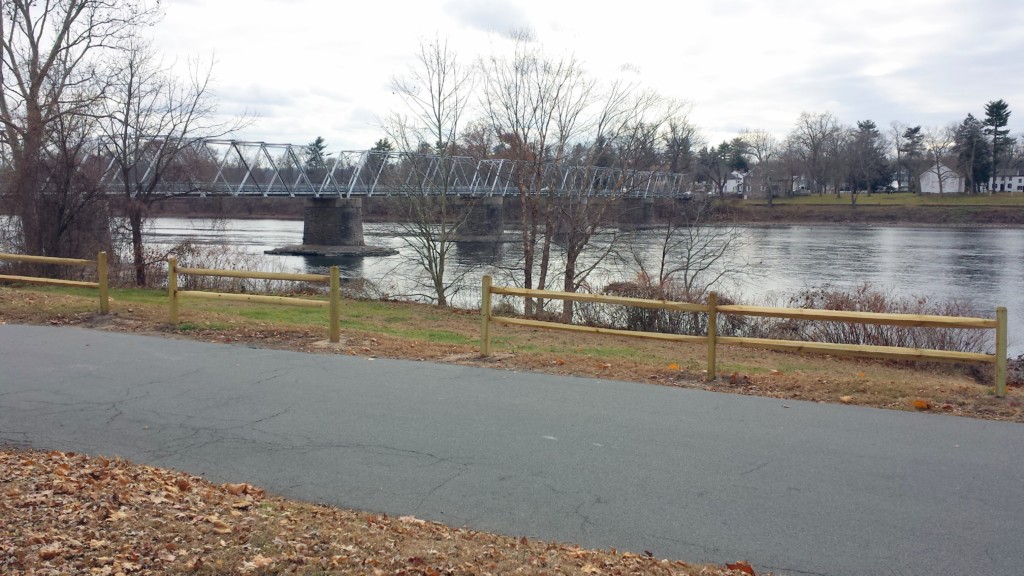
Washington's Crossing, looking from the New Jersey side. The bridge is barely wide enough for two-way traffic.
Washington’s Crossing, looking from the New Jersey side. The bridge is barely wide enough for two-way traffic.

I set up in a lightly-used section of the park in a wooded area on the banks of the river.  I could have tossed a wire up in a tree but I took the easy way out and went with my Alexloop.  Since the Alexloop isn’t exactly a barn-burner on 40 meters, I cranked up the power on my KX3 to 10 watts (gasp!).

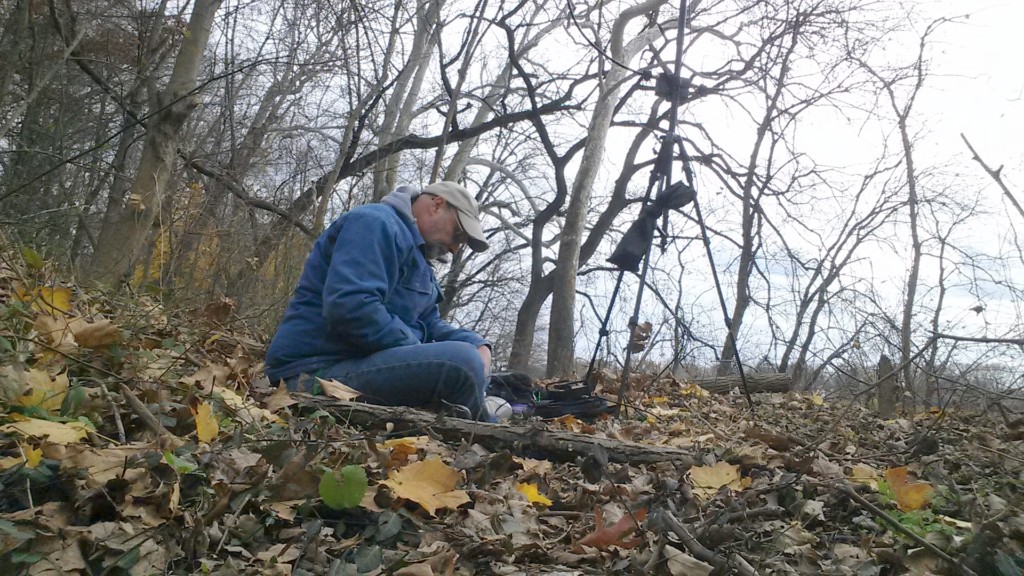
Operating on the banks of the Delaware River. I was sitting on a thick, foam pad; otherwise, I wouldn't have lasted too long!
Operating on the banks of the Delaware River. I was sitting on a thick, foam pad; otherwise, I wouldn’t have lasted too long!

I started out on 40 meters and quickly received a call from Emily KB3VVE.  Emily is an active NPOTA activator and chaser and is widely-known in NPOTA circles for her cookies.

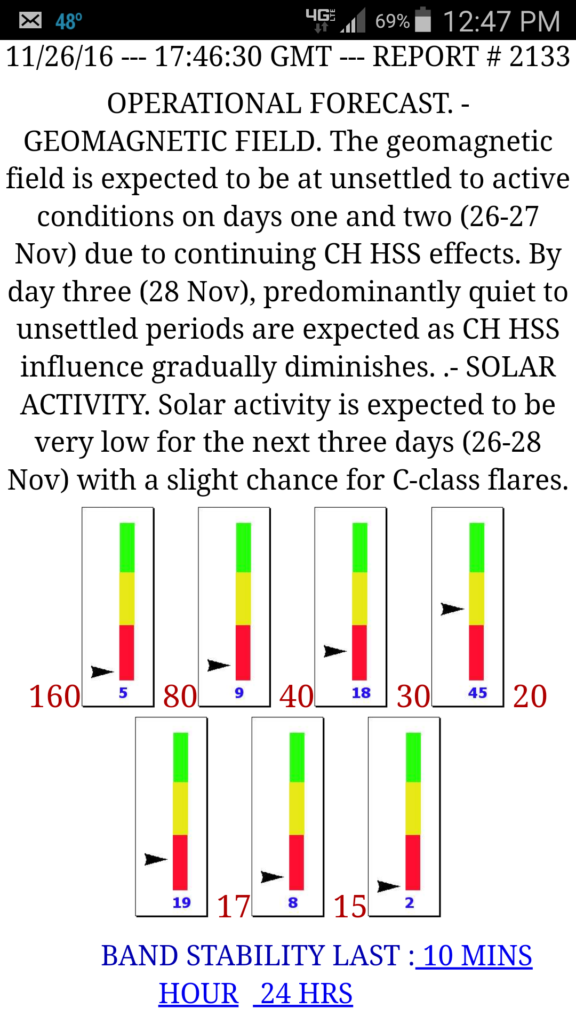
For the next 20 minutes or so, I was pretty busy until things started slowing down.  I checked 20 meters but it was wall-to-wall with contesters.  So, I retreated to 30 meters.  Thirty is usually a pretty good band for me but not today, for some reason.  Checking the Band Conditions website, it looked like conditions had taken a bad turn.  I went back to 40 meters and picked up one more contact.

Band Conditions Graph
This could be one of the reasons the QSOs dried up on me.

It was heavily overcast today with a steady breeze blowing down the river.  After an hour or so I started to get cold and decided to pack it in for the day.

I ended the day with 13 contacts in the log — all on 40 meters.  It wasn’t a great showing but I had more than enough to qualify the activation.

The heater in the truck felt pretty good on the drive home.

72, Craig WB3GCK

Save

Save

NPOTA Activation in Havre de Grace, MD

ARRL National Parks on the Air logoFollowing my failed attempt at activating the Captain John Smith Trail (TR21) back in July, I figured it was time to try again.  This time, I headed down to Havre de Grace, Maryland, to activate an NPOTA twofer:  TR21 and the Star Spangled Banner Trail (TR22).

I have always had a fondness for Northeastern Maryland.  I went through Navy Radioman School at the former Bainbridge Naval Training Center back in the early 70s and frequently traveled through this area during my working days.  The town of Havre de Grace has always been one of my favorite places.  It’s a scenic little town that is steeped in history.

The Promenade along the waterfront in Havre de Grace, MD

For this trip, I made the hour and a half drive down to Tydings Memorial Park in Havre de Grace.  I set up in the parking lot near a marina.  I got as close to the waterfront as possible but some overhead power lines kept me from taking a parking spot at the water’s edge.

After setting up my KX3 and my 29.5-foot vertical, I started calling CQ on 40 meters.  Things got off to a slow start.  After 15 minutes without a contact, a Havre de Grace police cruiser rolled up to see what I was up to.  I gave him my ham radio/NPOTA spiel but he seemed more interested in the mechanics of my 31-foot Jackite pole.  After chatting for a bit, he told me to have fun and left.

My location at Tydings Park in Havre de Grace, MD

Eventually, I scored my first contact.  Right about that time, K4JDF pulled up.  Bernie, who lives in Havre de Grace, saw my spot on Facebook and stopped by to visit.  After chatting with Bernie for a bit, things got busy on 40 meters.

While working a mini pile-up on 40 meters, I was battling some intermittent issues with my paddles.  At one point, I had to put the KX3 in straight key mode and use one side of my paddles as a straight key.  I eventually got that issue resolved.   A little later, I inadvertently hit the wrong button on the KX3 and put the receive filter in some weird state.  I eventually got that straightened out, too.

A view of the marina at Tydings Park

After shifting to 20 meters, things got pretty intense for a bit.  The band seemed to really be open to the western states.  After things thinned out on 20 meters, I took a few pictures and packed up for the trip home.

Some other highlights:

  •  Working fellow QRPer, W1PID.  Jim was out on a trail in New Hampshire.
  • Working N3FJP.  Scott is the developer of ACLog (among others), which I use for my main station log.  I think this is the first time I’ve worked Scott on the air.

This was a beautiful Fall day.  It was “t-shirt weather,” for sure.  I’m hoping to squeeze in a few more activations before the end of the year.

72/73, Craig WB3GCK

Busy Radio Weekend

This was a busy weekend, radio-wise.  First, the Polar Bear QRP Club held their monthly Moonlight Madness Event on Saturday.  Also, the Facebook-based Field Radio group was holding their second International Field Radio Event (IFRE) this weekend.  Finally, the Straight Key Century Club (SKCC) was holding their monthly Weekend Sprintathon (WES) contest.  To take advantage of all of this, I went portable twice over the weekend.

Saturday:
It was a bit chilly here in southeastern Pennsylvania, so I operated “stationary-mobile” from a local park.  I used my KX3 with a 29.5-foot vertical on the back of my truck.   When I powered up the radio, I immediately heard fellow Polar Bear, Chuck AF4O, calling CQ from a park in Tennessee.  I gave him a shout and had a nice chat.  His HB-1A sounded great.

My “stationary-mobile” location in Upper Schuylkill Valley Park.

I tuned around listening for stations operating in the International Field Radio Event. Not hearing any, I called CQ on 20 meters and got a call from HA3NU.  I think he was search and pouncing in a contest but he gave me a contact anyway.  I shifted over to SSB (which I don’t do very often) and worked 4 stations that way on 20 and 40 meters.

Since the SKCC WES was also going on, I put the KX3 in straight key mode and laid my Palm mini paddles on their side and used one paddle as a straight key.  I made two contacts that way, including F6HKA,  (Bert always has good ears.)

I ended my session by working Joe N2CX who was doing an NPOTA activation (Fort Necessity National Battlefield in southwestern Pennsylvania).

I wound up with 10 contacts total including 1 Polar Bear, 2 SKCC WES, 1 NPOTA and no IFRE stations.

Sunday
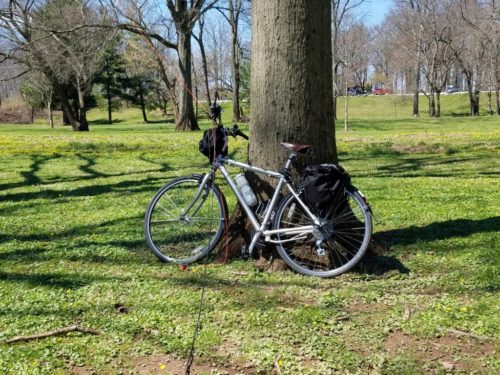
I took a bike ride on the Schuylkill River Trail, which connects to the Perkiomen Valley Trail.  I stopped at Lower Perkiomen Valley Park to set up the radio.  This is one of my favorite spots for QRP portable.  I put a 29.5-foot wire up in a tree and set up my KX3 on a conveniently located bench.

My bike was again used to tie off my antenna.

The bands were definitely not as hot as yesterday.  I tuned around the Field Radio calling frequencies but didn’t hear any IFRE activity.  I called “CQ IFR” on both 40 and 20 meters but had no takers.   The SKCC WES contest was still going on, so I made a few SKCC contacts.  One of those was with F6EJN.  It took a few tries to complete the QSO but Bob was able to pull me out of the noise.  While tuning around 40 meters, I had an NPOTA contact with WK2S.  Art was in the Pinelands National Reserve Affiliated Area (AA19) in New Jersey, which is a new one for me.

Operating from a bench in Lower Perkiomen Valley Park

The weather was absolutely beautiful today but, as the sun began to set behind the trees, it started getting cold.  So, I loaded up the bike and headed back down the trail.

This was my second IFRE with no contacts.  Oh well, maybe next time.

72, Craig WB3GCK