Murphy and MacGyver

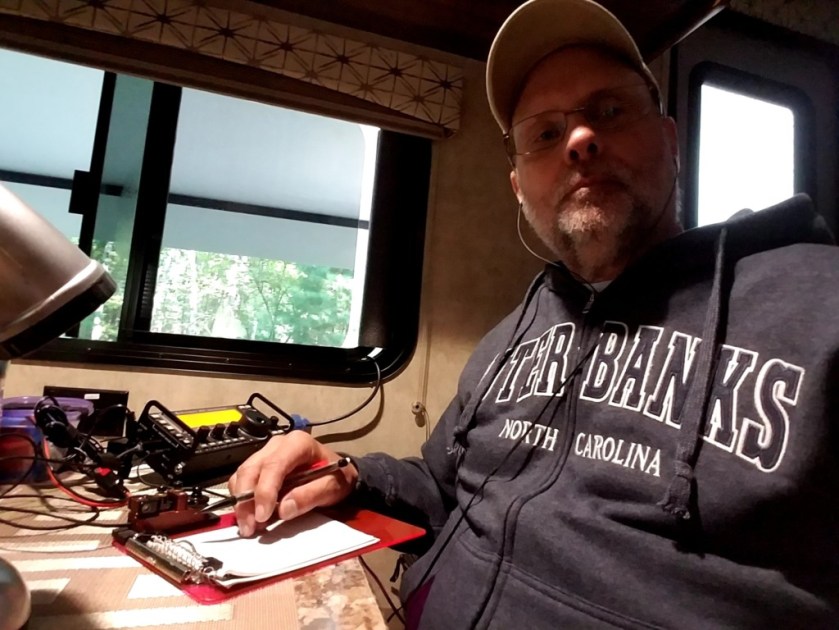
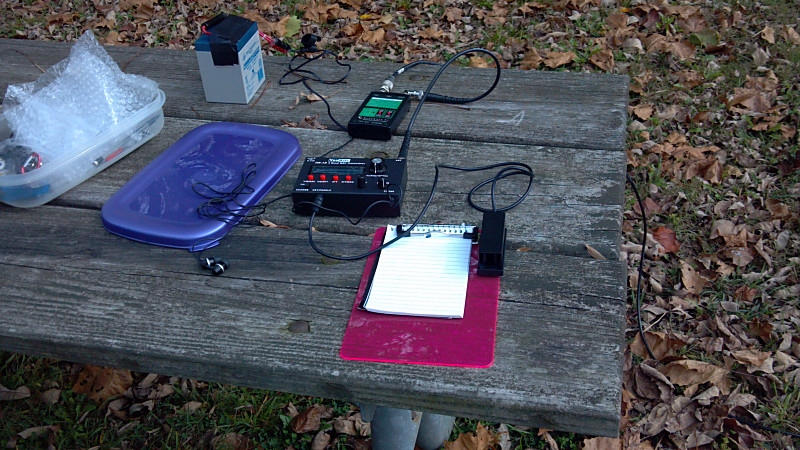
My XYL and I traveled out to the Harrisburg, PA, area over the weekend to spend some time with our daughter and her family.  Yesterday, I set up my KX3 and Alexloop in the backyard to make a few SKCC Weekend Sprintathon (WES) contacts.  Ol’ Murphy was certainly with me.

First, I had a problem with my little American Morse MS2 straight key.  Well, not the key itself, but rather a bad connector or cable.  I spent some time playing around with it but I had no multimeter to  troubleshoot it and no parts to repair it.

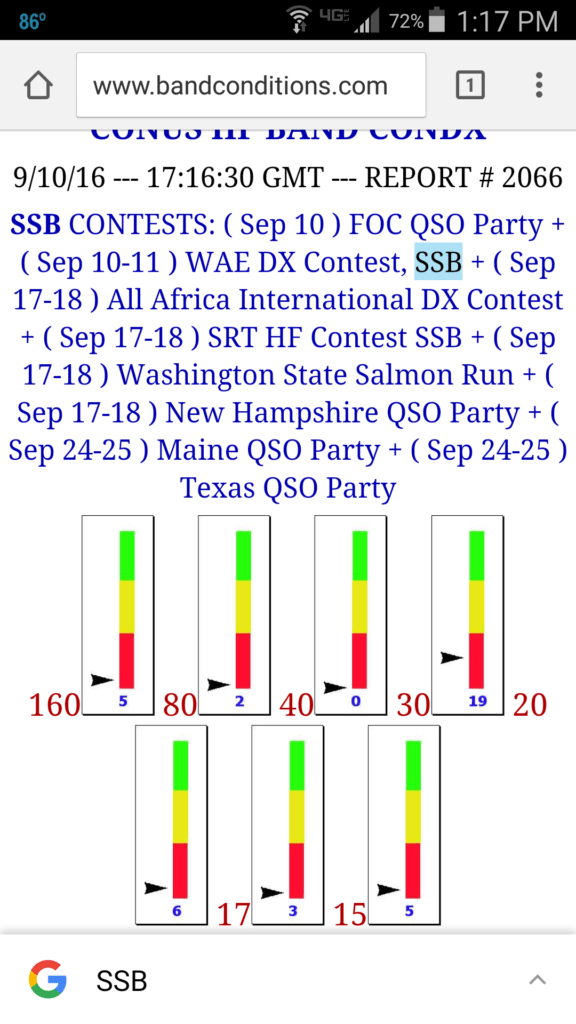
Tuning around the bands, I couldn’t hear a lot of activity.  The SKCC stations I heard seemed pretty weak and I wasn’t having any luck making contacts.  I checked the Band Conditions website and saw that the bands were in bad shape.  At that point, I threw in the towel and chalked up a win for Murphy.

Tough going on the bands

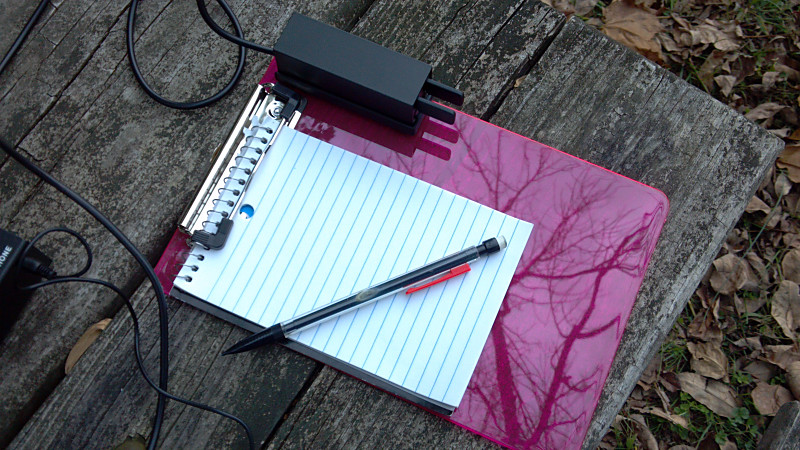
Today I decided to give it another shot.  The bands sounded better and I could hear some WES activity.  I remembered a trick that Burke N0HYD employed to pull off an SKCC contact with me a while back.  So, I channeled my inner MacGyver and set up the KX3 for a straight key and connected my Palm mini paddles.  I turned the paddles over on their side and used one lever as a straight key.  The straight key workaround worked surprisingly well.  The “feel” wasn’t half-bad, actually.

My sideways paddles. The top paddle was used as the straight key.

With the improved band conditions and the straight key workaround, I made several SKCC WES contacts, including one with Bert F6HKA.  Bert has great ears and has managed to pull my puny QRP signal out of the noise on several occasions.  I finished my session with a nice two-way QRP QSO with Mac NN4NC down in North Carolina on 40 meters.  I was only on for an hour or so but it was fun.

Despite my lack of a functioning straight key, I managed to put a few new SKCC stations in my log today.  MacGyver would have been proud.

72, Craig WB3GCK

More Jackite Pole Hacks

Here are a few more things I have learned, based on my experience using Jackite telescopic poles.  Although some of this might be fairly obvious stuff, hopefully, this will be helpful to some.

Dealing with Stuck Sections

About four months ago, I had the top two sections of my 31-foot pole become hopelessly stuck.  After trying several things, I stumbled across a solution (at least for me).

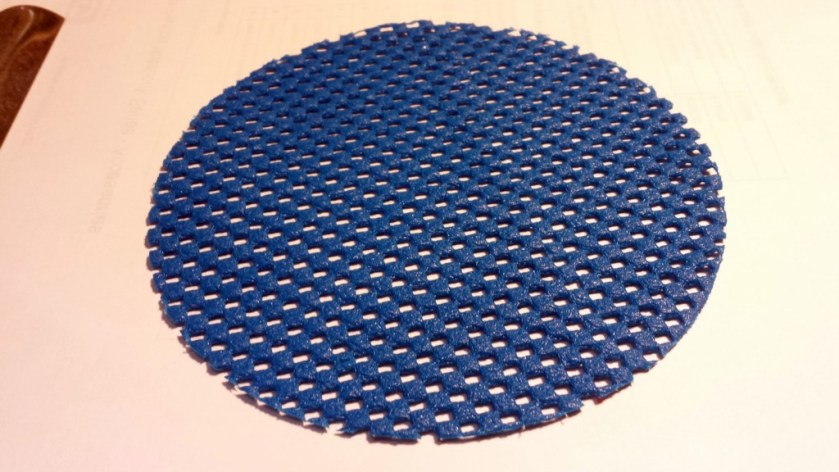
My wife came home from the store one day with one of those rubber pads that are intended to help you grip and remove the lids from stubborn jars.  A light went off in my head.  I bought a couple of them at the local dollar store and by using them to help me get a grip on each of the two stuck sections, I was able to twist them enough to get them unstuck.  A few months later, I again had two sections that became stuck.  I went right for the grip pads and was able to instantly get them unstuck.  I now keep a pair of these pads in my backpack for when I run into this problem again in the field.  As a bonus, these pads work great under your paddles or straight keys to keep them from sliding around on the table.

This is one of the jar lid grippers my XYL found at our local dollar store.

Just a piece of advice.  Don’t try to use pliers to get fiberglass mast sections unstuck.  You’ll create a bigger problem for yourself.  Don’t ask me how I know this.  Just trust me on this one.

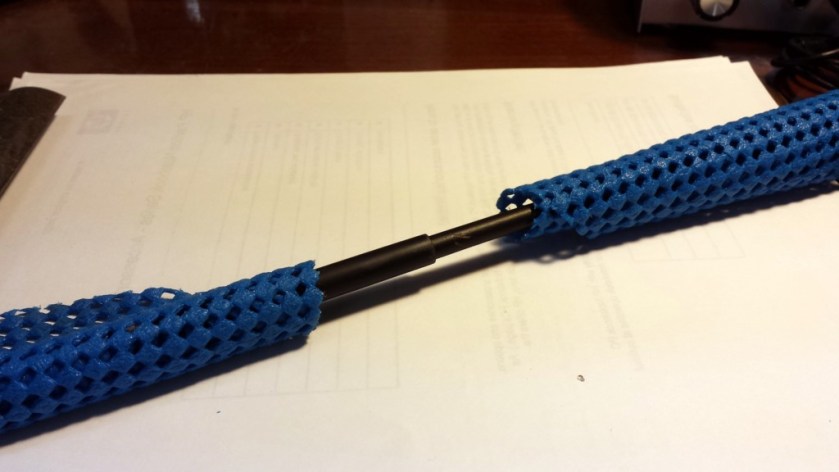
When wrapped around the two stuck sections of a pole as shown, these jar lid grippers help you twist the sections to get them apart.

Maintenance

This is sort of related to the stuck section problem.  I use my Jackite poles quite a bit and they can sometimes take a beating when camping or at the beach in a salty environment.  Dirt and debris might be contributing factors in getting sections stuck together.  Just a theory on my part.  I found that regular cleaning of the pole sections seems to minimize sticking problems.

Every other month or so (if I’m being diligent), I completely disassemble the poles.  Then, I spray a little WD-40 on a clean rag and wipe down each piece of tubing.  I wipe off any excess WD-40 with another clean rag and re-assemble the pole.  It seems to work for me.  After spending a week at the beach, this procedure is mandatory for me.

Bottom Cap Shock Absorber

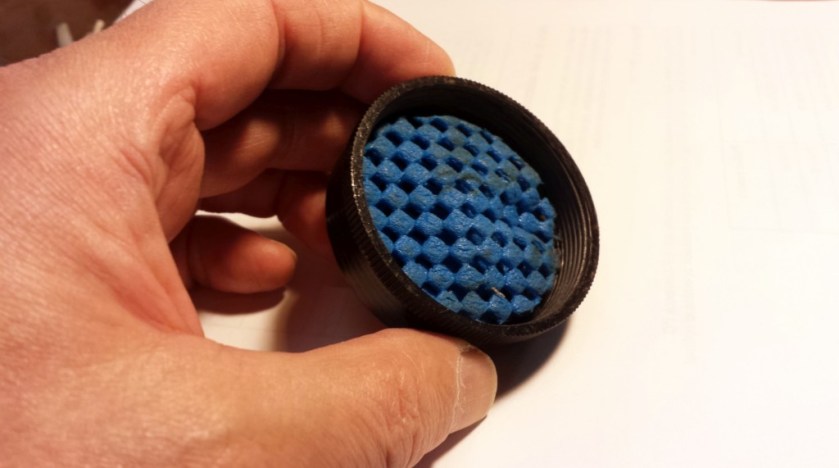
When collapsing a 28-foot or 31-foot pole, the lower sections can sometimes come down so hard that they knock the bottom cap loose.  To counter this, you can cut a thin piece of sponge and place it inside the bottom cap.  I actually used two layers of that dollar store jar lid gripper material in mine.  Just make sure whatever you use doesn’t interfere with the threads in the cap.  This should help absorb some of the impact if you collapse the pole too quickly or if it comes down by itself in a strong wind.

This is two layers of material cut from the dollar store lid gripping pads placed inside the bottom cap of a Jackite 31-foot pole. The intent is to absorb some of the impact when collapsing the pole.

I hope some of this is useful to someone out there.

72, Craig WB3GCK

Measuring Audio Frequencies with a Guitar Tuner

Here’s a little hack that serves no real purpose.  I’ll tell you about it anyway.

I recently built the T-Tone Code Practice Oscillator (CPO) kit from Morse Express.   It’s a handy little addition to the shack for adjusting straight keys or testing keyers.  After building it, I just adjusted the audio frequency for a pleasing tone.  Most people would have just left it alone at that point.  I’m not most people.

I started to do some thinking, which is a dangerous practice that can sometimes lead to unexpected consequences.  I wondered how the frequency of CPO compared to the sidetone of my FT-817.  There was no particular point to this mental exercise other than idle curiosity.

Now, I certainly could have keyed both the CPO and the FT-817 and done a comparison by ear.  I could have just adjusted the CPO by ear to match the FT-817.  But what fun would that be?  I was curious about the exact audio frequency of the FT-817’s sidetone, so I opted to do some experimenting.

Having been playing guitar for more than 50 years, I have acquired a gadget or two over the years.  One of those gadgets is a clip-on guitar tuner.  I can clip this clever device on the headstock of my guitar and, by sensing vibrations, it will tell me what note I’m playing and whether the pitch is sharp or flat.  I figured I could use this thing as an audio frequency meter of sorts.

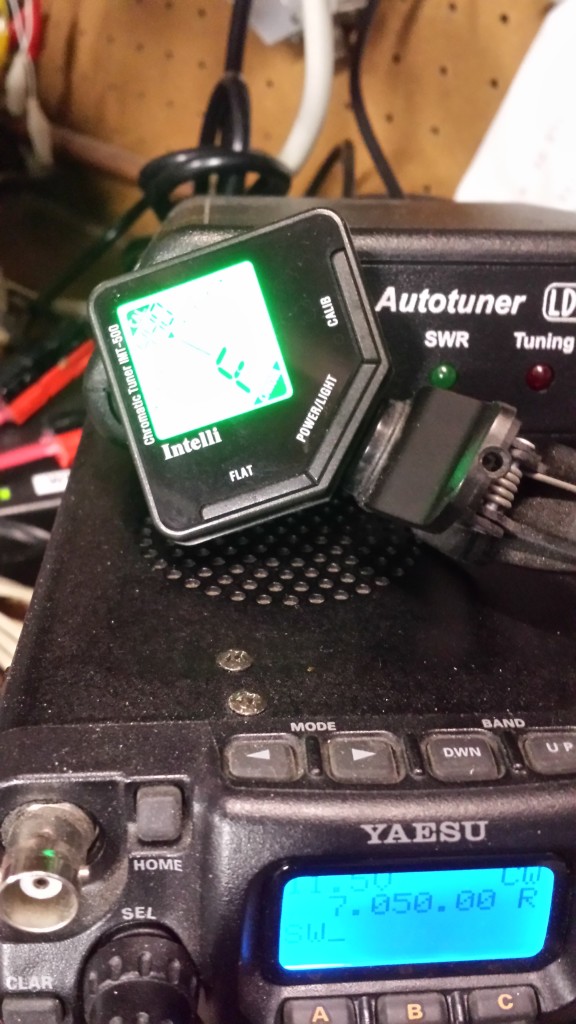
First, I laid the guitar tuner on top of the FT-817’s speaker and keyed up.  That indicated that the pitch of the sidetone was an F note.  Consulting a conversion chart I found on the Internet, that equates to 699Hz.  I seemed to recall that the FT-817’s sidetone was somewhere around 700Hz, so that seemed about right.  I was sure I was in the right octave.

Guitar tuner on top of the FT-817

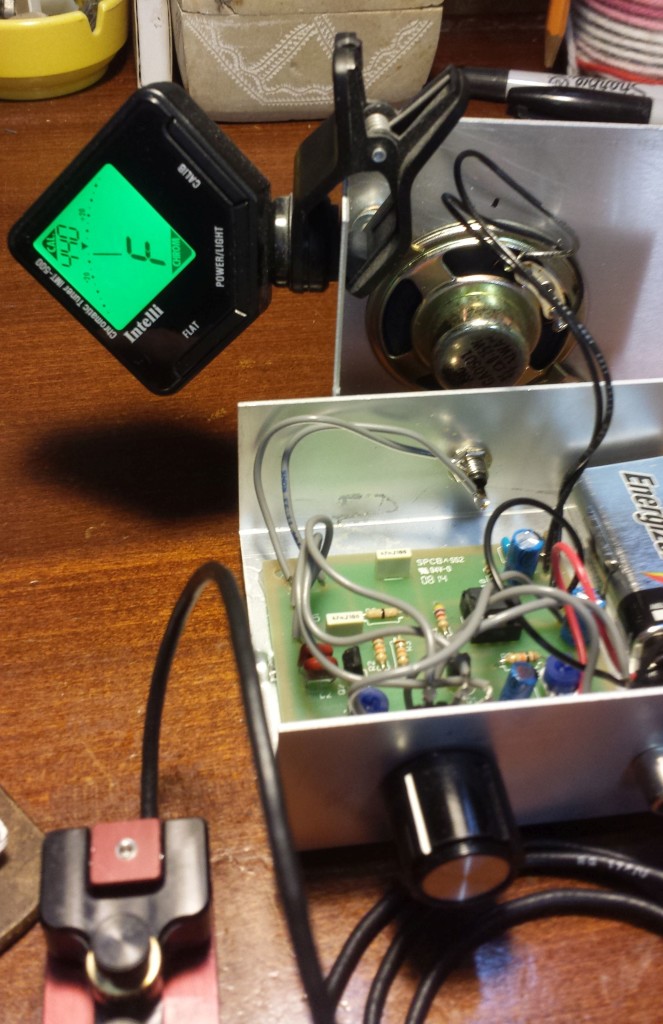
Next I took the lid off of the CPO and clipped the guitar tuner on it.  It initially indicated that the CPO was tuned to F#.  That equates to a frequency of 740Hz.  I tweaked the CPO’s frequency adjustment pot to F, matching the FT-817.  A side-by-side comparison of the CPO and the FT-817 showed that I was successful.

Guitar tuner clamped onto the lid of the code practice oscillator

So, what’s the point of all this?  None really.  Is there a practical use for this?  Probably not.  Does it really matter that my CPO matches the sidetone of my radio?  Nope.  I just had one of those “I wonder what would happen if…” moments.  Now I know.

72, Craig WB3GCK

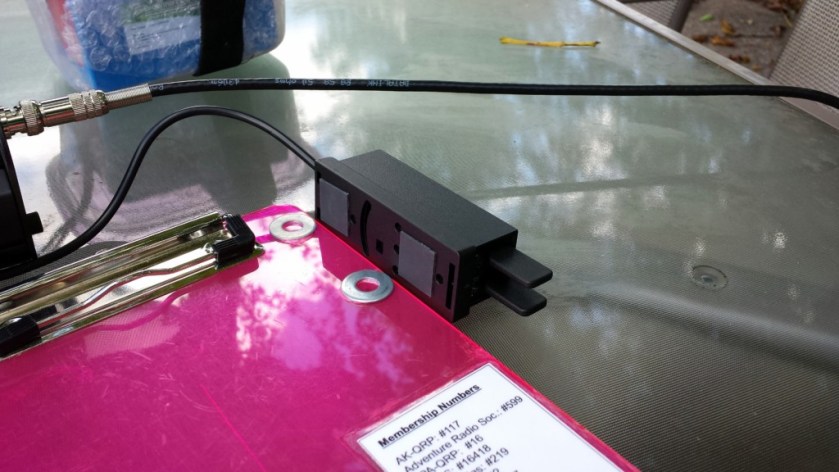
MS2 Straight Key Magnetic Mount

As I mentioned in an earlier post, I bought the little American Morse MS2 straight key intending to somehow magnetically attach it to the clipboard I use for portable operating.  It took some thinking but I came up with a workable solution.  I might come up with a better solution in the future but, for now, it should suffice.

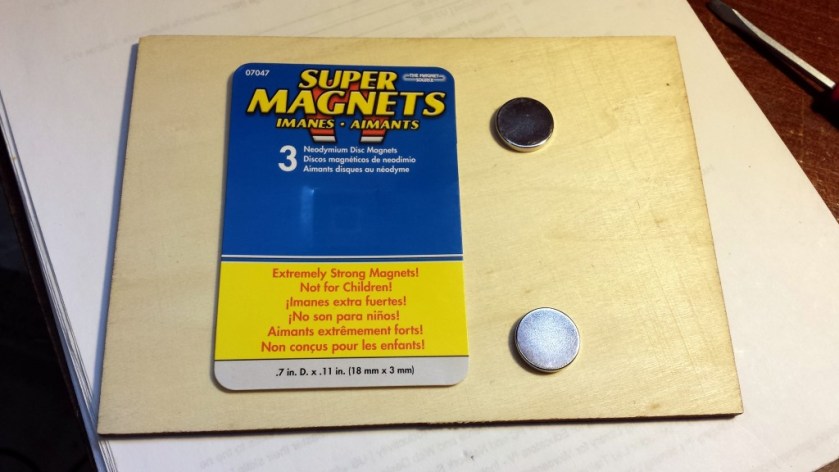
What I set out to do was build a wooden mount that could attach the MS2 that held two magnets that lined up with the steel washers on the clipboard.  I had a couple of “super magnets” that I planned to use.  The problem I ran into is that the magnets are almost too strong to attach directly to the washers.  My solution was to enclose the magnets within the wood base.

Super magnets used for the MS2 straight key magnetic mount. Boy, these things are powerful!
Super magnets. Boy, these things are powerful!

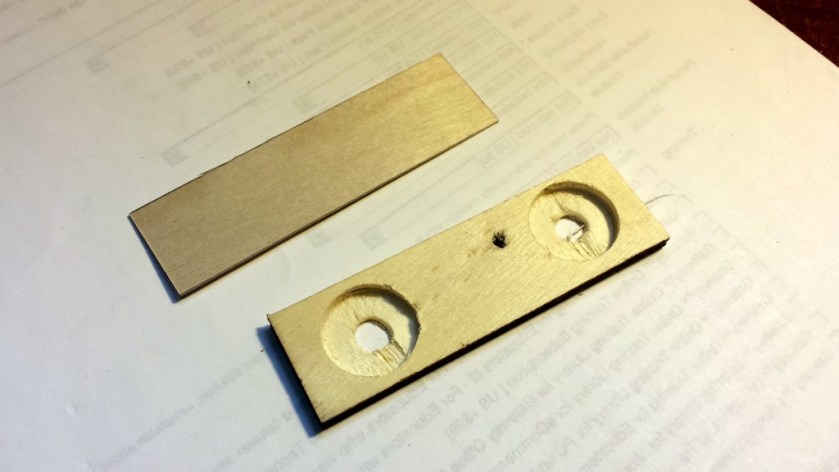
I cut a 1×3.25-inch piece of 1/8-inch plywood.  Then I drilled two 3/4-inch holes just deep enough to fit the magnets.  After placing the magnets in the holes, I glued on a thin wood veneer.  This puts some extra spacing between the magnets and the washers on the clipboard.  After drilling a mounting hole for the MS2, I sprayed on a couple of coats of paint.

MS2 straight key magnet mount wood pieces prior to assembly
Wood pieces prior to assembly

After letting the paint dry, I went to attach the key to the base.  Oops!  I drilled the mounting hole from the wrong side of the mount.  My first inclination was to putty it in and repaint.  However, I decided to leave it there as a constant reminder to always measure twice and drill once!

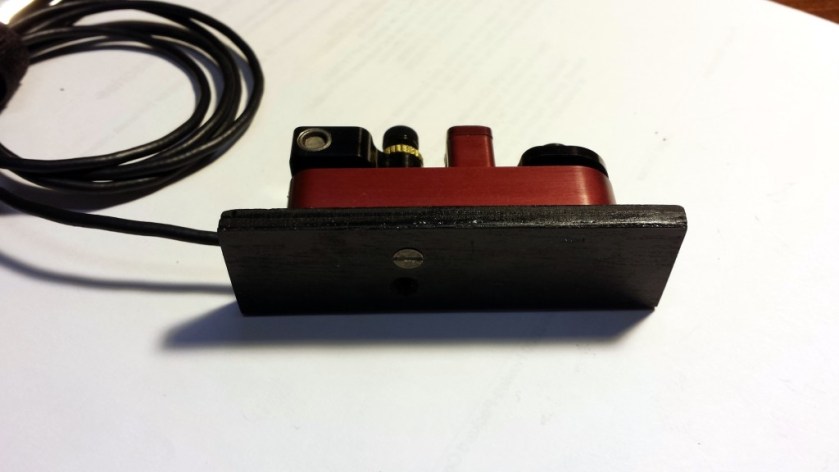
MS2 straight key attached to the magnetic base
MS2 attached to the magnetic base. Don’t look too closely or you might see the drilling mistake I made.

The mount actually works well.  The concealed super magnets hold the key firmly to the clipboard without the need for excessive force to remove it.  Once I free up some time, I’ll give it a thorough test out in the field.

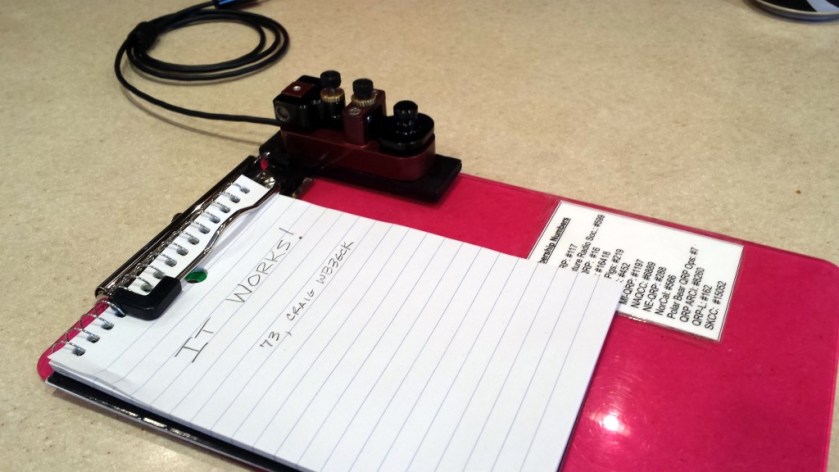
MS2 straight key mount attached to the clipboard
The finished product

72, Craig WB3GCK

AlexLoop Mounting

In my 40+ years in Amateur Radio, the AlexLoop Walkham was the first commercially-made HF antenna I ever bought.  I wanted something for those spur-of-the-moment QRP outings when I want to get on the air quickly and not have to deal with putting wires into trees.  The AlexLoop fit the bill nicely.  There’s probably nothing novel or new here but here’s how I mount the AlexLoop for operation.

Tripod Mounting.  While I was waiting for the AlexLoop to arrive from Brazil, I ordered a Vivitar VPT-1250 tripod from a vendor on eBay for less than $20.  The VPT-1250 is super lightweight and stores nicely in the AlexLoop’s carrying bag.  It’s a decent tripod for casual use but for something like a SOTA activation under windy conditions, you’d be better off with something more robust.

vivitar_tripod_2
Vivitar VPT-1250 Tripod with PVC pipe installed.

To use the VPT-1250, I removed the pan/tilt head.  I cut a 4-inch piece of 1/2-inch PVC pipe, which I slide over the center post of the tripod.  I added a bit of electrical tape to both the tripod post and the PVC pipe to give a slight friction fit.  The base of the AlexLoop slides onto the PVC pipe.

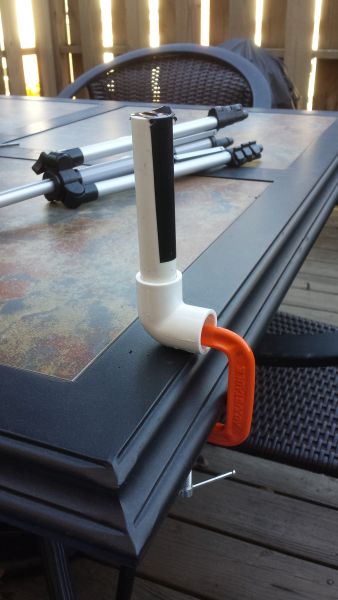
Picnic Table Mounting.  This is an idea I got from AK4LP’s QRZ page. For mounting to a table, I take the same piece of PVC pipe and insert it into a 1/2-inch PVC elbow fitting.  I sanded the end of the PVC pipe so it was easier to remove from the elbow fitting.

table_mount_1
Table mount attached

I just use a 2-inch C-clamp to secure the pipe and elbow fitting to the side of the table.  Again, the base of the AlexLoop just slides over the pipe.  I store the PVC parts and the C-clamp in the tripod’s nylon carrying bag.  When a picnic table is available, this mount goes to together faster than setting up the tripod.

table_mount_2
AlexLoop base mounted to table

If anyone knows the ham who came up with the picnic table mounting idea, let me know in the comments and I’ll make sure he gets credit for it.

UPDATE (11/16/2015):  I remember now where I got the idea for the picnic table mount and have updated the post accordingly.  Many thanks to Bob AK4LP for coming up with this simple and novel idea!  Be sure to check out his page on QRZ.com for pictures of his picnic table portable setup.  I had the pleasure of working him at that Smith Mountain Lake location back in 2013 while I was camping in Maryland.

73, Craig WB3GCK

Tilt Stand for the YouKits HB-1B

This is another one of those projects that took longer to write up than to build.

The top facing controls on “trail-friendly” radios like the YouKits HB-1B and others are very convenient when you’re sitting on the ground out in the middle of nowhere. When operating “picnic-table-portable,” however, the display can sometimes be a little hard to read. For those situations, I came up with a little tilt stand using some stuff I had on hand.

tiltstand-1
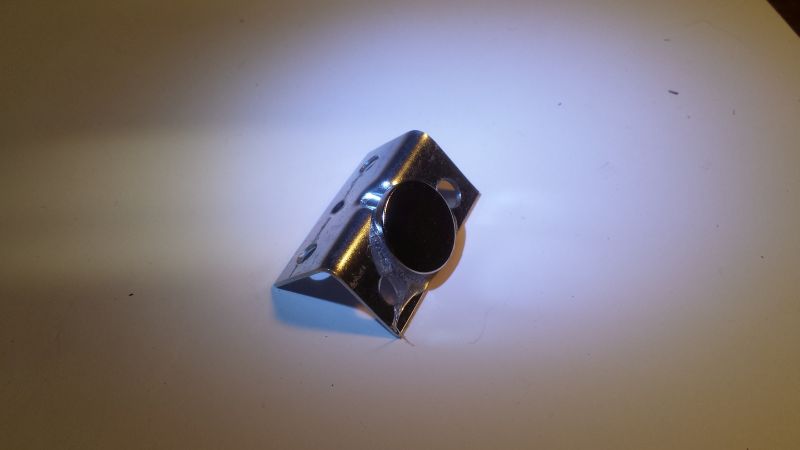
Magnet applied to the corner brace.

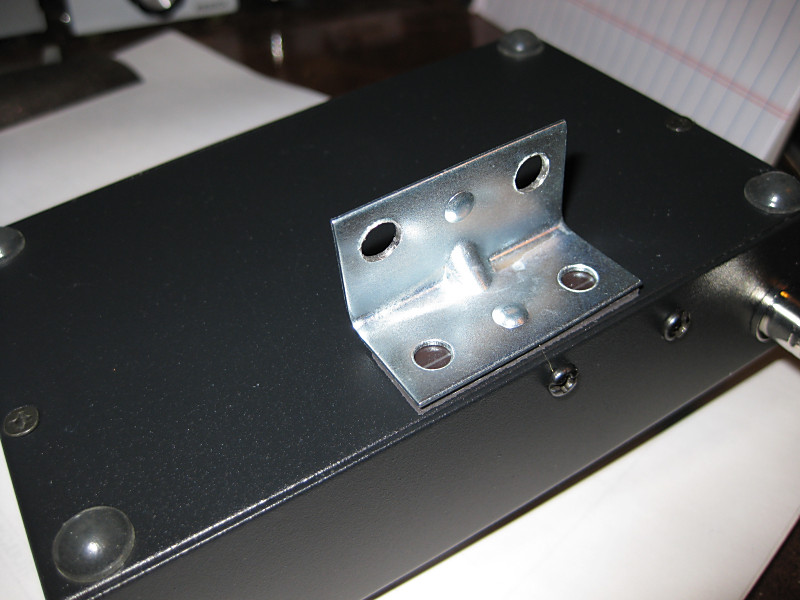
The tilt stand I came up with has a grand total of two parts. First is a steel inside corner brace. You can find these at any hardware store. The one I used is 3/4-inch on each side and 1.5 inches long. You can use whatever size gives you the amount of tilt you’re looking for. The other item is a small but powerful magnet. The one I used is about the size of a nickel. I secured it to the corner brace using some Goop adhesive. To use the tilt stand, just use the magnet to put it on the bottom of the HB-1B, as shown in the pictures.

tiltstand-2
Tilt stand attached to the radio

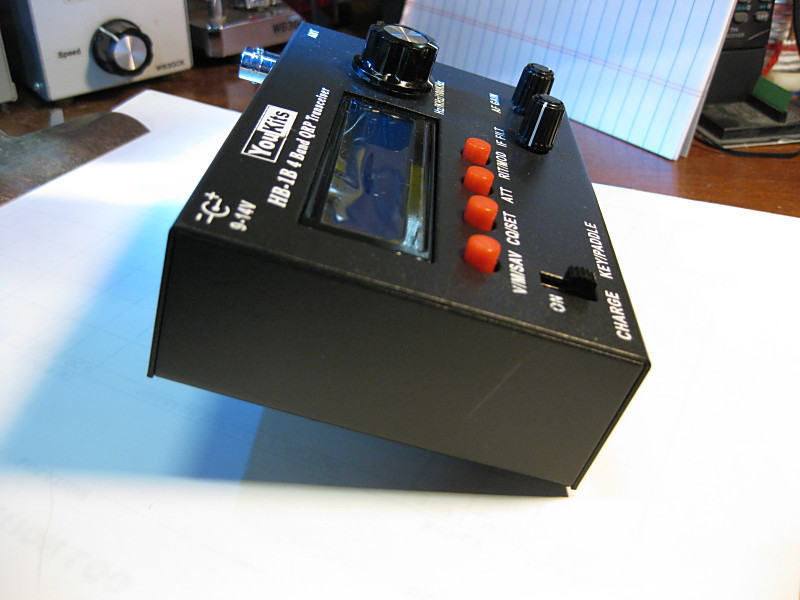
This tilt stand works best when you have rubber feet on the bottom of the radio, as I have on mine. In fact, I added those the first time I used the radio, to keep it from sliding around on my desk.

tiltstand-3
Tilt stand in use

This little gizmo will a permanent part of my HB-1B portable station for those “picnic-table-portable” operations.

73, Craig WB3GCK

Clipboard Keyer

I purchased a set of Palm Mini paddles for portable operating a while back. I love the magnet base, which attaches nicely to the side of my little YouKits HB-1B transceiver. However, in some situations — like sitting on the ground or operating from inside my truck — that isn’t always the most convenient arrangement for me. Here’s a little hack I came up with to solve that problem.

clipboard-1
Figure 1. Washers attached to clipboard
clipboard-2
Figure 2. Paddles attached to clipboard

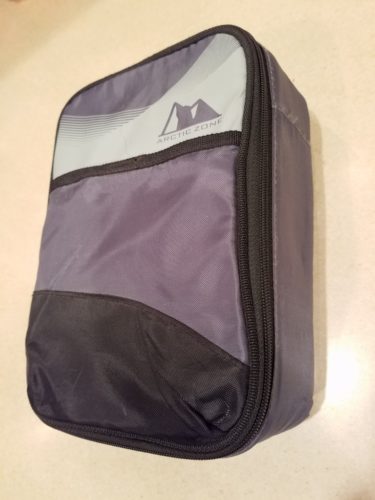
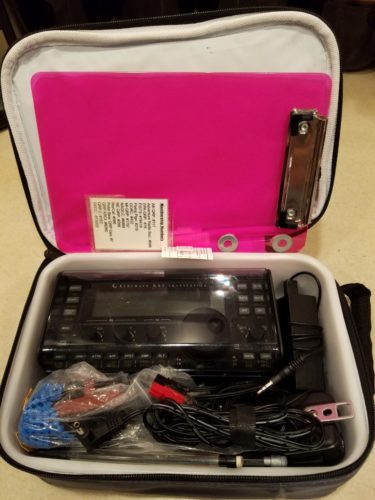
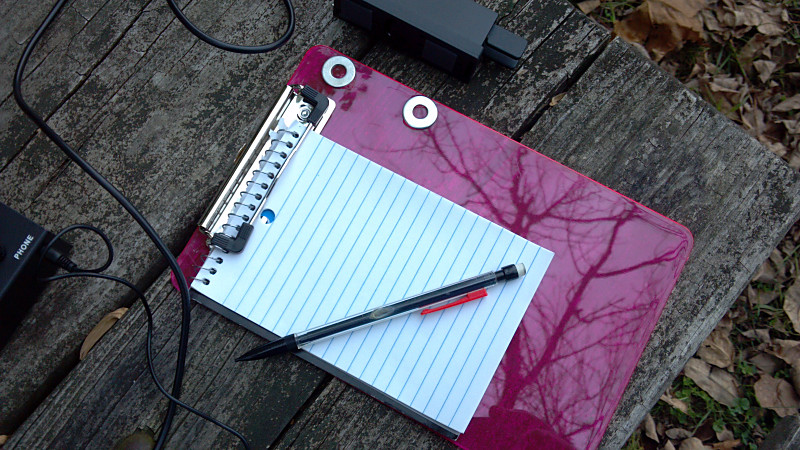
I purchased an inexpensive 6-inch by 9-inch, acrylic clipboard at my local office supply store. I used some GOOP adhesive to attach two steel washers to the clipboard, as shown in Figure 1. I made sure that the washers lined up with the magnets on the base of the paddles. Figure 2 shows the paddles attached to the clipboard. Figure 3 shows the clipboard in use during a recent outing. For transport, the little clipboard fits in the small plastic container I use for the HB-1B and accessories.

clipboard-3
Figure 3. Clipboard & paddles in use

For less than $2.00, this little accessory makes portable operating a bit more convenient.

73, Craig WB3GCK

Jackite Pole Hacks

I’m a big fan of the Jackite fiberglass poles for portable antenna supports. I have two of them have have seen a lot of use over the years. Here are a couple of quick and simple hacks that improve (in my opinion) on an already great product.

Keeping the Cap From Falling Off

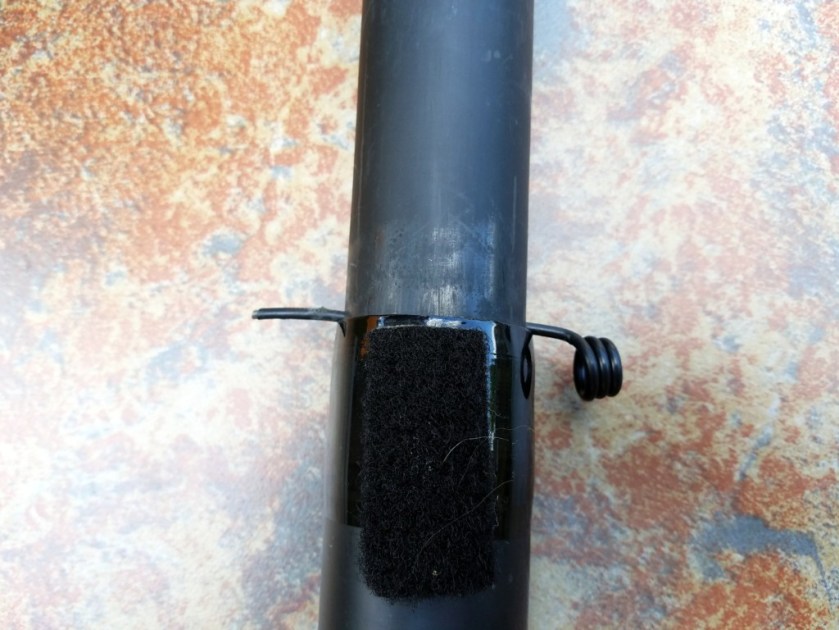
While the overall quality of Jackite’s products is excellent, there is one thing that I find annoying — the caps have a tendency to fall off when transporting the pole. To overcome this, I attached a velcro strap to the cap (Figure 1). The Velcro is something I had on hand in my junkbox. It’s about 8 inches long by 1 inch wide. I used a #4 machine screw with some flat washers, a lock washer and a nut (Figure 2). I used an awl and a small phillips screw driver to make the hole in the cap. I then attached two Velcro strips (the fuzzy part) on either side of the pole (Figure 3). When transporting the pole, just secure the Velcro straps (Figure 4) and you’re good-to-go.

Figure 1
Figure 1
Figure 2
Figure 2
Figure 3
Figure 3
Figure 4
Figure 4

Easy Extension

This quick mod might seem kinda pointless to some users. In fact, I hesitated about writing it up. Anyway, you be the judge:

Figure 5
Figure 5

In cases when I need to bungee or strap the pole to a fixed support, I would first need to extend the top-most section first. This is because the top section sits down inside the other sections when collapsed. What I did was attach a key ring (aka split ring) to the eyelet on the top section (Figure 5). The ring I used is approximately 7/8-inch in diameter. So, I can strap the collapsed pole to a support, remove the cap, reach in and use the ring to pull the top section out (Figure 6).

Figure 6
Figure 6

Again, you might not see the value in this one, but I find it helpful.

73, Craig WB3GCK