Father’s Day at Elk Neck State Park

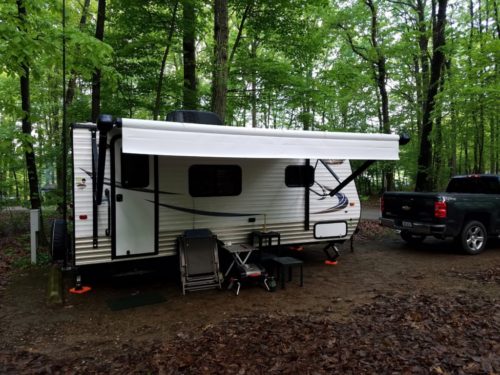
My better half and I took our little travel trailer down to one of my favorite campgrounds for the Father’s Day weekend. Although rest and relaxation was my main objective, I also worked in some QRP, too.

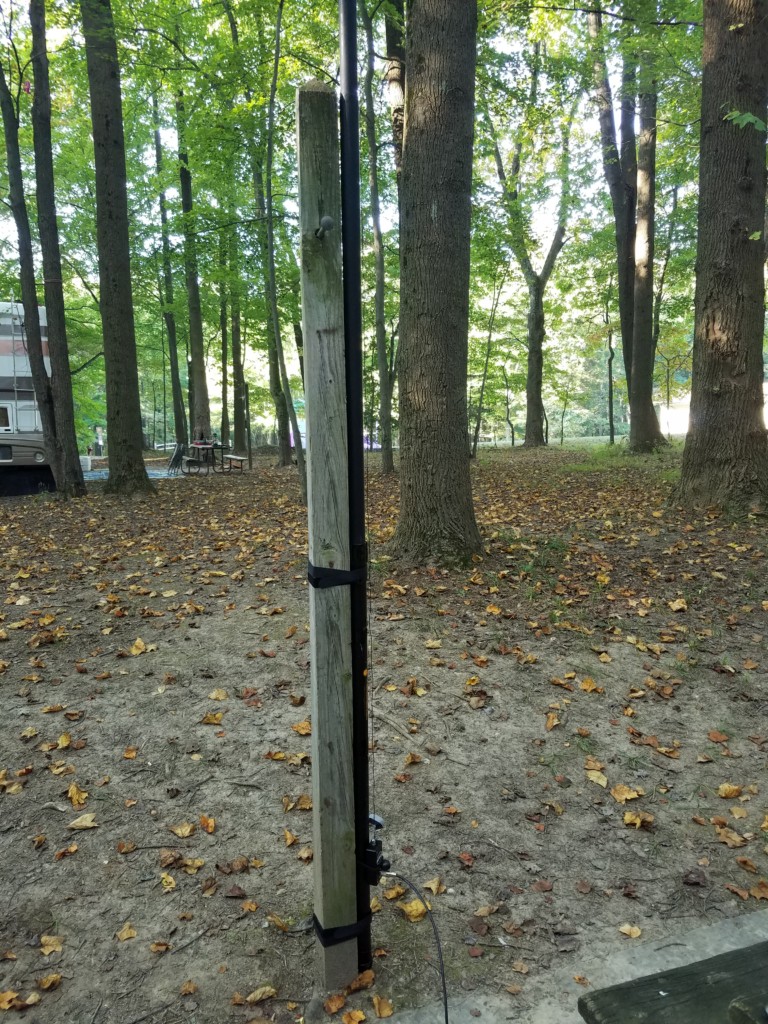
Our destination for the weekend was Elk Neck State Park in northeastern Maryland. After getting the trailer set up on Friday night, I strapped a Jackite pole to a lantern post and set up a 29.5-foot vertical. I did a quick test and found the area to be very quiet from both an audio (i.e., quiet neighbors) and an RF perspective.

On Saturday morning, I fired up the radio while the coffee was brewing and made a few SKCC contacts. I also had a nice CW chat with Butch NM1I in Massachusetts.

After lunch, I decided to do an impromptu Parks on the Air activation. Despite having poor cell service, I managed to post my plans on POTA and WWFF-KFF Facebook pages.

Things got off to a slow start on 40M until Emily KB3VVE found me and spotted me. After that, things began to pick up a bit. Most of my contacts were on 20M but sadly, I didn’t from any of the European regulars. Before wrapping up, I dropped down to 30M and picked up a couple more.
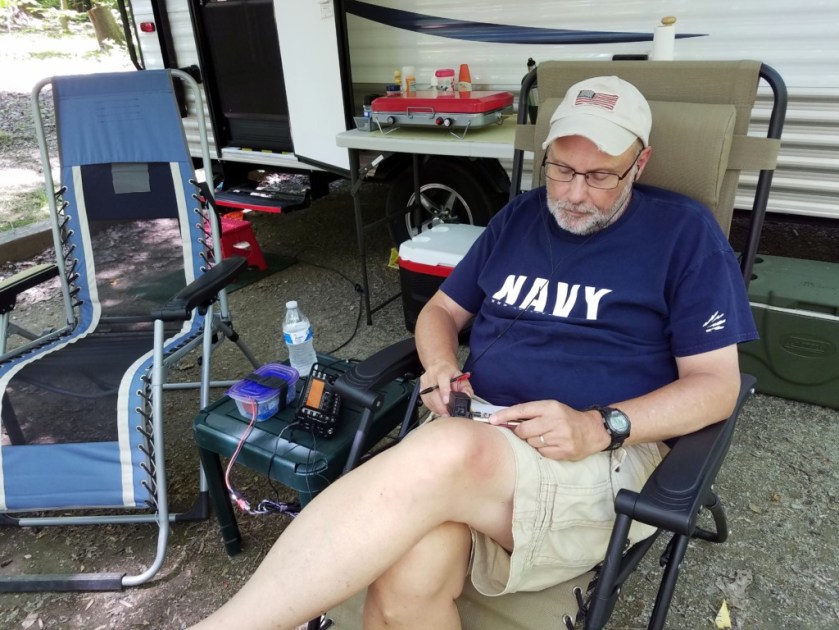
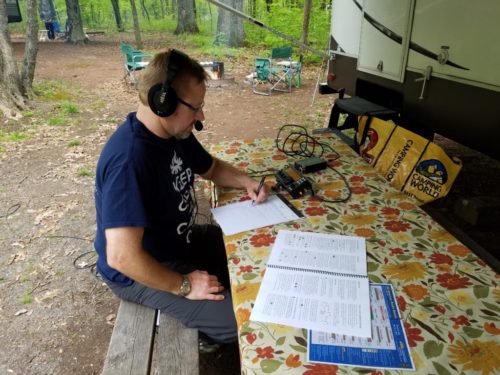
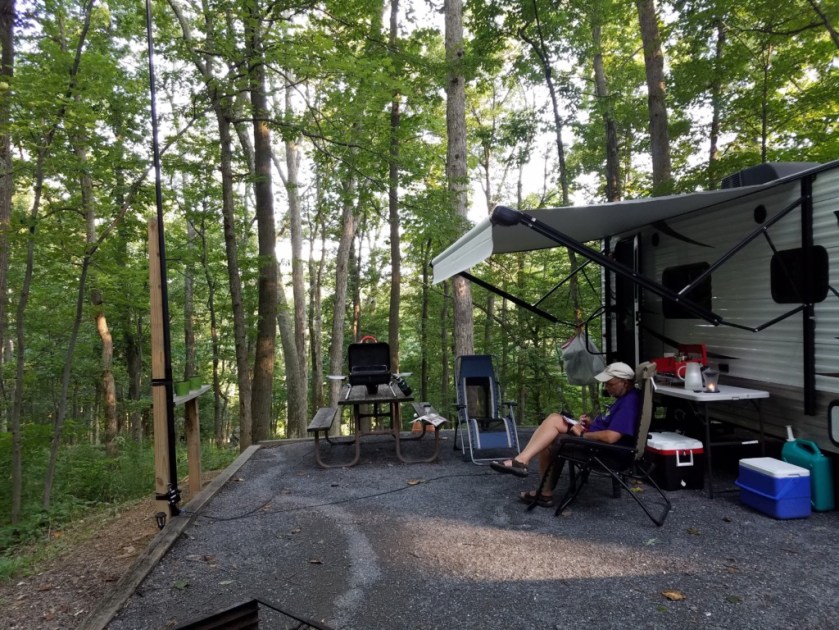
WB3GCK activating Elk Neck State Park from outside the camper.

After about an hour, I had 13 contacts in the log, including WB9OWN in Wisconsin who worked me on both 20M and 30M. I made another 7 contacts over the course of the weekend. That’s more than enough for a valid POTA activation but I’m still about 6 contacts shy of the 44 needed for a WWFF activation. We’re planning to visit Elk Neck again in the Fall, so I should be able to make the remaining WWFF QSOs I need.

It was nice to finally have a camping trip this year with decent weather and no rain. I more than satisfied my rest and relaxation objective for the weekend.

72, Craig WB3GCK
Rainy Camping Weekend

My (far) better half and I took our little trailer back to French Creek State Park (PA) for what turned out to be a rainy weekend of camping. Despite the lousy weather, I did have some radio fun and ran into one of my QRP friends.

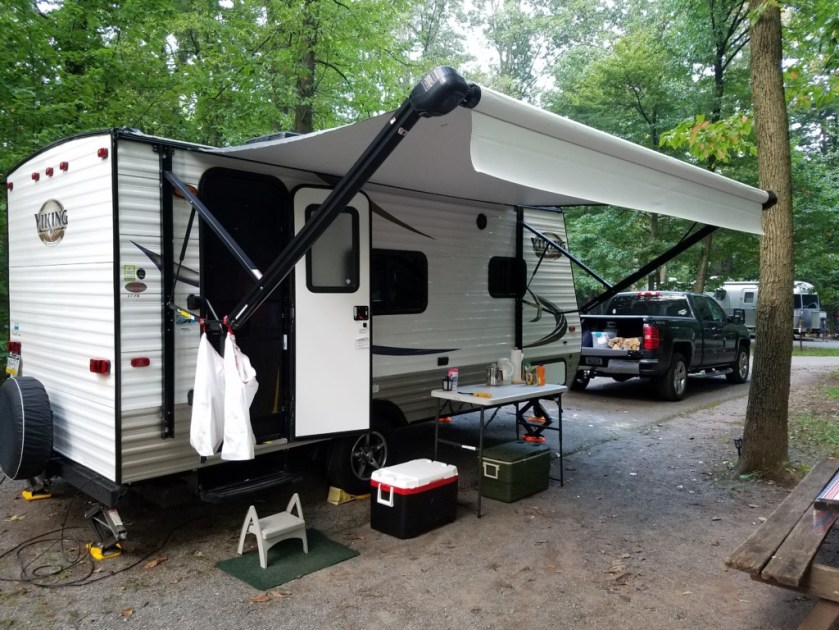
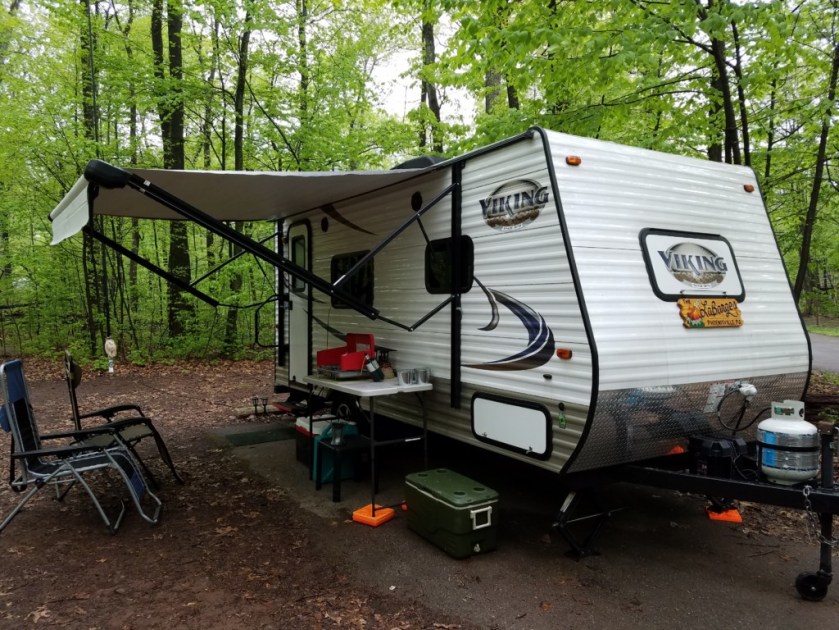
The QRP camper on a rainy weekend at French Creek State Park

Right after we set up the trailer, I was flagged down by one of my Boschveldt QRP buddies, Ron WA8YIH. Ron and his family were also spending the weekend at French Creek. Ron’s campsite was across the road about 30 yards or so away from ours. I hadn’t seen Ron since our Boschveldt QRP gathering back in January, so it was good to catch up with him.

Ron WA8YIH operating outside his camper at French Creek State Park

I spent most of my radio time operating in the SKCC Weekend Sprintathong (WES) contest. This month, bonus points were available for QSOs made using a homebrew key. So, before we left, I threw together a homebrew straight key using parts from an earlier key project that wound up in my junk box.

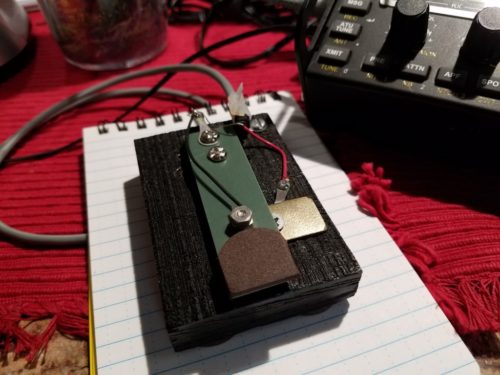
My homebrew straight key

The lever arm is a strip of thin fiberglass material I liberated from a trashcan where I worked many years ago. The contacts consist of a small screw on the lever arm and a piece of brass-plated metal from an old cabinet latch. I used some nuts and washers as spacers to get the contact spacing where I wanted it. That took a bit of trial and error. I couldn’t find anything on-hand that I liked for a knob, so I used a piece of self-adhesive foam. Using it on the air, I was pleasantly surprised with the feel of the key.

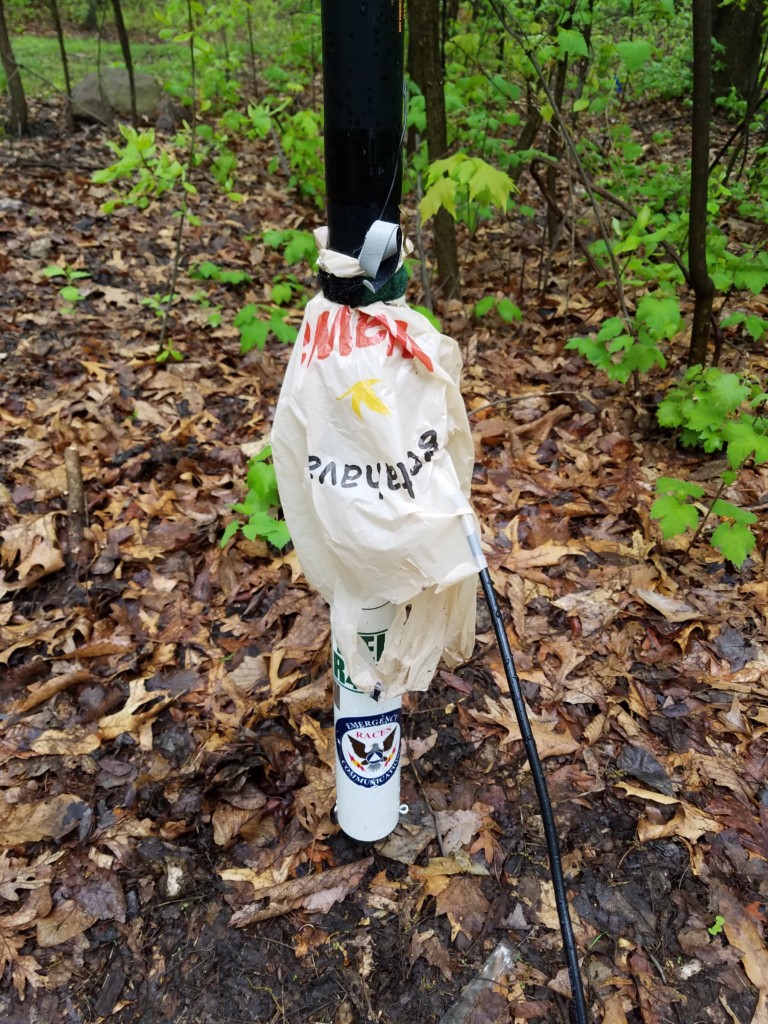
My 9:1 UNUN all prepared for the oncoming storms

Since the weather was so lousy, I spent a bit more time on the radio than normal. Over the course of the weekend, I found the band conditions to be highly variable with some deep fading. At times, my 5-watt signal seemed to be getting out really well. At other times, not so much. I also had to disconnect the antenna when thunderstorms rolled through.  As if that wasn’t enough, our area was under a tornado watch on Saturday night. (Fortunately, they never materialized.)  Needless to say, I have had better weather for camping.

I ended up with 19 WES QSOs and 1 QSO with Ron. Since I could actually see Ron from my campsite, I guess we could have used semaphore for that contact.

72, Craig WB3GCK

Trailer Operations – Lessons Learned

We recently wrapped up our first camping season with our little travel trailer. Over the past 6 months, I learned a few things about operating inside a metal box that has lots of electrical doo-dads inside.

Antenna

Over the 18 years of camping in a pop-up tent trailer, I evolved to a simple but effective vertical antenna, which was supported by the trailer. We basically used the old camper as a tent on wheels.  It had few electrical amenities, so noise wasn’t an issue.  Being mostly canvas, the pop-up camper had little influence on the vertical antenna I attached to it.

On our first trip with the new camper, I tried something similar. I used the new camper to support my vertical antenna.  Bad choice.  I quickly learned that the new travel trailer was a different animal.  I made contacts but there were two main issues: 1) The camper is a big metal object and 2) it’s noisy as heck when plugged into AC power at the campsite.

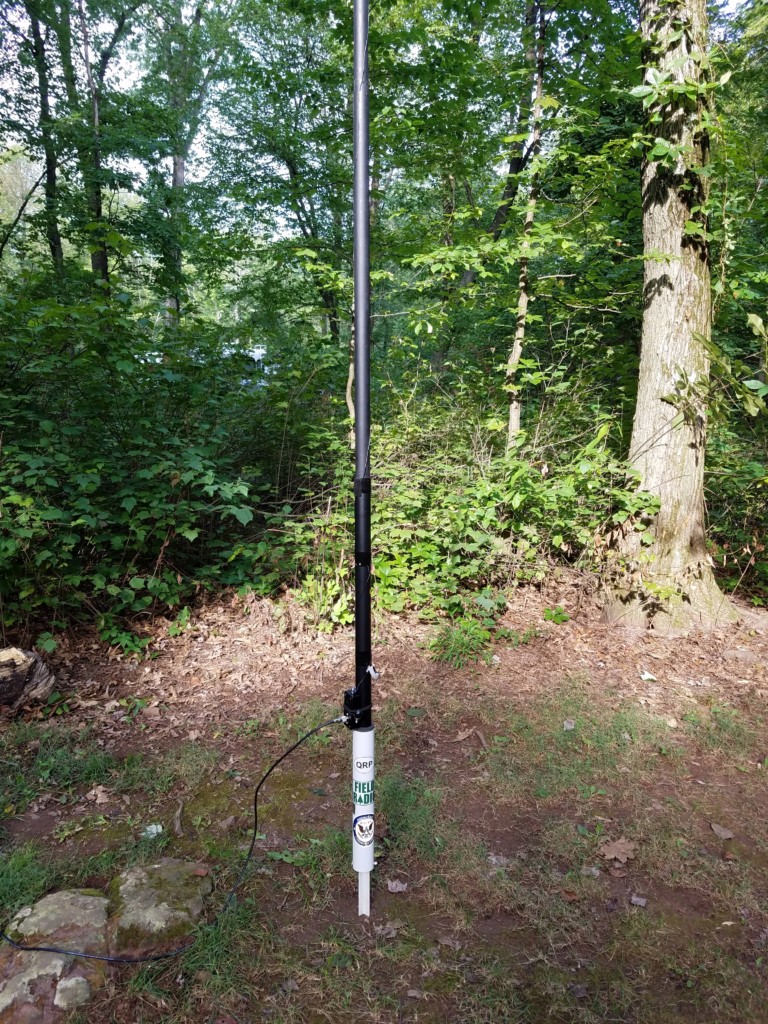
It became quickly apparent that I needed to keep the antenna as far away from the trailer as possible. For most trips, I used a 29.5-foot vertical wire supported by a 31-foot Jackite pole. I fed it with a 9:1 unun and ran a 25-foot piece of coax into the trailer. In some campgrounds, I was able to strap the Jackite pole to a lantern post or other object. Otherwise, I used my Jackite ground mount. (Unfortunately, Jackite no longer sells this ground mount.)

Some state parks provide lantern hanging posts that make great antenna supports. These are pretty common in Maryland state parks.

This set up worked well for me. There’s still some intermittent noise on 40 meters but it’s still usable. The other bands are pretty quiet. A pleasant surprise is that my KX3 loads up this antenna on 80 meters and the noise there is very low. I’ve had some nice late night/early morning contacts on 80 meters. On trips when we camped without an electrical hookup and used battery power only, I had no issues at all with noise.

My trusty 29.5-foot wire vertical. It's supported by a 31-foot Jackite pole and fed with a homebrew 9:1 unun.
Jackite ground mount. I bought this years ago. This particular mount is no longer sold by Jackite.

Radio Location

When the weather is decent, I prefer to operate outside of the camper, either from my camp chair or picnic table. However, when the weather is cold or rainy, I seek the shelter of the camper.

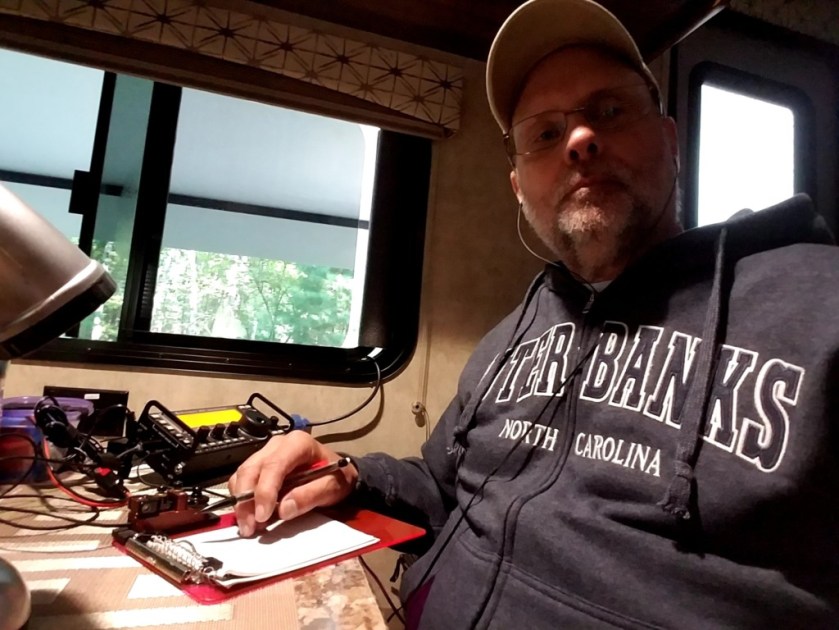
WB3GCK making some straight key contacts from the trailer.
Radio set up inside the trailer. The coax is routed through the window.

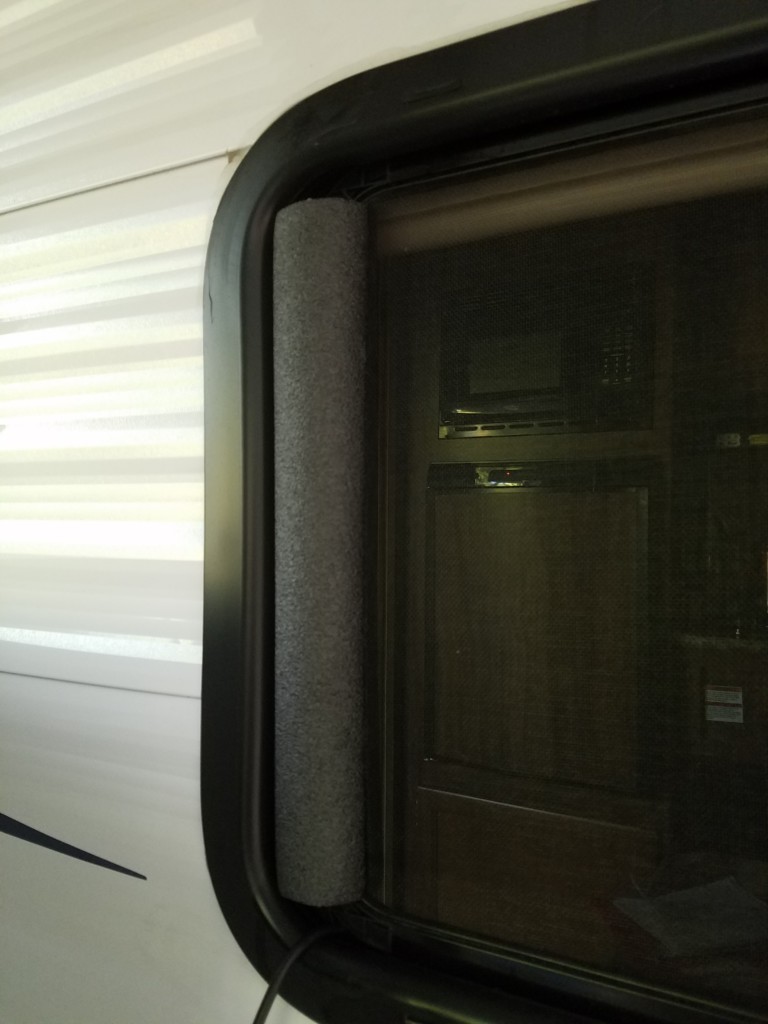
Initially, my big dilemma was routing a coax cable into the trailer. I really didn’t want to drill holes in a brand new trailer so I took the easy way out. There’s a conveniently located window next to the dinette table, so I brought the coax through there. To keep the bugs and inclement weather out, I used a piece of pipe insulation to help close up the gap. This window is also under the awning, so I get some additional weather protection there.  The dark-colored pipe insulation isn’t very noticeable, so my set up is “XYL-approved.”

Pipe insulation used to help close the gap in the window. The black pipe insulation is barely noticeable making it XYL-approved.

Wrapping It Up

So, now it’s time to Winterize the trailer and put it into hibernation until Spring. Over the Winter, I’ll have lots of time to look into other antenna options I can try next year.

73, Craig WB3GCK

Susquehanna State Park (Again)

I’ve been a little under the weather and haven’t done much radio stuff lately. A weekend of camping in Susquehanna State Park in Maryland turned out to be just what the doctor ordered. I worked some of the SKCC Weekend Sprintathon (WES) contest and I did a Parks on the Air (POTA) activation (KFF-1601).

During my last visit a couple of months ago, my results were less than stellar. This weekend, the bands seemed to be in better shape. My results this time were much improved.

The WB3GCK "QRP" camper at Susquehanna State Park (KFF-1601)
The WB3GCK “QRP” camper at Susquehanna State Park (KFF-1601)

On the WES front, I worked a lot of the SKCC regulars and added a few new ones to my log. In particular, 80 meters was very active Saturday night and Monday morning.  Tony K6ELQ in California managed to hear my QRP signals on two bands.  One of those bands was 40 meters, so he really must have good ears.  It was also good to work Bert F6HKA again.  Bert also has great ears.

My POTA activation got off to a slow start. I had poor cell phone coverage from the campsite, so self-spotting on Facebook and the DX cluster was difficult. I attempted to post a spot on Facebook but I’m not sure if it actually got through the first time or not. I spent about 30 or 40 minutes calling CQ on 40 and 20 meters with no takers. I knew that Joe N2CX was activating a park up the Susquehanna River from me so I set up on a frequency just below Joe’s usual 40M hangout. My hope was that folks looking for Joe would also stumble across me. It worked! I started getting some calls from POTA regulars who spotted me on the DX clusters.

When I wrapped up for the weekend, my log included France (3 QSOs), Croatia (2 QSOs), Netherlands, Belgium and park-to-park QSOs with N2CX and F4GYG. Coupled with my earlier visit, I amassed enough QSOs to exceed the 44 QSOs needed for a Worldwide Flora and Fauna (WWFF) activation.

After spending a relaxing weekend in the woods playing radio, I’m pleased to report that I’m feeling much better now.

72, Craig WB3GCK

Elk Neck State Park (KFF-1569)

My XYL and I took our “QRP” travel trailer down to Maryland over the weekend. We stayed in one of our favorite campgrounds, Elk Neck State Park. I did a brief Parks on the Air activation on Saturday.

Elk Neck State Park is located on a peninsula bounded by the Chesapeake Bay to the west and the Elk River to the East. Besides camping, there are numerous hiking trails, a beach on the Chesapeake side for swimming and access for boating. The park is home to the scenic Turkey Point Lighthouse, which overlooks the Chesapeake Bay.

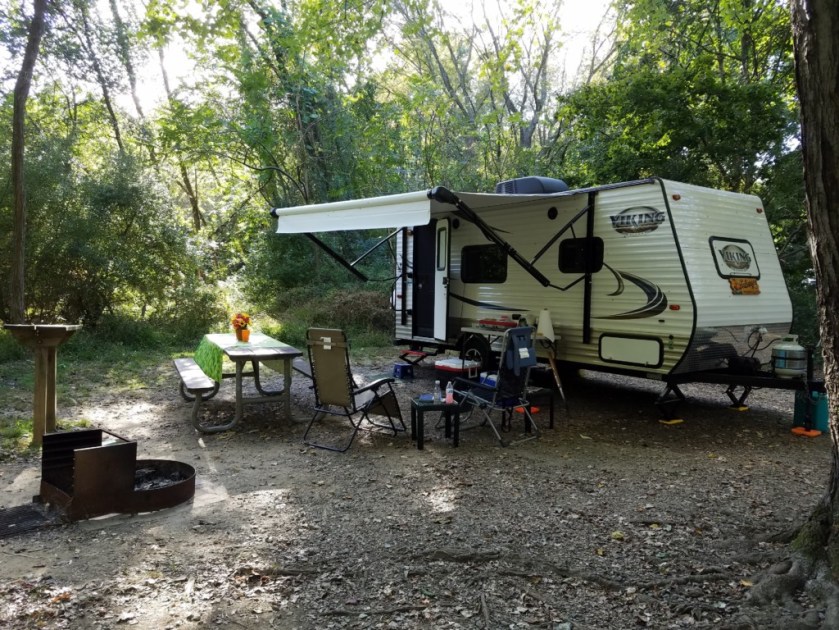
Our campsite in Elk Neck State Park. Once again, I used a lantern post to secure my Jackite pole.

Our campsite was located on the Elk River side near Stony Point. For this trip, we chose a campsite without electrical hookups. Since the trailer was powered only by battery, I didn’t have any noise to contend with. This made for some nice, quiet conditions on the bands.

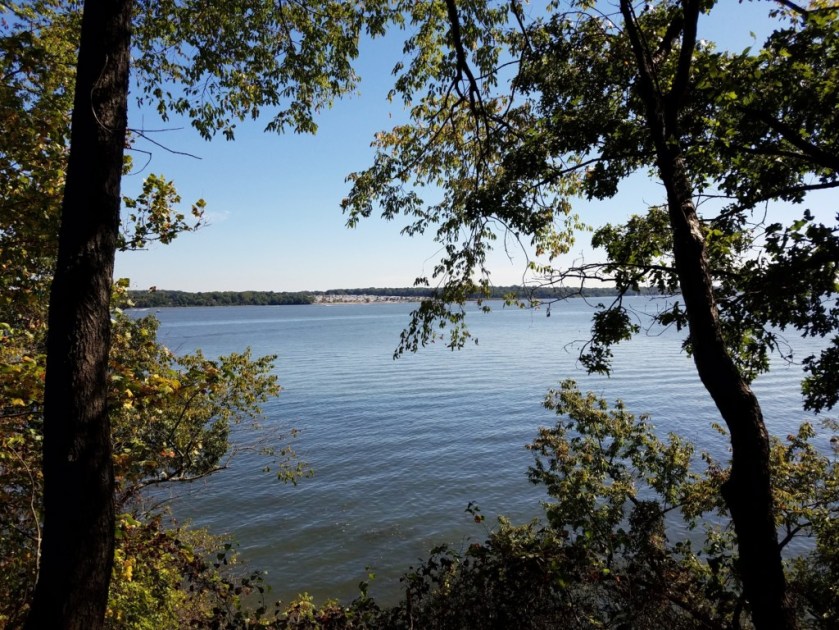
The view of the Elk River from Stony Point.

I operated on Saturday afternoon for about an hour. I made a few contacts on 40M but interference from an RTTY contest made it tough. When I moved up to 20M, things perked up a bit. To the west, I worked British Columbia and California. To the east, several of the European regulars showed up. I worked stations in Sweden, Poland, Germany, and Croatia.

Later in the evening, I got on 80M for about 20 minutes. I worked a few relatively local stations plus two in Michigan. It was starting to get dark so I shut down for the night and got a campfire started.

I ended the weekend with 19 stations in my log. Not too bad, considering the short amount of time I invested.

73, Craig WB3GCK


Kids and POTA Fun at KFF-1355

My XYL and I took our little camper up to nearby French Creek State Park (PA) for the weekend. In between entertaining our visiting grand-kids and grilling hotdogs, I managed to get in a brief Parks on the Air (POTA) activation (KFF-1355).

We usually camp at French Creek several times each year. It’s a great campground and just a short drive from home. It’s an easy weekend getaway for us. This weekend, our two daughters and our three grand-kids came up on Saturday to visit our campsite for the day.

My "portable hamshack" at French Creek State Park near Elverson, PA.
My “portable hamshack” at French Creek State Park near Elverson, PA.

At one point, everyone headed down to the playground with the kids. I stayed behind and got on the radio for about 20 minutes or so. I spotted myself on the Facebook POTA group and on the DX cluster. Twenty meters must have been in pretty good shape because I was soon met with a mini pileup of European stations. I wasn’t expecting that.

After I worked my way through the calling stations, I had worked Sweden, Belgium (2 stations), Croatia (2 stations), Italy and Spain. There were also two Texas stations and one from Oregon. My trusty 29.5-foot vertical wire had really gone the distance for me.

My trusty 29.5-foot wire vertical. It's supported by a 31-foot Jackite pole and fed with a homebrew 9:1 unun.
My trusty 29.5-foot wire vertical. It’s supported by a 31-foot Jackite pole and fed with a homebrew 9:1 unun.

I got on again later in the evening and picked up a few more POTA hunters before re-joining my better half at the campfire. I worked a few more the next morning (including EA1DR in Spain for the second time) before packing up and heading for home. There were a lot of familiar callsigns in the log.

I didn’t have a lot of time for radio this trip but the dedicated POTA “regulars” came out to play and made it a lot of fun.

73, Craig WB3GCK

Cunningham Falls State Park (KFF-1566)

My better half and I took our little camper down to Cunningham Falls State Park for the weekend. Located in central Maryland, Cunningham Falls has always been one of our favorite campgrounds. While I was there, I did some ham radio, including a Parks on the Air (POTA) activation of KFF-1566.

I did all of my operating outside under the camper’s awning. My antenna was my usual 30-foot vertical wire fed through a 9:1 unun. I strapped my 31-foot Jackite pole to a wooden lantern stand. With the bands being a bit flakey, I cranked my KX3 up to 10 watts for the POTA contacts.

Operating from our campsite in Cunningham Falls State Park in Thurmont, Maryland. My 31-foot Jackite pole is strapped to the lantern post on the left.

Despite some solar storming and generally poor propagation, I managed to squeeze out more than enough contacts to qualify the POTA activation. I certainly appreciate the effort put forth by the “hunters” to dig my low-power signal out of the noise. In particular, W6LEN in California was particularly persistent in tracking me down. Although our signals were only slightly better than ESP levels, we managed to connect on both 30 and 20 meters.

I also had a few nice rag-chew QSOs, too. On Saturday afternoon, I heard NA1CC/2 calling CQ and gave him a call. As it turns out, Wes was running QRP while camping near Cranberry Lake in New York. It always fun to have a campsite-to-campsite QRP QSO.

We also took a ride over to Catoctin Mountain Park.  This national park is right across the road from Cunningham Falls and is also where Camp David is located.  I activated Catoctin Mountain Park during the National Parks on the Air (NPOTA) event last year but had no time for a POTA activation there on this trip.

We had great weather for camping this weekend, although the space weather could have been better.

72, Craig WB3GCK

Father’s Day Weekend Camping

As is my usual practice, I spent Father’s Day weekend camping with my XYL. One of my Father’s Day “gifts” is a relaxing weekend with some occasional ham radio.

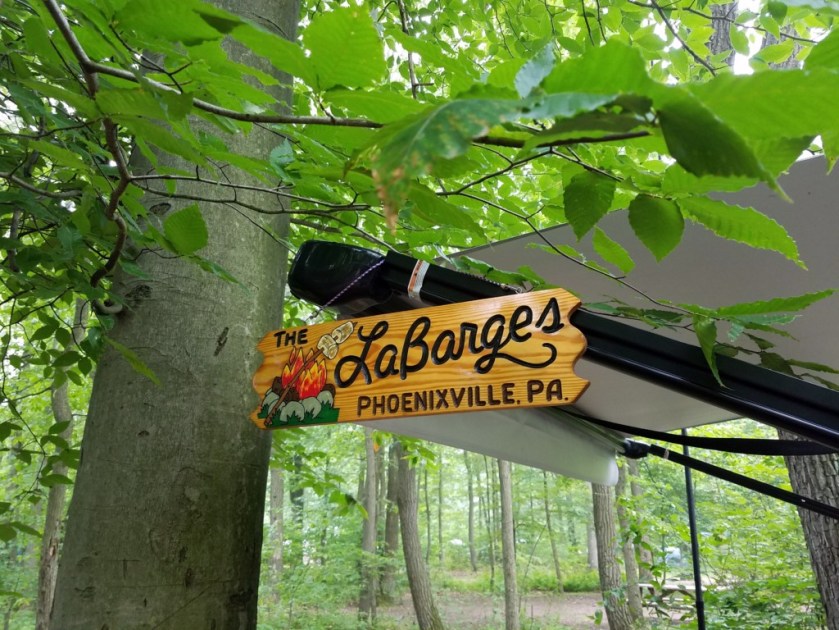
Our camp sign. A local artisan made this for us many years ago.

We took our travel trailer up to nearby French Creek State Park. On our maiden voyage with the trailer, I encountered some noise issues. Not this time. Since the trailer was only on battery power this time, I didn’t have the noisy 12V converter to contend with. Plus, I used my Jackite ground mount to mount my antenna further away from the trailer.

My 31-foot Jackite pole. This time I located the antenna about 10 feet away from the trailer.

For this trip, I used the 31-foot Jackite pole to support a 30-foot wire and fed it with a 9:1 unun. Inside the trailer, I used my KX3 with a small LiFePO4 battery. Using the KX3’s internal antenna tuner, I was able to load up on all bands from 80-6 meters. The KX3’s tuner never ceases to amaze me.

Operating on and off over the weekend, I made a dozen or so casual contacts. Some of them were pretty interesting:

  • On Saturday, I worked WB2LQF in New York. Stan was running 1W to his attic dipole and was delivering an amazing signal into southeastern Pennsylvania. On Sunday, I worked Stan again. This time he was operating WW2DEM aboard the USS Slater in Albany. Like me, Stan is a former Navy Radioman.
  • I worked N2CX who was doing a Parks on the Air (POTA) activation from Big Pocono State Park (KFF-1333) in the Pocono Mountains of Pennsylvania. I was monitoring his usual 40-meter frequency and caught him when he first came on the air.  After working Joe, I decided to start submitting my POTA logs.
  • I worked K1ZK as he was testing his new MTR rig on 20 meters. Zack and I had a nice two-way QRP chat. I was pleased to be his first contact with the new rig.
  • I wrapped up the weekend by working the NAQCC guys operating NY3EC aboard the USS Requin.

I also had a chance to do a quick test of the vertical antenna I have been working on. It’s getting better but the 30-meter band is still resonating a bit low. I’ll be doing another loading coil tweak this week.

My experimental vertical antenna set up on our campsite for some quick SWR measurements.

Next weekend I’ll be out with the Boschveldt QRP gang for Field Day. If you hear W3BQC on the air, give us a shout.

72, Craig WB3GCK

Trailer ‘Tenna

We recently retired our old pop-up tent trailer and acquired a small hard-sided travel trailer.  The antenna I used with the pop-up camper evolved over 19 camping seasons to a pretty decent all-band antenna.  It covered 80 through 6 meters (with a tuner) and required almost no space at all when deployed.  I needed to come up with something similar for the new trailer.

My new travel trailer on its maiden voyage to Codorus State Park in south-central Pennsylvania.

For the first outing, I went with a modified version of the Pop-Up Vertical.  In a nutshell, I used a 30-foot vertical wire, fed through a 4:1 unun.  The ground side of the unun was attached to the frame of the trailer.  My 31-foot Jackite pole supported the wire.  I used my drive-on mast support to hold up the pole.  Instead of parking one of the trailer’s tires on top of the drive-on mount, I put it under one of the trailer’s stabilizer jacks to hold it down.

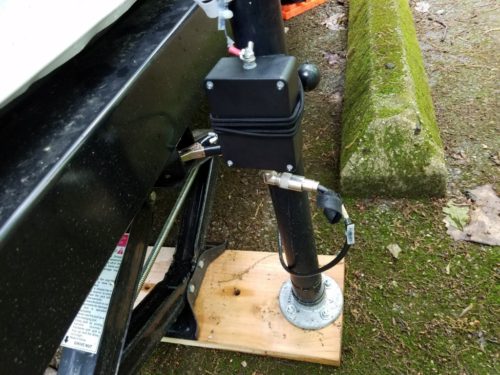
This is the drive-on mount that supported the Jackite pole. The black box is the 4:1 unun. To the left of the unun, you can see the clamp for the ground connection to the trailer’s frame.

On our first camping trip with the new trailer, I was able to quickly set up the antenna.  For the feedline, I used an 18-foot length of RG-8X coax, which I ran through a window to the dinette table inside the trailer.

Using the tuner in my KX3, I was able to get the antenna to load up on 80 through 6 meters.   The 80M band was a bit touchy but the KX3 was able to get to 1:1 SWR.  I had a nice CW chat on 40M with N1ESZ up in Connecticut.  Tony gave me a great signal report.  This thing appeared to be radiating!  I was a little concerned because part of the antenna was close to the metal wall of the trailer but my signals were going somewhere.

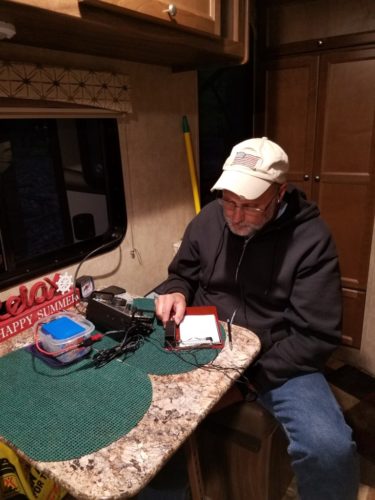
WB3GCK operating from the new trailer. My XYL took this picture while I was working N1ESZ on 40 meters.

I made another half-dozen QSOs on 80, 40 and 20 meters over the weekend.  The antenna performed well during some lousy band conditions but I did encounter some issues.

There was some noise that appeared about every 25 or 30 KHz that moved around a bit.  It was loudest on 40 meters.  I suspect that the trailer’s converter, which converts 120 VAC to 12 volts DC, is the culprit.  My antenna was pretty close to the trailer’s power cable that connects to “shore power.”  I could have picked up the noise from there.  Also, during a QSO with KK0I in Wisconsin on 40 meters, I noticed that a LED on the trailer’s control panel was flashing in unison with my CW.  My 5-watt signal was finding its way into the trailer’s circuitry.  The extra amenities and gadgets in the new trailer are convenient but not necessarily radio-friendly.

Not unlike the antenna on my old camper, this will be a work-in-progress.  On our next trip, I’ll be relocating the antenna to a corner of the trailer that’s further away from the electrical stuff.  I also have some tweaks to the antenna configuration that I want to try.  If all else fails, I’ll just have to mount the antenna further away from the trailer.

Stay tuned…

72, Craig WB3GCK

SKCC WES October 2016

I spent the weekend camping in French Creek State Park near Elverson, Pennsylvania.  The Straight Key Century Club’s (SKCC) monthly Weekend Sprintathon (WES) was held this weekend, so I spent some time making straight key contacts.

I was set up in my pop-up camper using my KX3 at 5 watts on battery power.  My antenna was my trusty “Pop-up Vertical.”

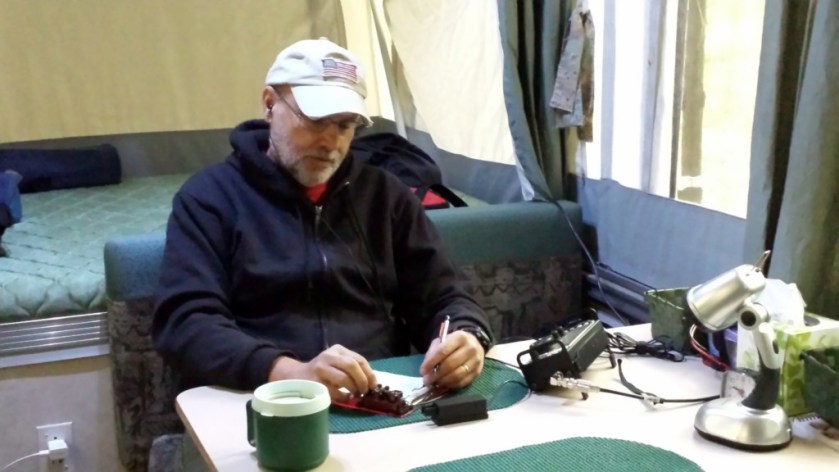
Working the SKCC WES contest from the camper

Prior to the start of the WES contest, I had a nice 2-way QRP chat with John W3FSA up in Maine.  John’s YouKits HB-1B was putting a great signal into Pennsylvania.

Working the contest on and off over the weekend, I logged 39 contacts.  Some of the highlights included:

  • Working F6EJN and DK7OB.  Both were new additions to my SKCC log.
  • An early morning QSO with Tony K6ELQ in California on 40 meters.  I have to admit, the credit needs to go to Tony and his phenomenal station.  It’s not the first time I’ve worked the West Coast on 40 meters during daylight hours but I always like when that happens.
  • Adding enough new contacts to my SKCC log to qualify for the Tribune x3 level.  I was stuck at the Tx2 level for a while, so I was pleased to finally get to the next level.

While tuning around 40 meters on Saturday afternoon, I heard my old QRP buddy, WA3WSJ, making some contacts in the Pennsylvania QSO Party.  I gave Ed a contact and let him know I was camping not far from his home.  A little while later, Ed stopped by the campsite for a visit.  He even came with some food items he acquired during one of his NPOTA trips.  It’s always fun to do some catching up with Ed.

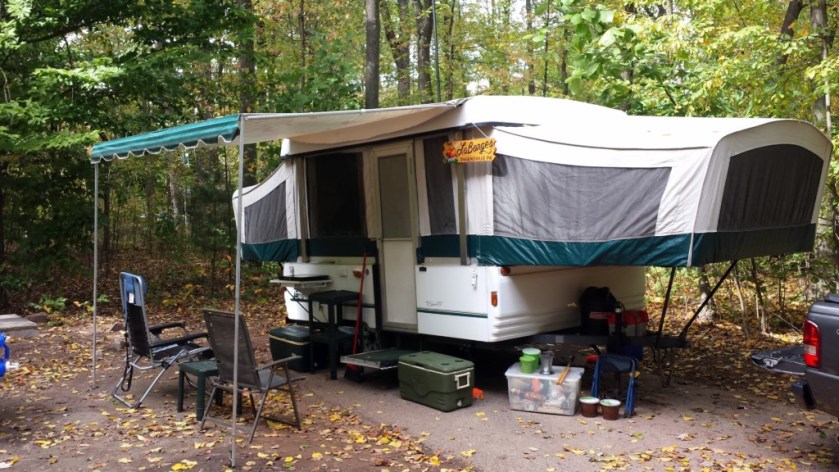
Our pop-up camper on its final camping trip (with us, at least).

I had a bittersweet moment this morning as I was taking down the Pop-up Vertical for the last time.  My XYL and I decided to retire the pop-up camper and go with something different next year.  Over the past 19 years, my ham radio setup in the camper has evolved to where I could be up and operating in minutes.  The Pop-up Vertical has always performed well for me.  So, I’ll have to start all over working out a new antenna setup for whatever kind of camper we end up with next year.  That should be fun.

72, Craig WB3GCK