WES at Frances Slocum State Park

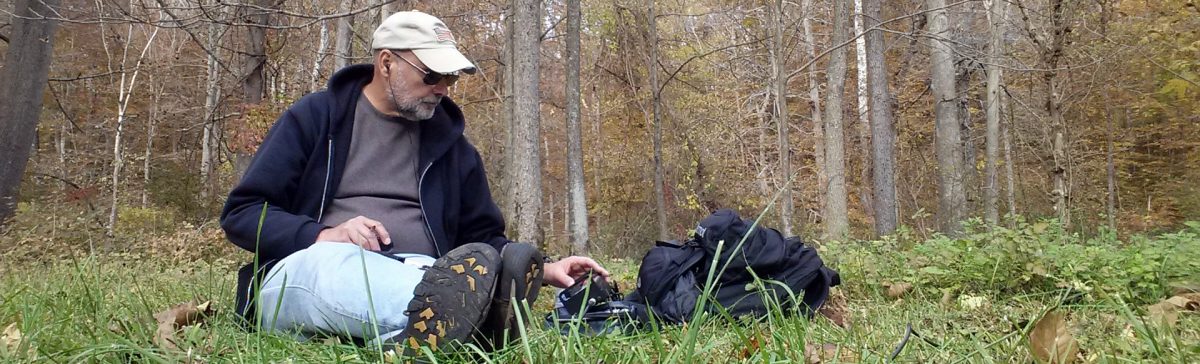
My (far) better half and I hitched up the “QRP camper” and headed north to the Pocono Mountains of Pennsylvania. Our destination for the weekend was Frances Slocum State Park. It was our first visit there and we had a great time. As a bonus, our trip coincided with the monthly SKCC Weekend Sprintathon (WES) contest.

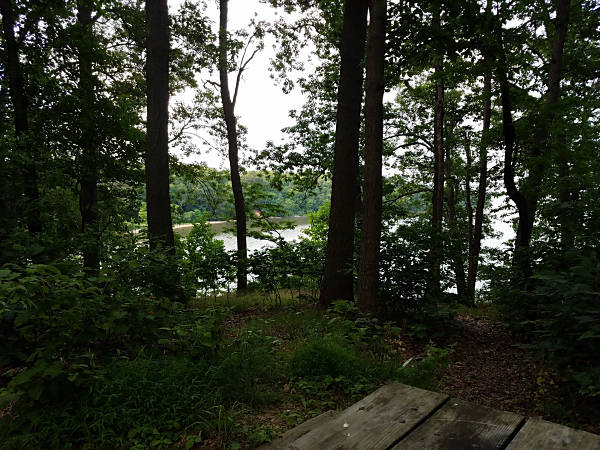
Frances Slocum State Park, located north of Wilkes-Barre, covers 1,035 acres. The centerpiece of the park is Frances Slocum Lake. The campground is relatively small and very quiet. Ours was one of the larger sites available and was nicely secluded.
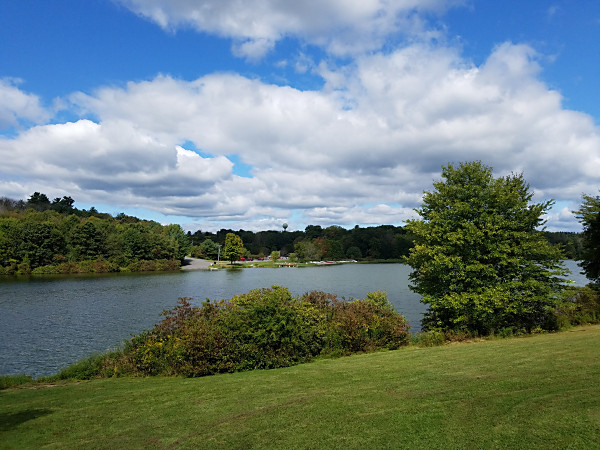
Frances Slocum Lake
Frances Slocum Lake

After getting the camper situated, I went about setting up my antenna. I had a bit of trouble driving in my Jackite pole ground mount. The ground was very rocky and it took 5 or 6 tries to find a spot to drive it in. I wound up putting it at the edge of our site near a large stand of pine trees.
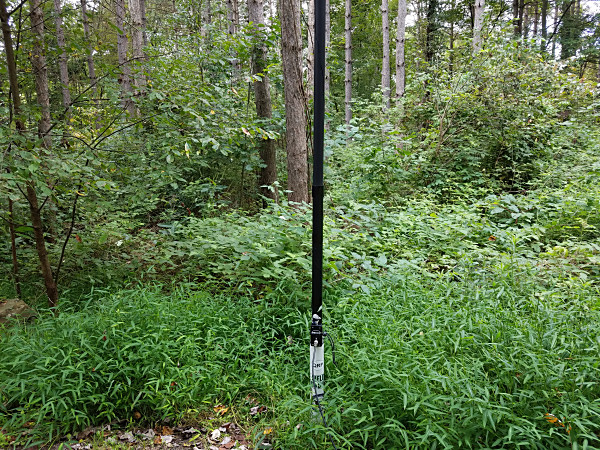
My antenna at Frances Slocum State Park. It took 5 or 6 tries to find soft ground to drive in the ground mount.

I got on the air Saturday morning just as the WES contest was starting. In general, it seemed like my 5-watt signal was getting into the southern states with good signal reports but reaching New England was a problem at times. I’m guessing that the mountainous terrain surrounding the park was a factor.
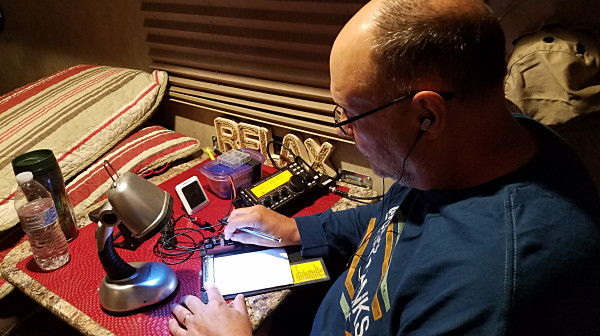
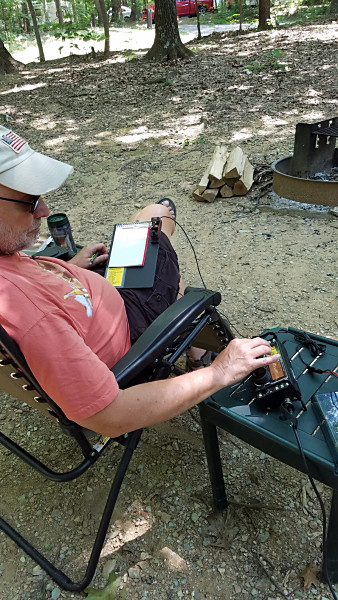
WB3GCK doing some early morning operating inside the camper at Frances Slocum State Park

After operating on and off on Saturday (and a little bit early Sunday morning), I ended up with 20 WES contacts in 12 SPCs. Not too bad, considering the time I spent on the air. I also worked KX0R out in Colorado. This was the second camping trip in a row where I worked George during one of his SOTA activations.

All in all, it was a very nice weekend. The weather was great and the radio wasn’t too bad.

72, Craig WB3GCK

W3Z Special Event Station

I received an email from my friend, Walt KB3SBC, last week. His group needed a CW operator for a special event station they were going to run at a local college. I volunteered to come out to work a few hours of CW for them and had a fun morning.

The event was the 150th anniversary of the founding of Ursinus College. Ursinus is a liberal arts college located in nearby Collegeville, PA.

Walt’s group, the Education Alliance for Amateur Radio (EAAR) is a non-profit corporation established in 2016 that promotes Science, Technology, Engineering, and Math (STEM) education through youth and community education and collaboration with other Amateur Radio organizations. The group obtained the callsign, W3Z, for the event at Ursinus College.

QSL card for the W3Z special event station

I arrived at Ursinus yesterday morning, as the group was unloading and setting up two outdoor stations near the festivities. The antennas included a fan dipole for 40M & 20M and Walt’s 32-foot military vertical.

Special event station, W3Z, celebrating the 150th anniversary of the founding of Ursinus College. Walt KB3SBC (left) is operating FT8, while Bill KA3RMM is operating SSB.

I had the honor of leading off the event, operating CW. We were in the midst of a G2 geomagnetic storm, so it was rough going at times. After a couple of hours, we managed to put more than a dozen stations in the log, including Germany and two Belgian stations. (This was the first time I operated at 100 watts in more than 20 years!) Walt then took over and started making contacts with FT8, while the other station operated SSB.

I wasn’t able to stay for the whole event, so I don’t know what the final tally was. However, if you worked W3Z yesterday, see QRZ.com for QSL information.

I’d like to thank EAAR for the opportunity to be a part of the event. Be sure to visit the EEAR website and follow them on Facebook to find out more about their important work promoting STEM education.

73, Craig WB3GCK

Bike-Portable in the Park

We finally got a break from the incessant heat yesterday, so it was a great day to take the bike out for a ride.

I headed back to the Schuylkill River Trail near Oaks, Pennsylvania; one of my favorite places to ride. I rode for a couple of miles before turning onto the Perkiomen Trail. Along the way, I stopped in Lower Perkiomen Valley Park for a little radio.

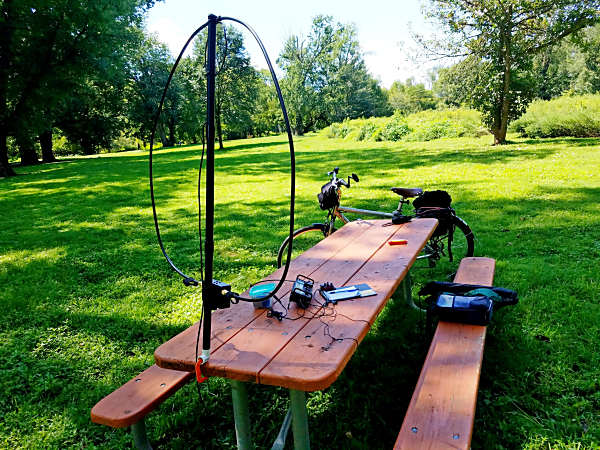
Bicycle-portable in Lower Schuylkill Valley Park

I mounted my Alexloop to a picnic table and fired up my trusty KX3. Things got off to a slow start but I eventually connected with fellow SKCCer, K9FW, on 30M. Al always puts out a great signal from Indiana. The 40M band was tied up with Ohio QSO Party stations. I worked a few of them before loading up the bike to continue my ride.

There was nothing earth-shattering, radio-wise, but it was a beautiful day to be out cruising on my bike. I’ll take those mid-70s temperatures any day.

72, Craig WB3GCK

Skeeter Hunt 2019

NJQRP Skeeter Hunt Logo

I was still recovering from a long drive home yesterday but I wanted to get out for this year’s Skeeter Hunt contest. It was a lot of fun and I’m glad I managed to catch part of it.

Like last year, the Skeeter Hunt fell on the day after the trip home from my annual Outer Banks family vacation. I took some time off from unpacking and putting things away and headed out to Valley Forge National Historical Park for a bit.

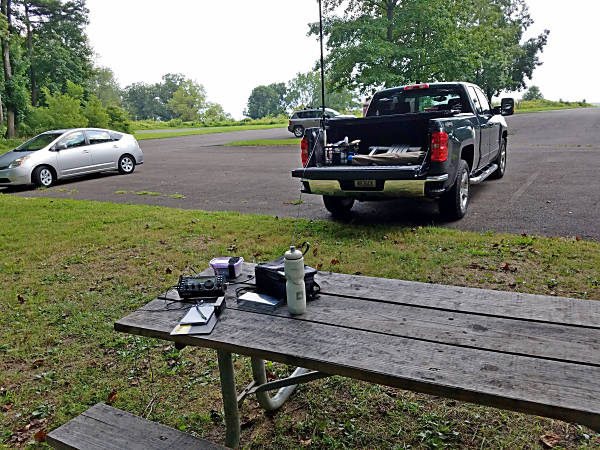
I found a parking spot near a picnic table in an almost deserted area of the Park. The temperature was in the 90s today, so I made sure to pick a table under a shady tree. I mounted my 19-foot homebrew vertical on the truck and ran a coax cable over to the picnic table. I fired up my KX3 just after the contest started.

My set up in Valley Forge Park for the 2019 Skeeter Hunt. The table was well-shaded and close enough to the truck for 18-feet of coax to reach the antenna.

There was quite a bit of activity on 40M, so I spent most of my time there. When things started to thin out on 40M, I changed bands and picked up 3 more skeeters on 20M.

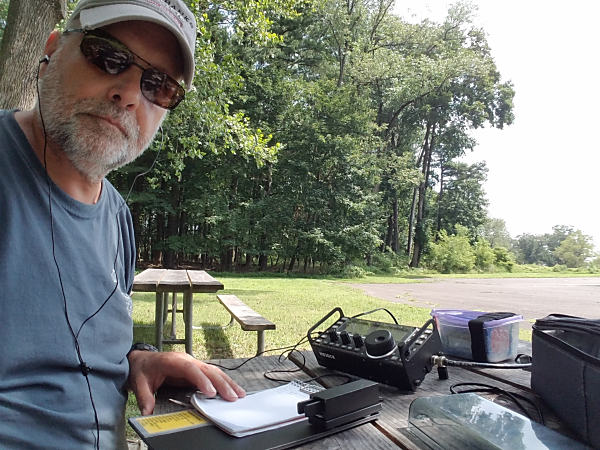
WB3GCK hunting skeeters in Valley Forge National Historical Park

I packed up after an hour and a half but it was a fun time. I ended up with 22 QSOs in the log, including 19 skeeters and 14 SPCs. As always, it was nice to work some familiar callsigns.

Thanks to Larry W2LJ and the NJ QRP Club for sponsoring this contest. It continues to be one of my favorite QRP events of the year.

72, Craig WB3GCK

Outer Banks 2019

Once again, my family made our annual vacation trip to North Carolina. We rented a house in Corolla on the Outer Banks for the week. Of course, in between the usual vacation activities, there was some ham radio involved.

For various logistical and traffic reasons, it took us longer than usual to get there. It wasn’t until the next day (Sunday), that I was able to get an antenna up. This year, I went with my trusty “Up & Outer” antenna.

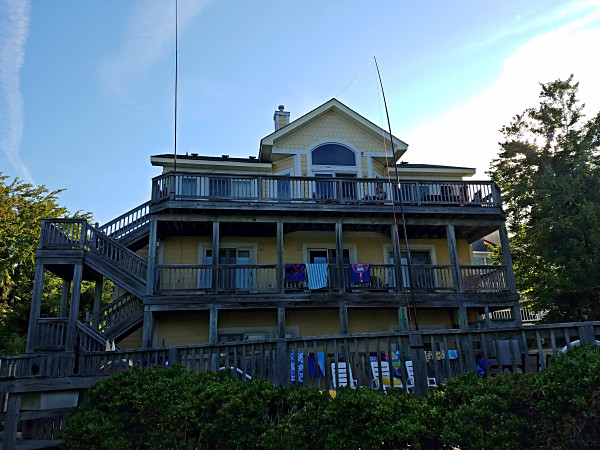
I mounted a 28-foot pole on the 3rd story deck for the vertical element. I strapped a smaller pole to a fence to support the horizontal element. I put a BNC-to-binding post adapter on my KX3 and fed the 300-ohm twin-lead directly. It loaded up fine from 60M through 10M. Surprisingly, the ambient noise levels were low. Man-made noise is usually a challenge in these rental houses.

Poles supporting my "Up & Outer" antenna. The pole on the left is supporting the vertical wire. The pole on the right is the end support for the horizontal wire.
Poles supporting my “Up & Outer” antenna. The pole on the left is supporting the vertical wire. The pole on the right is the end support for the horizontal wire.

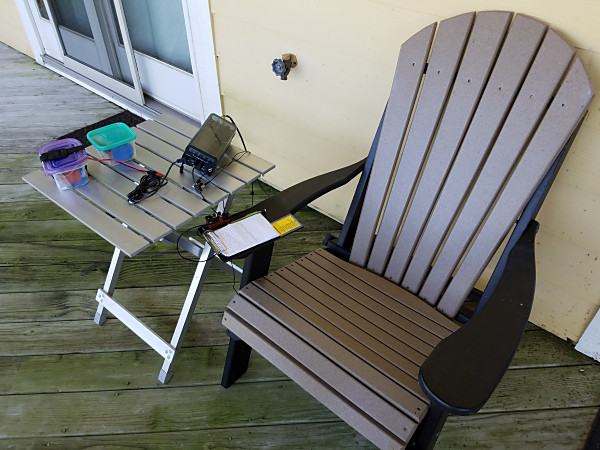
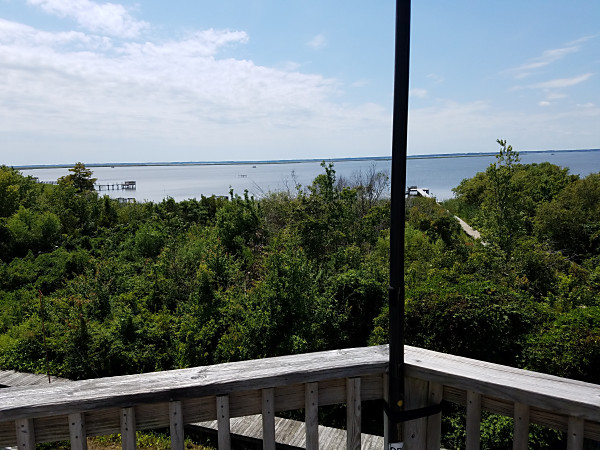
I operated from a 2nd-floor deck on the rear of the house. This spot provided some nice shade for most of the day and gave a great view of Currituck Sound.

My outdoor shack for the week. The chair was particularly comfortable and the view of Currituck Sound was great.

I managed to catch a few hours of the SKCC Weekend Sprintathon (WES) contest. Running 10 watts, I worked 20 stations and added 8 more new contacts to my quest for the Senator Award. For good measure, I also worked DP6A in Germany who was participating in another contest. So, the antenna set-up appeared to be working fine.

The view of Currituck Sound from my antenna
The view of Currituck Sound from my antenna.

For the rest of the week, I fell into a pattern of casual QRP operating for a bit in the late mornings. The rest of the time was spent swimming, crabbing, and riding bikes with my grandkids. I still managed to make a handful of contacts each day and enjoyed some nice rag-chews.

Mid-week, we had some unsettled weather. I had a “Plan B” for inclement weather, though. I planned to move my radio gear into an unused sitting area not far from my outdoor location. I was going to use a small piece of pipe insulation to route the twin-lead in through a sliding door and keep it from touching the metal door jamb. Fortunately, the weather cooperated and “Plan B” never came into play.

As usual, the week went by too fast. On our last day, I made two more contacts before it was time to pack up the radio and tear down my antenna.

This was another fun vacation, radio-wise. I made 40 contacts, including some very nice early morning CW chats. I also worked a couple of stations who were also operating portable while on vacation and made a couple of DX contacts to boot. Plus, I continued my slow-but-steady progress towards my SKCC Senator Award, adding 16 new ones this week.

It was nice to be using a decent antenna in a low-noise environment — a welcomed change of pace from my home station!

72, Craig WB3GCK

Codorus State Park 2019

We’re in the midst of a busy camping season. Over the past weekend, we took our little “QRP” camper to Codorus State Park. I didn’t spend too much time on the radio this weekend but I did have some fun on 30M.

Codorus State Park, in southern York County, is one of our favorites. We try to get out there at least once a year. It’s a large, scenic park and includes and encompasses 1,275 acre Lake Marburg. Our site this time was large and wooded, with no neighbors on one side.

It was getting towards dark when I finally got around to putting up an antenna. I had a nice contact with W2IFB on 40M who was putting out a great 3-watt signal from New York. Assured that everything was in order, I headed out to join my (far) better half at the campfire.

The next morning, I made a few more contacts on 40M and 80M. Among those was N2KMF who was operating portable from Crandall Park near Glen Falls, New York.

WB3GCK operating at Codorus State Park near Hanover, Pennsylvania

For the rest of the weekend, I stayed on 30M, which provided lots of activity. The 30M band has always been one of my favorites and there was ample activity there. There weren’t any exotic contacts but I had fun working stations up and down the East Coast and out to the mid-West.

There was some deep fading on 30M on Saturday but Sunday was a different story. I got on around mid-day briefly before heading out for the trip back home. I was met with a mini pile-up and the signals were all solid. I quickly worked four stations before packing up the radio and tearing down the antenna.

Scenic Lake Marburg in Codorus State Park

The good news is that I made some more progress towards my SKCC Senator award. The bad news, though, is that I had to miss this year’s running of the Flight of the Bumblebees. The QRP contest coincided with our drive home. I hope all of the bumblebees had fun and I hope to be able to join in the fun next year.

72, Craig WB3GCK

Westclox Canadian Military Key

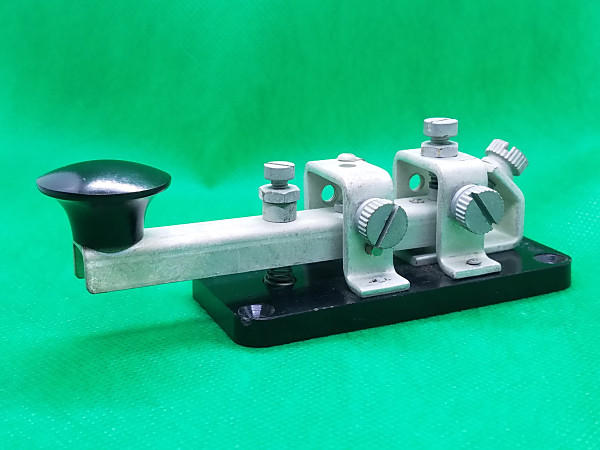
While puttering around the shack this morning, I came across an old key I had all but forgotten. It’s a Westclox Canadian military key that I acquired back when I was first licensed. It has been tucked away in the back of my desk drawer for most of the past 44 years. I can’t remember ever using it on the air, so I figured it’s time to give it a fresh look.

Westclox Canadian military key. According to the original box, it was manufactured in May 1949.

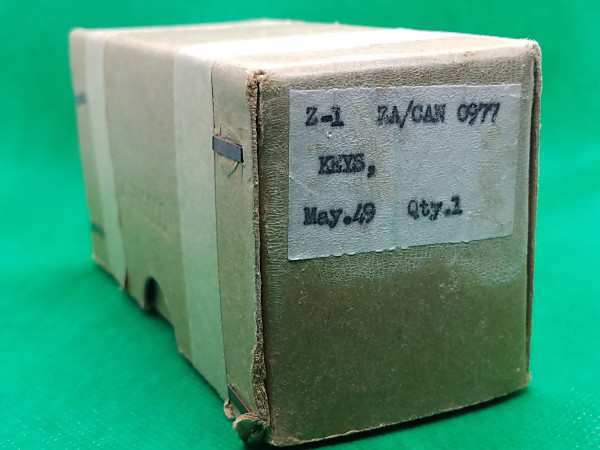
It seems like I’ve had this Westclox key forever. I remember buying it from a mail-order military surplus house around 1975. It was in excellent condition and appeared to be unused. The label on the box reads: Z1 ZA/CAN 0977. The box also shows a manufacturing date of May 1949. An identical key is shown on the W1TP website. The PA3EGH website also shows some similar keys.

Original box for the Westclox Canadian military key. The label reads Z-1 ZA/CAN 0977 and shows a date of May 1949.
Original box for the Westclox Canadian military key.

I don’t remember what I paid for it, but it wasn’t very expensive. I took a quick look at eBay this morning and I saw these keys listed anywhere from $80 to an outrageous $750.

One of the reasons it hasn’t seen much use is its “feel.” Unlike the J-38 style keys I used in the Navy, the contacts on the Westclox key are behind the fulcrum. This results in a “feel” that was a bit unusual to my taste.

The other issue with this key is that it’s somewhat loud. At one time I considered using it for portable operating while camping. However, I don’t think it would be a good choice for early morning operating when others are still sleeping.

Having said all that, there’s still something about this key that fascinates me. I spent some time re-adjusting it and it now feels better than I remembered. I also mounted it on a wooden base for some additional stability.

Frankly, I don’t think I gave this key a fair shake back when I bought it. So, I think I’m going to put this 70-year-old key on the air this week. If it really was new/unused when I bought it, this will be the first operational use in its 70-year existence.

73, Craig WB3GCK

WES at Cunningham Falls State Park

My (far) better half and I took our little camper to one of our favorite campgrounds for the weekend. Our destination was Cunningham Falls State Park in north-central Maryland. Our trip coincided with the Straight Key Century Club’s (SKCC) monthly Weekend Sprintathon (WES). So, I spent most of my ham radio time operating in the contest.

Our site was wooded and nicely shaded but not large enough for the larger antenna I planned to use. Instead, I strapped my Jackite pole to a lantern post and used my trusty 29.5-foot wire and 9:1 unun.

I got on the air on Saturday at 1200Z when the contest started. The noise from my trailer was very low (for reasons unknown) and I heard some strong signals on 40M. Things got off to a good start but got a bit more challenging as the day went on.

I worked the contest on and off over the weekend with mixed results. I was able to easily make some contacts while others were difficult, if not impossible. Cunningham Falls is located in a very mountainous area. That, coupled with some sketchy band conditions, made it an interesting weekend.

I’ve been working towards my SKCC Senator award but I’ve been in a bit of a slump the past few weeks. I decided to increase my KX3’s power to a whopping 10W to improve my odds. This was the first time I haven’t been in the QRP category for a WES contest.

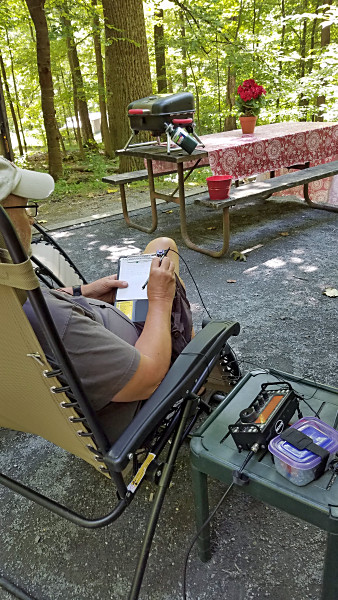
WB3GCK working hard (or hardly working) during the SKCC WES contest from Cunningham Falls State Park in Maryland

Despite the terrain and propagation issues, my casual operating resulted in 28 contacts in my log. Most were on 40M with a couple on 80M.

Here are the highlights:

  • I managed to add 12 more QSOs toward my Senator award. I only have 65 more to go.
  • On Saturday evening, I heard R7DA calling “CQ WES” from Russia on 40M. I gave him a call and got a “WB3? AGN.” It took quite a few tries before he had my full callsign and we were able to complete the QSO. Alex deserves major props for his patience and persistence in pulling my puny 10W signal out of the noise.
  • On Sunday morning, I got on the radio for a few final contacts before packing up. As I was tuning around looking for WES stations, I found N4ZN doing a Parks on the Air (POTA) activation in New York. I gave him a call and had a park-to-park QSO. After that, I pulled the plug and started packing up for the long drive home.

Despite the occasional frustrations, it was an enjoyable weekend of camping and ham radio.

73, Craig WB3GCK

Amazing GOOP for Ham Radio

You have probably seen Amazing GOOP® in your local hardware store. This product with the funny-sounding name has been around for decades. I’ve been using it for ham radio applications for the past 25 years or so.

I recently did some extensive research on Amazing GOOP. (Full disclosure: OK. I lied. My “extensive research” merely consisted of a quick Google search and reading a Wikipedia article.) Back in 1972, a senior executive in the aerospace industry created a product called “Shoe GOO®.” Shoe GOO was intended to repair rubber-soled shoes. In fact, I first used it many years ago to repair a pair of rubber fishing waders. The original Shoe GOO is still produced by Eclectic Products. They also produce a wide variety of waterproof, flexible adhesives for a host of applications and environments. The Amazing GOOP® product line is what I’ve been using for ham radio applications.

Here are some of the uses I’ve found for it:

Sealing portable antenna connections. This was my original use for Amazing GOOP. After soldering the connections between the feedline and dipole elements, I seal them up with Amazing GOOP. I’ve never had any corrosion problems like you can run into with RTV.

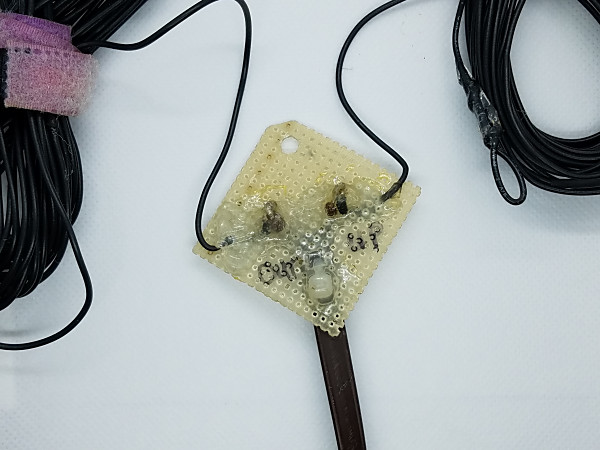
This is the center connector of the doublet that I use for my "Up and Outer" antenna. I used Amazing GOOP to seal the soldered connections and help anchor the wires in place. This particular antenna was built about 15 years ago and is still holding up well.
This is the center connector of the doublet that I use for my “Up and Outer” antenna. I used Amazing GOOP to seal the soldered connections and help anchor the wires in place. This particular antenna was built about 15 years ago and is still holding up well.

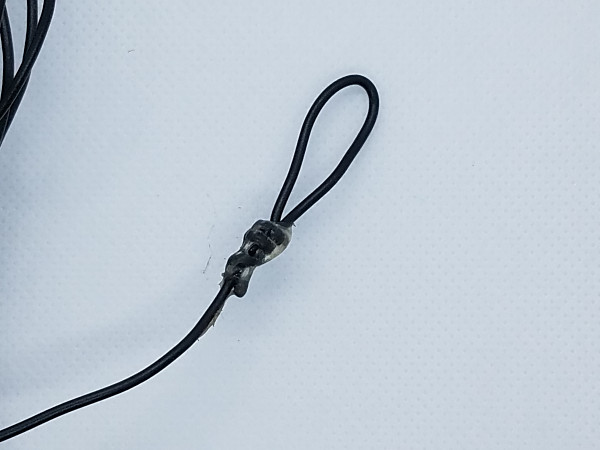
Wire end loops. Instead of end insulators for my portable wire antennas, I just form small loops. I twist the wire to form a loop and use Amazing GOOP to hold the wire twists in place. (This works very well for my lightweight portable wire antennas but I would use end insulators for permanent antennas.)

End loop on one of my (many) wire antennas for portable use. I attach my throwing line directly to the loop, foregoing an insulator. With smaller diameter wire, I sometimes put some shrink wrap over the GOOP.

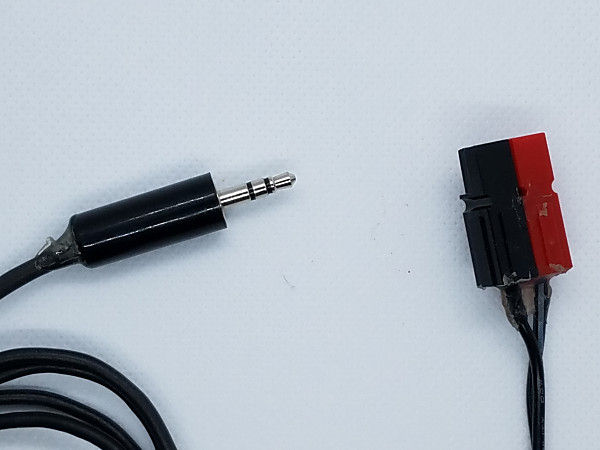
Powerpole® connectors. I’m a “belt and suspenders” kind of guy. So, I crimp and solder my Powerpole connectors. After I assemble and test them, I apply some Amazing GOOP where the wires enter the connector housing. This provides strain relief and makes them very rugged. I also place a dab of GOOP on both ends of the roll pin. This keeps them from popping out in the field.

Miniature audio connectors. I’m hard on the little 1/8″ audio plugs I use on my CW keys. So, after soldering and testing them, I put some GOOP on the connections before screwing on the plastic housing. Then, I put some GOOP on the wires where they enter the connector to add strain relief. I also apply GOOP to spade/ring lugs after they are crimped and soldered.

A 3.5mm plug and Anderson Powerpole connector after I have applied GOOP as a strain relief. Sure, they look a bit ugly but these connectors are pretty much bomb-proof. These items have seen heavy use in the field over the past 3 or 4 years.

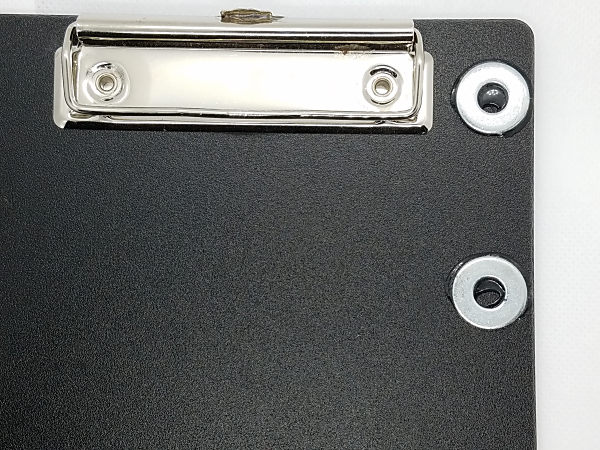
My CW Clipboard. I used GOOP to attach the steel washers to the clipboards I use in the field. The washers are how I attach the magnetic bases of my portable paddles and straight key to the clipboard.

I used GOOP to attach the steel washers to the clipboards I use in the field. The washers are used to attach the magnet bases of my portable paddles and straight key.
I used GOOP to attach the steel washers to the clipboards I use in the field. The washers are used to attach the magnetic bases of my portable paddles and straight key.

My rainspout antenna. I use a liberal amount of GOOP to seal the connection to my trusty rainspout antenna. GOOP holds up well to the continuous exposure to the elements.

Hopefully, the pictures will clarify my descriptions.

If I can find it, I use one of the GOOP varieties intended for outdoor use for my rainspout and portable wire antennas. Right now, I’m using Amazing GOOP Max. Regular old household variety of Amazing GOOP is fine for most uses, though. For all applications, I like to let the GOOP cure overnight before use.

A few disclaimers are in order:

  • This stuff is permanent. Be sure whatever you’re using it on works before sealing it up with GOOP.
  • This stuff works for me, as described. I don’t know what you’re using it for or how you’re using it, so your results may vary.
  • I have absolutely no financial interests in this product. I’m just a satisfied consumer.

So, that’s it. I hope you found it useful.

73, Craig WB3GCK

Reference Links:

Tough Weekend of Camping

I spent the weekend camping in one of the most scenic campsites we’ve encountered in a while. Unfortunately, it wasn’t a great weekend for weather-wise and radio-wise.

The park in question was Elk Neck State Park in northeastern Maryland. Our site was wooded, shady, and had a beautiful view of the Elk River.

We rolled in on Friday evening just before dark. We went about setting up the camper and I set up my usual 29.5-foot vertical. I checked to make sure the radio was working and headed out to join my (far) better half at the campfire.

The next morning was another hot and humid day, with temperatures headed towards the 90s. We’ve had a bunch of those lately. I set up the KX3 in a shady spot and checked around on 40M for some SKCC contacts. I worked a station in Georgia but it was a bit of a struggle. Although the propagation forecasts looked pretty decent, there was some deep fading and lots of static crashes.

WB3GCK operating outside the camper at Elk Neck State Park in Maryland

After breakfast, I tried again. After going unheard by several stations, I finally got through to a station in New Hampshire. Again, it was a struggle to complete the contact (mostly for the other guy, I suppose).

Around this time, it started raining. A spotty but severe thunderstorm was headed right towards us. We quickly stashed our outdoor gear and retreated into the trailer. It poured buckets. After the storm passed, I found my coax submerged in a puddle. (Note to Self: Test that coax to make sure it’s OK.)

The aftermath of one of the storms that rolled through Elk Neck State Park. My coax cable resembled the Transaltlantic Cable.

It rained on and off for much of the afternoon. With thunder and lightning in the area, I stayed off the radio. Fortunately, the rain stopped long enough for us to make dinner outdoors and enjoy another campfire. After we turned in for the night, yet another storm came through. This one featured lots of thunder and lightning.

This morning, I set up the radio outside again. It was another hot and humid day. The biting flies were out in full force, too. Despite all that, I fired up the radio. I made one last contact with another station in New Hampshire. As you might guess, the op on the other struggle to get my information. His QRO signal was fading, so I can image what I must have sounded like on his end. After that, we decided to pack up the camper and head home.

The view of Elk River in Maryland. There were some great sunrises over the river but, unfortunately, I couldn't capture a decent picture.
The view of Elk River in Maryland. There were some great sunrises over the river but, unfortunately, I couldn’t capture a decent picture.

I was a little disappointed that I was only able to squeeze out 3 contacts over the weekend. I would much rather write a post a making a bazillion contacts to far-flung places. I know these are tough times for QRP but still…

Elk Neck is one of my favorite campgrounds, so I’d like to get back down there in the Fall. Hopefully, the weather, propagation, and bugs will be better then.

72, Craig WB3GCK