Norristown Farm Park (KFF-4363)

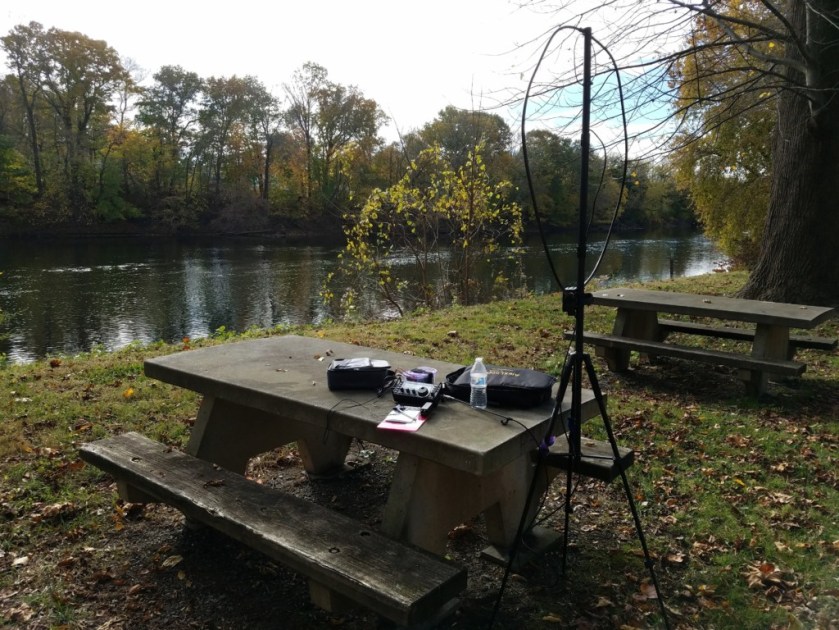
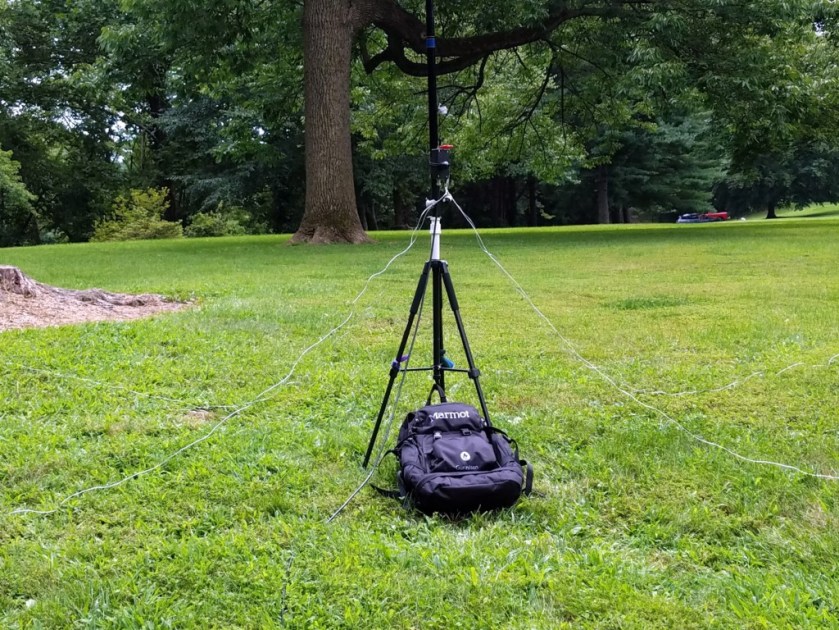
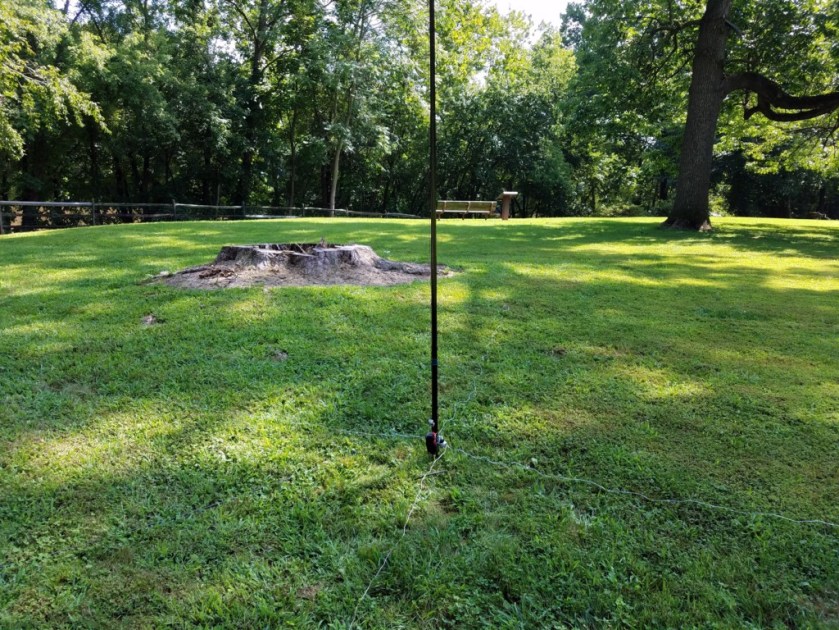
wwff_logo_200_transparentI took some time on Labor Day to do a quick Parks-on-the-Air (POTA) activation from Norristown Farm Park. This nearby park has only been activated one other time. In fact, KFF-4363 was activated for the first time yesterday by K0BAK.

Earlier this year, our local ARES-RACES group provided the communications for a March of Dimes event at this park. In preparation, I spent some time running communications tests around the park.  Being familiar with this park and its terrain, I set up today in a parking lot across from the park office. This spot is the highest elevation in the park that you can get to by car.

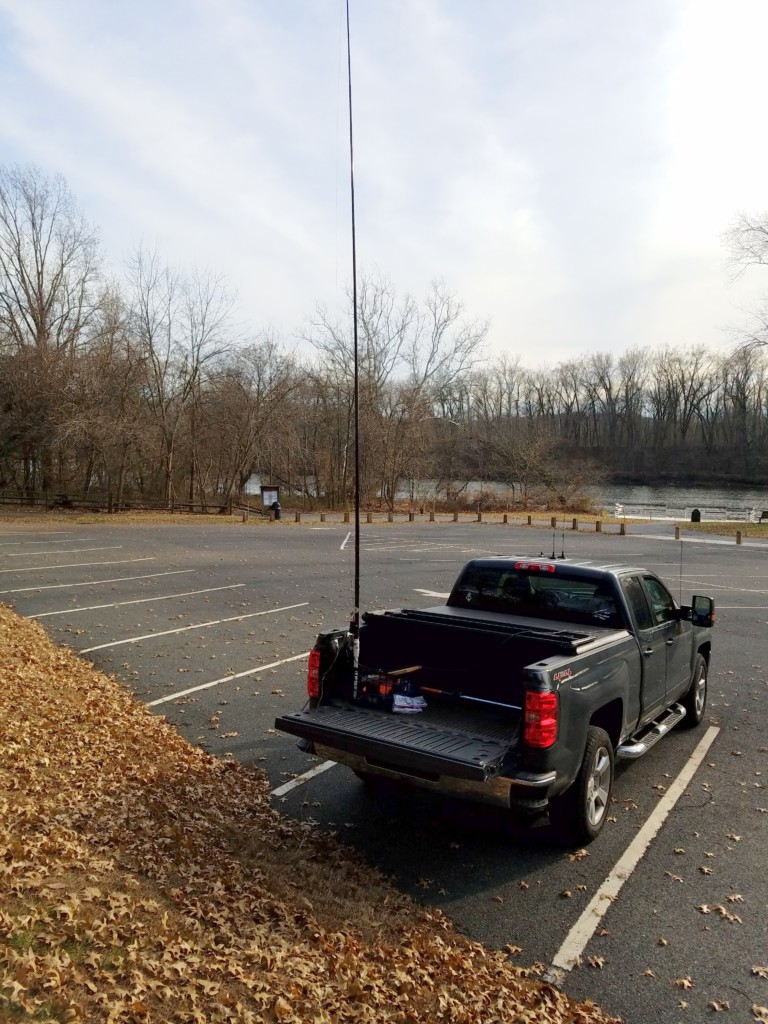
My location at Norristown Farm Park. You can see the corn fields behind my truck.

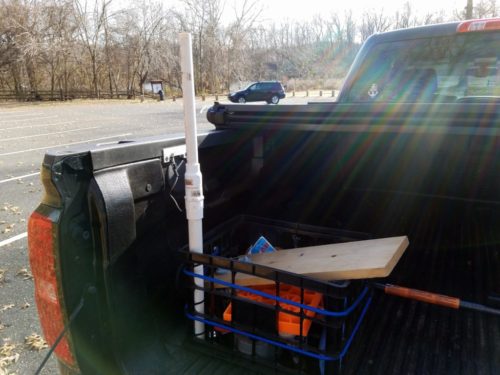
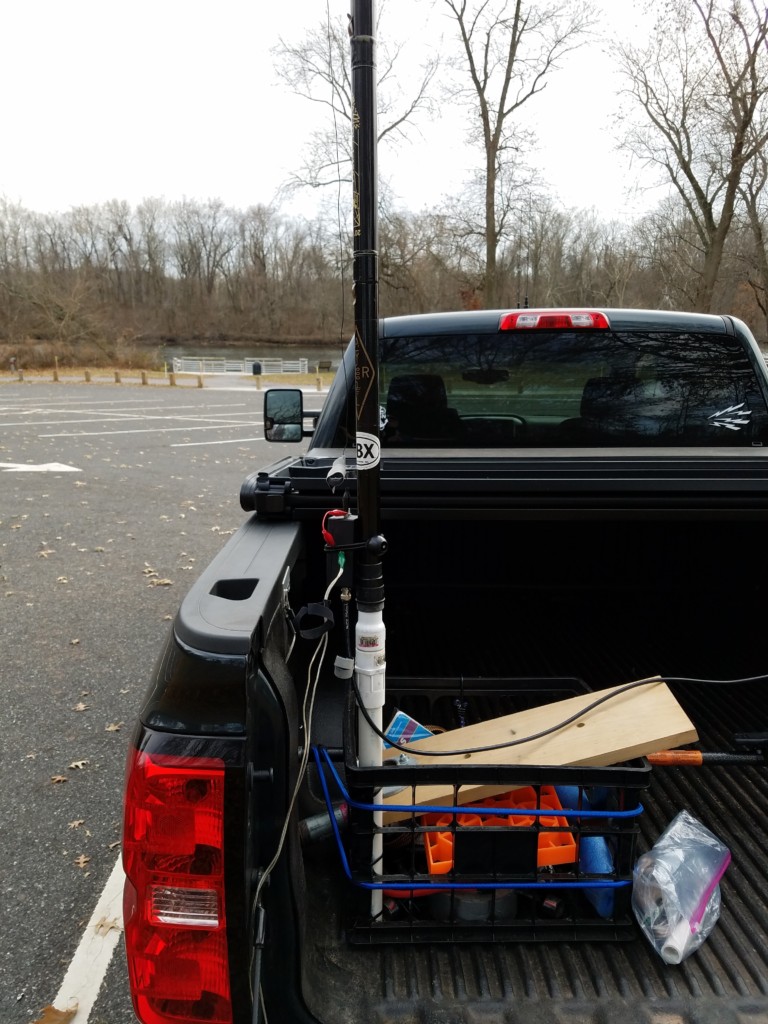
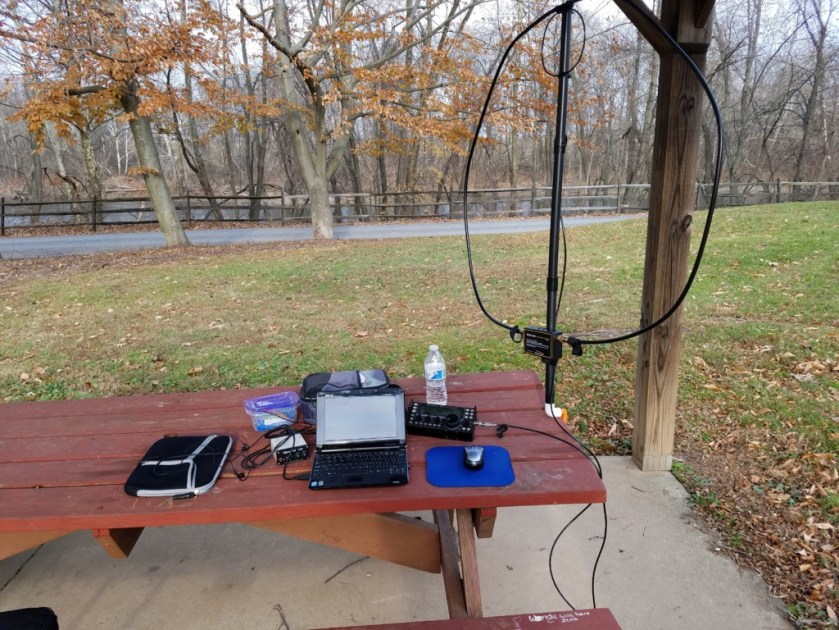
I operated from my truck today, using my trusty KX3 and a 29.5-foot vertical. I started out on 20M and things were a bit slow at first. After people noticed my spots, I worked enough to qualify my activation including a couple of the European regulars. I dropped down to 40M and picked up several more stations but came up empty on 30M. I went back to 20M and picked up two more to finish out the day. I was hoping to work some West Coast stations but Kansas was as far west as I got today.

Norristown Farm Park is a working farm in continuous use since colonial times.

At one point, a couple of curious Park Rangers rolled up to see what I was up to. They were familiar with ham radio since the park hosts several public service events each year. After chatting for a few minutes, they wished me luck and moved on.

I wasn’t out very long but I had a great time today. I hope all of my U.S. friends also had a happy and safe Labor Day.

73, Craig WB3GCK

Kids and POTA Fun at KFF-1355

My XYL and I took our little camper up to nearby French Creek State Park (PA) for the weekend. In between entertaining our visiting grand-kids and grilling hotdogs, I managed to get in a brief Parks on the Air (POTA) activation (KFF-1355).

We usually camp at French Creek several times each year. It’s a great campground and just a short drive from home. It’s an easy weekend getaway for us. This weekend, our two daughters and our three grand-kids came up on Saturday to visit our campsite for the day.

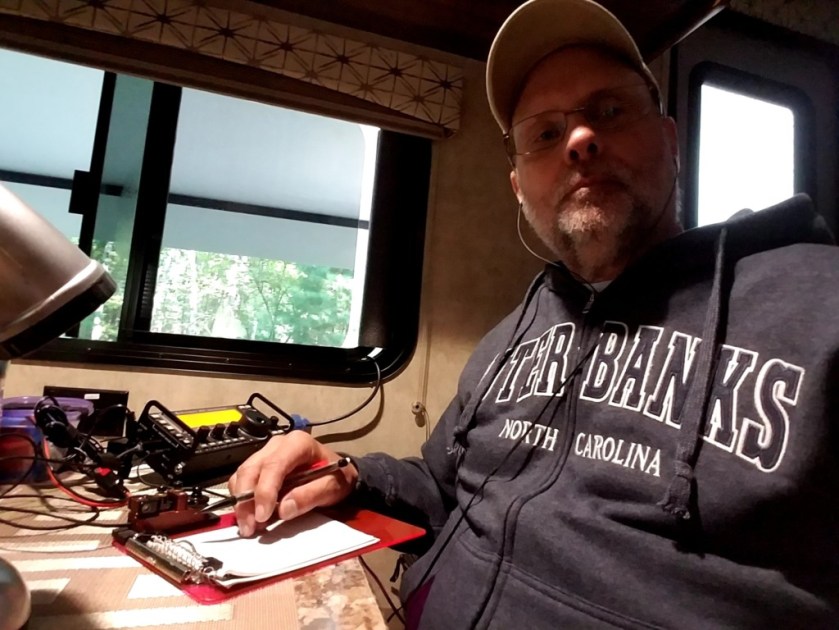
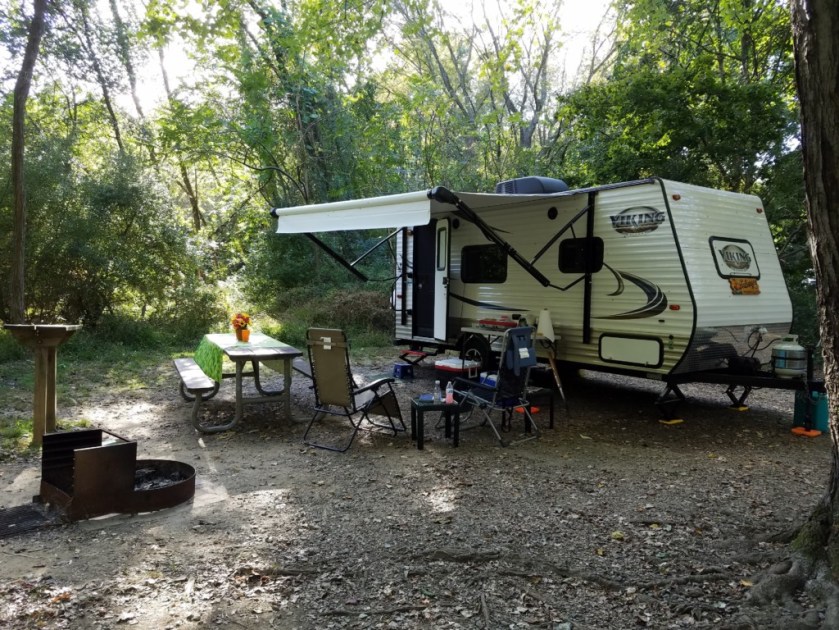
My "portable hamshack" at French Creek State Park near Elverson, PA.
My “portable hamshack” at French Creek State Park near Elverson, PA.

At one point, everyone headed down to the playground with the kids. I stayed behind and got on the radio for about 20 minutes or so. I spotted myself on the Facebook POTA group and on the DX cluster. Twenty meters must have been in pretty good shape because I was soon met with a mini pileup of European stations. I wasn’t expecting that.

After I worked my way through the calling stations, I had worked Sweden, Belgium (2 stations), Croatia (2 stations), Italy and Spain. There were also two Texas stations and one from Oregon. My trusty 29.5-foot vertical wire had really gone the distance for me.

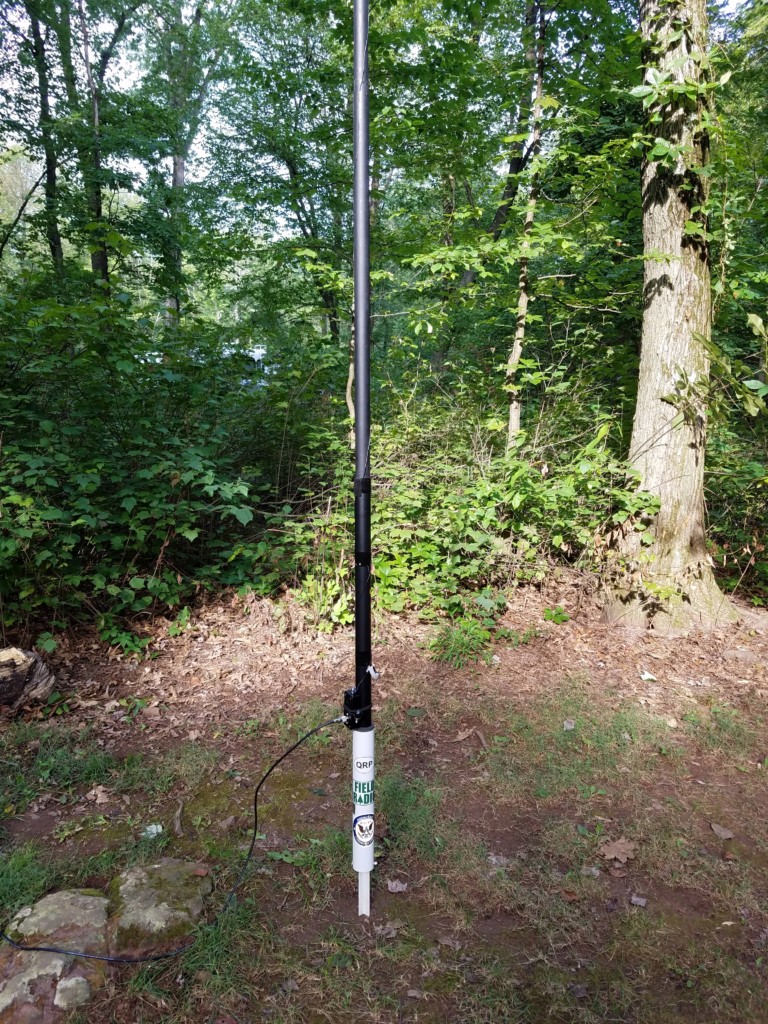
My trusty 29.5-foot wire vertical. It's supported by a 31-foot Jackite pole and fed with a homebrew 9:1 unun.
My trusty 29.5-foot wire vertical. It’s supported by a 31-foot Jackite pole and fed with a homebrew 9:1 unun.

I got on again later in the evening and picked up a few more POTA hunters before re-joining my better half at the campfire. I worked a few more the next morning (including EA1DR in Spain for the second time) before packing up and heading for home. There were a lot of familiar callsigns in the log.

I didn’t have a lot of time for radio this trip but the dedicated POTA “regulars” came out to play and made it a lot of fun.

73, Craig WB3GCK

Skeeter Hunt 2017

NJQRP Skeeter Hunt LogoAnother NJQRP Skeeter Hunt is in the books. This year, stations operating from Parks on the Air (POTA) entities earned bonus points. So, I did a repeat of last year’s contest and operated from Valley Forge National Historical Park (POTA designator KFF-0761).

I operated from my truck in the Varnum’s Picnic Area of the park. I like this spot because it’s quiet, RF-wise, and has decent elevation. Most importantly, it has a restroom, which is important for us old guys.

In my haste to get set up and on the air, I made a huge mistake by parking in an area without shade. (More on that later.) As I was mounting my 31-foot Jackite pole on the back of my truck, an elderly gentleman approached and inquired about my antenna. He was very curious about ham radio, so after I got set up, I let him listen to some signals on my KX3. After about 10 minutes, he wished me luck and moved on.

My unshaded site at Valley Forge. It's hard to see, but my 31-foot Jackite pole if mounted is mounted on a bike rack on the back of my truck.
My unshaded site at Valley Forge. It’s hard to see, but my 31-foot Jackite pole if mounted is mounted on a bike rack on the back of my truck.

Propagation was weird today. At times, 40M seemed to be very long. I worked stations in Michigan and Wisconsin while struggling to work my friend Carter N3AO down in Virginia. The bands seemed to be up and down all afternoon.

In the course of nearly 3 hours of operating, the sun was baking me and my radio inside the cab of my truck. At one point, the KX3 rolled its power back to 3 watts. I never had that happen before. After rearranging some things, I got the KX3 out of the direct sunlight and things eventually went back to normal.

Towards the end of my operating session, I was struggling to find stations I hadn’t already worked. Since the heat was taking its toll on me and the radio, I decided to pack up and head home.

My lucky Skeeter Hunt t-shirt.

Even though I was wearing my lucky Skeeter Hunt t-shirt, I only ended up with 19 QSOs in the log. Four of those were park-to-park QSOs, though. I didn’t do as well as last year but it was still a fun event. Thanks for Larry W2LJ and the NJQRP Club for putting the Skeeter Hunt together.

72, Craig WB3GCK


The “Up and Outer” Antenna

[This is an updated version of a post that appears on my old website. – WB3GCK]

Something about the “Up and Outer” antenna has fascinated me since I first came across it in the 1974 edition of the ARRL Antenna Book. This antenna, which was once popular many years ago, is about as simple as it gets. Simply put, the Up and Outer is a dipole or doublet where one leg is vertical while the other leg is horizontal. Although it seems to be overlooked by Amateurs these days, this antenna offers some significant benefits:

  • It’s a good limited space antenna since one leg of the doublet is vertical. It only requires half of the space that a horizontal doublet would take up.
  • When fed with balanced line and used with a suitable transmatch, it’s a good multi-band antenna.
  • It combines characteristics of both verticals and horizontal wire antennas. That is, it is good for both local and DX work.
  • It’s very easy to build and erect.
The "Up & Outer" is essentially a doublet with one vertical leg and one horizontal leg.
The “Up & Outer” is essentially a doublet with one vertical leg and one horizontal leg.

First, a little background on this antenna. According to some handwritten notes from QRP Hall of Famer, C. F. Rockey W9SCH (SK), this antenna goes back to the 20s and 30s. Lew McCoy W1ICP (SK) wrote about it in the October 1960 edition of QST [1]. He didn’t use the name, “Up and Outer;” he merely referred to it as a “limited space antenna.” McCoy recommended horizontal and vertical elements of 30-feet each for operation on 80-10 meters. He also recommended using an open-wire feedline to minimize losses. Information from McCoy’s article has appeared for years in the ARRL Antenna Book. (I first saw it in my 1974 edition [2] and it was still shown in the 1997 edition [3].)

W9SCH wrote a couple of articles about this antenna for SPRAT  and appears to have coined the term, “Up and Outer.” In the first SPRAT article [4], Rock suggested using 1/4 wave elements for the lowest band and feeding it with either coax (for single band operation) or balanced line (for multi-band operation). In a follow-up article [5], Rock suggests pruning the horizontal element to equalize the current in the balanced feeder. He noted the imbalance when operating with the horizontal element close to ground. He started with 16-foot elements to cover 30-10 meters.

Another Hall of Famer, L. B. Cebik W4RNL (SK), wrote about a coax-fed version of this antenna for 10 meters [6]. Cebik built his antenna using aluminum tubing and referred to it as the “L Antenna.”

I also exchanged some correspondence years ago with Fred Bonavita K5QLF (SK), another QRP Hall of Famer and fan of the Up and Outer. He told me that W9SCH once mentioned using the copper ball from an old toilet float to top-load the vertical element of the antenna. I later came across a brief write-up by W9SCH on his Copper-Top antenna in the October 1995 edition of QRP Quarterly [7]. Using the toilet ball for top loading, Rock was able to reduce the height of his vertical element by 2-1/2 feet.

The "Up and Outer" antenna mounted on a 3rd-story deck in Corolla, North Carolina.
The “Up and Outer” antenna mounted on a 3rd-story deck in Corolla, North Carolina.

For me, the Up and Outer has turned out to be an ideal portable antenna to use while on vacation in a rented house on the Outer Banks of North Carolina. For several years I’ve used a 56-foot doublet with one wire supported by a 28-foot fiberglass telescopic mast and one 28-foot leg run horizontally. The vertical radiator is typically situated on a 3rd or 4th story wooden deck with the horizontal wire secured to a nearby tree or other support. For feedline, I use 25-feet of TV twinlead (the cheap brown stuff). Using either a homebrew Z-match tuner or an autotuner with a short run of coax to an external 4:1 balun, I’ve been able to use this antenna on 40-10 meters. Your mileage may vary. Depending on the transmatch you use, you might need to adjust the length of the feedline to get a good match on 40 meters.

"Up and Outer" feedpoint
“Up and Outer” feedpoint

I did some quick modeling of a typical Outer Banks installation using MMANA-GL and you can clearly see the results of the combined horizontal and vertical elements. The horizontal polarity (shown in blue) shows lobes perpendicular to the axis of the horizontal wire, similar to a dipole. The vertical polarity (shown in red) shows a fairly low take-off angle and exhibits some slight directivity on 40 meters in the direction of the horizontal wire. This effect is due to the proximity to ground of the horizontal element and diminishes as you go higher in frequency. So, try to mount the Up and Outer as high above ground as you can.

"Up and Outer" 40M pattern
“Up and Outer” 40M pattern
"Up and Outer" 30M pattern
“Up and Outer” 30M pattern
"Up and Outer" 20M pattern
“Up and Outer” 20M pattern

The modeling bears out my empirical results with the antenna. My version of the Up and Outer has worked very well for both stateside contacts and DX. In particular, it has been very effective for DX contacts on 30 meters. As an added bonus, the 56-foot doublet can also be pressed into service as a normal horizontal antenna in locations where the Up and Outer configuration isn’t possible. So, it’s like getting two antennas in one. Can’t beat that.

If you are looking for a limited-space antenna, give this obscure classic a try!

73, Craig WB3GCK

References:
1. McCoy, Lewis G. “A Limited-Space Antenna.” QST October 1960: pp 23-25. (Available in the ARRL online archives)
2. “The ARRL Antenna Book.” 13th Edition, 1974. Newington, CT. pp 187-188.
3. “The ARRL Antenna Book.” 18th Edition, 1997. Newington, CT. pp 7-15, 7-16.
4. Rockey, C. F. “Up and Outer.” SPRAT Issue #67 (Summer 1991): p 18.
5. Rockey, C. F. “A Four Band Up and Outer Antenna.” SPRAT Issue #69 (Winter 1991/1992): p 16.
6. Cebik, L. B. “Whips, Tubes and Wires: Building a 10-Meter L Antenna.” QST December 1999: pp 52-54. (Available in the ARRL online archives)
7. Rockey, C.F. “The Copper-Top Antenna.” QRP Quarterly, October 1995: pp. 40-41.

© 2009-2020 Craig A. LaBarge

Cunningham Falls State Park (KFF-1566)

My better half and I took our little camper down to Cunningham Falls State Park for the weekend. Located in central Maryland, Cunningham Falls has always been one of our favorite campgrounds. While I was there, I did some ham radio, including a Parks on the Air (POTA) activation of KFF-1566.

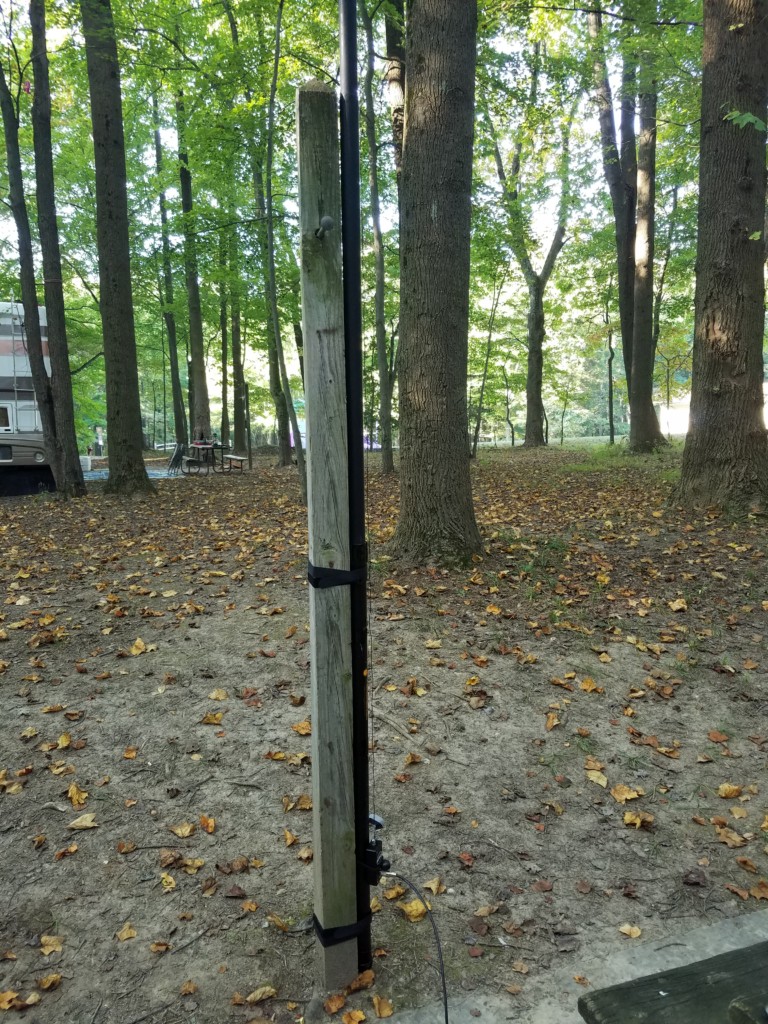
I did all of my operating outside under the camper’s awning. My antenna was my usual 30-foot vertical wire fed through a 9:1 unun. I strapped my 31-foot Jackite pole to a wooden lantern stand. With the bands being a bit flakey, I cranked my KX3 up to 10 watts for the POTA contacts.

Operating from our campsite in Cunningham Falls State Park in Thurmont, Maryland. My 31-foot Jackite pole is strapped to the lantern post on the left.

Despite some solar storming and generally poor propagation, I managed to squeeze out more than enough contacts to qualify the POTA activation. I certainly appreciate the effort put forth by the “hunters” to dig my low-power signal out of the noise. In particular, W6LEN in California was particularly persistent in tracking me down. Although our signals were only slightly better than ESP levels, we managed to connect on both 30 and 20 meters.

I also had a few nice rag-chew QSOs, too. On Saturday afternoon, I heard NA1CC/2 calling CQ and gave him a call. As it turns out, Wes was running QRP while camping near Cranberry Lake in New York. It always fun to have a campsite-to-campsite QRP QSO.

We also took a ride over to Catoctin Mountain Park.  This national park is right across the road from Cunningham Falls and is also where Camp David is located.  I activated Catoctin Mountain Park during the National Parks on the Air (NPOTA) event last year but had no time for a POTA activation there on this trip.

We had great weather for camping this weekend, although the space weather could have been better.

72, Craig WB3GCK

Outer Banks 2017

For our annual vacation this year, our extended family rented a house in the town of Corolla on the Outer Banks of North Carolina. Of course, ham radio was a part of my week’s activities.

I’ve operated my QRP equipment from numerous beach houses over the past 20 years but this year highlighted the need to be flexible and adapt. Before I left for vacation, I looked at some pictures of the house online and did some aerial reconnaissance (Google Earth) to see where I might set up my radio and antenna.

I initially set up a 30-foot vertical on a 3rd-floor balcony on the front of the house. I ran my coax down to an unused bedroom on the 1st floor. That was a great place to operate but the noise levels were horrendous. My vertical was a bit too close to some electronics (TVs, WiFi equipment, etc.). I made one contact before taking down the antenna and moving on to Plan B.

After studying the back of the house (furthest away from all of the electronic gadgets), I decided to go with a 53-foot wire in an inverted L configuration. I ran the wire vertically along a wooden deck up to the 3rd floor. From there, I ran the wire out horizontally to a Jackite pole strapped to a volley ball net. The last 6 feet or so of wire ran back down the Jackite pole. So, I guess it was technically an “inverted J.” Whatever you want to call it, it served me well. I still had some intermittent noise issues but it was more manageable than before.

This is a view of the rear of the house showing how I supported my inverted L. The wire ran up the side of the deck and out to the Jackite pole strapped to the volley ball net. The last 6 feet or so ran down the Jackite pole. So, technically, it was more of an inverted "J" than an "L."
This is a view of the rear of the house showing how I supported my inverted L. The wire ran up the side of the deck and out to the Jackite pole strapped to the volley ball net. The last 6 feet or so ran down the Jackite pole. So, technically, it was more of an inverted “J” than an “L.”

I fed the antenna through a 9:1 unun with an 18-foot run of coax going in through a nearby window. My KX3 was wedged into the corner of a ground floor bedroom.

This is a homebrew 9:1 unun at the feedpoint of my antenna. The wire went up vertically about 23-feet before extending out horizontally to the Jackite pole.

On the air, this impromptu antenna worked surprisingly well. It was especially effective on 40 and 30 meters. If I ever get bored enough someday, I might model it to see what it looks like on paper.

My “cozy” operating position next to a foosball table. If you look carefully, you can see the 9:1 unun through the window.

The bands were pretty flakey this week but I managed to make contacts every day. I fell into the pattern of getting on 40 meter CW early in the morning then doing some PSK-31 on 40 meters in the evening. I had some nice CW rag chews and worked some Carribean and South American DX on 40M PSK-31.

One notable highlight was working Joe N2CX who was doing Parks on the Air (POTA) activations in Canada. Despite the lousy band conditions, I worked him at three different parks. I worked two of the parks on two bands and one of them on three bands.

We had some thunderstorms and heavy rain on our last day there, so I took the antenna down and packed up the radio stuff a little earlier than I wanted to.

It was a fun week in North Carolina and we’re already looking at houses for next year. You can bet that I’ll be ready with several antenna options. You just never know what to expect.

72, Craig WB3GCK

Save

Save

Jackite Pole Locking Pin

Here’s a quick little hack that might come in handy if your Jackite pole should suddenly collapse in windy conditions. It’s very easy to do and costs nothing, depending on what you have in your junk box.

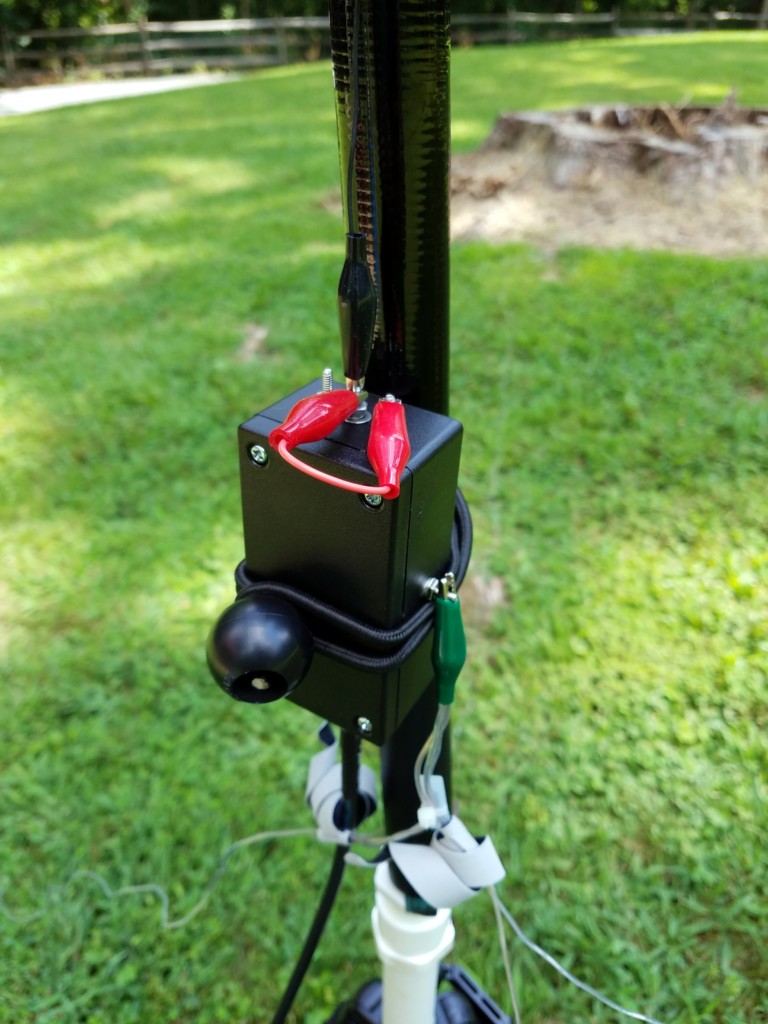
Once in a blue moon, in windy conditions, I have had my 28-foot and 31-foot Jackite poles spontaneously collapse. Usually, when it happens, it’s the second largest tube that collapses into the largest tube.  To remedy this, I drilled two 1/8-inch holes in the second largest tube right where it meets the largest tube. I drilled the two holes such that they were directly opposite each other. (See the accompanying pictures if my explanation is confusing.)

To remedy this, I drilled two 1/8-inch holes in the second largest tube right where it meets the largest tube. I drilled the two holes such that they were directly opposite each other. (See the accompanying pictures if my explanation is confusing.)

Jackite-Locking-Pin-Hole-500x375Here’s how it works. When the pole is fully extended, I just slide a pin through the two holes to prevent the pole from collapsing. For the pin, I used a hook from a bungee cord that I straightened out, using a pair of pliers. The resulting pin is just the right size and it has a nice rubberized coating on it. You could, of course, use something else (a nail, a piece of wire, etc.) for the pin.

These are the two pole sections with the locking pin inserted.

This is before (top) and after of the bungee hook I used for the locking pin.

I don’t usually use the pin, except in very windy conditions. I’ll definitely use it during my upcoming trip to the Outer Banks of North Carolina. My Jackite pole will be up for a week and facing some stiff ocean breezes.

73, Craig WB3GCK
Susquehanna State Park (KFF-1601)

My better half and I headed down to Susquehanna State Park in northeastern Maryland for a relaxing weekend of camping. My plan for the weekend was to make some contacts in the SKCC Weekend Sprintathon (WES). I also wanted to set some time aside for a dedicated Parks on the Air (POTA) activation of KFF-1601.

Our campsite was heavily wooded but in a bit of a low spot. It was a great site for camping but probably not ideal for ham radio. Undeterred, I used my 30-foot wire vertical, fed through a 9:1 unun and did most of my operating outside in a comfy camp chair.

WB3GCK hard at work operating from our campsite in Susquehanna State Park.

I made most of my contacts on Saturday morning working WES stations. After that, things slowed down and my little 5-watt signal was struggling to get through. On Saturday afternoon, I spotted myself on the POTA Facebook page and called CQ for nearly an hour on 40 and 20 meters. The net result was a meager 2 contacts. I made a few more WES contacts on 80 and 40 meters on Sunday morning before packing up for the trip home.

When the bands start to fade, it's good to have a backup plan.
When the bands start to fade, it’s good to have a backup plan.

Fortunately, I ended up with more than enough contacts to get credit for the POTA activation. Even when the bands aren’t conducive to QRP, it’s still fun operating outdoors.

72, Craig WB3GCK

Bike-Portable with My AlexLoop

Today was the first chance I’ve had during this long, holiday weekend to go out play radio. I’m a regular supporter of the Rails-to-Trails Conservancy, so I like to take advantage of rail trails when I can. Today, I loaded up my bike and headed down to the Chester Valley Trail. The Chester Valley Trail cuts across Chester County and connects to a large, growing network of trails in the greater Philadelphia area.

I decided to take my AlexLoop along today. I’ve never really tried carrying the AlexLoop on my bike before. While it fits comfortably in my backpack, I don’t really like to ride with a backpack on. I’ve always found that uncomfortable, especially on hot and humid days.

My bike loaded up and ready for travel. The AlexLoop structural components are in the green back. The coax radiator is in one of the pannier bags.
My bike loaded up and ready for travel. The AlexLoop structural components are in the green bag. The coax radiator is in one of the pannier bags.

Today, I arranged the three support pieces of the loop side-by-side. I used the velcro straps on the back of the tuning box to help hold the three sections together. Then I placed the sections in an over-sized nylon stuff sack. Taking care not to bend the antenna’s feed loop, I strapped the loop components and my tripod on the rear rack of my bike. I put the coax part of the loop in one of my panniers, along with my LiFePO4 battery. I put my KX3 in the other pannier bag. This turned out to be a workable solution.

This is how I arranged the AlexLoop components prior to putting them in a protective stuff sack. The velcro straps attached to the tuning box are used to help hold the pieces together.

After loading up the bike, I rode about 2.75 miles to the Exton County Park. I found a picnic table in a remote section of the park and set up the AlexLoop and KX3. I was out in an open area, so the wind was strong at times. I used a bungee cord to secure the tripod to the seat of the picnic table.

Due to some gusting winds, I used a bungee cord to secure the tripod to the bench.

I started off calling CQ on 20 meters and quickly received a call from N5GW. Gene was on vacation in Tennessee and was putting a great signal into southeastern Pennsylvania. After chatting for a bit, I signed with Gene and moved down to 30 meters. There were no takers there, so I gave 40 meters a try. N1KK gave me a call. Ken was operating QRP-portable from his summer home in Narragansett, Rhode Island. By the time Ken and I finished our QSO, the lack of shade was starting to get to me, so I packed up the bike and got back on the trail.

My setup at Exton County Park.

I rode another mile or so further before turning around and heading back to the trailhead.  I really enjoyed this trail and I’ll definitely be doing this ride again in the near future.

I was happy with the AlexLoop arrangement on the bike but I’m sure there’s room for improvement.

I’d like to wish all of my friends here in the U.S. a happy and safe Fourth of July holiday.

72, Craig WB3GCK

Boschveldt (W3BQC) Field Day 2017

Once again, I joined my fellow Boschveldt QRP Club members for Field Day. We’re a loosely-organized group of QRPers who enjoy portable operating. Field Day is one of the few times each year that we get together, so it’s always good to see everyone and do some catching up. This year we held Field Day on a beautiful piece of land owned by a close family friend of one of our members. We were situated on top of a hill, so we had some good elevation, too.

This is the little camper K3YTR used. Besides sleeping, there was enough room for his radios.

Ed K3YTR, Glen NK1N and I arrived mid-afternoon on Friday and set up our tents. We were expecting some heavy rains from the remnants of Tropical Storm Cindy so we held off setting up our radio equipment. We were joined later that night by Ron WA8YIH.

This is my (WB3GCK) tent. The Jackite pole in the foreground is supporting the vertical portion of my 58-ft inverted L antenna.

We sat around chewing the fat until it started to rain around 10:30 PM. At that point, we retreated to our tents for the night to ride out the storm. It certainly was a rough night, with some of the heaviest rain I have ever experienced in a tent. My old tent made it through the night with only some slight leaks. WA8YIH’s canopy, unfortunately, was destroyed by the heavy rain. Other than that, we got through the night otherwise unscathed.

Ron WA8YIH (left) and Glen NK1N surveying the aftermath of Tropical Depression Cindy. Ron's canopy was a total loss.
Ron WA8YIH (left) and Glen NK1N surveying the aftermath of Tropical Depression Cindy. Ron’s canopy was a total loss.

After breakfast on Saturday, we went about setting up our radio equipment. Ed WA3WSJ arrived mid-morning.

Ed WA3WSJ camped out in his hammock. He's in there somewhere.
Ed WA3WSJ camped out in his hammock. He’s in there somewhere.

This year, we operating as Class 3A EPA, using our club callsign, W3BQC. We were all QRP on battery power. I operated CW while WA8YIH operated SSB, digital and a little CW. NK1N worked satellites using his new portable setup. K3YTR worked 2M and 440 SSB. WA3WSJ assisted with all the stations.

Glen NK1N setting up his antenna array for satellite communications.

On HF, WA8YIH and I were both running KX3s and inverted L antennas fed through 9:1 ununs. Propagation seemed fair on Saturday but was much better on Sunday. Despite all the wet foliage around us, NK1N managed to make some decent satellite contacts. On Saturday night, I switched my station over to digital to copy the W1AW Field Day Bulletin on 80 meters.

This is Ron WA8YIH's station running SSB and digital.
This is Ron WA8YIH’s station running SSB and digital.

Field Day with the Boschveldt QRP crew is always a somewhat laid-back affair. None of us are serious contesters, so there is always a lot of socializing going on during the weekend. During the evening, we assemble around the campfire to swap tall stories. We never rack up huge scores but we always have a lot of fun.

WA3WSJ grilling Spam for lunch on Sunday

After a Sunday lunch of grilled Spam sandwiches, we started tearing down and packing up. We haven’t compiled our logs yet, so I don’t know what our final score is yet. I’m sure we didn’t set any records but, if they gave out bonus points for having fun, the Boschveldt crew would be at the top of our category.

For more (and much better) pictures of our Field Day, visit the Boschveldt QRP website.

72, Craig WB3GCK