I wanted to get out for at least one POTA activation during the Labor Day holiday weekend. Since we have another extended heatwave kicking off today, I opted to go out yesterday. I got an early start at French Creek State Park (K-1355, KFF-1355), figuring that the park would be busy—and it was.
I parked at a trailhead, well away from the busy boat launch and picnic areas. Using my TR-35 (5 watts) and homebrew vertical, my first ten contacts came in about 15 minutes. Most of my contacts were on 40M, while 30M and 20M both yielded a few more.
My rig at French Creek State Park (K-1355, KFF-1355)
After an hour or so, the bands seemed to suddenly dry up; so I packed up. (After I got home, I saw that there was some geomagnetic activity in progress.) In any event, my log had 22 QSOs with four park-to-park contacts.
This activation put me one away from a “Repeat Offender” award for this park. I guess I’ll be back again soon to wrap that up.
I hope everyone has a happy and safe Labor Day holiday.
Yesterday was the annual running of New Jersey QRP Club’s Skeeter Hunt QRP contest. Even though I’m not much of a contester, I always look forward to this four-hour sprint.
This year, I was asked to be one of the bonus “Palindrome Skeeters.” These are participants with skeeter numbers that read the same, forwards and backwards. My assigned skeeter number this year was 66.
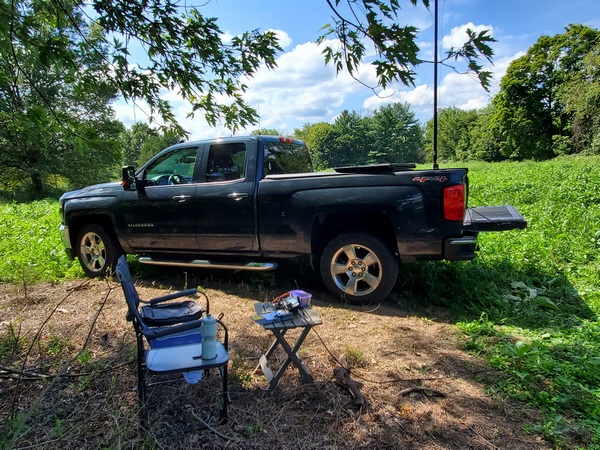
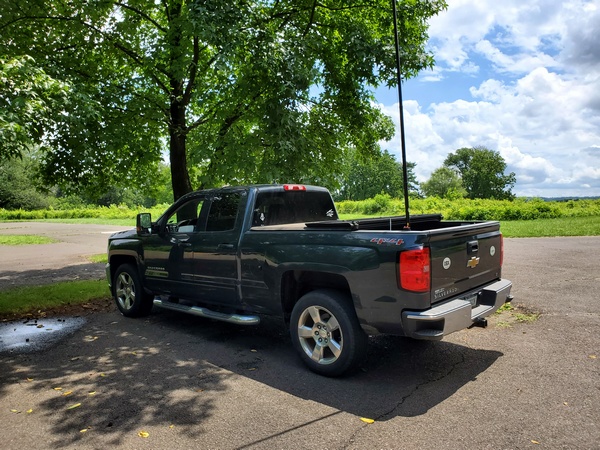
For this year’s contest, I operated from a piece of property owned by my daughter and her husband. I set up in a field on top of a hill, a place I’ve used many times in recent years. Since I had plenty of room, I planned to get up there early to set up some sort of long wire antenna. That didn’t quite work out. I got there later than planned, so I just set up my trusty homebrew vertical on the back of my truck. That’s always a quick way to get on the air.
My setup for the 2023 Skeeter Hunt
I spent most of my operating time on 40M, alternating between calling CQ and searching/pouncing. Although most signals weren’t very strong, there were lots of them. Every time I thought I had run out of skeeters to work on 40M, I’d find another one buzzing out there. I eventually moved up to 20M, where the signals seemed much stronger. Searching and pouncing, I added a few more skeeters to my log.
My KX3. The food container behind the radio houses a LiFePO4 battery.
The bugs were bad yesterday. I didn’t see any real skeeters, but I did encounter every other insect known to man. I even killed a tick that was taking a leisurely stroll across the table. When I eventually lost my shade, it was time to call it a day.
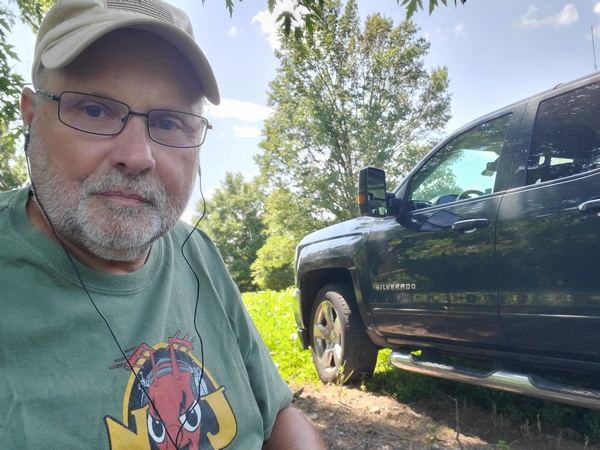
Yours truly wearing my official Skeeter Hunt attire
I operated for a little over two hours, which is longer than my attention span usually lasts. (Remember when I said I wasn’t much of a contester?) I ended up with 30 contacts, 28 of which were skeeters. Four of my skeeter contacts were with fellow palindrome skeeters. I also hunted a POTA station I came across in amongst the skeeters on 20M.
My 30 contacts won’t set any records, but it’s my best showing in recent years (or maybe ever). Once again, I have to give a shout out to Larry W2LJ for putting this fun contest together.
We made a trip to the Outer Banks of North Carolina this week for our annual family vacation. As in previous years, we rented a house on Currituck Sound. This time, however, we were just outside the village of Duck.
This was our first time renting this house, so I did a little prior research on the layout using pictures on the Realtor’s website and Google Earth. OK, I’ll be honest; I was looking for places to put my antenna. I had a couple of possibilities in mind, but I waited until we got there to decide where to set up.
My Set-up
It was brutally hot when we arrived on Sunday afternoon, August 13th; so I decided to forego putting up an antenna until the following morning. Instead, I surveyed the property to find a spot to set up the radio gear.
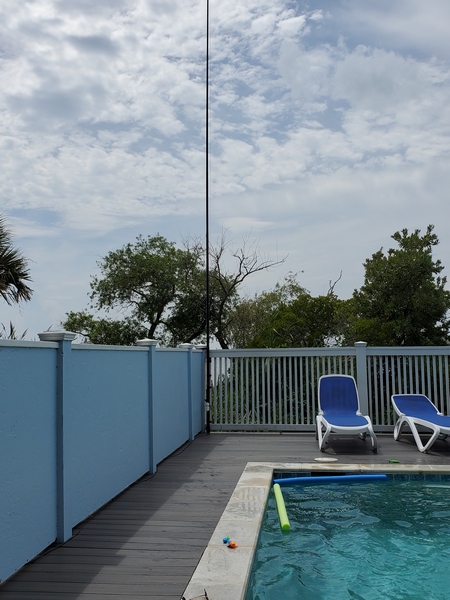
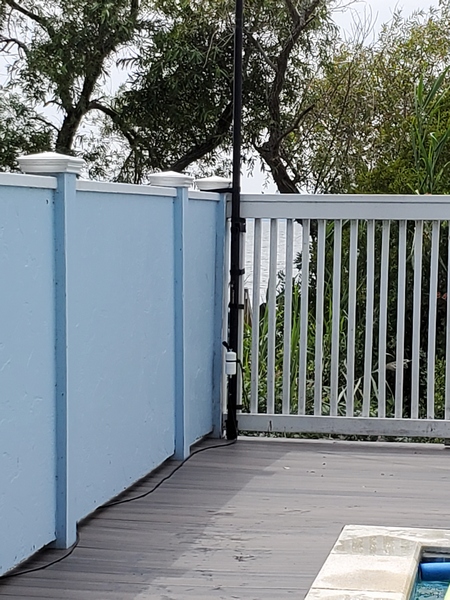
Later the next day, I strapped my 31-foot Jackite pole to a fence near the pole. The wind was pretty strong, so I used every velcro strap I had with me. Since these rental houses usually come with high noise levels, I kept the antenna about 40 feet from the house. I used the pole to support a 29.5-foot vertical wire, which was fed through my weather-resistant 9:1 unun. I had to use 50 feet of RG-8x to connect to the rig. That’s longer than I usually use, so I’m sure I was introducing increased coax losses. Life is full of trade-offs, I guess.
My 31-foot Jackite pole strapped to a fence about 40 feet away from the house
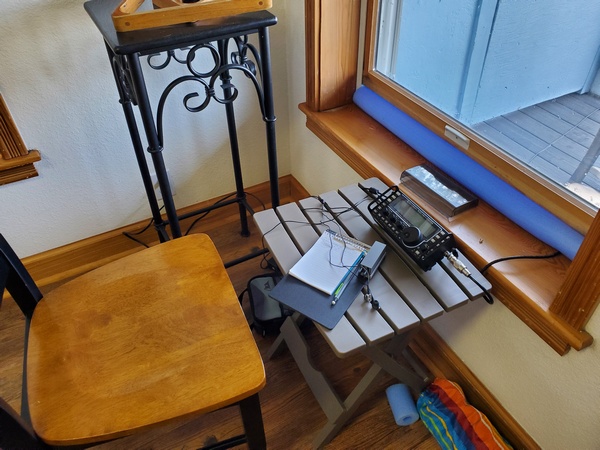
We were under an excessive heat warning for the first few days, so I kept my radio inside the building. I unclipped the bottom of the window screen enough to accommodate the coax. I cut a foam pool noodle to fit the width of the window. Then I made a lengthwise cut so I could fit it onto the window frame and seal the window a bit.
My operating position. A piece of foam “pool noodle” was used to seal the window where the coax enters.
After getting it all together, I did a quick test. The KX3’s tuner provided a good match on every band from 80M to 10M. I’m sure the coax losses were helping to make it easier to tune the antenna. There was a fair amount of noise on 40M and below, but the higher bands weren’t too bad.
Antenna feedpoint. My homebrew, weather-resistant 9:1 unun was used to feed a 29.5-foot vertical wire.
While I was on 30M, I heard a station in Arkansas calling CQ. Despite some deep fading and static from storms in the area; we managed to complete the QSO. The antenna, while nowhere near optimal, was functional. Satisfied with that, I declared victory and headed out to join the rest of the family in the pool.
Wright Brothers Memorial (K-0797, KFF-0797
For the past several years, I thought about activating a park or two on the Outer Banks. For various reasons (mostly laziness), it hasn’t happened. I set out to change that this time around.
On Wednesday, I drove down to the Wright Brothers National Memorial (K-0797, KFF-0797), about 30 minutes away from where we were staying in Duck. I planned to go the day before, but I delayed it by a day, because of an excessive heat warning. There’s normally a fee to enter this park, but my Veterans ID card got me in for free.
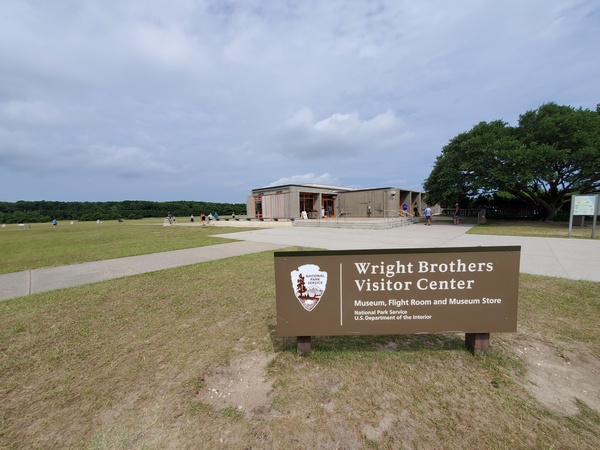
Wright Brothers National Monument (POTA K-0797) Visitor Center
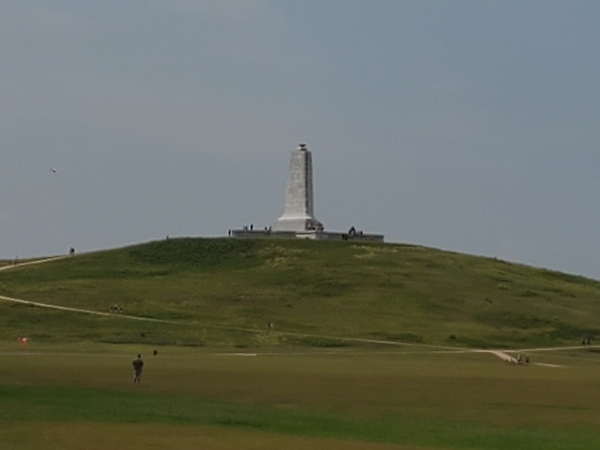
The Wright Brothers Monument
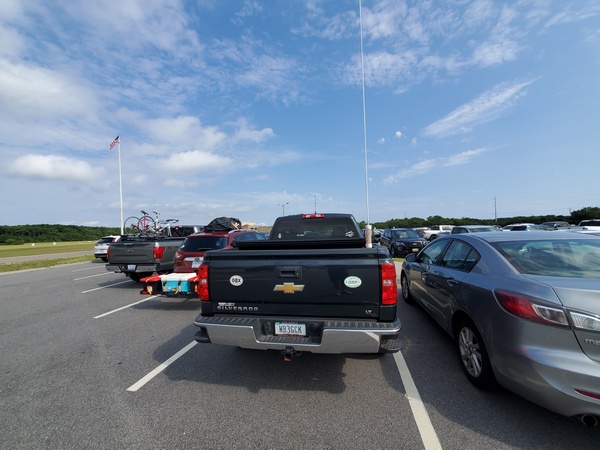
My parking spot at the Wright Brothers Monument (K-0797). There was no one around me when I started.
I operated from my truck in the main parking lot, using my TR-35 (five watts) and 12-foot loaded whip antenna. The bands were in great shape; I made my first ten contacts in ten minutes.
After about 50 minutes, it started getting hot and crowded; so I started packing up. This park is a very popular attraction; the empty parking lot I started in was now full. I ended up with 30 contacts in my log, including six park-to-park QSOs.
I had planned to activate a second park this week, but that didn’t work out. I’ll save that for next year.
Operating from the House
Besides the POTA activation, I made a handful of QSOs each day. The 30M and 20M bands, both having a low noise floor, were the most productive for me. These rental houses are chock full of light dimmers and other noise-producing amenities, so operating on the lower bands can be challenging.
Tuesday, August 15th, was the 30th anniversary of my first QRP portable operation. I wrote about that trip in a post from five years ago. It was fitting, I suppose, that I was portable this week.
Things also got a little dicey Tuesday evening. A storm blew in, and the high winds were bending my 31-foot Jackite pole further than I had ever seen. I hurried out and collapsed the pole before the heavy rain started. That pole has really taken a beating over the years, and this year was no different. The wind collapsed it a few times during the week.
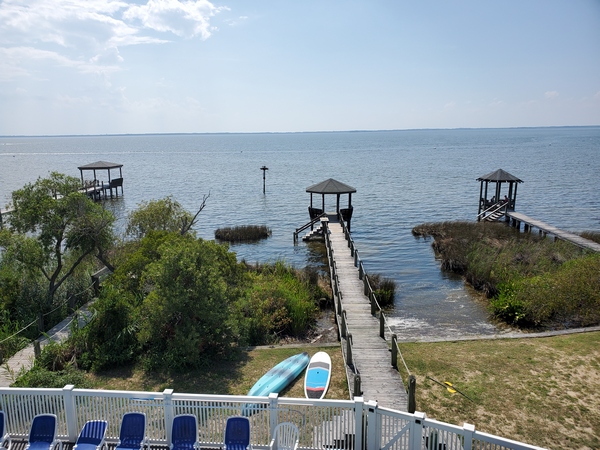
Our view of Currituck Sound from the 3rd story deck
One of my last QSOs for the week was with EC1R, who was activating a park in northern Spain. I had to crank up the KX3 to 15 watts to make it, but I managed to bust through the pile-up he had going.
After a few final QSOs on Saturday morning, it was time to take down the antenna and pack up the radio gear. Our annual family vacation always seems like the shortest week of the year. This year was no exception.
Looking through some files recently, I came across the sales invoice for my old Yaesu FT-817. According to the invoice, my FT-817 was 20 years-old back in May. The ‘817 hasn’t seen much use lately, so I set out to change that.
I first saw the FT-817 at an Atlanticon QRP convention back in 2001. The FT-817 had just come out, and I wanted one the moment I saw it. It wasn’t until two years later that I finally pulled the trigger and bought one. The FT-817 became my main rig for many years, both at home and in the field. After I bought my Elecraft KX3, the FT-817 was only saw infrequent use in the shack.
The early FT-817s were plagued with a tendency to blow the finals. Sadly, mine was no exception. Despite being very careful, my finals went belly-up during a camping trip in 2006. I sent my rig back to Yaesu for repairs, and they installed the newer, more robust finals used in the FT-817ND. It’s been fine ever since—knock on wood.
Initially, I used my homebrew Z-match tuner with the FT-817. In 2009, I bought the LDR Z-817 auto tuner, which was designed specifically for the FT-817. The Z-817 certainly made tuning up a lot faster.
A while back, I tried to program some new repeater frequencies using Chirp on my laptop. Windows informed me that the chip in my old FT-817 CAT cable is no longer supported. I bought a new cable on Amazon, and I was soon back in business.
To prepare for today’s outing, I put fresh batteries in the Z-817. Since the FT-817 doesn’t have a memory keyer in it, I dug out my old NorCal Keyer. I built the NorCal Keyer from a kit not long after I purchased the FT-817, so it is also 20 years old. I gave the keyer a set of fresh batteries and programmed one of the three memories with a “CQ POTA” message.
With my trusty FT-817 in tow, I drove over the Valley Forge National Historical Park (K-0761, KFF-0761). I parked my truck in a spot that had a picnic table about 10 feet behind it. That allowed me to set up my homebrew 19-foot vertical on the truck and run an 18-ft length of RG-8x over to the rig.
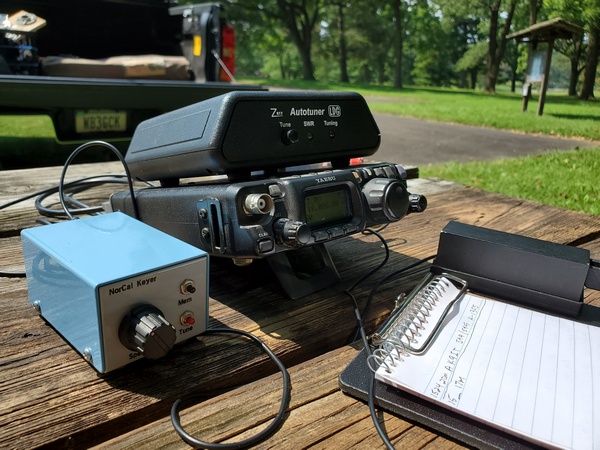
My 20 year-old Yaesu FT-817 back in the field at Valley Forge National Historical Park (K-0761, KFF-0761). The blue box in the foreground is my NorCal Keyer, which I built from a kit 20 years ago.
Before starting my activation, I did some testing. The FT-817 and Z-817 combo played well with the vertical. I was able to easily get a good match from 40M through 10M. The earbuds I used were more sensitive than the headphones I use at home, so the sidetone was louder than I’m accustomed to. Unfortunately, I couldn’t remember how to adjust the sidetone volume, and I neglected to pack my little FT-817 cheat sheet. So, I just pulled the earbuds out a bit and continued on.
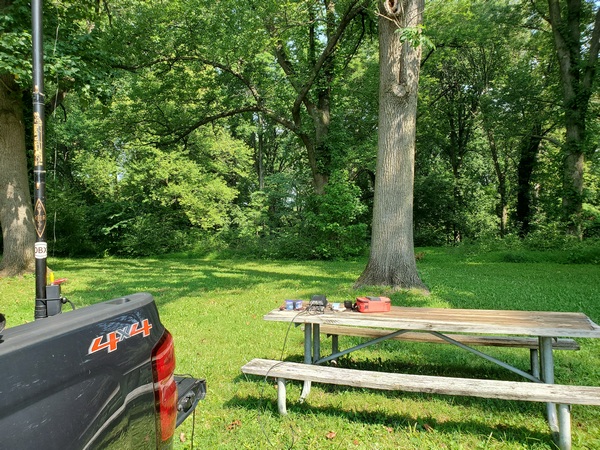
Since the picnic table was only 10 feet from my truck, I was able to use my homebrew 19-foot vertical.
Once I got going, using the FT-817 brought back a lot of memories of portable outings from years ago. Happily, the old rig still works like a charm.
Despite some fading on the bands, contacts came easily. In a little more than an hour, I made 21 contacts with four park-to-park QSOs. Most of my contacts were on 40M and 20M, with one contact on 30M (a P2P). I also had a contact with W1AW/0, but the operator didn’t give his location.
It was a lot of fun getting my trusty FT-817 back out in the field again. The FT-817 isn’t my oldest QRP rig; that honor goes to my 30 year-old MFJ-9030 transceiver. I definitely need to dust off more of my old rigs and give them some QRP-portable love.
Today was the last day of a heatwave we have been experiencing this week. It was the only free day for me this weekend, so I headed out to Evansburg State Park (K-1351, KFF-1351) for an activation. Having had a heat-related issue recently, I wanted to get out early and keep it short.
I set up my trusty Penntek TR-35 (5 watts) and homebrew 19-foot vertical. As is my normal practice, I started out on 40M CW. Before I started calling CQ, I made a park-to-park contact with a station in Maryland. Things got off to a slow start, but I managed to make my first 10 contacts in about 15 minutes.
I moved up to 30M and started calling CQ. The first station to call was NJ2BB. I immediately recognized the callsign as the amateur radio station aboard Battleship New Jersey (BB-62). The New Jersey is a WWII-era battleship, which is now a museum ship in Camden, New Jersey. I chatted with the operator, Tom, for a bit letting him know I was a former U.S. Navy Radioman, I always enjoy contacting museum ships; however, this was the first time one has called me.
USS New Jersey (BB-62) in California, 1985 (DoD photo)
After logging a few more contacts on 20M, I pulled the plug. After an hour, I ended up with 28 QSOs in my log, including two park-to-park contacts. The NJ2BB contact was certainly the highlight of my outing this morning.
My QRP-portable operations seem to have come to a grinding halt this month. I won’t bore you with the reasons, but a quick POTA activation today ended my slump.
I spent about an hour today in Valley Forge National Historical Park (K-0761, KFF-0761), parked in one of my favorite spots. The propagation forecast was less than spectacular, but I forged ahead.
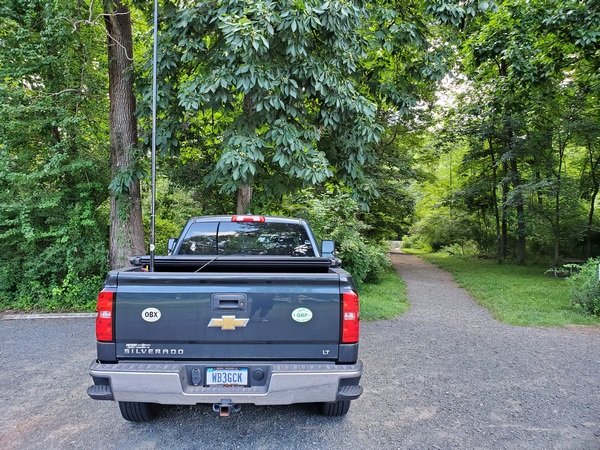
WB3GCK at Valley Forge National Historical Park (K-0761, KFF-0761)
Using my trusty Penntek TR-35 and my homebrew vertical, I started out on 40M. After calling “CQ” a few times, I received an ear-shattering call from W1AW, the station at ARRL Headquarters. The operator identified himself as “John,” and said he was operating from “the Mothership” in Connecticut. That gave me a chuckle. What a great way to start an activation.
I normally reduce the power output of the TR-35, when I’m tuning up. After three or four contacts on 40M, I noticed I had forgotten to turn the power back up. So, for the first few contacts, I was only running a couple of watts. I guess band conditions weren’t all that bad after all.
After an hour, I had 15 contacts in the log, with two park-to-park QSOs. My best “DX” today was California on 20M.
It was just a short outing, but it sure felt good to get back out there.
I bought the Evolve III Maestro E-Book about nine months ago. Having used it for various ham radio applications during that time, I thought I’d offer some updated thoughts on this inexpensive laptop.
Spoiler alert! There really isn’t anything I dislike about the Evolve III laptop. Sure, it’s not the speediest machine ever built, but it has stood up to every task I’ve thrown at. I regularly use it at home for Winlink, NBEMS, and VarAC. I’ve also used it for these modes in the field for ARES-RACES exercises.
The Evolve e-book in use during this year’s Field Day
Power Considerations
Besides its small size and low cost, the thing I like best about the Evolve III is its battery life. Depending on what I’m doing, I can get eight to ten hours of run time. That’s way more than I need for my typical portable outings.
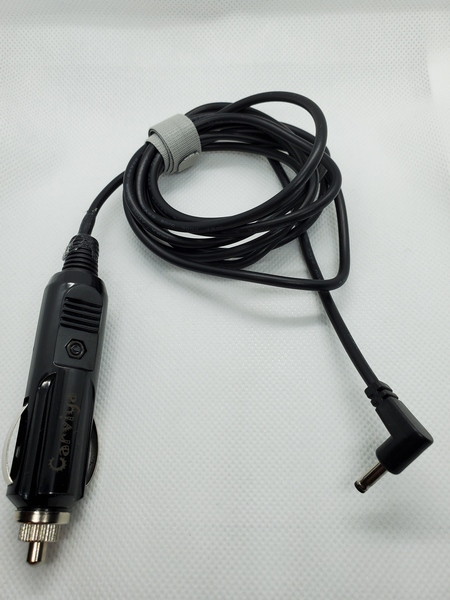
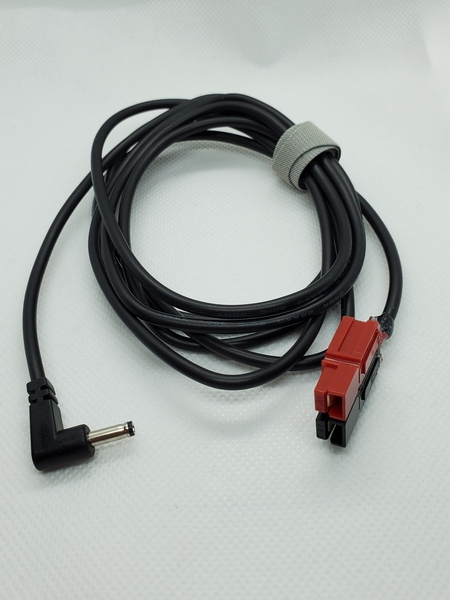
Since the “wall wart” charger it came with outputs 12VDC, I can charge the laptop from a 12V battery. For charging in the field, I bought a 6-foot cable on Amazon that has a 3.5mm x 1.35mm coaxial power connector on one end. On the other end, I added a 12V accessory plug (cigarette lighter type). I also built a second cable with an Anderson Powerpole connector.
A charging cable I built with a 12V cigarette lighter type plug
A 12V charging cable I built with a Powerpole connector
For Field Day, I operated all day without having to charge the laptop. I couldn’t have done that with other laptops I have used in the past. Before turning in for the night, I connected the Evolve to a 17 A-H gel cell battery to charge it overnight. (I had a fused 12V socket installed on the battery.) When I woke up during the night, it was fully charged, so I disconnected it. The Evolve lasted the rest of Field Day without further charging.
Field Day Configuration
My Field Day configuration made full use of the Evolve’s capabilities. I used it for logging, connecting to our shared log file via Wi-Fi. I also used one of the two USB connectors to drive my WKmini Morse interface to send CW with my KX3.
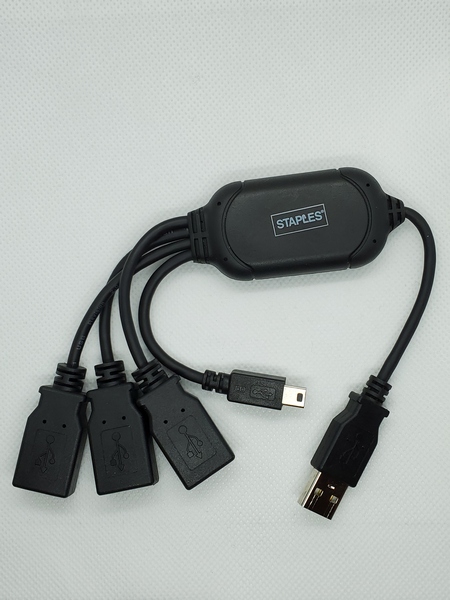
Since I only had one more USB connector available, I used a 3-way USB splitter to accommodate the other devices I needed to attach. I had the receiver for my wireless mouse attached to one port on the splitter and the KX3’s rig control cable connector to another port. I used the third port to connect a thumb drive, which I used for exchanging files with another Field Day participant.
This is a USB splitter I bought at Staples years ago. The extra USB ports came in handy during Field Day.
For backups, I had my N3FJP Field Day logger configured to save backup files to an SD card. Since my backup files included the entire networked log, I had everything I needed to submit our group’s entry on my laptop when I got home.
With all that going on, the Evolve performed flawlessly.
Some Additional Thoughts
I recently heard from a couple of hams who received Evolve laptops with a USB-C charging port. This is a recent design change, I suppose. I don’t have any hands-on experience here, but I think this might actually simplify things in the field. A 12V socket connected to the battery and a commercial 12V cell phone car charger should be all you need to charge the Evolve. Most cell phones and devices seem to favor the USB-C connectors these days, so suitable 12V car chargers are easy to come by.
So, if you couldn’t tell, I’m a big fan of the Evolve III Maestro E-Book. So far, I feel the $89 I paid for it was money well spent. I’m hoping I can get several more years of good service from it.
I made an early trip to French Creek State Park (K-1355, KFF-1355) to get in a quick activation before the hot weather kicked in. Despite the lousy band condition predictions, I did pretty well in less than an hour.
Knowing that this park gets busy on holidays, I steered clear of the boat launch and picnic areas. Instead, I found a shady spot in a trailhead parking area. My rig today was my trusty Penntek TR-35 (5 watts) and my homebrew 19-foot vertical.
My parking spot in French Creek State Park near the Hopewell Lake Trail
My propagation app showed poor daytime conditions on 40M through 20M. Indeed, 40M was noisy; but I still heard quite a few loud signals across the band. Cell coverage here is poor (at least for my carrier). Using the Wi-Fi in my truck, however, I was able to post a spot and soon started receiving calls. It only took about 11 minutes to make my first 10 contacts.
My Penntek TR-35 and Elecraft T1 tuner
I moved up to 20M and started off searching for park-to-park contacts. I heard N4NYM in there, but it sounded like Bill had a pretty good pile-up going. Instead of trying to break through with 5 watts, I moved up the band and started calling CQ. Again, the band seemed to behave better than the predictions. In fact, I seemed to have a pipeline to Florida today. During my time on 20M, N4NYM called me; so I eventually got that park-to-park contact with him.
Speaking of N4NYM, I ended up my activation with a second park-to-park contact with Bill, this time on 17M. By this time, the weather was heating up; so I packed up and headed home to enjoy the rest of the holiday.
In about 55 minutes, I worked 24 stations with three park-to-park contacts. My best “DX” today was Nevada on 20M.
I’d like to wish my fellow Americans a happy and safe Fourth of July.
Today was one of those lazy days. I intended to go out to do some radio, but I came very close to talking myself out of it. In the end, I went ahead, and I’m glad I did. It turned out to be a fun activation.
I made a quick trip to nearby Valley Forge National Historical Park (K-0761, KFF-0761) and pulled into one of my favorite spots. Using my KX3 (5 watts) and my homebrew 19-ft vertical, I planned to spend an hour operating, regardless of the outcome.
Despite the “fair” propagation prediction, the 40M band produced 11 contacts for me. Once I moved to 20M, things got interesting. My 20M contacts included Germany and France. Sandwiched in between those DX contacts was one with fellow Polar Bear QRPer, VE3WMB. Michael and I exchanged the customary Polar Bear greeting, “GRRR.” My last contact on 20M was with W7AV in Washington State. It’s always fun to work both Europe and the West Coast in rapid succession. Moving back down to 40M, I picked up a couple of park-to-park contacts before calling it quits. My hour-long outing resulted in 20 contacts, including four park-to-park QSOs and the two DX stations.
As I was finishing up my contacts, I looked in my rear-view mirror and saw a man and woman closely inspecting my antenna. When I got out to take the antenna down, the woman asked me about it. I gave her my ham radio, POTA, and Morse Code speech, and I told her the places I contacted today.
The two people were soon joined by six children they had been hiking with. The woman asked me if I could explain to the kids what I was doing and how far I had gotten out. So, I gave the speech again. When I mentioned Morse Code, one girl excitedly said she didn’t know the Code, but she knew what it was. I’m not sure my impromptu show and tell produced any prospective hams, but it was fun talking with the kids.
In the end, I’m glad I talked myself into going out today. It was a short but fun activation. I didn’t take any pictures today; but, then again, there wasn’t anything noteworthy about my setup today.
Happy Canada Day to my friends to the north. To my friends here in the U.S., have a happy and safe Fourth of July holiday weekend.
Another Boschveldt QRP Club Field Day is in the books. The weekend started out rainy, but the weather improved for the rest of the weekend. The inclement weather didn’t stop us from having a good time.
As we’ve done for the past five years, we camped out on private property owned by a local businessman. There were only three of us this year: Ed K3YTR, Glen NK1N, and me. On the air, we operated in category 2A (battery) running QRP. We used our club callsign, W3BQC.
Given the lousy weather, I kept my antenna simple this year. I used a 29.5-foot vertical fed with my homebrew weather-resistant 9:1 unun. NK1N used an 85-foot inverted L, which performed very well for him. Once again, we used a battery operated Wi-Fi access point to network our logging laptops together.
This picture of NK1N’s set up shows the fog and rain on Friday.
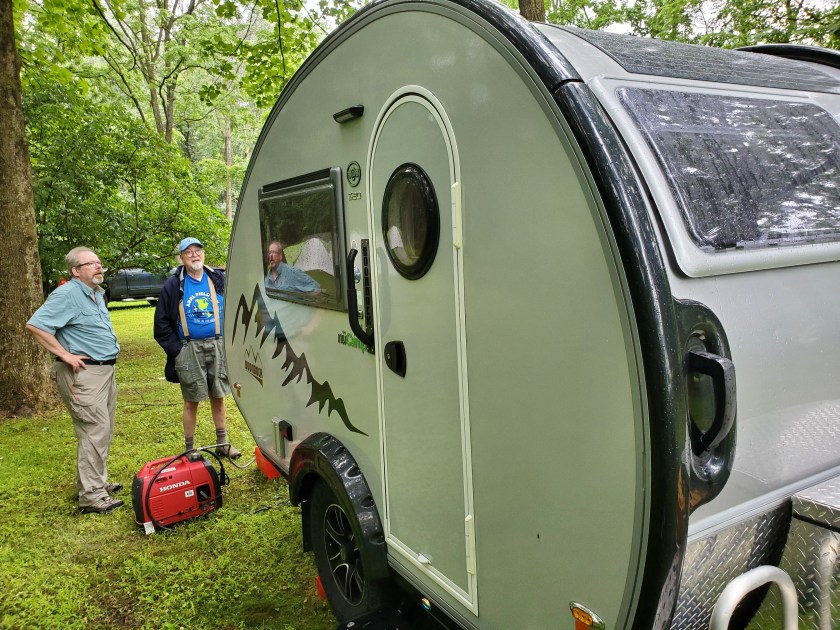
NK1N and K3YTR admiring the trailer Ed K3YTR rented for the weekend
Glen NK1N testing out his gear on Friday
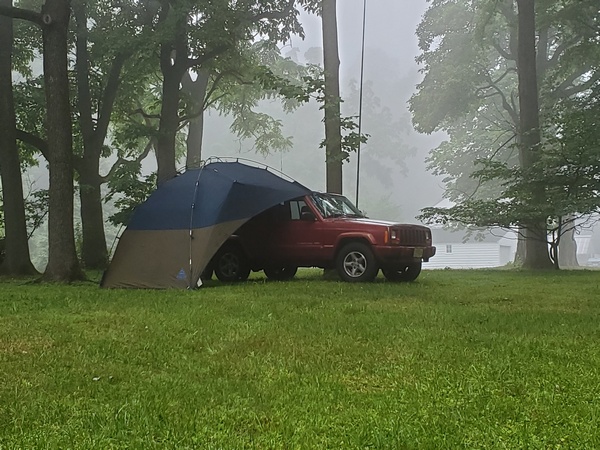
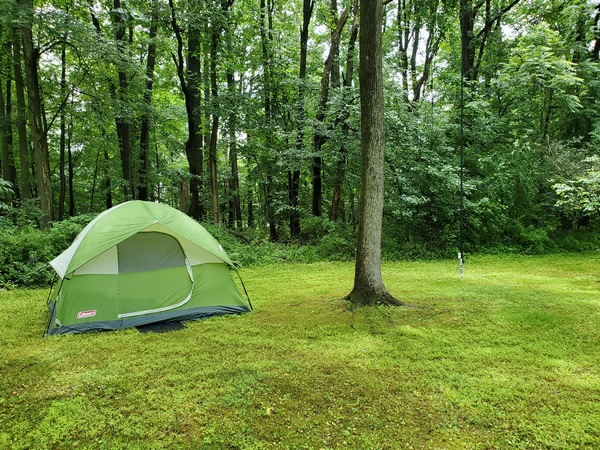
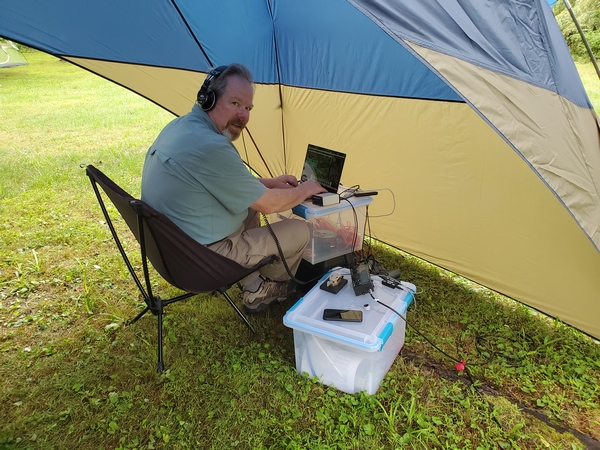
WB3GCK’s tent with my vertical to the right of the tree
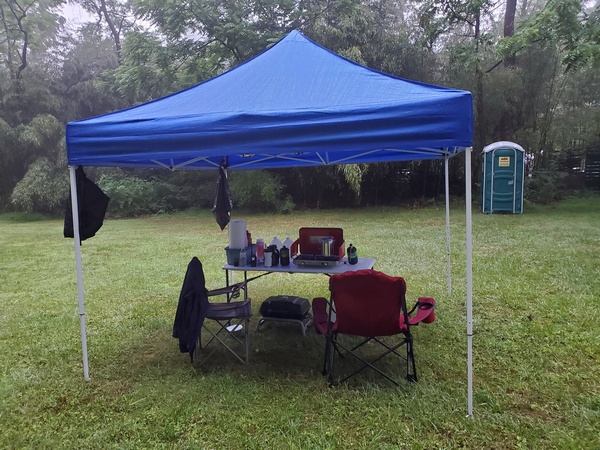
Our common food prep area gave us a place to hang out during the rain.
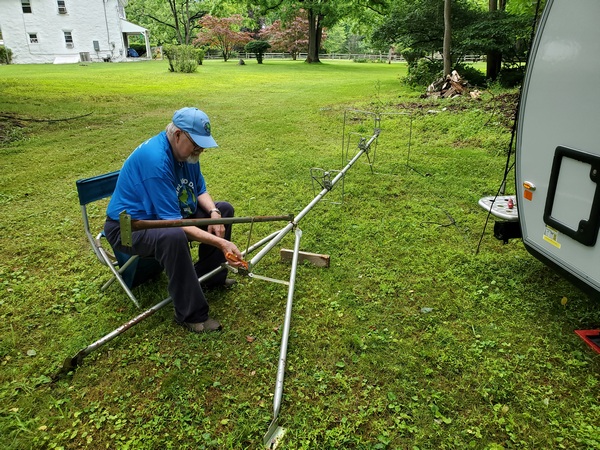
Ed K3YTR assembling his VHF antennas
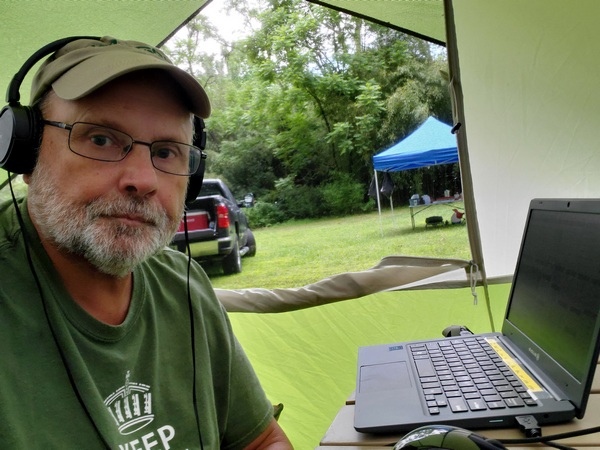
WB3GCK operating from the tent
Glen NK1N operating under his canopy
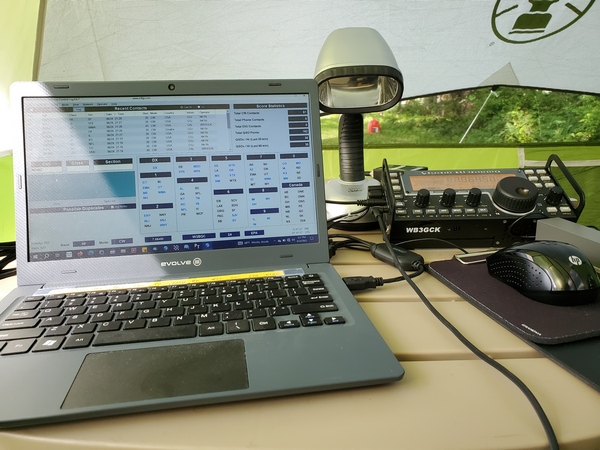
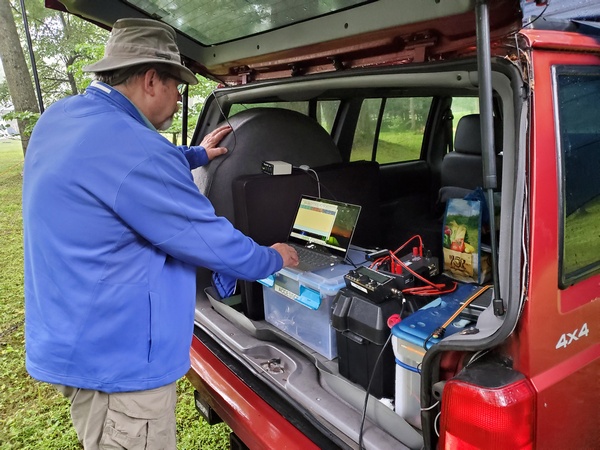
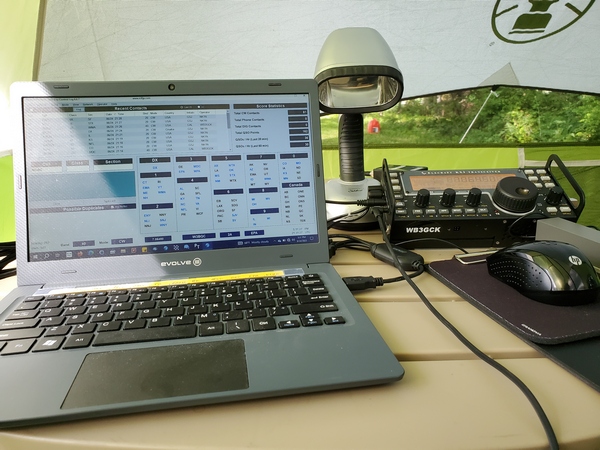
The radio equipment in my tent. This was the first Field Day for my little Evolve laptop. I used it for logging, CW keying, and rig control.
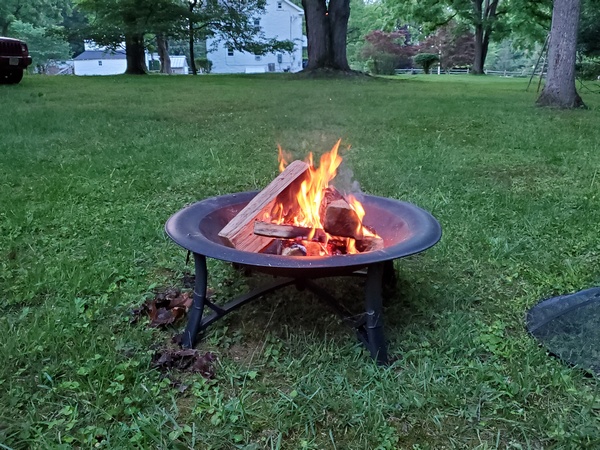
It’s just not a Boschveldt Field Day without a campfire.
I primarily operated 40M CW, while Glen covered 20M and 80M. We both made contacts on 15M CW. Glen had a contact with a station in Croatia and one in Hawaii. I think the Hawaii contact was a Boschveldt QRP Field Day first. By Saturday night, the weather had improved enough for us to take a break and swap some tall tales around the campfire.
The weekend was not without some equipment issues. Glen and I both had batteries fail. Fortunately, we had spares on hand, so our operations weren’t affected. K3YTR also had to spend some time troubleshooting his setup. I also had an issue with the Digirig Mobile interface that I planned to use to send a radiogram via Winlink (VARA-FM). However, Glen was able to successfully send the radiogram via HF.
On Sunday morning, we operated for a few hours before shutting down early to pack up. We had some rain and thunderstorms headed our way, so we wanted to pack up while everything was still dry. (The rain started about an hour after we left.)
We ended up with 233 CW contacts. No records were broken, but the three of us had a great time.









 WB3GCK QRP Amateur Radio