I learned recently that Ed Hare, W1RFI, passed away. Ed was a long-time lab engineer at ARRL. I didn’t really know him, but I had the pleasure of meeting him at a QRP gathering 25 years ago. The post below originally appeared on my old website, but I thought I’d share it over here in Ed’s memory. – WB3GCK
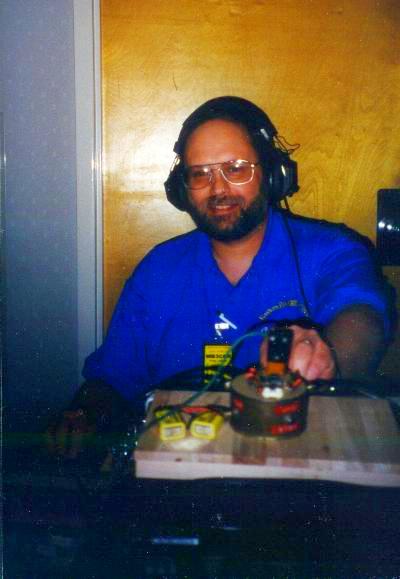
During the 2000 Atlanticon QRP convention at Glen Mills, Pennsylvania, I had the distinct honor of operating a bit of QRP history. Ed Hare, W1RFI, brought the original Tuna Tin 2 transmitter and put it on the air as a special event station operating as W1FB/3.
For those unaware of the significance, the Tuna Tin 2 was built by famed QRPer, Doug DeMaw, W1FB, and featured in QST back in the 70s [1][2]. It was stored at ARRL headquarters for many years until it mysteriously disappeared. It was later discovered by Ed Hare in a hamfest junk box 100 miles away. Ed bought it back for a dollar and has been putting this classic rig on the air on a regular basis. The fact that it still exists at all makes it a very special piece of equipment. The design has been updated over the years and QRPers still continue to build versions of this venerable classic.
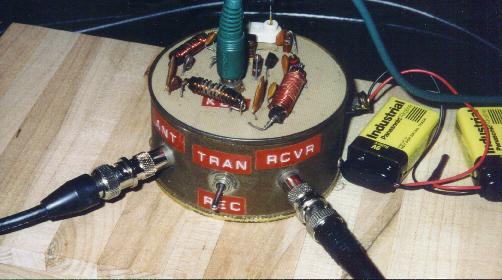
Technically speaking, it’s not much of a transmitter. A couple of 2N2222s in a simple, crystal-controlled circuit putting out about a half-watt or so (or about 800mW with the two 9-volt batteries shown). Using a toggle switch to switch from transmit to receive brought back memories of my Novice days. My only QSO was with another QRPer on the 4th floor of the hotel. Still, I was thrilled to be able to briefly operate this famous little transmitter. Especially, under Doug DeMaw’s callsign, W1FB. That really made it special.
© 2000-2025 Craig A. LaBarge
[1] DeMaw, Doug. “Build a Tuna Tin 2.” QST, May 1976, pp. 14–16. Available in the QST archives at ARRL.org.
[2] Hare, Ed. “The Tuna Tin 2 Today.” QST, Mar. 2000, pp. 37–40. Available in the QST archives at ARRL.org.
 WB3GCK QRP Amateur Radio