Boschveldt QRP Field Day 2018

Boschveldt QRP Club patchThe intrepid members of the Boschveldt QRP Club got together for another great Field Day. The weather for much of the weekend was rainy but that didn’t stop up us from having fun.

Like last year, we held our Field Day on a nice piece of privately owned property in Malvern, Pennsylvania. The Boschveldt members on hand this year were Ed K3YTR, Glen NK1N, Ron WA8YIH and WB3GCK. Although he didn’t camp overnight with us, Jerry WC8R was on-hand for the weekend.
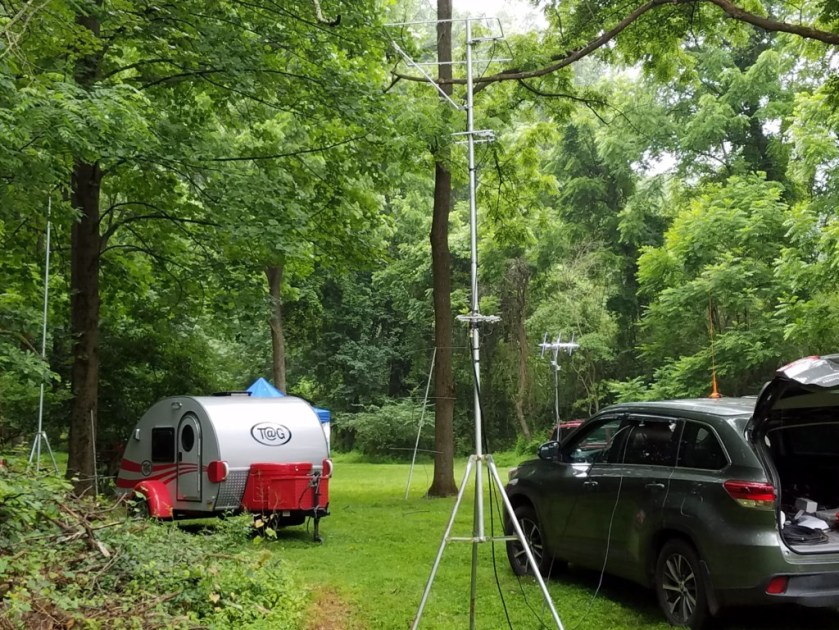
Part of the W3BQC Field Day site. Some of the VHF/UHF antennas are in the foreground. You can see the satellite antenna array in the background (above the car's hood).
Part of the W3BQC Field Day site. Some of the VHF/UHF antennas are in the foreground. You can see the satellite antenna array in the background (above the car’s hood).

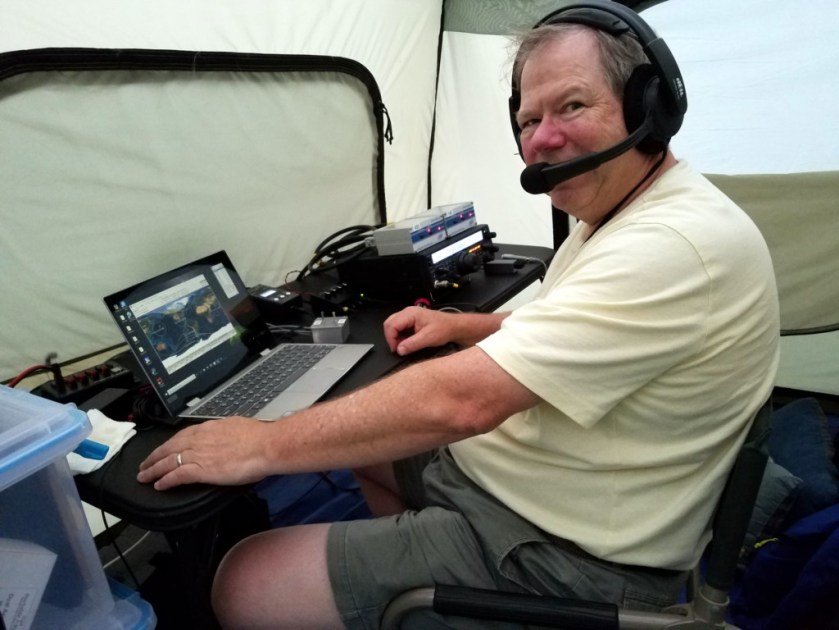
We operated QRP in the 2A (battery) class this year, using our club callsign, W3BQC. On HF, WA8YIH worked SSB and digital, while I handled the CW chores. K3YTR worked 6M, 2M and 440 (with help from WC8R), while NK1N worked the satellites. Normally, Ed WA3WSJ participates but, unfortunately, he was under the weather.
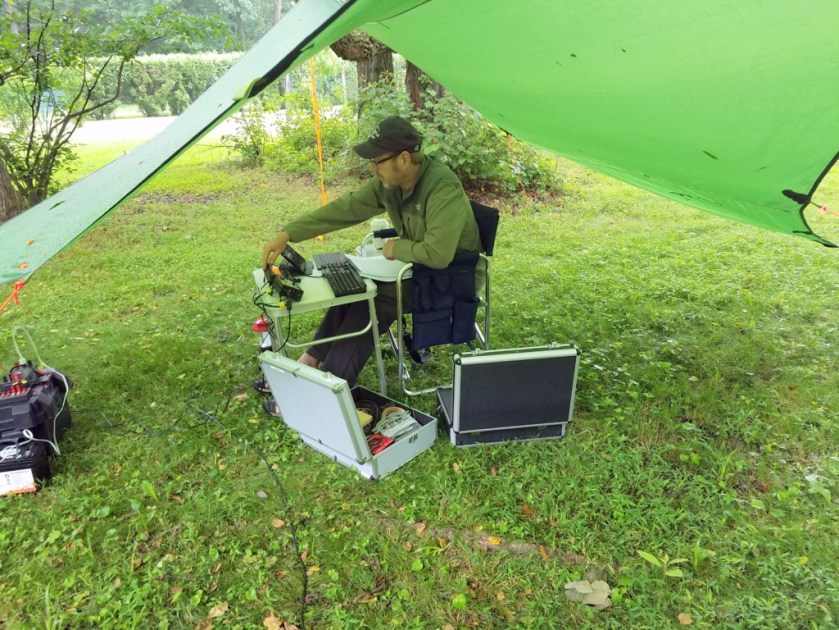
WA8YIH operating underneath his tarp shelter at W3BQC Field Day 2018. At night, the tarp sheltered the hammock he slept in.

After we arrived on Friday afternoon, we put up our tents and shelters, along with some of our antennas. Most of this work was done with some light rain and drizzle coming down. As is our custom, we headed out to a local restaurant to have dinner and do some catching up.
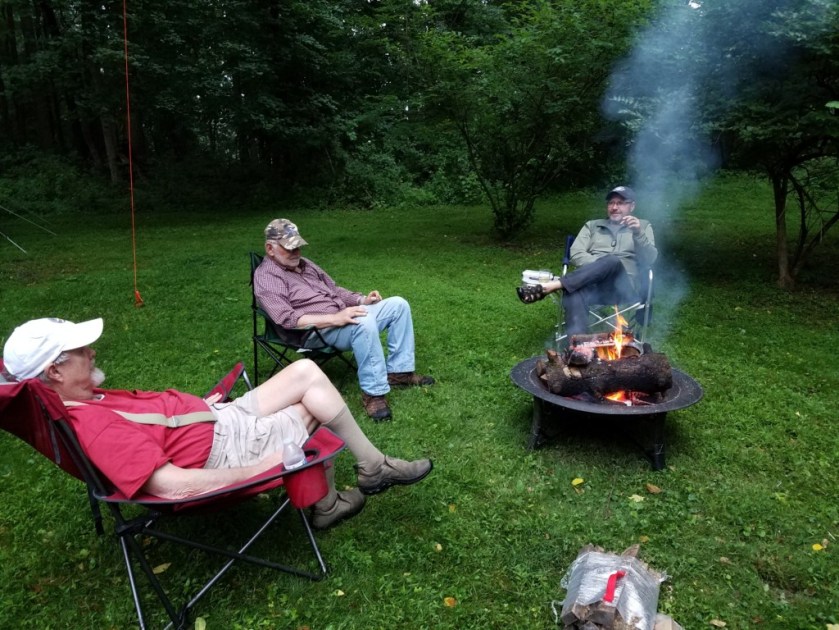
(l-r) K3YTR, WC8R, and WA8YIH enjoy the campfire at W3BQC Field Day 2018

On Saturday morning, we attended to some last-minute equipment preparations. For the HF stations, WA8YIH and I kept things simple. We both used simple inverted L antennas fed through 9:1 UNUNs. K3YTR had a variety of antennas for VHF and UHF and NK1N had an elaborate system for tracking the satellites.
NK1N working the satellites during the W3BQC Field Day 2018

Our little group of QRPers tends to run a very laid-back Field Day. When the event got officially underway, we interspersed periods of operating with lots of socializing and eating. By Saturday evening, the lousy weather cleared out enough for us to do a campfire. Of course, there was more socializing and eating.
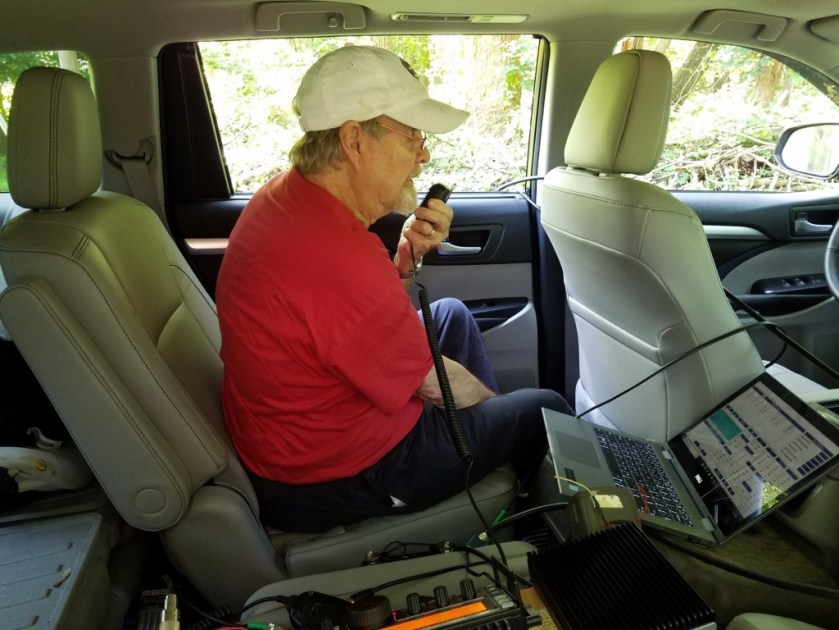
K3YTR working VHF/UHF during W3BQC Field Day 2018

On Sunday, the weather finally cleared up and the sun came out. We also took advantage of openings on the 15M and 10M to make some more contacts towards the end of the event. We were happy to have a visit from Ed WA3WSJ. He felt well enough to come out to the site for a few hours. He even brought an assortment of sandwiches for lunch.
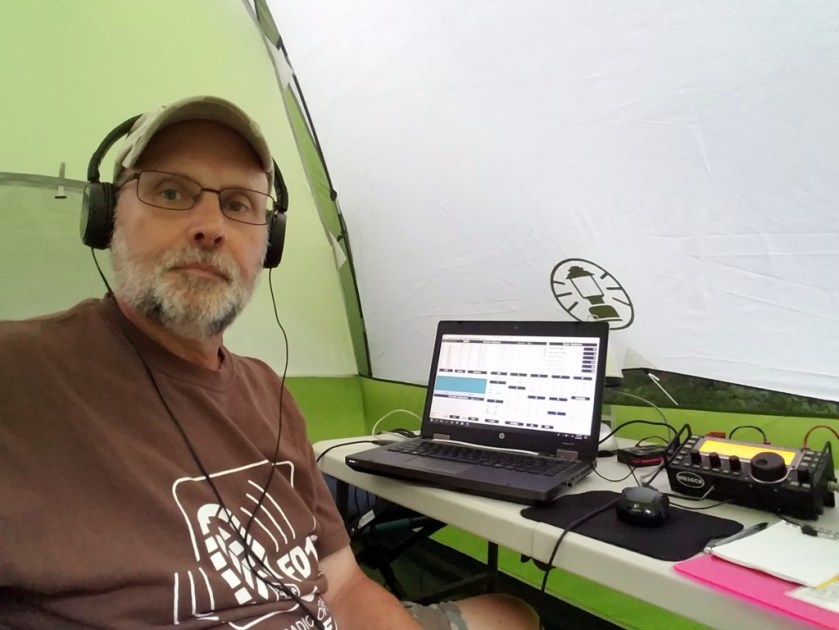
WB3GCK operating CW from my tent during W3BQC Field Day 2018

As is always the case, Field Day seems to be over far too soon. No records were broken this year but the Boschveldt QRP crew had a great time.

72, Craig WB3GCK
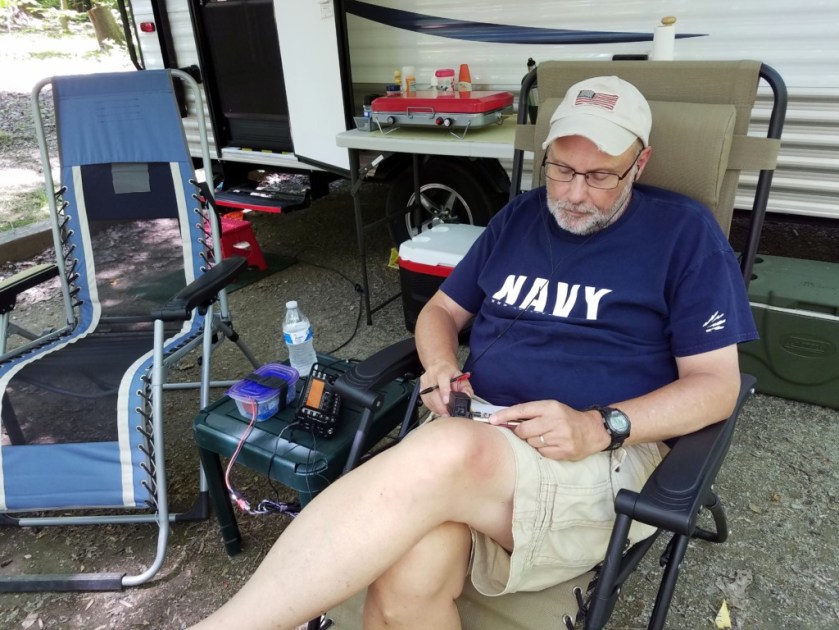
Father’s Day at Elk Neck State Park

My better half and I took our little travel trailer down to one of my favorite campgrounds for the Father’s Day weekend. Although rest and relaxation was my main objective, I also worked in some QRP, too.

Our destination for the weekend was Elk Neck State Park in northeastern Maryland. After getting the trailer set up on Friday night, I strapped a Jackite pole to a lantern post and set up a 29.5-foot vertical. I did a quick test and found the area to be very quiet from both an audio (i.e., quiet neighbors) and an RF perspective.

On Saturday morning, I fired up the radio while the coffee was brewing and made a few SKCC contacts. I also had a nice CW chat with Butch NM1I in Massachusetts.

After lunch, I decided to do an impromptu Parks on the Air activation. Despite having poor cell service, I managed to post my plans on POTA and WWFF-KFF Facebook pages.

Things got off to a slow start on 40M until Emily KB3VVE found me and spotted me. After that, things began to pick up a bit. Most of my contacts were on 20M but sadly, I didn’t hear from any of the European regulars. Before wrapping up, I dropped down to 30M and picked up a couple more.

WB3GCK activating Elk Neck State Park from outside the camper.

After about an hour, I had 13 contacts in the log, including WB9OWN in Wisconsin who worked me on both 20M and 30M. I made another 7 contacts over the course of the weekend. That’s more than enough for a valid POTA activation but I’m still about 6 contacts shy of the 44 needed for a WWFF activation. We’re planning to visit Elk Neck again in the Fall, so I should be able to make the remaining WWFF QSOs I need.

It was nice to finally have a camping trip this year with decent weather and no rain. I more than satisfied my rest and relaxation objective for the weekend.

72, Craig WB3GCK

Another Busy Radio Weekend

There were several radio-related things going on this weekend. I managed to take part in a few of them.

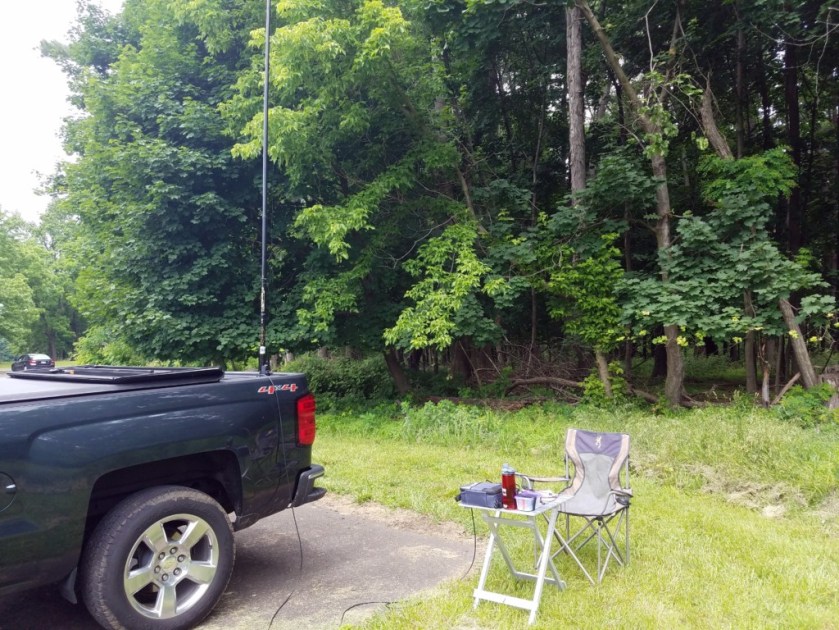
This weekend, the monthly SKCC Weekend Sprintathon (WES) contest coincided with the International Field Radio Event (IFRE). On Saturday, I headed out to Valley Forge National Historical Park to work both events. I parked in a remote section of the Varnum’s Picnic Area, as far away as possible from the folks having picnics. I mounted my 19-foot vertical on the back of my truck and set up my KX3 on a little table next to the truck.

My setup in Valley Forge National Historical Park. I last about an hour before I had to seek some shade.
My setup in Valley Forge National Historical Park. I lasted about an hour before I had to seek some shade.

I alternated between making SKCC contacts and checking the IFRE calling frequencies. Most of my contacts were with SKCC stations on 40M. I didn’t hear much activity on 20M but I did make a 2-way QRP SKCC contact with Bobby AK4JA. Bobby was running a crystal-controlled tube rig and had a nice signal into Valley Forge.

After about an hour, the heat was starting to get to me and the static crashes from nearby storms were deafening. I moved my rig into the truck to get out of the direct sun and checked around 7.035 for IFRE stations and heard Dave W3DET calling CQ. I had previously worked Dave in the last IFRE and, as luck would have it, he is also an SKCC member. Two for the price of one.

After two hours or so, the static crashes were giving me a headache, so I packed up and headed home. I needed to get a few things together for a public service event the next day. I ended up with 10 SKCC contacts and the IFRE contact with W3DET.

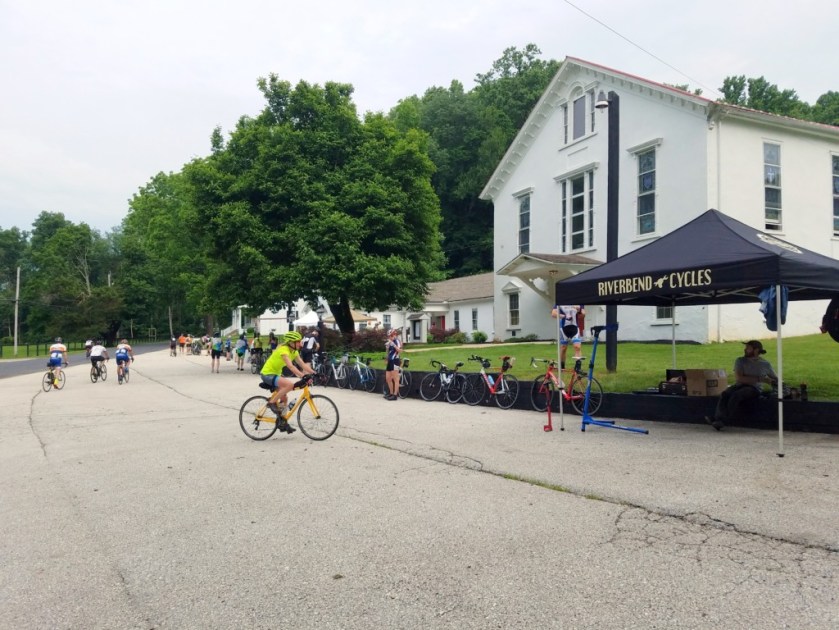
On Sunday, I wrapped up my weekend supporting the French Creek Iron Tour with my local ARES-RACES group. The Iron Tour is a charity bike event benefiting the French & Pickering Creeks Conservation Trust. This year, I provided communications for a rest stop in historic Yellow Springs, Pennsylvania. Fortunately, the rain held off until I finished up and there were no major issues to deal with.

The French Creek Iron Tour rest stop in Yellow Springs, Pennsylvania.

Unfortunately, I was once again unable to participate in was the annual Cookie Crumble Contest due to a conflict with the bike event. Hopefully, I’ll be able to participate in this fun QRP contest next year.

73, Craig WB3GCK

Connecting Two Keys to the KX3

When operating in the field, I often like to alternate between a straight key for SKCC contacts and paddles for everything else. I found a quick and easy way to do this, courtesy of an excellent article by Rich AG6QR.

In the past, I would sometimes run an external keyer and connect a straight key in parallel with the keyer’s output. I have often used this as a way to use both computer keying and paddles during Field Day. I have also resorted to putting the CW KEY1 jack into the straight key mode and turning my Palm Mini paddles on their side to simulate a straight key. I could have used the Elecraft paddles designed for the KX3 but that arrangement isn’t very comfortable for me.

I did some searching and found a neat little adapter on the Pignology website. Unfortunately, at the current time, they aren’t accepting orders. A little more searching produced AG6QR ‘s article, which provided a perfectly workable solution. Best of all, I had everything I needed in my junk box.

Inspired by Rich’s article, I assembled a two-pin, female header connector (with standard 0.1-inch spacing) by crimping on a short length of two-conductor wire. On the other end, I soldered on an in-line 1/8-inch stereo jack. (I connected to the tip and sleeve terminals, leaving the ring terminal open.)

This is the 2-pin female header connector. It’s an Amphenol part but, unfortunately, I don’t have the specific part number.

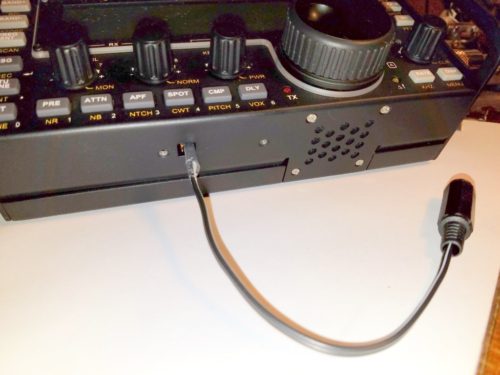
After setting the CW KEY2 jack to the “HAND” setting, I connected my header connector to the two right-most pins on the front connector and a straight key to the stereo jack. Voila! It worked just fine. As is my usual practice, I used a little Goop sealant/adhesive to add a little extra strain relief and make the connectors more rugged for field use.

This is the straight key adapter connected to my KX3.

So until Pignology reopens, I have a great (cheap) solution for simultaneously connecting a straight key and paddles. Be sure to check out AG6QR’s page for a more detailed description (and better photography).

72, Craig WB3GCK